
Resources
Explore a wide range of valuable resources on GCED to deepen your understanding and enhance your research, advocacy, teaching, and learning.
3,451 Results found
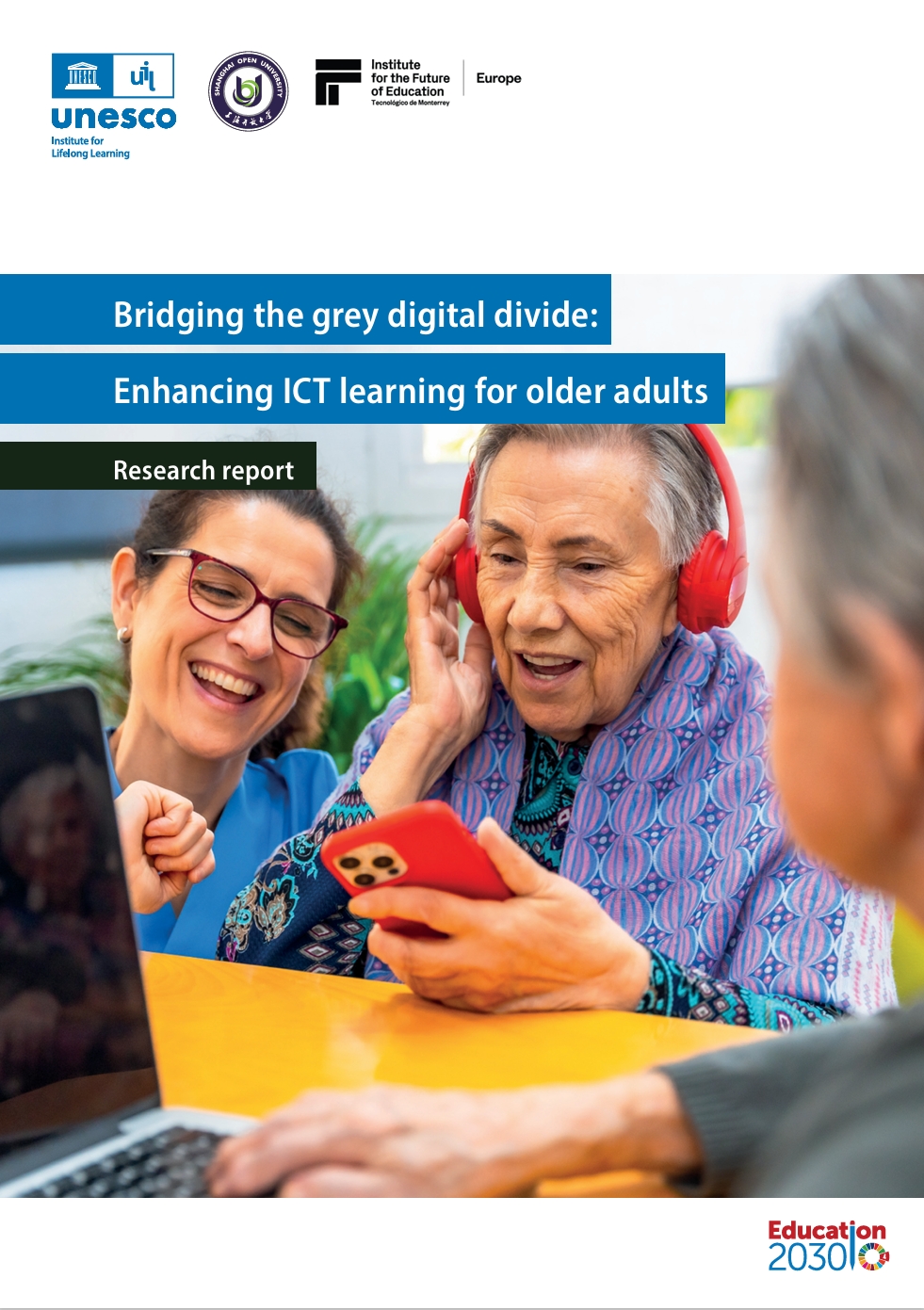 Bridging the Grey Digital Divide: Enhancing ICT Learning for Older Adults; Research Report Year of publication: 2025 Corporate author: UNESCO Institute for Lifelong Learning (UIL) | Shanghai Open University (SOU) | Institute for the Future of Education This research report, Bridging the Grey Digital Divide: Enhancing ICT Learning for Older Adults, explores how organizations across diverse national and regional contexts are supporting digital learning opportunities for older adults. Through six case studies from across five UNESCO regions, it presents a rich array of practices and strategies adopted by independently funded non-profit organizations, community learning centres operating under the auspices of national and local governments, foundations and adult education institutions drawing on a combination of private and public funding sources while maintaining links with universities, and other stakeholders working to close the digital gap for older learners. These examples demonstrate that with the right support structures and pedagogical methods – such as tailored learning programmes, age-friendly technology environments, and intergenerational collaboration – older adults can, and do, engage meaningfully with digital technologies..
  Digital Empowerment for Lifelong Learning and Transformative Andragogy (DELTA) for Adult Educators: Introduction to the DELTA Framework and Resources Year of publication: 2025 Corporate author: UNESCO Institute for Lifelong Learning (UIL) | Shanghai Open University (SOU) The UNESCO Institute for Lifelong Learning (UIL), in partnership with Shanghai Open University (SOU), has unveiled the DELTA Framework — Digital Empowerment for Lifelong Learning and Transformative Andragogy. This global initiative aims to enhance adult educators’ digital competencies and foster inclusive, lifelong learning opportunities for all.
  학습도시와 지속가능발전목표: 실행을 위한 가이드 Year of publication: 2017 Corporate author: UNESCO Institute for Lifelong Learning (UIL) 학습도시의 핵심 특징(Key Features of Learning Cities)에 맞추어 이 실행 가이드는 환경 친화적이며 건강한 학습도시(환경적 지속가능발전), 평등하고 포용적인 학습도시(개인 권한 부여, 상호문화적 대화, 사회적 통합), 학습도시 내에서의 고용 및 기업가정신(경제 발전 및 문화적 번영)이라는 세 가지 주제영역으로 구성되어 있다. 지속가능발전의 이 세 가지 영역은 근본적으로 서로 연계되어 있으며, 도시에서의 평생학습 활동이 언제나 여기에 영향을 미칠 것임을 인식하는 것은 중요하다. 지속가능발전목표의 다른 영역과 마찬가지로 중요한 네 번째 영역은 문화(문화적 표현, 유산, 그리고 다양성) 영역이며, 이는 다음 장에서 공통 주제로 포함시켰다.
 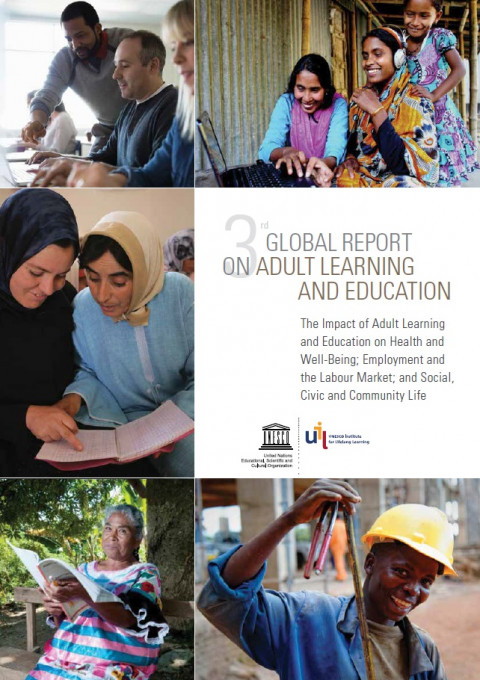 Third Global Report on Adult Learning and Education: The Impact of Adult Learning and Education on Health and Well-Being; Employment and the Labour Market; and Social, Civic and Community Life Year of publication: 2016 Corporate author: UNESCO Institute for Lifelong Learning (UIL) This Report on Adult Learning and Education (GRALE III) comes out as the international community works towards the 2030 Agenda for Sustainable Development. It is also reference and advocacy documents, providing information for analysts and policymakers, and reminding Member States of their commitment. Here policymakers will find high-quality evidence to support policies, strategies and budgets. Stakeholders will find compelling arguments for how adult learning and education promotes sustainable development, healthier societies, better jobs and more active citizenship. Researchers will find entry points and ideas for future research.
 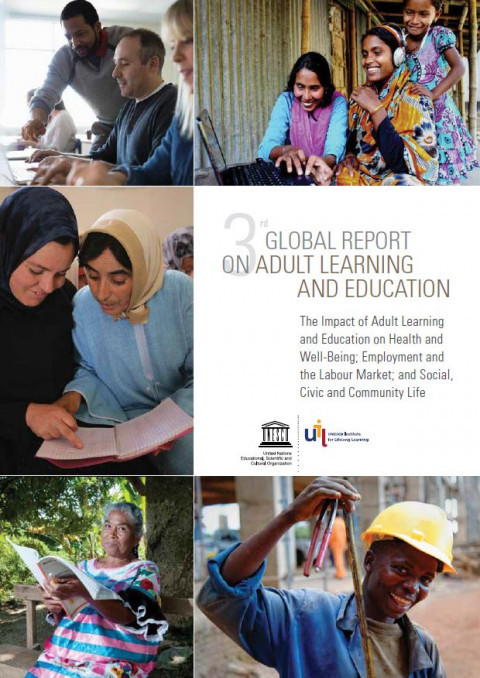 3rd Global Report on Adult Learning and Education: The Impact of Adult Learning and Education on Health and Well-being, Employment and the Labour Market, and Social, Civic and Community Life Year of publication: 2016 Corporate author: UNESCO Institute for Lifelong Learning (UIL) The Global Reports on Adult Learning and Education (GRALE) play a key role in meeting UNESCO’s commitment to monitor and report on countries’ implementation of the Belém Framework for Action. This Framework was adopted by 144 UNESCO Member States at the Sixth International Conference on Adult Learning and Education (CONFINTEAVI), which was held in Belém, Brazil, in 2009. In the Belém Framework for Action, countries agreed to improve ALE across five areas of action: policy; governance; financing; participation, inclusion and equity; and quality (UNESCO Institute for Lifelong Learning, 2010b).GRALE III appears as the ALE community prepares for an important global conference: the 2017 Mid-Term Review of CONFINTEA VI. GRALE III will help high-level decision makers take stock of progress in delivering their Belém promises since 2009. It will also help them look ahead to 2030. Policymakers are now considering how to put into practice the ALE promises made in the 2030 Agenda for Sustainable Development (United Nations, 2015) and the Recommendation on Adult Learning and Education (2015) (UNESCO, 2015). GRALE III will support their deliberations by showing how ALE can help achieve broader health, economic and social outcomes. It will identify major challenges for ALE and examine the implications for ALE of major global trends like migration and demographic shifts.GRALE III brings together the latest data, policy analysis and case studies on ALE. Government leaders will find high quality evidence to inform their policies, strategies and budgets. Proponents of change will find compelling arguments showing how ALE promotes sustainable development, healthier societies, better jobs and more active citizenship. Policy analysts will find entry points and ideas for future research and policy.
  지속가능개발목표(SDGs) 달성을 위한 교육개발협력 연구(Ⅵ): 지속가능발전교육과 세계시민교육을 통한 SDGs 범분야 실천 전략 Year of publication: 2022 Author: 윤종혁 | 김소아 | 김현진 | 서예원 | 안해정 | 김신애 | 박환보 | 유성상 Corporate author: 한국교육개발원 한국교육개발원은 개발도상국의 SDGs 달성을 지원하기 위한 교육개발협력의 실천전략 을 모색하고자 2017년부터 총 6개년 동안 「지속가능개발목표(SDGs) 달성을 위한 교육개발협력연구」를 수행하였습니다. 올해 연구는 최종 마무리하는 연구로서 SDG 4.7에서 강조하고 있는 세계시민교육과 지속가능발전교육을 포함한 환경교육, 평화・비폭력, 국제이해, 문화적 다양성 존중, 젠더 평등, 난민 및 이주민 등 소수집단 인권, 민주주의 등을 촉진시키기 위한 교육개발협력 전략을 마련하였습니다. 본 저작물은 한국교육개발원에서 2022년 작성하여 공공누리 제4유형으로 개방한 ‘지속가능개발목표(SDGs) 달성을 위한 교육개발협력 연구(Ⅵ)(윤종혁 외)’를 이용하였으며 해당 저작물은 한국교육개발원 홈페이지 (www.kedi.re.kr)에서 무료로 다운받으실 수 있습니다.
 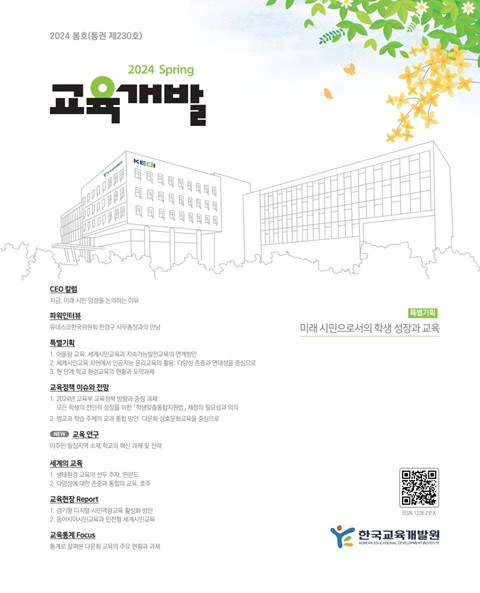 미래 시민으로서의 학생 성장과 교육 (교육개발; 2024년 봄호, Vol. 230) Year of publication: 2024 Corporate author: 한국교육개발원 CEO 칼럼지금, 미래 시민 양성을 논의하는 이유 파워인터뷰유네스코한국위원회 한경구 사무총장과의 만남 특별기획미래 시민으로서의 학생 성장과 교육1.어울림 교육: 세계시민교육과 지속가능발전교육의 연계방안2.세계시민교육 차원에서 인공지능 윤리교육의 활용: 다양성 존중과 연대성을 중심으로3.현 단계 학교 환경교육의 현황과 도약과제 교육정책 이슈와 전망1. 2024년 교육부 교육정책 방향과 중점 과제: 모든 학생의 전인적 성장을 위한 「학생맞춤통합지원법」제정의 필요성과 의의2. 범교과 학습 주제의 교과 통합 방안: 다문화·상호문화교육을 중심으로 NEW 교육 연구이주민 밀집지역 소재 학교의 혁신 과제 및 전략 세계의 교육1.생태환경 교육의 선두 주자, 핀란드2.다양성에 대한 존중과 통합의 교육, 호주 교육현장 Report1.경기형 디지털 시민역량 교육 활성화 방안2.동아시아시민교육과 인천형 세계시민교육 교육통계 Focus통계로 살펴본 다문화 교육의 주요 현황과 과제
 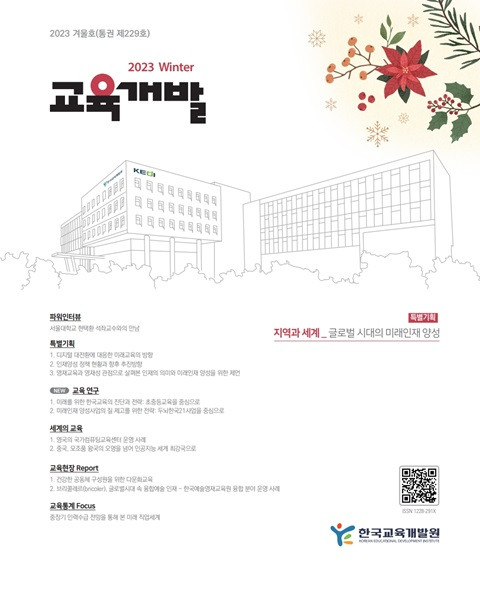 지역과 세계: 글로벌 시대의 미래인재 양성 (교육개발; 2023년 겨울호, Vol. 229) Year of publication: 2023 Corporate author: 한국교육개발원 파워인터뷰서울대학교 현택환 석좌교수와의 만남 특별기획지역과 세계 _ 글로벌 시대의 미래인재 양성1.디지털 대전환에 대응한 미래교육의 방향2.인재양성 정책 현황과 향후 추진방향3.영재교육과 영재성 관점으로 살펴본 인재의 의미와 미래인재 양성을 위한 제언 NEW 교육 연구1. 미래를 위한 한국교육의 진단과 전략: 초중등교육을 중심으로2. 미래인재 양성사업의 질 제고를 위한 전략: 두뇌한국21사업을 중심으로 세계의 교육1. 영국의 국가컴퓨팅교육센터 운영 사례2. 중국, 모조품 왕국의 오명을 넘어 인공지능 세계 최강국으로 교육현장 Report 1. 건강한 공동체 구성원을 위한 다문화교육2. 브리콜레르(bricoler), 글로벌시대 속 융합예술 인재 - 한국예술영재교육원 융합 분야 운영 사례 교육통계 Focus중장기 인력수급 전망을 통해 본 미래 직업세계
  Community-based Learning for Sustainable Development (UIL policy brief 8) Year of publication: 2017 Corporate author: UNESCO Institute for Lifelong Learning (UIL) The 2030 Agenda for Sustainable Development sets ambitious goals to transform our world, balancing the economic, social and environmental dimensions of sustainable development. To rise to the challenges posed by these goals and to ensure no one is left behind, it is critically important that local communities are involved in the planning and management of sustainable development and the promotion of sustainable lifestyles. The 2030 Agenda encompasses all aspects of our lives, which implies that learning, if it is to contribute fully to this agenda, must be seen as both lifelong and life-wide. The relevance of community-based non-formal education and informal learning for children, young people and adults, especially those not in education or from marginalized or disadvantaged parts of society, must be recognized and fostered in every country of the world if the 17 Sustainable Development Goals are to be met. This Policy Brief proposes six action principles and four policy recommendations to advance community-based lifelong learning for sustainable development. They summarize the lessons of successful community-based learning for sustainable development, drawn from around the world. L’apprentissage communautaire pour le développement durable (Note d’orientation n° 8 de l’UIL) Year of publication: 2017 Corporate author: Institut de l’UNESCO pour l’apprentissage tout au long de la vie (UIL) Le Programme de développement durable à l’horizon 2030 définit des objectifs universels ambitieux pour transformer notre monde, qui visent à équilibrer les dimensions économiques, sociales et environnementales du développement durable. Pour relever les défis que posent ces objectifs et veiller à ce que personne ne soit laissé pour compte, il est crucial d’impliquer les communautés locales dans la planification et la gestion du développement durable ainsi que dans la promotion de modes de vie durables. Afin que l’apprentissage réalise son potentiel et contribue pleinement à un Programme qui englobe tous les aspects de notre vie, il doit être considéré comme un processus tout au long de la vie et dans tous les aspects de la vie. Si nous voulons atteindre les 17 objectifs pour le développement durable, il nous faut reconnaître la pertinence de l’éducation communautaire non formelle et de l’apprentissage informel pour les enfants, les jeunes et les adultes, en particulier ceux qui ne sont pas scolarisés ou qui sont issus des secteurs marginalisés ou défavorisés de la société, et encourager cette éducation et cet apprentissage dans tous les pays du monde.La présente note d’orientation propose six principes d’action et formule quatre recommandations politiques pour faire progresser l’apprentissage communautaire tout au long de la vie en vue du développement durable. Ces principes et recommandations tirent les leçons du succès de l’apprentissage communautaire pour le développement durable à partir d’études de cas recueillies dans le monde entier.