
Resources
Explore a wide range of valuable resources on GCED to deepen your understanding and enhance your research, advocacy, teaching, and learning.
3,446 Results found
 Des Universités de plus en plus tournés vers l'international Year of publication: 2015 Author: Patrick Aebischer Corporate author: Organisation des Nations Unies pour l'éducation, la science et la culture (UNESCO) The role of science, technology and innovation has been explicitly recognized as a vital driver of sustainability. This paper addresses
 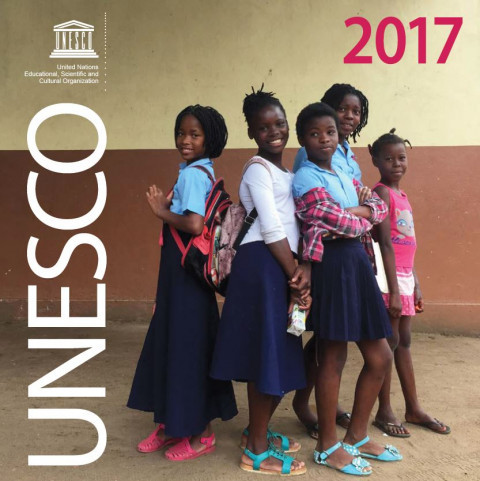 UNESCO 2017: Annual Report 2017 Year of publication: 2018 Corporate author: UNESCO This Annual Report takes stock of these actions and many others, undertaken during the mandate of the former Director-General, Irina Bokova, to whom I wish to pay tribute. The Report also reflects the professionalism and expertise of the Organization’s staff working across the world, and translating the 2030 Agenda for Sustainable Development’s Goals into action. The Report features UNESCO’s commitment to provide a world of justice, peace and sustainable development.Guided by the ideals of peace and progress, UNESCO represents a powerful force for transformation in the face of today’s challenges. It is also well-placed to share our wide-ranging experience and formulate the innovative ideas that the world currently needs, bearing in mind specific conditions on the ground and the need to respect local history and culture. Rapport UNESCO 2017 Year of publication: 2018 Corporate author: Organisation des Nations Unies pour l'éducation, la science et la culture (UNESCO) Ce rapport annuel dresse le bilan de ces actions et de nombreuses autres, engagées par la précédente Directrice générale, Irina Bokova, à qui je souhaite rendre hommage. Il reflète également le professionnalisme et l’expertise du personnel de l’UNESCO dans le monde entier, traduisant en actions les objectifs du Programme de développement durable à l’horizon 2030. Il met en mots et en images leur engagement pour construire un monde de justice, de développement durable et de paix.Guidée par les idéaux de paix et de progrès, l’UNESCO représente une puissante force de transformation face aux défis du monde contemporain. Elle est aussi le lieu par excellence pour partager la pluralité des expériences et faire naître les idées novatrices dont le monde a besoin – en tenant compte des spécificités du terrain, dans le respect des histoires et des cultures particulières.
 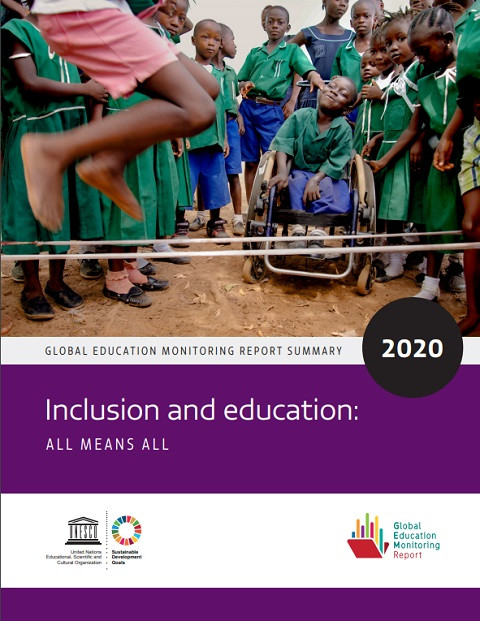 ملخص التقرير العالمي لرصد التعليم 2020: التعليم الشامل للجميع; الجميع بال استثناء Year of publication: 2020 Corporate author: منظمة الأمم المتحدة للتربية والعلم والثقافة (UNESCO) | Global Education Monitoring Report Team ينظر التقرير العالمي لرصد التعليم لعام 2020 في اآلليات االجتماعية واالقتصادية والثقافية التي تميز ضد األطفال والشباب والبالغين المحرومين، مما يحرمهم من التعليم أو يجعلهم مهمشين فيه. وبفضل حافز التزامها بإعمال الحق في التعليم الشامل، تعمل البلدان على توسيع نطاق رؤيتها للتعليم الشامل بإدراج التنوع في صلب ً ما يتعثر تنفيذ القوانين والسياسات الهادفة التي تنطوي نظمها التعليمية. لكن غالبا على نوايا حسنة. ويرى التقرير الذي صدر في بداية عقد العمل حتى عام 2030 ، وفي خضم األزمة الناجمة عن جائحة كوفيد-19 ،التي أسفرت عن تفاقم أوجه عدم ً أمام ً حقيقيا المساواة الكامنة، أن مقاومة تلبية احتياجات كل متعلم تشكل تهديدا تحقيق أهداف التعليم العالمية. 全球教育监测报告摘要 2020: 包容与教育; 覆盖全民,缺一不可 Year of publication: 2020 Corporate author: 联合国教科文组织 (UNESCO) | Global Education Monitoring Report Team 2020年《全球教育监测报告》分析了歧视弱势儿童、青年和成人、将 其排除在教育之外或是在教育领域内使其边缘化的社会、经济和文化机 制。各国承诺落实民众享有包容性教育的权利,并以此为鞭策,努力拓 展对于教育包容性的认识,将多样性作为教育系统的核心。然而,出于 良好意愿的法律和政策在实施过程中往往举步维艰。本报告发布于迈向 2030年目标的十年行动之初,仍在肆虐的2019冠状病毒病危机加剧了深 层次的不平等问题,报告认为对满足每名学习者需求的抵触,是对实现 全球教育目标的真正威胁。
 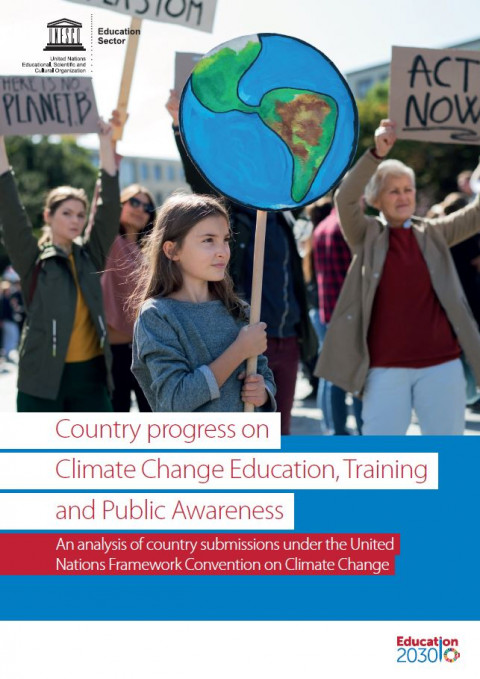 Country Progress on Climate Change Education, Training and Public Awareness: An Analysis of Country Submissions Under the United Nations Framework Convention on Climate Change Year of publication: 2019 Corporate author: UNESCO Since its entry into force, the 1992 United Nations Framework Convention on Climate Change (UNFCCC) in Article 6 has recognised the importance of ‘education, training and public awareness’ in mitigating ‘dangerous human interference with the climate system’. Article 12 of the Paris Agreement (2015) reaffirms this recognition.This document provides a status report on the implementation of climate change education in countries. It outlines key findings from an analysis of country submissions to the UNFCCC Secretariat as part of UNFCCC reporting processes and highlights achievements and remaining gaps in the area of climate change education.The analysis shows that almost all countries include some reference to climate change education in their country submissions under the UNFCCC reporting processes. This shows a certain level of commitment, which provides a good basis to further scale up educational responses to climate change. However, important gaps remain. Addressing them will be crucial in order to fully mobilize the power of education in response to this greatest challenge of our times. Progrès nationaux en matière d'éducation, de formation et de sensibilisation du public aux changements climatiques: Analyse des comptes rendus nationaux au titre de la Convention-cadre des Nations Unies sur les changements climatiques Year of publication: 2019 Corporate author: Organisation des Nations Unies pour l'éducation, la science et la culture (UNESCO) Depuis son entrée en vigueur, la Convention-cadre des Nations Unies sur les changements climatiques (CCNUCC, 1992) reconnaît, dans son article 6, l’importance de l’éducation, de la formation et de la sensibilisation du public pour atténuer toute perturbation anthropique dangereuse du système climatique. L’article 12 de l’Accord de Paris (2015) réaffirme cette prise de conscience.Le présent document dresse un état des lieux de la mise en place de l’éducation aux changements climatiques dans les pays. Il souligne les principaux résultats issusde l’analyse des comptes rendus nationaux présentés au Secrétariat de la CCNUCC dans le cadre du processus d’établissement des communications à ce titre. Il met en lumière les réalisations accomplies et les lacunes à combler dans le domaine de l’éducation aux changements climatiques.L’analyse démontre que pratiquement tous les pays mentionnent l’éducation aux changements climatiques dans leurs comptes rendus nationaux soumis dans le cadre du processus d’établissement des communications au titre de la CCNUCC. Cela démontre un certain niveau d’engagement, garantie d’une bonne base pour renforcer les actions éducatives face aux changements climatiques. Cependant, d’importantes disparités persistent. Il sera crucial de les résorber afin de mobiliser le plein potentiel de l’éducation pour affronter le plus grand défi de notre époque.
  Access to Information: A New Promise for Sustainable Development Year of publication: 2019 Corporate author: UNESCO The central aim of this study is to unpack the major trends in the field of ATI laws and their implementation. In order to understand the trends, the report examines the activities of trendsetters. It focuses on awareness-raising by UNESCO, Member State recommendations in the Universal Periodic Review, the commitments of the Open Government Partnership, actions of civil society organizations, and the standard-setting activities of such regional intergovernmental organizations as the Council of Europe, the African Union and the Organization of American States.
  Educational Content up Close Examining the Learning Dimensions of Education for Sustainable Development and Global Citizenship Education Year of publication: 2019 Corporate author: UNESCO In taking ESD and GCED forward, UNESCO seeks to advance a holistic approach to education that emphasizes three inter-related dimensions of learning – the cognitive, social and emotional and behavioural.This publication summarizes the findings of a study commissioned by UNESCO to examine if and how these three dimensions of learning and teaching of ESD and GCED are reflected in pre-primary, primary and secondary educational content (ie. national laws, policies and the intended curriculum) in Costa Rica, Japan, Kenya, Lebanon, Mexico, Morocco, Portugal, Republic of Korea, Rwanda and Sweden. The outcome of this work shows a major pattern of commitment to the three learning dimensions in the selected countries and across the four education levels, with noteworthy nuances between ESD and GCED. 지속가능발전교육 및 세계시민교육의 학습 영역 연구: 국가별 교육 과정 분석을 중심으로 Year of publication: 2019 Corporate author: 유네스코 이 보고서는 유네스코가 의뢰한 연구 결과를 요약한 것으로, ESD 및 GCED의 교수·학습에 있어서 이 세 가지 영역이 취학전교육, 초등교육, 중등교육의 내용 (예: 국가법, 정책 및 의도된 교육과정)에 반영되고 있는지 여부와 어떻게 반영되고 있는지를 검토하고 있다. 연구 대상 국가로는 코스타리카, 일본, 케냐, 레바논, 멕시코, 모로코, 포르투갈, 한국, 르완다, 스웨덴 등 10개국이다. 이 연구결과는 선정 국가별, 교육단계별로 나타나는 세 가지 학습 영역에 대한 주요 양상을 보여주고 있으며, ESD와 GCED 사이의 미묘한 차이는 주목할 만하다.