
Resources
Explore a wide range of valuable resources on GCED to deepen your understanding and enhance your research, advocacy, teaching, and learning.
518 Results found
 Practices of Citizenship in East Africa: Perspectives from Philosophical Pragmatism Year of publication: 2020 Author: Katariina Holma | Tiina Kontinen Corporate author: Routledge Practices of Citizenship in East Africa uses insights from philosophical pragmatism to explore how to strengthen citizenship within developing countries. Using a bottom-up approach, the book investigates the various everyday practices in which citizenship habits are formed and reformulated. In particular, the book reflects on the challenges of implementing the ideals of transformative and critical learning in the attempts to promote active citizenship. Drawing on extensive empirical research from rural Uganda and Tanzania and bringing forward the voices of African researchers and academics, the book highlights the importance of context in defining how habits and practices of citizenship are constructed and understood within communities. The book demonstrates how conceptualizations derived from philosophical pragmatism facilitate identification of the dynamics of incremental change in citizenship. It also provides a definition of learning as reformulation of habits, which helps to understand the difficulties in promoting change. This book will be of interest to scholars within the fields of development, governance, and educational philosophy. Practitioners and policy-makers working on inclusive citizenship and interventions to strengthen civil society will also find the concepts explored in this book useful to their work.
 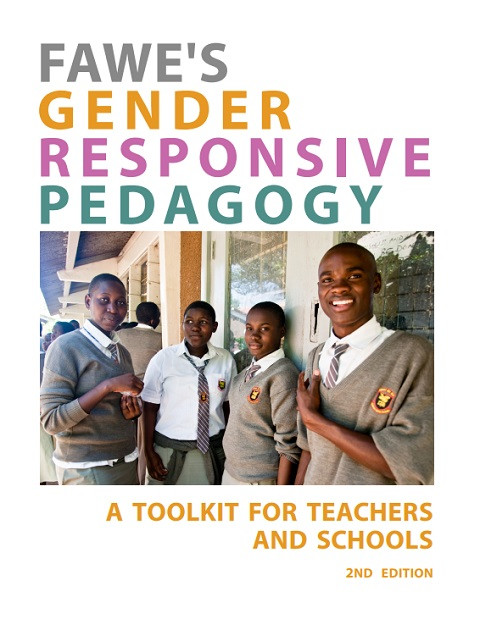 Gender Responsive Pedagogy: A Toolkit for Teachers and Schools Year of publication: 2019 Author: Clare Dowd | Aryeh Shell | Veronica Thamaini | Louisa Trackman Corporate author: Forum for African Women Educationalists (FAWE) This toolkit is intended as a practical tool for training new teachers and refreshing the knowledge and skills of seasoned teachers and a reference for teacher and school management to creatively engage a wide range of community stakeholders in gender-responsive pedagogy (GRP) and related topics.
 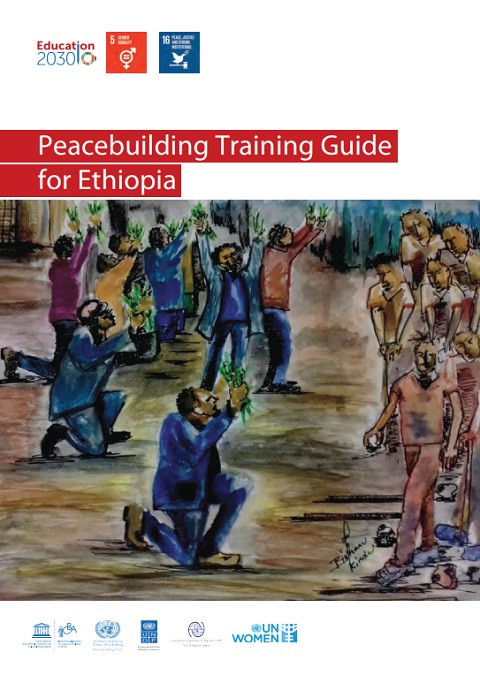 Peacebuilding Training Guide for Ethiopia Year of publication: 2020 Corporate author: UNESCO International Institute for Capacity-Building in Africa (IICBA) This publication is a training guide for a variety of stakeholders, both inside and outside the education system, in Ethiopia on peace and resilience building. It is an adapted and updated guide for the Ethiopian context. The training guide aims to inform and empower the reader in why and how to educate others for peacebuilding. It provides a foundation of con¬ict analysis and peacebuilding and describes a learner-centered approach to peace education and community engagement. The goal of the training guide is for the reader to become a facilitator with the disposition, knowledge, skills and commitment to support others in developing their full potential as peace-builders.
  PEERs for Peace!: A Community-Based Resource Guide for Peace Education Year of publication: 2016 Author: Tyler Hook | Kathleen Kardos | Athena Lao | Sharanya Vasudevan | Erin Wall Corporate author: UNESCO International Institute for Capacity-Building in Africa (IICBA) | University of Pennsylvania This peace education resource guide is designed for teachers of upper primary grades in sub‐Saharan African countries to help them foster the development of peaceful skills, attitudes, and practices in their students and empower students to use peaceful tools to respond productively to conflict. Throughout the seven units in this peace education resource guide, students will explore the concepts of problem solving, empathy, effective communication, and respect (PEER) and how they relate to conflict in various areas of their lives, including families, schools, communities, governments, and more.
 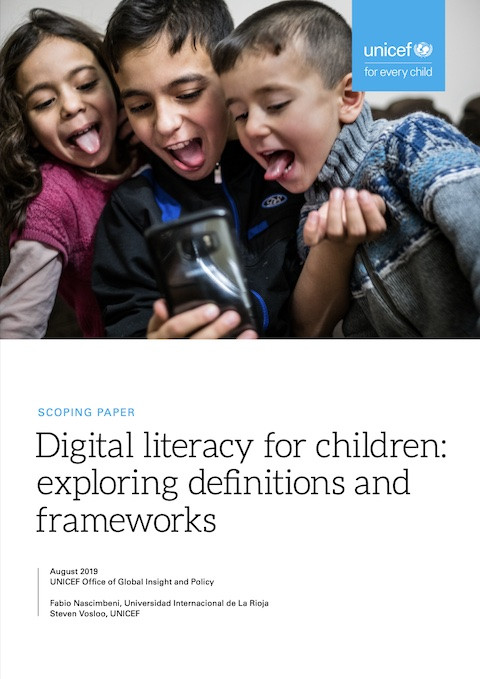 Digital Literacy for Children: Exploring Definitions and Frameworks Year of publication: 2019 Author: Fabio Nascimbeni Corporate author: United Nations Children's Fund (UNICEF) This paper presents the results of a scoping exercise on children’s digital literacy that has been undertaken with the following objectives:To understand the current digital literacy policy and practice landscape;To highlight existing competence frameworks and how they can be adapted to UNICEF’s needs;To analyze the needs and efforts of UNICEF country offices; andTo reflect on policy and programme recommendations, including a definition of digital literacy for UNICEF
 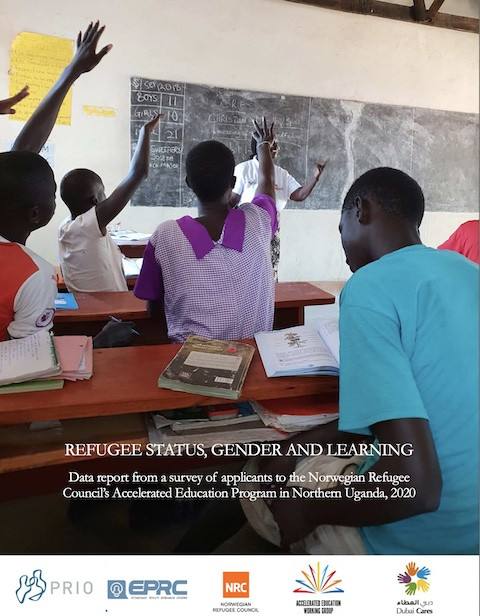 Refugee Status, Gender and Learning Year of publication: 2020 Author: Kendra Dupuy | Martin Flatø | Haakon Gjerløw | Andreas Kotsadam | Mette Løvgren | Francis Mwesigye | Siri Aas Rustad | Gudrun Østby Corporate author: Norwegian Refugee Council (NRC) | Dubai Cares | Accelerated Education Working Group (AEWG) | Economic Policy Research Center (EPRC) | Peace Research Institute Oslo (PRIO) This data report provides details from a survey of applicants to the Norwegian Refugee Council’s Accelerated Education Program in Northern Uganda, 2020. The surveys covered a range of topics, such as demographic and socioeconomic background, school attendance, academic skills, social control, feelings and perceptions on various topics, and future aspirations.
  Internationalization of Tertiary Education in the Middle East and North Africa Year of publication: 2020 Author: Giulia Marchesini | Lise Barbotte | Paul Cahu | Aurelia Hoffmann | Holly Johnstone | Mirna Mehrez | Marco Pasqualini | Francisco Marmolejo Corporate author: World Bank This report draws on available data to respond to both a real need for regional analysis and a direct demand from stakeholders, including tertiary education institutions in MENA. Encouraging internationalization to be mainstreamed throughout MENA is the objective that this report seeks to achieve by way of stimulating regional policy dialogue on the subject. The report presents some global trends in internationalization and details its main benefits, before providing an overview of the current status of internationalization in the MENA region, including an in-depth analysis of student mobility. In its reflections on the way forward for the region, the report situates its recommendations in the context of COVID-19, within which, despite serious challenges due to a lack of attractiveness of the region, MENA may find a key opportunity. It suggests that adapting to the “new normal” through the deeper implementation of internationalization “at home” – a dimension that does not require physical mobility and, being implemented within domestic environments, has a much wider reach – may help enable the region to make strides towards catching up on the internationalization agenda. Internationalisation de l’enseignement supérieur dans la région Moyen-Orient Afrique du Nord Year of publication: 2020 Author: Giulia Marchesini | Lise Barbotte | Paul Cahu | Aurelia Hoffmann | Holly Johnstone | Mirna Mehrez | Marco Pasqualini | Francisco Marmolejo Corporate author: World Bank Ce rapport s'appuie sur les données disponibles pour répondre à la fois à un réel besoin d'analyse régionale et à une demande directe des parties prenantes, y compris des établissements d'enseignement supérieur de la région MENA. Encourager le développement de l’internationalisation à travers la région MENA est l'objectif que ce rapport cherche à atteindre, en stimulant un dialogue régional sur les politiques publiques autour de ce sujet. Le rapport présente quelques tendances mondiales de l'internationalisation et détaille ses principaux avantages, avant de donner un aperçu de l'état actuel de l'internationalisation dans la région MENA, y compris une analyse approfondie de la mobilité étudiante. Parmi les recommandations proposées pour le développement de l’internationalisation, le contexte de la COVID-19 est vu, pour la région MENA, comme une fenêtre d’opportunité pour pallier au manque d'attractivité de la région dans ce domaine. Mettre l’accent sur l'internationalisation « à domicile » - une dimension qui ne nécessite pas de mobilité physique et qui se développe dans le cadre domestique, et a donc une portée plus large - pour s’adapter à la « nouvelle normalité » peut aider la région à rattraper son retard sur le plan de l’internationalisation.
  Quality TVET for the Successful Training to Employment Transition of Africa’s Youth Year of publication: 2020 Corporate author: UNESCO International Institute for Educational Planning (IIEP) | Agence luxembourgeoise pour la coopération au développement (LuxDev) | Institut de la Francophonie pour l'éducation et la formation (IFEF) This report constitutes the analytical synthesis of the 2nd Regional Workshop for Exchange between Vocational Training Actors in Africa and their Mutual Strengthening, held in Nairobi from 18-20 June 2019, on the theme of “Quality TVET for the successful training to employment transition of Africa’s youth”. Des systèmes d’EFTP de qualité pour une transition formation-emploi réussiedes jeunes en Afrique Year of publication: 2020 Corporate author: UNESCO International Institute for Educational Planning (IIEP) | Agence luxembourgeoise pour la coopération au développement (LuxDev) | Institut de la Francophonie pour l'éducation et la formation (IFEF) Ce rapport constitue la synthèse analytique du 2e atelier régional de partage et de renforcement mutuel des acteurs de la formation professionnelle en Afrique, tenu à Nairobi du 18 au 20 juin 2019 sur le thème : « Améliorer la gestion de la qualité des systèmes d’EFTP pour une transition formation-emploi des jeunes d’Afrique réussie ».