
Resources
Explore a wide range of valuable resources on GCED to deepen your understanding and enhance your research, advocacy, teaching, and learning.
2,657 Results found
 The Right to Education of Migrants and Refugees Year of publication: 2014 Author: Vernor Muñoz Villalobos The focus of this report is on those who have crossed national borders, who generally are at risk of marginalization and specifically to discrimination in the provision of education. The research addresses six core issues, the consideration of which follows an analysis of the contextual background. Attention to these issues is viewed as indispensable in meeting the educational challenges and opportunities related to migration. These core, but inevitably interrelated themes are: the legal and normative framework; social and cultural issues; language and curriculum; teachers; accreditation and lifelong learning. The preparation of the report has benefitted greatly from the active and constructive engagement of many relevant actors including Governments, international organizations, academics, non-governmental organizations and concerned individuals. Together they have offered a wealth of different perspectives and which form the basis of a number of recommendations ending the text. El Derecho a la Educación de las Personas Migrantes y Refugiadas Year of publication: 2014 Author: Vernor Muñoz Villalobos El objetivo de este artículo es sobre las personas que han cruzado las fronteras nacionales, quienes generalmente se encuentran en riesgo de exclusión social y se enfrentan a la discriminación en el acceso y las oportunidades educativas. El texto aborda seis temas principales, seguido de un análisis del marco contextual. La atención a estas cuestiones es indispensable para enfrentar los desafíos y las oportunidades educativas relacionadas con la migración. Los temas tratados están inevitablemente interrelacionados son el marco legal y normativo, las cuestiones sociales y culturales, el lenguaje y el currículo, los maestros, acreditación y el aprendizaje a lo largo de la vida. La elaboración de la investigación que nutre este artículo se ha beneficiado en gran medida de la participación activa y constructiva de muchas partes interesadas, incluidos los gobiernos, organizaciones internacionales, académicos, organizaciones no gubernamentales y personas interesadas. Juntos han ofrecido una gran cantidad de diferentes perspectivas y que forman la base de una serie de recomendaciones con las que termina el texto.
  Building Intercultural Citizenship through Education: A Human Rights Approach Year of publication: 2008 Author: Rodolfo Stavenhagen This article analyses the challenges posed by traditional ethnic and linguistic minorities in multicultural states and more specifically the problems faced by indigenous peoples and communities. Their educational and cultural needs and demands are increasingly being framed in the language of human rights, based on the expanding international legal and institutional human rights system. The United Nations World Conference on Human Rights, held in Vienna in 1993, endorsed a rights-based approach to development, human rights education is a growing field in educational practice, respect for cultural diversity is now enshrined in international and domestic laws, and the right of every person to education and to culture has become a mainstay of international human rights principles to which a majority of the world's states has subscribed.
  Discours de M. Koïchiro Matsuura, Directeur général de l'UNESCO, à l'occasion de la cérémonie de remise du Prix UNESCO 2004 de l'éducation aux droits de l'homme; Bangkok, Thaïlande, le 23 Mars 2005 Year of publication: 2005 Corporate author: UNESCO. Director-General, 1999-2009 (Matsuura, K.) Ce discours a été prononcé par M. Koïchiro Matsuura, Directeur général de l'Organisation des Nations Unies pour l'éducation, la science et la culture (UNESCO) à l'occasion de la cérémonie de remise du Prix UNESCO 2004 de l'éducation aux droits de l'homme. Образование в области прав человека в России. Аналитический отчет Year of publication: 2008 Author: Anatoly Azarov Corporate author: Moscow School of Human Rights The book examines the status, trends, and issues of human rights education, including HIV/AIDS prevention education in the Russian Federation. It spans the period from the early 1990s to December 2008, analyzing both positive preconditions for the spread of human rights and freedoms knowledge in Russia and obstacles encountered in the process. A special focus is on laws, regulations and standards applicable to higher education. The book describes the activities of the primary social institutions engaged in HRE: comprehensive schools and universities, human rights commissioners, NGOs. It shows examples of international humanitarian law teaching; offers an evaluation of HRE literature for Russian universities; offers a concept of Science and Discipline of Human Rights. The book also examines the condition of HIV/AIDS prevention education within the context of human rights observance. The authors’ conclusions and judgments are supported with a special opinion poll. Plano de ação: Programa Mundial para Educação em Direitos Humanos Year of publication: 2012 Corporate author: UN Office of the High Commissioner for Human Rights The Plan of Action for the first phase (2005-2007) of the World Programme was adopted by all United Nations Member States in July 2005. It proposes a concrete strategy and practical guidance for implementing human rights education in primary and secondary schools. On 10 December 2004, the General Assembly of the United Nations proclaimed the World Programme for Human Rights Education (2005-ongoing) to advance the implementation of human rights education programmes in all sectors. Building on the foundations laid during the United Nations Decade for Human Rights Education (1995-2004), this new initiative reflects the international community’s increasing recognition that human rights education produces far-reaching results. By promoting respect for human dignity and equality and participation in democratic decision-making, human rights education contributes to the long-term prevention of abuses and violent conflicts. To help make human rights a reality in every community, the World Programme seeks to promote a common understanding of the basic principles and methodologies of human rights education, to provide a concrete framework for action and to strengthen partnerships and cooperation from the international level down to the grass roots. 行动计划世界人权教育方案 : 第一阶段 Year of publication: 2006 Corporate author: UN Office of the High Commissioner for Human Rights The Plan of Action for the first phase (2005-2007) of the World Programme was adopted by all United Nations Member States in July 2005. It proposes a concrete strategy and practical guidance for implementing human rights education in primary and secondary schools. On 10 December 2004, the General Assembly of the United Nations proclaimed the World Programme for Human Rights Education (2005-ongoing) to advance the implementation of human rights education programmes in all sectors. Building on the foundations laid during the United Nations Decade for Human Rights Education (1995-2004), this new initiative reflects the international community’s increasing recognition that human rights education produces far-reaching results. By promoting respect for human dignity and equality and participation in democratic decision-making, human rights education contributes to the long-term prevention of abuses and violent conflicts. To help make human rights a reality in every community, the World Programme seeks to promote a common understanding of the basic principles and methodologies of human rights education, to provide a concrete framework for action and to strengthen partnerships and cooperation from the international level down to the grass roots.
 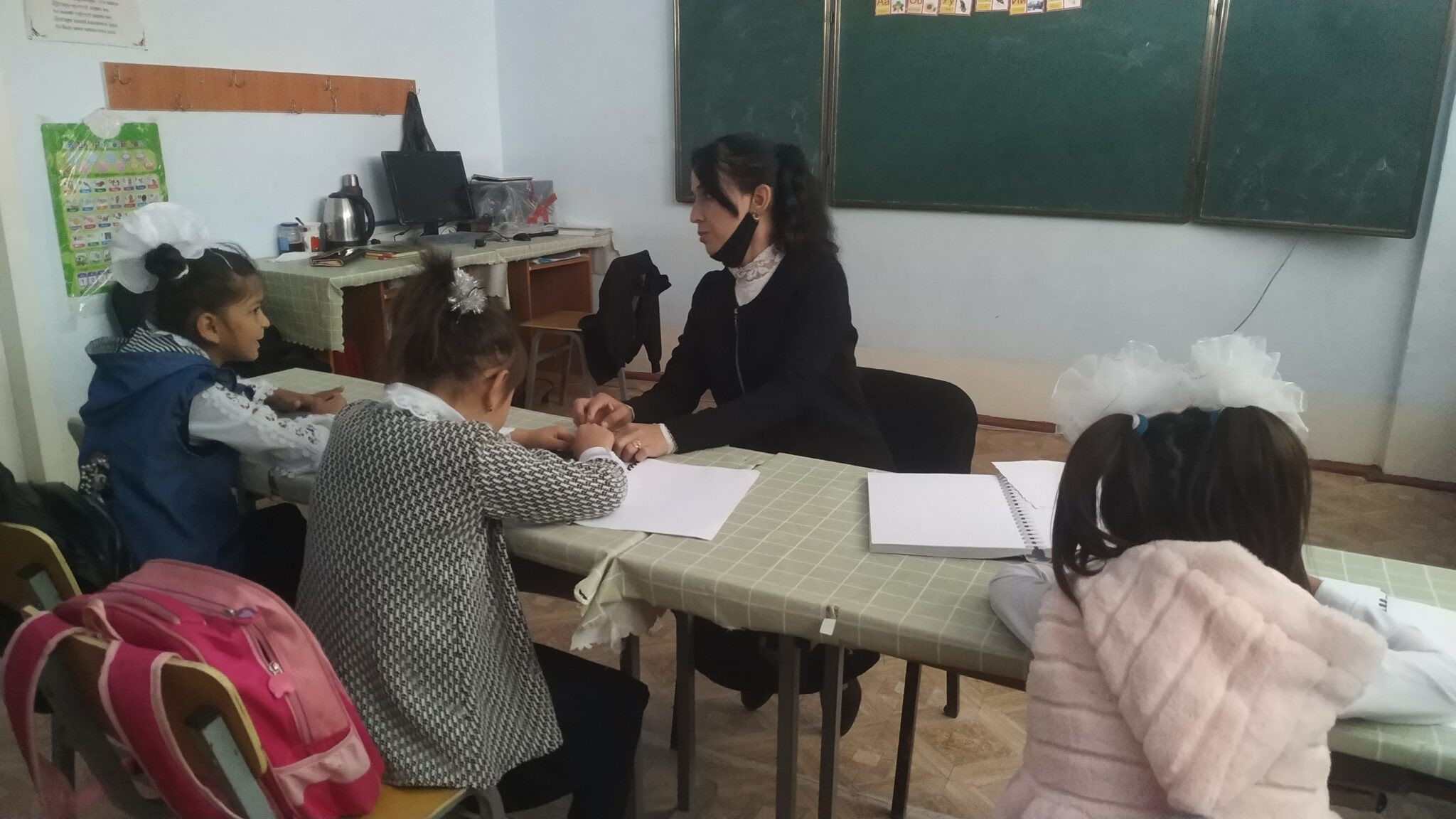 Children with Disabilities in Remote Regions of Tajikistan Have No Access to Quality Education Year of publication: 2023 Corporate author: CABAR.asia Parents of children with disabilities from remote villages in Khatlon Province are concerned about their children’s education conditions, but authorities say all are covered. У детей с инвалидностью в отдаленных регионах Таджикистана нет доступа к качественному образованию Year of publication: 2023 Corporate author: CABAR.asia Родители детей с инвалидностью из отдаленных сел Хатлонской области обеспокоены условиями обучения своих детей, но власти заявляют, что все они охвачены образованием.
  Почему дискриминируются незрячие педагоги? Year of publication: 2021 Author: Абдулла Абдухалилов | Дильмурад Юсупов Вовлечение незрячих учителей в систему образования необходимо для развития инклюзии в этой сфере Узбекистана. Созданы ли равные условия и возможности для педагогической деятельности? Абдулла Абдухалилов и Дильмурад Юсупов изучили проблему на основе личного опыта и успешных примеров инклюзии в педагогике.