
Resources
Explore a wide range of valuable resources on GCED to deepen your understanding and enhance your research, advocacy, teaching, and learning.
3,446 Results found
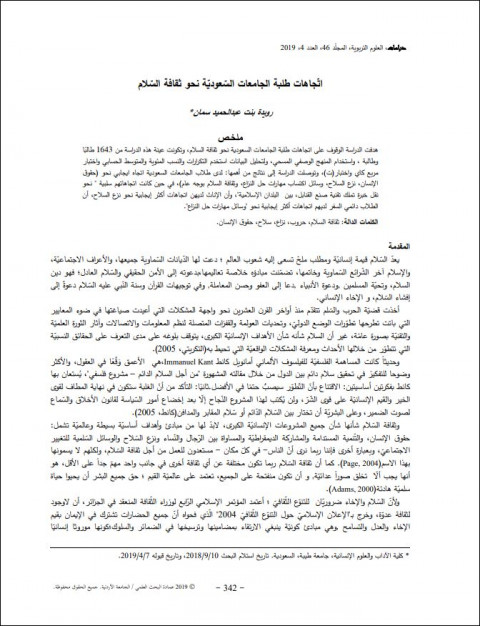 اتّجاهات طلبة الجامعات السّعوديّة نحو ثقافة السّلام Year of publication: 2019 Author: Rowaidah Abdulhameed Saman Corporate author: University of Jordan هدفت الدراسة الوقوف على اتجاهات طلبة الجامعات السعودية نحو ثقافة السلام، وتكونت عينة هذه الدراسة من 1643 طالبا وطالبة، واستخدام المنهج الوصفي المسحي، ولتحليل البيانات استخدم التكرارات والنسب المئوية والمتوسط الحسابي واختبار مربع كاي واختبار (ت)، وتوصلت الدراسة إلى نتائج من أهمها: لدى طلاب الجامعات السعودية اتجاه إيجابي نحو (حقوق الإنسان، نزع السلاح، وسائل اكتساب مهارات حل النزاع، وثقافة السلام بوجه عام)، في حين كانت اتجاهاتهم سلبية "نحو نقل خبرة تملك تقنية صنع القنابل، بين البلدان الإسلامية"، وأن الإناث لديهن اتجاهات أكثر إيجابية نحو نزع السلاح، أن الطلاب دائمي السفر لديهم اتجاهات أكثر إيجابية نحو "وسائل مهارات حل النزاع".
  The Role of Education Towards Enhancing the Peaceful Coexistence Culture and Devoting the Citizenship Values of Postmodern Society Year of publication: 2019 Author: Lilia Bensouilah Corporate author: Research & Development of Human Resources Center REMAH This study aims to examine the role of education in creation the peaceful coexistence culture, promote opportunities for cosmopolitan openness to the other, preserve mutual respect and legitimize culture of difference, tolerance and pluralism of religions, beliefs and ideologies away from all manifestations of intolerance, hatred and destructive conflicts that violate human rights. دور التعليم في تعزيز ثقافة التعايش السلمي وتكريس قيم المواطنة في سياق مجتمع ما بعد الحداثة Year of publication: 2019 Author: Lilia Bensouilah Corporate author: Research & Development of Human Resources Center REMAH تركز الورقة على تحليل دور التعليم وبحث المجهودات العالمية والمساعي الدولية في سياق مجتمعي لما بعد الحداثة نحو تعزيز ثقافة التعايش السلمي وتكريس قيم المواطنة بما يتوافق مع المنظور الحقوقي الإنساني، وما ينبثق عنه من احترام وتقبل لتعددية واختلاف المذاهب والأديان والأيديول وجيات والثقافات بعيدا عن كل مظاهر التعصب الفكري المذهبي والعرقي والذي يمكن أن يهيأ بيئة محفزة لنشوب النزاعات المسلحة والصراعات المدمرة المنتهكة الكيان الحقوقي للبشرية قاطبة.
 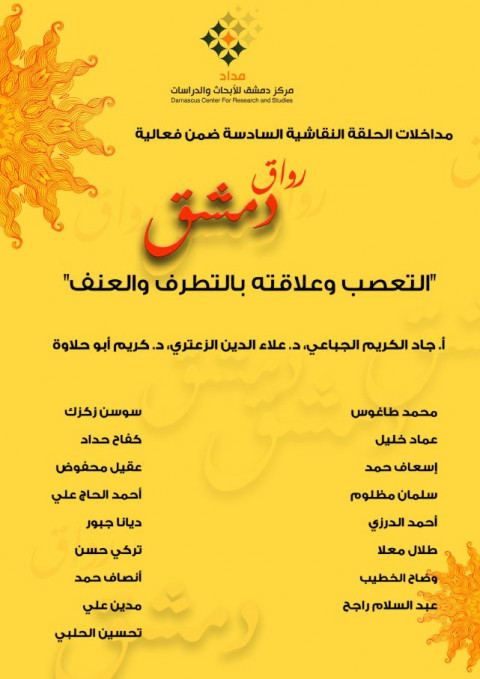 Intolerance and Its Relationship to Extremism and Violence Year of publication: 2017 Author: Jad Al-Karim Al-Jabaei | Aladdin Zaatari | Karim Abu Halawa Corporate author: Damascus Center for Research and Studies This document is a set of research papers discussing intolerance and its relationship to extremism and violence. In this production, the researchers tried to shed light on one of the issues facing societies, which is intolerance. التعصب وعلاقته بالتطرف والعنف Year of publication: 2017 Author: Jad Al-Karim Al-Jabaei | Aladdin Zaatari | Karim Abu Halawa Corporate author: Damascus Center for Research and Studies مجموعة من الأوراق البحثية تناقش التعصب وعلاقته بالتطرف والعنف. حاول الباحثون في هذا الانتاج تسليط الضوء على واحد من القضايا التي تواجه المجتمعات وهو التعصب.
  The Role of the Teacher in Spreading the Culture of Peace among Secondary School Students in Riyadh Year of publication: 2015 Author: Ali bin Saad Al-Qahtani Corporate author: Fayoum University The study aimed to identify the role of the teacher in spreading the culture of peace among secondary school students in the city of Riyadh, and to clarify the statistically significant differences among the sample members in relation to the role of the teacher in spreading the culture of peace among secondary school students in Riyadh from the point of view of students and teachers. The study population included all day public high school students and teachers in the city of Riyadh, which numbered (51044) students and (3564) teachers. دور المعلم في نشر ثقافة السلام لدى طلاب المرحلة الثانوية بمدينة الرياض Year of publication: 2015 Author: Ali bin Saad Al-Qahtani Corporate author: Fayoum University هدفت الدراسة إلى التعرف على دور المعلم في نشر ثقافة السلام لدى طلاب المدارس الثانویة في مدینة الریاض، وتوضیح الفروق ذات الدلالة الإحصائیة أفراد العینة بالنسبة لدور المعلم في نشر ثقافة السلام لدى طلاب المدارس الثانویة بالریاض من وجهة نظر الطلاب والمعلمین. وشمل مجتمع الدراسة جمیع طلاب ومعلمي المرحلة الثانویة العامة الحكومیة النهاریة بمدینة الریاض، والبالغ عددهم ( ٥١٠٤٤ ) طالبًا و( ٣٥٦٤ ) معلمًا، وطبقت الدراسة على عینة عشوائیة عنقودیة، تكونت من ( ٦٠٠ ) طالبًا، و( ٣٦٠ ) معلمًا.
  Manuscript Heritage of Uzbekistan and Its Current State Year of publication: 2021 Author: Asror Abdukhakimov The study of the cultural and educational heritage of past centuries, developed by the entire history of mankind, is one of the main tasks in the construction of a new society and its culture, because only accurate knowledge of culture and science created by the entire development of mankind, and their processing can build a progressive culture. Of particular importance in this is the study of medieval written sources, which are one of the main sources of information about the historical past of people. Рукописное наследие Узбекистана и его современное состояние Year of publication: 2021 Author: Asror Abdukhakimov Изучение культурно-просветительского наследия прошлых веков, выработанного всей историей человечества, является одной из основных задач в постройке нового общества и его культуры, ибо только точным знанием культуры и науки, созданной всем развитием человечества, только их переработкой можно строить прогрессивную культуру. Особое значение в этом имеет исследование средневековых письменных источников, которые являются одним из основных источников сведений об историческом прошлом народов.
  Backtalk: The Participatory Film and Its Residency in the Space of Cultural Violence and Creative Education towards a Conceptual Understanding of Peace Year of publication: 2017 Author: Ruchika Gurung Corporate author: Mahatma Gandhi Institute of Education for Peace and Sustainable Development (MGIEP) Cultural violence is defined as the beliefs, attitudes and values that justify structural and direct violence (Galtung 1990). It dulls us into seeing exploitation and repression as normal or in not actively witnessing it, and the media plays a vital role in its dissemination. Media and in particular film studies occupies a space through which notions of culture, ideology, peace and violence are negotiated.While the observational approach to film is well established in education, participatory filmmaking as an educational tool is what this paper addresses, with reference to concepts of cultural violence and peace education.This paper uses Brantmeier’s (2011) five stage model, that encourages social and cultural change towards a future that is nonviolent, sustainable and renewable, and Bery’s (2003) conceptualisation of empowerment to propose that participatory film functions as a transformative creative process and challenges notions of identity and culture while helping learners describe the world around them (Zembylas & Bekerman 2013).Through analysing existing cases in the field of participatory video (Schwab-Cartas & Mitchell 2014), the author argue that participatory film functions as a tool for creative education practices that promotes a more hands-on approach to raising awareness about cultural violence and engaging with identity formation, and as a creative tool for knowledge creation and dissemination.