
Resources
Explore a wide range of valuable resources on GCED to deepen your understanding and enhance your research, advocacy, teaching, and learning.
3,226 Results found
 Analysis of the 2015 Revised Korean Languages Curriculum in Terms of the OECD Education 2030 Competencies (Journal of Curriculum and Evaluation; Vol. 23. No. 3) Year of publication: 2020 Author: Jongyun Kim | Hyounjin Ok | Jaeyoon Cho Corporate author: Korea Institute for Curriculum and Evaluation (KICE) The purpose of this study is to analyze the characteristics of the Korean language curriculum through curriculum content mapping (CCM) in the OECD Education 2030 project, which is later compared with the international curricular of the national languages. The CCM framework consists of a “competency code” that presents OECD competencies and a “content code” that contains the content of the curriculum. In this study, the degree of the competencies in the Korean language curriculum is analyzed and compared with the international curricular in terms of the OECD perspective. The result is analyzed as follows. First, foundational literacies of Korean were similar to the international national language curricular. Second, in the competencies of skills, attitudes and values, “problem-solving” and “learning about learning” were higher in the Korean language curriculum than the OECD average, “critic thinking” was similar to, and “persistence” was lower than the OECD average. Third, in terms of key concepts, both “student agency” and “co-agency” were higher in the Korean language curriculum. Fourth, “creating values” and “solving dilemmas” in terms of the degree of reflection of CCM framework competency related to transformational competencies, the Korean Language was higher than the average of OECD member countries in terms of “creating new values” and “resolving tensions and dilemmas” were higher but “taking responsibilities” were lower than the OECD countries. Fifth, the competencies in the compound literacies were also compared. These comparison results provide as reference materials that describes the suitability of the Korean language curriculum and contributes to future revisions of the Korean language curriculum for the students in 2030s. 2015 개정 국어과 교육과정의 OECD Education 2030 역량 반영 양상 분석 (교육과정평가연구; Vol. 23, No. 3) Year of publication: 2020 Author: 김종윤 | 옥현진 | 조재윤 Corporate author: 한국교육과정평가원 본 연구는 2015 개정 국어과 교육과정과 OECD가 새롭게 제안한 Education 2030 역량틀을 비교하는 교육과정 매핑(curriculum mapping)을 통해 우리 국어과 교육과정의 특성을 분석하고, OECD Education 2030 프로젝트로부터 향후 국어과 교육과정의 설계 및 실행을 위한 시사점을 파악하는 데 목적이 있다. 이를 위해 OECD 교육과정 내용 매핑(CCM) 프레임워크에 반영된 국어과와 OECD 참여국의 자국어 교과의 역량 반영 정도를 비교하였으며, 그 결과는 다음과 같다. 첫째, 기초 소양은 국어과와 OECD 2030 역량 반영 정도가 유사하였다. 둘째, 기능, 태도, 가치 중 국어과는 ‘문제해결력’과 ‘학습에 대한 학습’에서는 OECD 참여국 평균보다 높으나, ‘비판적 사고’는 유사하게, ‘끈기/회복력’은 OECD 참여국 평균보다 낮게 나타났다. 셋째, 주요 개념 측면에서 국어과는 ‘학생 주도성’과 ‘협력적 주도성’에서 모두 OECD 참여국 평균보다 높았다. 넷째, 변혁적 역량에서 국어과는 ‘새로운 가치 창조하기’와 ‘긴장과 딜레마 해소하기’에서는 OECD 참여국 평균보다 높으나 ‘책임감 가지기’는 낮게 나타났다. 다섯째, 복합 소양 반영 정도에서 국어과는 ‘미디어 리터러시, 컴퓨팅 사고력/프로그래밍/코딩’에서 OECD 참여국 평균보다 높게 나타났으나, ‘기업가 정신, 금융 소양, 글로벌 역량, 지속 가능한 발전을 위한 소양’은 OECD 참여국 평균보다 낮았다. 이러한 비교는 추후 국어과 적용(활용)의 적합성과 정합성을 검토할 근거 자료, 현장교사들의 교육과정 재구성의 타당성 근거, 타 교과와의 융합 교육을 실시할 때의 근거, 교육과정을 개정할 때 추구하는 인재상, 핵심역량, 목표와 내용(성취기준) 등을 구체화하여 문서화하는 참고 자료가 된다는 점에서 시사하는 바가 있다.
  차기 교육과정과 평화・세계시민교육 Year of publication: 2021 Corporate author: 한국교육과정평가원 2021년 2월 16일 유네스코 아태교육원과 한국교육과정평가원이 공동 개최한 온라인 토론회 “차기 교육과정과 평화·세계시민교육” 자료집이다. 2015 개정 교육과정에서 ‘평화와 세계시민성’을 강화하기 위한 방안 및 논의 내용을 정리하였다.
  학교 수준 민주시민교육을 위한 교육과정 개선 방안 Year of publication: 2020 Author: 장의선 | 김기철 | 박진용 | 박태준 | 이인태 | 강대현 | 정윤미 Corporate author: 한국교육과정평가원 본 연구의 목적은 먼저 세계화가 이미 일상화 된 21세기의 학생들에게 요구되는 민주시민성을 폭넓게 성찰하고, 이를 측정할 수 있는 민주시민성 지표를 구안한 후, 구안한 지표를 준거로 민주시민성 인식 및 교육과정 현황 등 민주시민교육 관련 주요 실태와 요구를 분석하여, 민주시민교육 강화를 위한 교육과정 개선안을 도출하는 데 있다.
  지속가능발전교육을 위한 국가·사회적 요구 조사 Year of publication: 2021 Author: 권영락 | 이미숙 | 김혜숙 | 유은정 | 김찬국 Corporate author: 한국교육과정평가원 본 연구의 목적은 생태 위기 및 환경 문제에 대응하고 지속가능발전을 이루기 위해 학교교육의 방향에 대한 국가·사회적 인식 및 요구를 파악하는 것이다. 본 연구는 ‘지속가능발전교육을 위한 국가·사회적 요구 조사’라는 취지에 맞게 학생, 교사, 학부모, 교육전문가 등 교육 관계자들을 대상으로 한 인식 및 실태 조사에 중점을 두고 있다. 이에 주요 연구 내용은 지속가능발전교육에 관한 교육 관계자들의 인식과 실태를 조사하고, 이를 토대로 지속가능발전교육의 개선 방향을 위한 정책 제언을 탐색하는 것이다.본 저작물은 한국교육과정평가원에서 2021년 작성하여 공공누리 제 1유형으로 개방한 ‘지속가능발전교육을 위한 국가·사회적 요구 조사 (권영락; 이미숙; 김혜숙; 유은정; 김찬국)’ 를 이용하였으며 해당 저작물은 한국교육과정평가원(https://www.kice.re.kr/)에서 무료로 다운받으실 수 있습니다.
  미래교육 전망: UNESCO 교육의 미래와 OECD 교육 2030을 중심으로 Year of publication: 2022 Author: 김미경 Corporate author: 한국교육과정평가원 본 연구는 변화하는 미래 사회를 대비하기 위해 UNESCO 교육의 미래와 OECD 교육 2030을 비교하여 미래 교육을 전망하고, 이에 따른 향후 우리나라 교육의 방향을 모색하고 정책을 제언하는 것을 목적으로 한다. 이를 위해 2021년 발간된 UNESCO 교육의 미래 보고서의 주요 내용을 살펴보고, OECD 교육 2030과 미래 학교교육 시나 리오에서 제시한 미래 교육 내용을 UNESCO 교육의 미래와 비교 분석하여 시사점을 도출하였다. 또한 이를 토대로 한국의 미래 교육이 나아가야 할 방향과 제언을 제시하였다.
 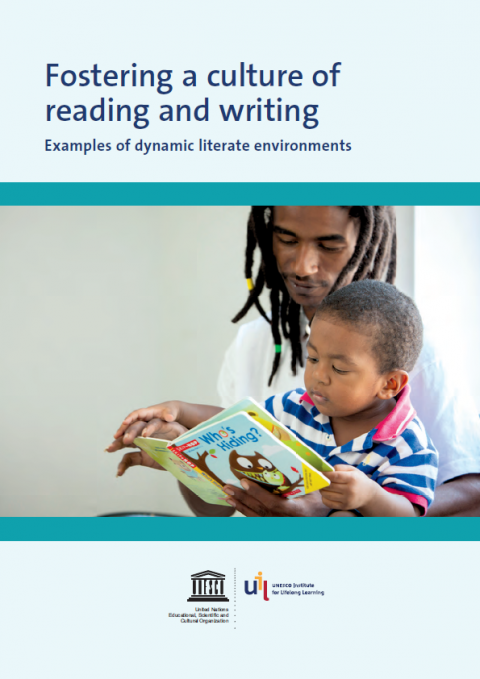 Fostering a culture of reading and writing: examples of dynamic literate environments Year of publication: 2017 Author: Hanemann, Ulrike | Krolak, Lisa Corporate author: UNESCO Institute for Lifelong Learning (UIL) The examples of literacy programmes showcased and analysed in this publication confirm the critical role of literate environments. They have been selected from UNESCO’s Effective Literacy and Numeracy Practises Database (LitBase), which UIL develops on a continuous basis. They demonstrate first and foremost how the development of literate environments can positively influence people’s motivation to (re-)engage in literacy and learning and how they can practise their newly acquired skills in their daily activities to reach sustainable skills levels. In addition, they reveal successful strategies towards a culture of reading, writing and learning in the family, community or wider society. The examples reflect different contexts, such as families, libraries and prisons, to illustrate the potential of ICTs, intergenerational approaches, and community, mobile and prison libraries to engage young people and adults in literacy and learning. Créer des cultures de la lecture, de l'écriture et de l'apprentissage Year of publication: 2017 Author: Hanemann, Ulrike | Krolak, Lisa Corporate author: UNESCO Institute for Lifelong Learning (UIL) Les exemples de programmes d'alphabétisation présen-tés et analysés dans cette publication confirment le rôle déterminant des environnements alphabétisés. Ils sont tirés de la base de données Pratiques efficaces d'alpha-bétisation (LitBase) de l'UNESCO, que UIL développe en permanence. Ils démontrent, d'abord et avant tout, com-ment la mise en place d'environnements alphabétisés peut influencer positivement une personne et la pousser à se (re)mettre à l'alphabétisation et à l'apprentissage, mais aussi comment l'apprenant peut pérenniser ses acquis en les appliquant à ses activités quotidiennes. En outre, ils révèlent des stratégies efficaces pour créer une culture de la lecture, de la lecture et de l'apprentissage au sein de la famille, de la communauté ou de la société. Les exemples incluent divers contextes – familles, biblio-thèques et prisons – pour illustrer la capacité des TIC, des approches intergénérationnelles et des bibliothèques communautaires, mobiles et carcérales à encourager jeunes et adultes à s'alphabétiser et à apprendre.
 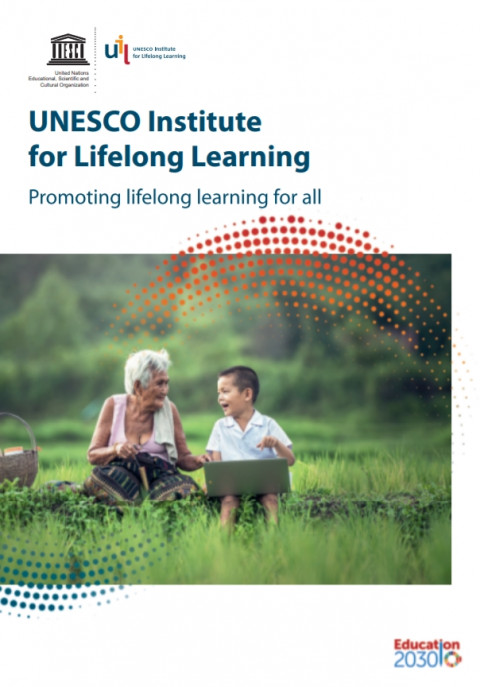 UNESCO Institute for Lifelong Learning: promoting lifelong learning for all Year of publication: 2019 Corporate author: UNESCO Institute for Lifelong Learning (UIL) The UN’s 2030 Agenda for Sustainable Development is our guide to action. Leaving no one behind is at the centre of this global planof action for people, planet and prosperity. The 2030 Agenda for Sustainable Development consists of 17 Sustainable Development Goals (SDGs). UIL has a special responsibility for supporting countries to ‘ensure inclusive and equitable quality education and promote lifelong learning opportunities for all’ (SDG 4). But we are also charged with realizing the potential contribution of lifelong learning to the other 16 SDGs. In today’s fast-changing world, where social, economic and political contexts are being constantly reshaped, learning must be continuous and lifelong, for everyone.
  Towards CONFINTEA VII: adult learning and education and the 2030 Agenda Year of publication: 2019 Corporate author: UNESCO Institute for Lifelong Learning (UIL) The CONFINTEA VI Mid-Term Review (MTR) Conference took place in Suwon and Osan, Republic of Korea, in October 2017. Stakeholders from 95 UNESCO Member States assessed progress in implementing the Belém Framework for Action (BFA) and discussed the next steps. The BFA, which was adopted by delegates at the Sixth International Conference on Adult Education (CONFINTEA VI) in Belém, Brazil, in December 2009, records the commitments of Member States and presents a strategic guide for the future development of adult learning and education (ALE) within the perspective of lifelong learning. This publication constitutes the third outcome document of the conference. It provides an overview of the main thematic debates. The chapters follow the conference themes and aim to illustrate or underpin the main arguments and way forward set out in the Suwon-Osan Statement.