
Resources
Explore a wide range of valuable resources on GCED to deepen your understanding and enhance your research, advocacy, teaching, and learning.
518 Results found
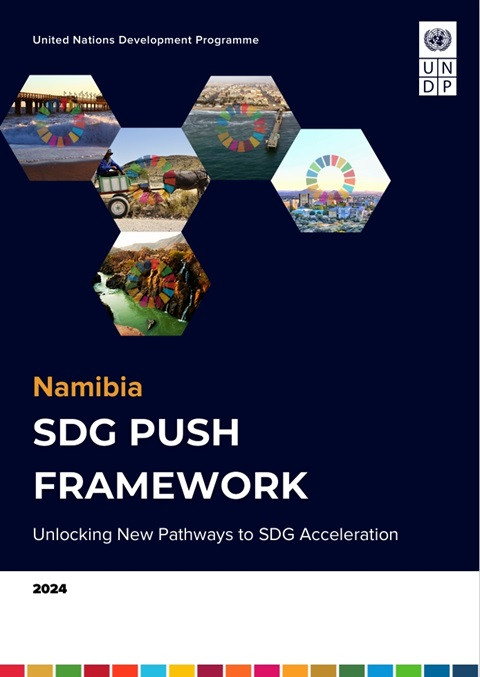 Namibia SDG Push Framework: Unlocking New Pathways to SDG Acceleration Year of publication: 2024 Corporate author: United Nations Development Programme (UNDP) SDG Push is about realizing development ambition and redefining how we build acceleration pathways. It helps pinpoint policy choices that ‘move the needle’ towards the achievement of the Sustainable Development Goals. A UNDP flagship initiative, SDG Push uses digital and data innovation, systems thinking, and futures approaches to provide a comprehensive and country-specific tool to plan and implement SDG breakthroughs in a variety of development contexts. SDG Acceleration Pathways, specific to context and need, were co-created in collaboration with Indonesia, Moldova, Namibia, Peru and South Africa. These pilots helped to refine the SDG Push approach and the digital SDG Push Diagnostic and formed the foundation of the Integrated SDG Insights Reports, presented at the 2023 SDG Summit. This integrated, modular approach includes the analysis of development trends and priorities with data visualization, integrating generative dialogue, foresight methods and economic modelling to assess the impact of potential accelerators.
 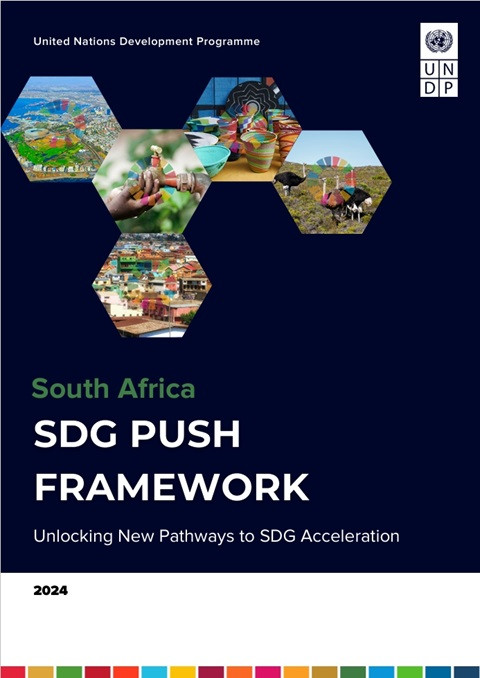 South Africa SDG Push Framework: Unlocking New Pathways to SDG Acceleration Year of publication: 2024 Corporate author: United Nations Development Programme (UNDP) SDG Push is about realizing development ambition and redefining how we build acceleration pathways. It helps pinpoint policy choices that ‘move the needle’ towards the achievement of the Sustainable Development Goals. A UNDP flagship initiative, SDG Push uses digital and data innovation, systems thinking, and futures approaches to provide a comprehensive and country-specific tool to plan and implement SDG breakthroughs in a variety of development contexts. SDG Acceleration Pathways, specific to context and need, were co-created in collaboration with Indonesia, Moldova, Namibia, Peru and South Africa. These pilots helped to refine the SDG Push approach and the digital SDG Push Diagnostic and formed the foundation of the Integrated SDG Insights Reports, presented at the 2023 SDG Summit. This integrated, modular approach includes the analysis of development trends and priorities with data visualization, integrating generative dialogue, foresight methods and economic modelling to assess the impact of potential accelerators.
 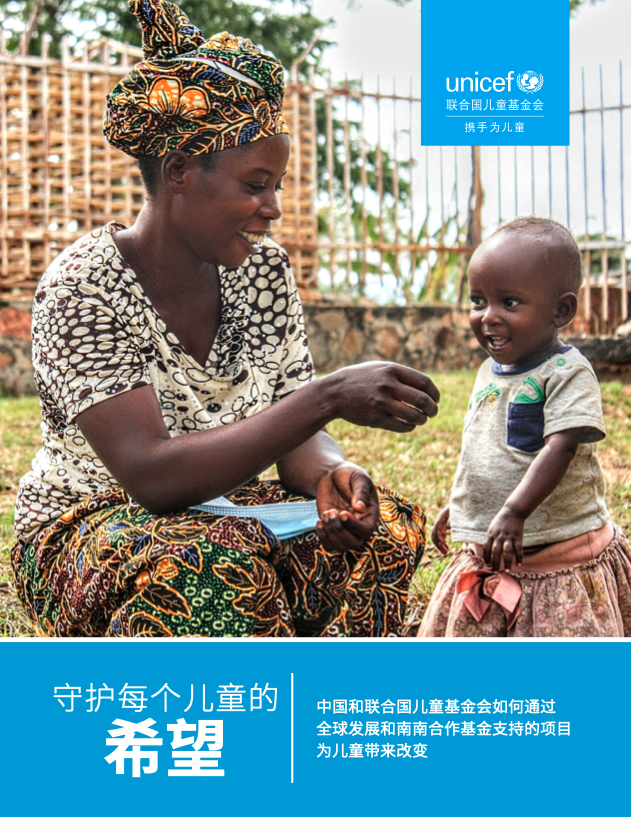 守护每个儿童的希望 Year of publication: 2023 Author: 联合国儿童基金会驻华办事处 联合国儿童基金会和中国政府在中国建立了长期合作伙伴关系,在其他伙伴国家也已开始合作,携手促进世界各地儿童权利保护工作。双方不仅在中国通过连续实施九个国别方案开展合作,自2018年以来,双方还通过南南合作,共同援助中低收入国家最弱势的儿童群体。本案例研究汇编详细介绍了通过全球发展和南南合作基金资助的17个项目,联合国儿童基金会和15个非洲国家的政府如何为儿童的生活带来改变,凸显了中国与联合国儿童基金会在儿童事业方面取得的合作成果。我们希望通过分享相关案例促进学习交流,为合作伙伴和其他相关人士提供参考借鉴,从而为每个孩子的生存和赋权点亮新的希望。
  Global Kids Online: Comparative Report Year of publication: 2019 Author: Sonia Livingstone | Daniel Kardefelt-Winther | Marium Saeed Corporate author: UNICEF Innocenti The internet is often celebrated for its ability to aid children’s development. But it is simultaneously criticized for reducing children’s quality of life and exposing them to unknown and unprecedented dangers. There is considerable debate about when or how children’s rights – including the rights to expression, to privacy, to information, to play and to protection from harm, as set out in the United Nations Convention on the Rights of the Child – may be realized or infringed in the digital age.With more children around the world going online every day, it is more important than ever to clarify how the internet can advance children’s opportunities in life while safeguarding them from harm or abuse. This requires evidence, from children themselves, that represents the diversity of children’s experiences at the national and global levels. By talking to children, we are better able to understand not only the barriers they face in accessing the internet, but also the opportunities they enjoy and the skills and competences they acquire by engaging in these activities.This allows us to enquire about children’s exposure to online risks and possible harms, and about the role of their parents as mediators and sources of support. In bringing children’s own voices and experiences to the centre of policy development, legislative reform and programme and service delivery, we hope the decisions made in these spheres will serve children’s best interests.
 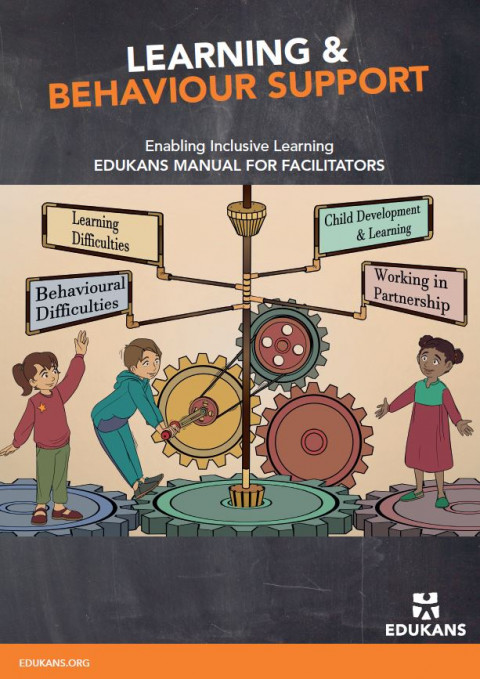 Learning & Behaviour Support: Enabling Inclusive Learning; Edukans Manual for Facilitators Year of publication: 2021 Author: Hendrien Maat | Judith Pietersma | Aniek Santema Corporate author: Edukans This Edukans training manual is intended as a guide to train people in how to respond to the needs of students with learning and behavioural problems, such as dyslexia, dyscalculia, lack of motivation, aggression and anxiety. Troubled behaviour is often a child's way of communicationg distress and, in these cases, the right kind of response can make all the difference. Behavioural and learning difficulites are well-recognized problems all over the world, and inclusive learning is on top of the educational agenda. When a person has more knowledge about learning & behavioural difficulties, he or she can understand the situation that the child is facing and offer suitable suport. This manual aims to help programme managers and trainers to give training to their staff in: understanding the diverse needs of vulnerable students, the origins of learning and behavioural problems, their implications, and a variety of effective support strategies and interventions. The manual is meant to be used by master trainers who can further train teachers, social workers, NGO staff, mentors, relief workers, government officials, mental health workers, and counselors.
 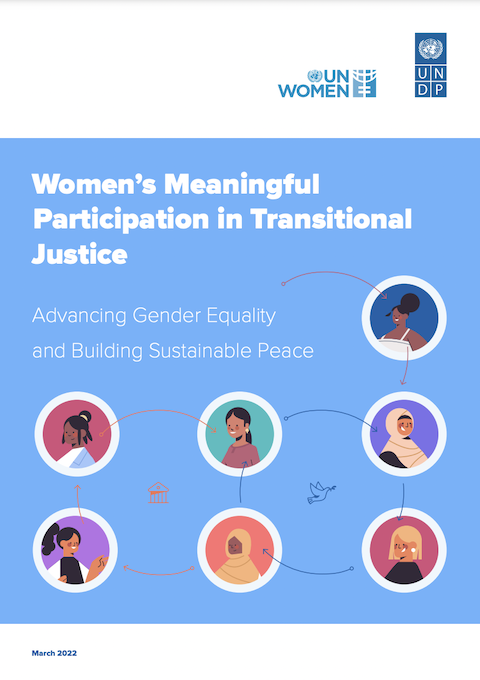 Women’s Meaningful Participation in Transitional Justice: Advancing Gender Equality and Building Sustainable Peace Year of publication: 2022 Author: Lorena Mellado | Emily Kenney | Hariwa Adil Corporate author: United Nations Entity for Gender Equality and the Empowerment of Women (UN Women) | United Nations Development Programme (UNDP) This detailed research paper explores what women’s meaningful participation in transitional justice means and “looks like” in policy and practice. It focuses specifically on women and addressing the unique barriers to women’s meaningful participation in transitional justice processes as a result of gender-based discrimination.This publication reviews the current policy framework and assertions for women’s meaningful participation in transitional justice and highlights critical gaps between policy and practice. The research paper suggests a definition for women’s meaningful participation in transitional justice, as well as typologies of women stakeholders and roles that women play within transitional justice.
 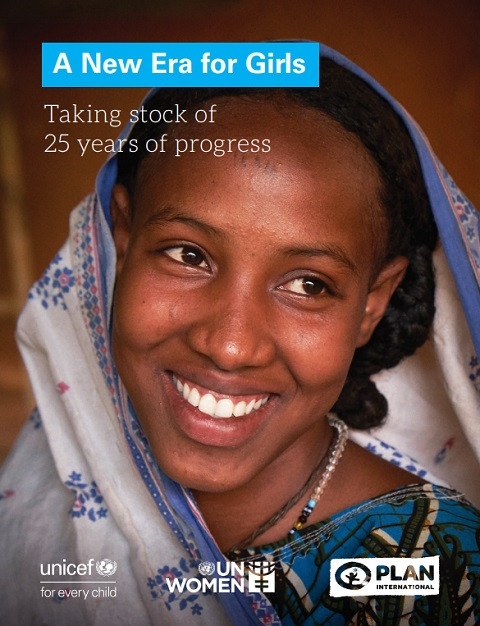 A New Era for Girls: Taking Stock on 25 Years of Progress for Girls Year of publication: 2020 Corporate author: United Nations Children's Fund (UNICEF) | United Nations Entity for Gender Equality and the Empowerment of Women (UN Women) | Plan International The analysis presented in this report demonstrates that while girls' lives are better today than they were 25 years ago, the gains are uneven across all regions. The report calls on global, national and regional stakeholders to expand opportunities for girls and young women to be the changemakers and designers of the solutions to their challenges and opportunities; invest in the skills development of adolescent girls so they can compete in today's labour market; improve girls' health and nutrition; and end violence in all its forms against them.
  Turning Promises into Action: Gender Equality in the 2030 Agenda for Sustainable Development Year of publication: 2018 Corporate author: United Nations Entity for Gender Equality and the Empowerment of Women (UN Women) “Turning promises into action: Gender equality in the 2030 Agenda for Sustainable Development” provides a comprehensive and authoritative assessment of progress, gaps and challenges in the implementation of the Sustainable Development Goals (SDGs) from a gender perspective. This report monitors global and regional trends in achieving the SDGs for women and girls based on available data, and provides practical guidance for the implementation of gender-responsive policies and accountability processes. As a source of high-quality data and policy analysis, the report is a key reference and accountability tool for policymakers, women’s organizations, the UN system, and other stakeholders. Traduire les promesses en actions : L’égalité des sexes dans le Programme de développement durable à l’horizon 2030 Year of publication: 2018 Corporate author: United Nations Entity for Gender Equality and the Empowerment of Women (UN Women) « Traduire les promesses en actions : l’égalité des sexes dans le Programme de développement durable à l’horizon 2030 » offre une évaluation exhaustive et fiable des progrès, des manquements et des difficultés dans la mise en œuvre des Objectifs de développement durable (ODD) dans une perspective de genre. Ce rapport analyse, sur la base des données disponibles, les grandes tendances mondiales et régionales dans la réalisation des ODD pour les femmes et les filles, et offre des conseils pratiques pour la mise en œuvre de politiques et de processus de responsabilisation sensibles au genre. En tant que source de données et d’analyse des politiques de grande qualité, le rapport constitue une référence et un outil de responsabilisation clé pour les décideurs politiques, les organisations de femmes, le système des Nations Unies, et d’autres parties prenantes. Hacer las promesas realidad: La igualdad de género en la agenda 2030 para el desarrollo sostenible Year of publication: 2018 Corporate author: United Nations Entity for Gender Equality and the Empowerment of Women (UN Women) “Hacer las promesas realidad: La igualdad de género en la Agenda 2030 para el Desarrollo Sostenible” presenta una evaluación exhaustiva y fidedigna de los avances, dificultades y posibilidades de la aplicación de los Objetivos de Desarrollo Sostenible (ODS) desde una perspectiva de género. El informe hace seguimiento de las tendencias mundiales y regionales con miras a la consecución de los ODS para las mujeres y las niñas sobre la base de los datos disponibles, y ofrece orientación práctica para la ejecución de políticas sensibles al género y los consiguientes procesos de rendición de cuentas. Como fuente de análisis de alta calidad de datos y políticas, el informe es una referencia e instrumento de rendición de cuentas esencial para responsables de la formulación de políticas, organizaciones de mujeres, el sistema de las Naciones Unidas y otras partes interesadas.