
Resources
Explore a wide range of valuable resources on GCED to deepen your understanding and enhance your research, advocacy, teaching, and learning.
3,378 Results found
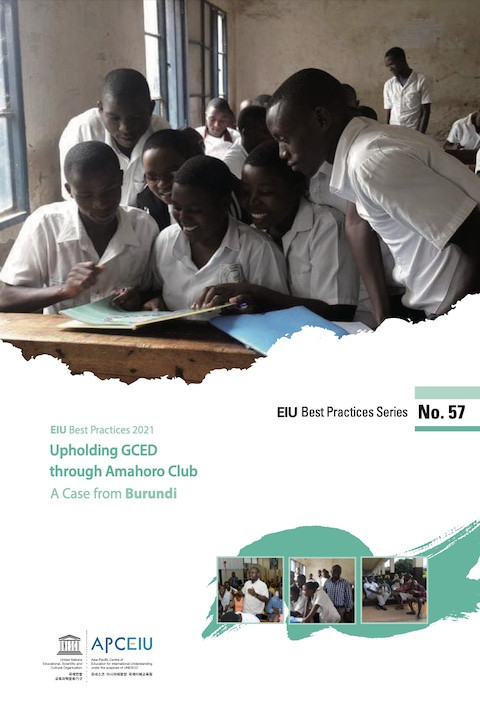 EIU Best Practices 2021: Upholding GCED through Amahoro Club; A Case from Burundi (EIU Best Practices Series; no.57) Year of publication: 2021 Author: Sinai Bakanibona Corporate author: APCEIU This monograph is one of APCEIU's EIU Best Practices Series, which aims to encourage educators, scholars, and activists to implement and share local initiatives on EIU. The Series No.57 introduces ‘Amahoro Clubs’ which means Peace Education Clubs. It is a project that has been initiated in other secondary schools of Burundi in terms of consolidating culture of peace and stability in Burundian society by applying different concepts of Global Citizenship Education in our life. This programme influence positively different social stratifications of people to know how to live together and be united by facing diverse challenges which can somber the population in violent conflicts. Amahoro Clubs serve as a platform in which people become aware of the various social issues. Students and teachers are gaining the necessary knowledge and skills that will help prevent the occurrence of conflicts.
 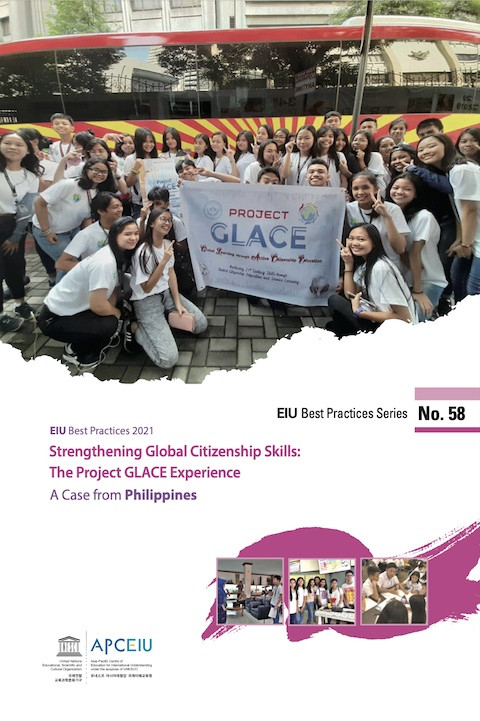 EIU Best Practices 2021: Strengthening Global Citizenship Skills; The Project GLACE Experience, A Case from Philippines (EIU Best Practices Series; no.58) Year of publication: 2021 Author: Marco Meduranda Corporate author: APCEIU This monograph is one of APCEIU's EIU Best Practices Series, which aims to encourage educators, scholars, and activists to implement and share local initiatives on EIU. The Series No.58 introduces ‘Project GLACE’ or ‘Global Learning through Active Citizenship Education’. It is an after-school enhancement program that sought to enhance students' global citizenship skills through afterschool learning sessions, off-campus intercultural education experiences, and service-learning or community outreach activities. Using the 4-I's (Inquire, Investigate, Innovate and Impact), selected teachers taught global citizenship education concepts for a span of 12 - 15 weeks with the first six to ten weeks exploring the themes of social justice and equity, identity and diversity, self-awareness and reflection, concern for the environment, commitment to sustainable development, and commitment to participation and inclusion.
 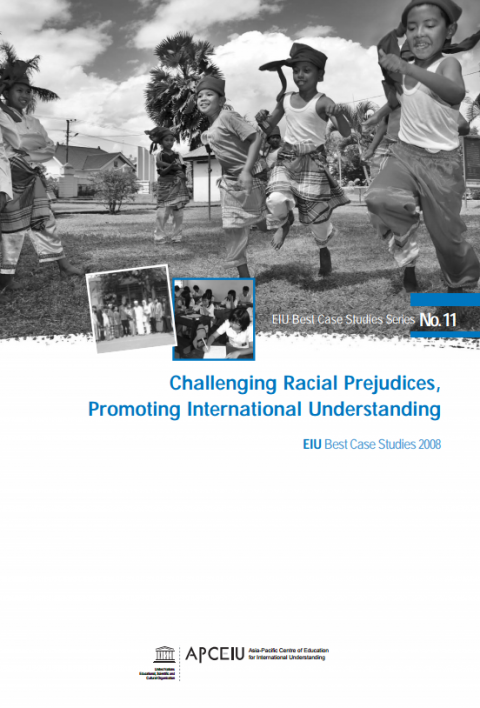 EIU Best Practices Series No. 11: Challenging Racial Prejudices, Promoting International Understanding Year of publication: 2008 Corporate author: APCEIU This monograph is one of APCEIU's EIU Best Practices Series, which aims to encourage educators, scholars, and activists to implement and share local initiatives on EIU. The Series No.11 introduces a case study of the SMA Taman Harapan High School in Indonesia, conducted to explore prevalent issues of racial prejudices and devise methods to reduce racism. Research revealed that students held a degree of racist perception against people of certain heritage. Activities were conducted thenceforth, allowing participants to have direct and extended interactions with people of different cultures. Despite the short timeframe of the activity, perception on stereotypes did not change altogether, yet progress was evident in students’ understanding of the severity of the issue. As educators also learned ways to help alleviate the problem of racism, the case is an exemplary example of increasing cultural awareness and international understanding.
  EIU Best Practices Series No. 19: Culture-Based Education Programme for Indigenous Children & Youth in the Philippines Year of publication: 2010 Author: Benjamin David Abadiano Corporate author: APCEIU This monograph is one of APCEIU's EIU Best Practices Series, which aims to encourage educators, scholars, and activists to implement and share local initiatives on EIU. The Series No.19 introduces the Pumulaan program, a successful culture-based education programme for indigenous children and youth in the Philippines. The program is similar to that of Tugdaan, a widely recognized education program that promote learning for the Indigenous people. The Pumulaan program focuses on providing culturally sensitive, appropriate, and relevant education to students in Mangyan Tribe in Mindoro and the Matigsalog Tribe in Mindanao, incorporating values of peace, harmony, and diversity within the education programs.
 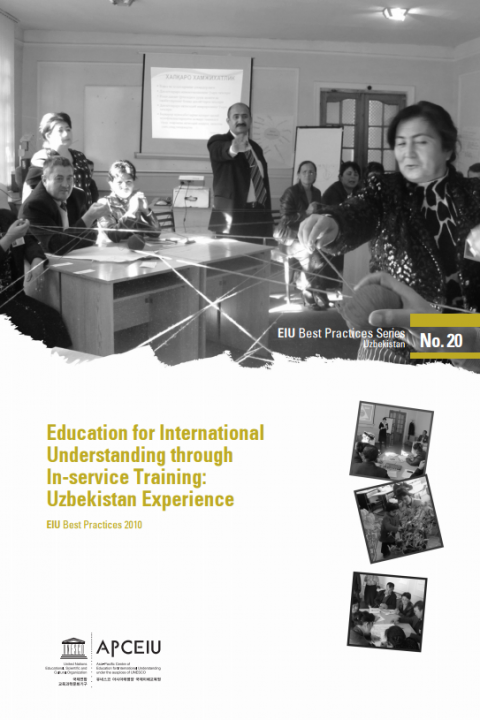 EIU Best Practices Series No. 20: Education for International Understanding through In-service Training: Uzbekistan Experience Year of publication: 2010 Author: Mukhamadjon Aliyev Corporate author: APCEIU This monograph is one of APCEIU's EIU Best Practices Series, which aims to encourage educators, scholars, and activists to implement and share local initiatives on EIU. The Series No.20 introduces EIU projects undertaken by the Avloni In-Service Teacher Training Institute in Uzbekistan. The programme integrates EIU concepts into the public education through in-service training programs, promotes EIU concepts in different subjects and projects, and broadcasts good practices in the field of global citizenship education nationwide. Although it is still in the process of improvement, the programme is expected to raise awareness of EIU and empower education managers, principals and teachers in Uzbekistan.
  EIU Best Practices Series No. 21: EIU School-based Initiatives in Bhutan Year of publication: 2010 Author: Rinzin Wangmo Corporate author: APCEIU This monograph is one of APCEIU's EIU Best Practices Series, which aims to encourage educators, scholars, and activists to implement and share local initiatives on EIU. The Series No.21 introduces the case of Yonphula Lower Secondary School in Trashigang, Bhutan, which successfully incorporated EIU principles into the existing curriculum. With the Gross National Happiness (GNH) principle as Bhutan’s educational framework, EIU can fit easily to the academic settings and system. The case highlights activities, such as providing non-formal education for illiterate parents, and counseling services, health programs, and meditation programs to students, in exemplifying how innovative school activities can optimize the GNH framework for the promotion of EIU.
 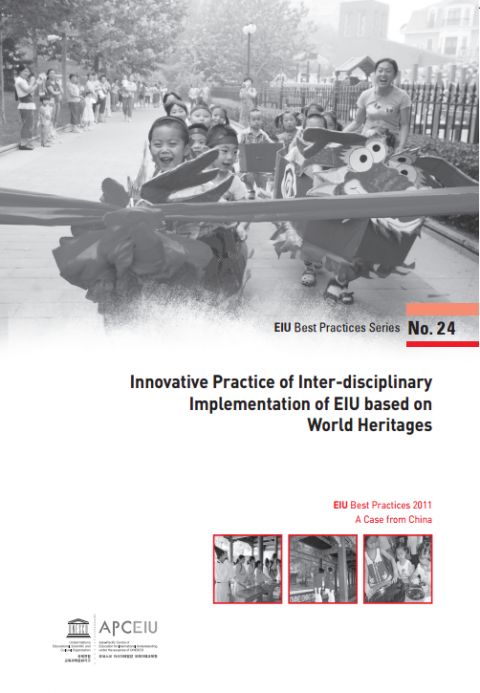 EIU Best Practices Series No. 24: Innovative Practice of Inter-disciplinary Implementation of EIU based on World Heritages Year of publication: 2011 Author: QIAN Lixia Corporate author: APCEIU This monograph is one of APCEIU's EIU Best Practices Series, which aims to encourage educators, scholars, and activists to implement and share local initiatives on EIU. The Series No.24 introduces a research undertaken by the Research Center for ESD, which outline projects that can be implemented to explore and promote education for international understanding and world heritage. To test the effectiveness, the Center carried out activities such as role-playing discussions and hands-on festival experiences at four kindergartens of the Huijia Education Organization and the High School Affiliated to the Renmin University of China. Overall, such initiative increased multicultural awareness of students and teachers alike, and affirmed commitment for further research and development.
 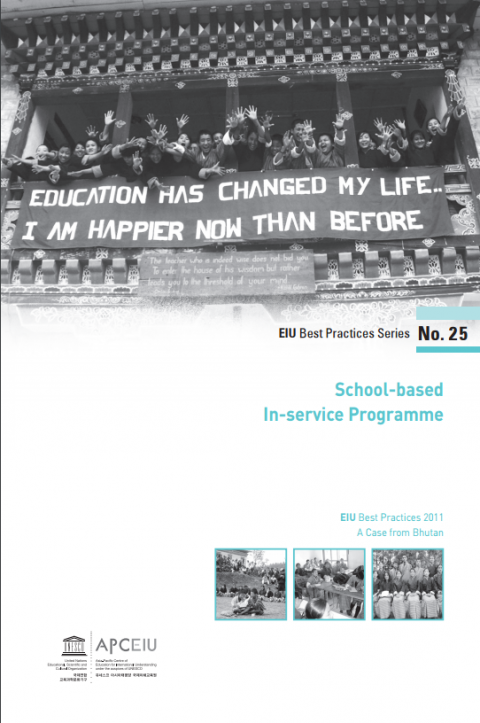 EIU Best Practices Series No. 25: School-based In-service Programme Year of publication: 2011 Author: Yeshi Pemo Corporate author: APCEIU This monograph is one of APCEIU's EIU Best Practices Series, which aims to encourage educators, scholars, and activists to implement and share local initiatives on EIU. The Series No.25 introduces the case of the Damphu Lower Secondary School in Bhutan, which carried out a number of initiatives to promote culture of peace and EIU through workshops, literary activities, and contests for students, teachers, parents, and nation-wide UNESCO clubs. The case showcases that the educators’ aspirations toward education for peace can be achieved through the combination of excellent school leadership, strong commitment, high competency, and available resources.
  2016 한-유네스코 펠로우십 프로그램 최종보고서 Year of publication: 2016 Corporate author: 유네스코 아시아태평양 국제이해교육원 본 보고서는 2016년 9월 1일부터 10월 31일까지 열린 ‘2016 한-유네스코 펠로우십 프로그램’에서이루어진 활동 내용과 성과물에 대한 요약을 담고 있다. 올해 10회를 맞이하는 본 프로그램에는 아시아태평양 및 아프리카 17개국 25명의 교육자들이 참가하였으며, 두 달간 기초교육, ICT교육(e-러닝), 세계시민교육 및 소녀교육의 4가지 주제영역에 대한 참가자들의 이해 증진과 역량강화를 위한 연수로 진행되었다. 이 보고서를 통해, 다양한 주제관련 강의, 워크숍, 현장학습활동, 교육자료 개발 프로젝트 등으로 이루어진 이 프로그램의 내용과 참가자들의 교육현장에서 의미 있게 적용될 수 있는 결과물과 실행계획 등 성과에 대한 내용을 살펴볼 수 있다. 문의: 유네스코 아태교육원 교육연수실(ent@unescoapceiu.org)
 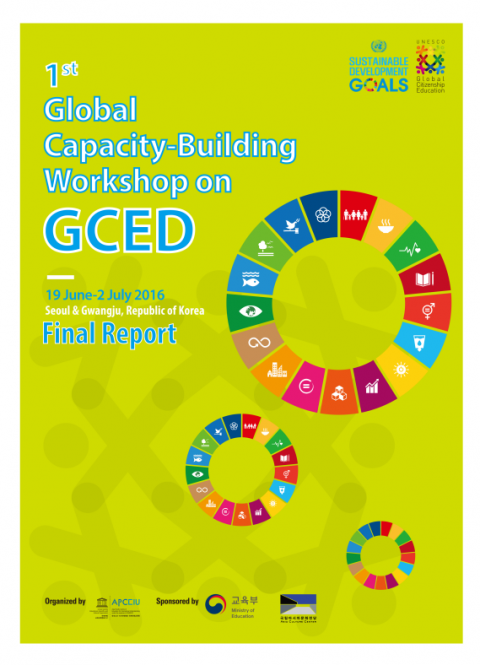 Final Report: 1st Global Capacity-Building Workshop on GCED Year of publication: 2016 Corporate author: APCEIU This report provides an overview of the activities carried out during the 1st Global Capacity-Building Workshop on GCED held in Seoul and Gwangju, Republic of Korea from 19 June - 2 July, 2016. APCEIU organized the 1st Global Capacity-Building Workshop on GCED in collaboration with UNESCO in order to contribute to achieving the Sustainable Development Goals(SDGs) target 4.7 by enhancing the capacity of teacher educators and trainers in implementing GCED. This intensive 2-week workshop provided the participating educators with the opportunities to better understand the concept and internalize the pedagogical principles of GCED while sharing their experiences and working on collaborative action plans. For more information, please contact APCEIU's Office of Education and Training at ent@unescoapceiu.org.