
Resources
Explore a wide range of valuable resources on GCED to deepen your understanding and enhance your research, advocacy, teaching, and learning.
3,435 Results found
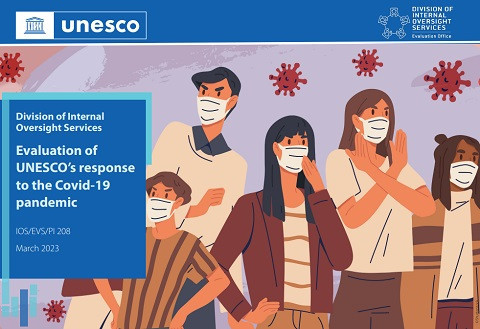 Evaluation de la riposte de l’UNESCO à la pandémie de COVID-19 Year of publication: 2023 Corporate author: Organisation des Nations Unies pour l'éducation, la science et la culture (UNESCO) Le présent rapport d’évaluation contient les conclusions tirées d’une évaluation complète de la manière dont l’Organisation des Nations Unies pour l’éducation, la science et la culture (UNESCO) s’est adaptée et a répondu à la pandémie de coronavirus 2019 (COVID-19). Il rend compte de la réponse programmatique de l’UNESCO dans tous ses secteurs, et en évalue la pertinence et l’efficacité. Il examine également l’efficacité avec laquelle l’Organisation s’est adaptée pour assurer la continuité de ses opérations tout au long de la pandémie. Axée sur l’apprentissage, l’évaluation a permis de dégager une série d’enseignements et de mettre en évidence les innovations les plus précieuses apportées durant la pandémie. Le présent rapport énonce cinq recommandations visant à guider l’UNESCO vers la pérennisation des innovations les plus efficaces et le renforcement de la résilience de ses activités et de ses programmes en cas de crise.
 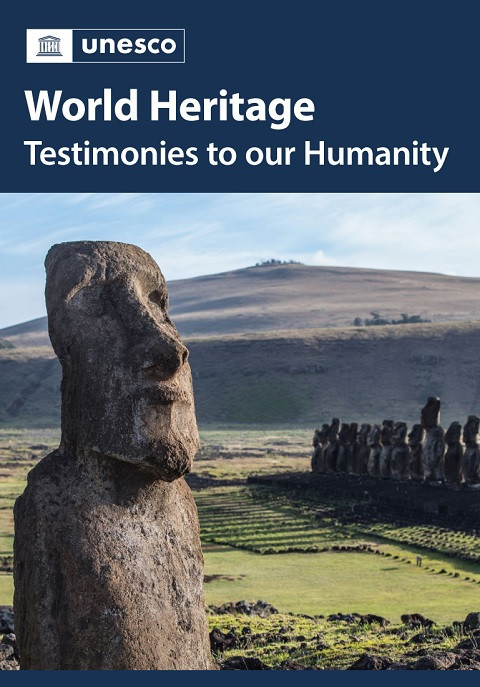 World Heritage: Testimonies to Our Humanity Year of publication: 2022 Corporate author: UNESCO The Convention for the Protection of the Cultural and Natural Heritage is an international agreement based on the principle that some places on Earth embody outstanding universal value that should be part of the shared heritage of humankind. UNESCO recognizes cultural and natural sites of outstanding universal value, and protects them for the benefit of all. As a basis for mutual understanding and dialogue, the responsibility for protecting our shared heritage requires cooperation among all States Parties as well as civil society, local communities and the private sector. The idea of reconciling the conservation of cultural sites with that of natural sites originated in the United States of America. A White House conference in Washington, D.C., in 1965 called for the creation of a “World Heritage Foundation” that would stimulate international cooperation to protect “the most extraordinary places, landscapes, and historic sites for the present and future of all mankind.” In 1968, the International Union for Conservation of Nature (IUCN) made similar proposals to its members. These proposals were presented at the United Nations Conference on the Human Environment in Stockholm in 1972. Eventually, all parties concerned agreed on a single text. The Convention concerning the Protection of the World Cultural and Natural Heritage was adopted by the General Conference of UNESCO on 16 November 1972. In recognizing both cultural and natural aspects of heritage, the Convention reminds us of the interaction between human beings and nature and the fundamental need to preserve the balance between the two. Evaluation of UNESCO’s response to the Covid-19 pandemic Year of publication: 2023 Corporate author: UNESCO This evaluation report summarises the findings of a comprehensive evaluation on how UNESCO has adapted and responded to the Covid-19 pandemic. It describes and assesses the relevance and effectiveness of UNESCO’s programmatic response across all of its Sectors, and reviews how efficiently the Organization adapted itself to ensure business continuity during the pandemic. With an overall focus on learning, the evaluation identified a series of lessons and useful innovations made during the pandemic. The report’s five recommendations aim to guide UNESCO towards sustaining useful innovations and further increasing the crisis resilience of its operations and programme.
  UNESCO Guidance for the World Heritage ‘No-Go’ Commitment: Global Standards for Corporate Sustainability Year of publication: 2022 Corporate author: UNESCO UNESCO World Heritage properties are cultural, natural and mixed sites of outstanding universal value (OUV) that exemplify some of humanity’s most exceptional heritage and treasures on our planet. They cover over a thousand properties in all regions of the world and it is the duty of the international community as a whole to cooperate on their protection. UNESCO World Heritage sites provide major benefits to our society and help safeguard ecosystem services and cultural resources vital for human well-being. Yet the threats to UNESCO World Heritage sites have been rising steadily for decades, including those arising from harmful industrial and infrastructure projects, extractive activities such as mining, oil and gas and large hydropower projects, among others. In view of these significant threats, several leading companies and financial institutions have committed to protect World Heritage by respecting them as ‘no-go’ areas. UNESCO World Heritage sites are protected under international law as humanity’s legacy to future generations and, as such, merit particular attention in corporate policies and business conduct. However, there is wide variation in the nature and strength of sustainability policies and due diligence processes. This guidance was developed to assist companies to develop comprehensive strategies for World Heritage as part of their efforts to measure and manage environmental, social and governance risks. Orientations de l’UNESCO relatives à l’engagement de respecter les sites du patrimoine mondial en tant que zones d’exclusion : recommandations mondiales pour le développement durable des entreprises Year of publication: 2022 Corporate author: Organisation des Nations Unies pour l'éducation, la science et la culture (UNESCO) Les biens du patrimoine mondial de l’UNESCO sont des sites culturels, naturels et mixtes d’une valeur universelle exceptionnelle (VUE) qui sont représentatifs du patrimoine et des trésors les plus exceptionnels de l’humanité sur notre planète. Ils recouvrent plus d’un millier de biens dans toutes les régions du monde et il incombe à la communauté internationale toute entière de coopérer pour en assurer la protection. Les sites du patrimoine mondial de l’UNESCO apportent de nombreux bénéfices à notre société et aident à préserver les services écosystémiques et les ressources culturelles indispensables au bien-être humain. Pourtant, les menaces qui pèsent sur les sites du patrimoine mondial de l’UNESCO n’ont cessé d’augmenter depuis des décennies, notamment celles qui découlent de projets industriels et d’infrastructures néfastes, d’activités extractives telles que l’exploitation minière, pétrolière et gazière, et de grands projets hydroélectriques, entre autres. Au vu de ces menaces importantes, plusieurs grandes entreprises et institutions financières se sont engagées à protéger le patrimoine mondial en respectant le principe de zones d’exclusion (« no-go areas »). Les sites du patrimoine mondial de l’UNESCO sont protégés par le droit international en tant que legs de l’humanité aux générations futures et, à ce titre, ils méritent qu’une attention particulière leur soit octroyée par les entreprises dans leurs politiques et leur conduite. Cependant, la nature et le poids des politiques de durabilité et des procédures de diligence raisonnable varient considérablement. Les présentes orientations ont été conçues pour aider les entreprises à élaborer des stratégies globales relatives au patrimoine mondial dans le cadre de leurs efforts pour mesurer et gérer les risques environnementaux, sociaux et de gouvernance. 教科文组织 世界遗产 “禁入”承诺指南: 企业可持续性全球标准 Year of publication: 2022 Corporate author: UNESCO 教科文组织世界遗产地是具有突出普遍价值的文化、自然和混合遗产地,体现出人类在地球上最杰出的一些遗产和珍宝。它们涵盖世界各个地区的一千多处遗产,整个国际社会都有责任合作保护这些遗产。世界遗产地给我们的社会带来了巨大惠益,有助于保护对人类福祉至关重要的生态系统服务和文化资源。 然而,几十年来,世界遗产面临的威胁逐渐增加,包括有害的工业和基础设施项目、采矿和油气开采等采掘活动以及大型水电项目等造成的威胁。鉴于这些重大威胁,一些龙头企业和金融机构已承诺保护世界遗产,将其作为“禁入”区域加以尊重。 世界遗产地作为人类留给后代的遗产,受到国际法律保护,因此在企业政策和商业行为中值得特别关注。然而,在可持续性政策和尽职调查程序的性质和力度方面存在着很大差异。制定本指南,旨在协助企业制定全面的世界遗产战略,作为衡量和管理环境、社会和治理风险工作的一部分。
 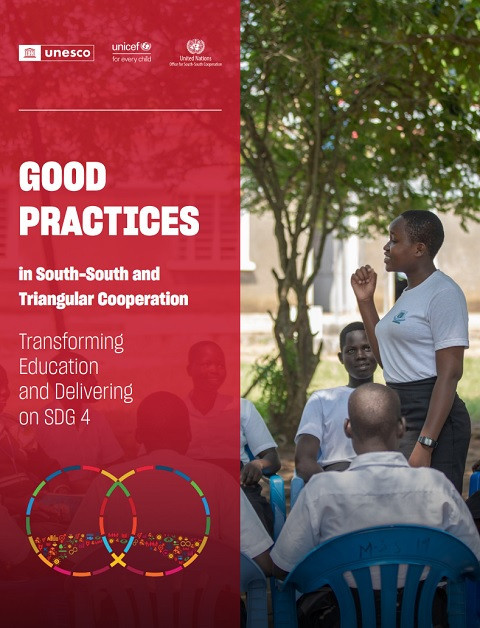 Good Practices in South-South and Triangular Cooperation: Transforming Education and Delivering on SDG 4 Year of publication: 2023 Corporate author: UNESCO | United Nations Children's Fund (UNICEF) | UN. Office for South-South Cooperation (UNOSSC) Quality Education: South-South cooperation as a lever for action. This publication showcases 40 innovative solutions on how South-South and Triangular Cooperation can transform education.South-South and triangular cooperation is at the heart of SDG4 implementation on Quality Education. As demonstrated in the last few years, this kind of cooperation can mobilize action, ambition, solidarity and solutions to transform education in a rapidly changing world. From the inclusive approach to digital learning in Lao People’s Democratic Republic to distance learning and teacher training strategies in Caribbean SIDS, South-South cooperation is a key modality of cooperation for transforming education and supporting internationally agreed development goals, including the 2030 Agenda. This publication showcases 40 innovative solutions on how South-South and Triangular Cooperation can transform education.This publication presents forty innovative solutions from around the world which showcase how South-South and triangular cooperation can support the development of more efficient, equitable and resilient education systems that are adapted to the challenges of the 21st century. Countries of the South, with the support of partners, must enhance South-South and triangular cooperation to exchange resources, technology, skills and knowledge to realize the promise of making inclusive, quality education available to all.
  World Heritage Online Map Platform: Technical Note on the Provision of Geospatial Data Year of publication: 2023 Corporate author: UNESCO UNESCO’s World Heritage Online Map Platform (WHOMP) is a Geographic Information System (GIS) developed with the support of the Government of Flanders (Belgium), aiming at the creation of a comprehensive and accessible geodatabase for World Heritage properties worldwide. This platform is hosted and managed by UNESCO which ensures that the data presented correspond exactly to the boundaries of the World Heritage properties and their buffer zones as inscribed in the World Heritage List, including any changes adopted by the World Heritage Committee after the initial inscription of a property. Plateforme de cartes en ligne du patrimoine mondial: Note technique sur la mise à disposition de données géospatiales Year of publication: 2023 Corporate author: UNESCO La Plateforme de cartes en ligne du patrimoine mondial de l’UNESCO est un système d’information géographique (SIG) développé avec le soutien du Gouvernement flamand (Belgique) visant à créer une base de données géospatiales complète et accessible pour les biens du patrimoine mondial du monde entier. Cette plateforme est hébergée et gérée par le Centre du patrimoine mondial de l’UNESCO, qui veille à ce que les données présentées correspondent exactement aux limites des biens du patrimoine mondial et de leurs zones tampons, telles qu’inscrites dans la Liste du patrimoine mondial, en tenant compte de toute éventuelle modification adoptée par le Comité du patrimoine mondial après l’inscription initiale du bien.
  World Heritage: A Unique Contribution to Biodiversity Conservation Year of publication: 2023 Corporate author: UNESCO | International Union for Conservation of Nature (IUCN) The UNESCO World Heritage Convention is unique among international agreements as it deals with both natural and cultural heritage. By conferring one of the highest levels of protection recognized by 195 countries, it ensures a truly global commitment to safeguarding exceptional places. UNESCO natural World Heritage sites are critical for the conservation of ecosystem integrity and biodiversity. While they make up less than 1% of the Earth’s surface, they harbor more than 1/5 of mapped global species richness. This includes over 75,000 species of plants, and over 30,000 species of mammals, birds, fishes, reptiles and amphibians. Cultural World Heritage sites in particular can be an important ally in biodiversity conservation since around 20% of them are located in Key Biodiversity Areas (KBAs). UNESCO World Heritage sites also represent a safe haven for some of the most threatened species on Earth. They are estimated to protect over 20,000 globally threatened species, and are home to some of the last individuals of many iconic species. Today, up to 1/3 of remaining elephants, tigers and pandas can be found in these sites, as well as at least 1 in 10 great apes, giraffes, lions and rhinos. However, even these highly protected sites are today threatened by global climate change and human pressures, including agricultural expansion, infrastructure development, poaching, overexploitation of resources and the proliferation of invasive species. Every 1°C increase in temperature could double the number of species exposed to dangerous climate conditions. Ensuring effective and sustained protection of UNESCO World Heritage sites and surrounding landscapes is crucial for maximizing their value as a solution to tackle the current biodiversity and climate crisis. One way of achieving this is by supporting countries to integrate World Heritage into their National Biodiversity Strategies and Action Plans (NBSAPs), as they are key to implementing the Kunming-Montreal Global Biodiversity Framework (GBF).