
Resources
Explore a wide range of valuable resources on GCED to deepen your understanding and enhance your research, advocacy, teaching, and learning.
55 Results found
 Молодежь Центральной Азии: Таджикистан Year of publication: 2017 Author: Muzaffar Olimov | Shavkat Sakhibov Corporate author: Фонд имени Фридриха Эберта в Казахстане Фондом им. Фридриха Эберта был инициирован проект «Молодежь Центральной Азии». Его цель – изучение ценностей и взглядов молодых таджикистанцев, образа жизни, идентификации, политических взглядов и внешнеполитических ориентаций. По итогам проведенной работы независимым экономистом Шавкатом Сахибовым и доктором исторических наук, профессором Музаффаром Олимовым был подготовлен исследовательский аналитический отчет.
 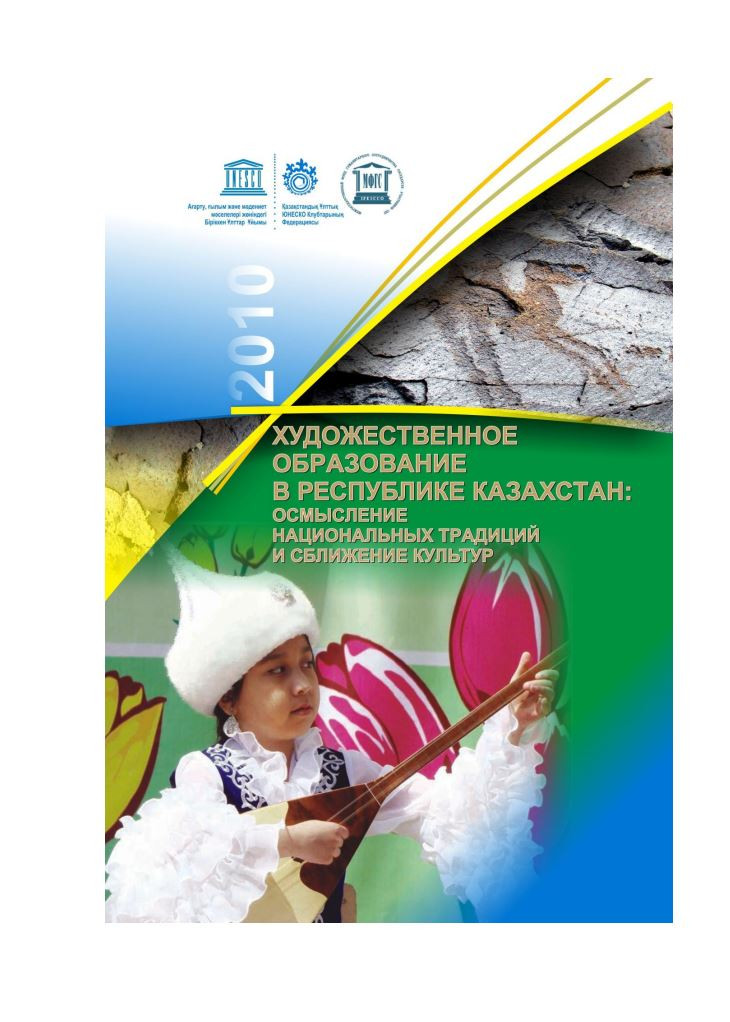 Art Education in the Republic of Kazakhstan: Perception of the National Traditions and Rapprochement of the Cultures; Research Paper Year of publication: 2010 Author: Rustam Muzafarov Kazakhstan has the unique feature of ethno-cultural diversity that appeared historically due to multi-ethnic and multi-confessional population's development. Such an environment urges the state to facilitate the revival and development of ethnic cultures and cross-cultural interaction for the benefit of national unity. The adoption of the concept of ethno-cultural education means that the creation of national education system would enhance the idea of cultural and linguistic pluralism, combining the advanced education techniques and information facilities with traditional cultural values. In fact, the educated personality feels real belonging to the historical and cultural traditions of the country. Художественное образование в Республике Казахстан: осмысление национальных традиций и сближение культур. Аналитический доклад. Year of publication: 2010 Author: Rustam Muzafarov Уникальность этнокультурного многообразия Казахстана обусловлена исторически сложившимся полиэтническим и многоконфессиональным составом населения. В таких условиях важно создание возможностей для возрождения и развития этнических культур, взаимодействия между ними в интересах общенационального единства. Принятие идеи этнокультурного образования означает создание национальной системы обучения и воспитания, базирующейся на идее культурного и лингвистического плюрализма, сочетающей мировой уровень технической и информационной оснащенности образования с традиционными культурными ценностями. Именно образование формирует причастность личности к исторической и культурной традиции.
  Some Features of the Gender Orientation of the Social Policy of the Central Asian Countries Year of publication: 2017 Author: A.D. Bekebaeva The article examines the gender-oriented social policy of Central Asian countries, its origins, features and disadvantages. Special attention is paid to the common Soviet past of the countries studied, since this period left a major imprint on the current state of gender issues in the region. Некоторые особенности гендерной ориентации социальной политики стран центральной Азии Year of publication: 2017 Author: A.D. Bekebaeva В статье рассматривается гендерно ориентированная социальная политика стран Центрльной Азии, ее истоки, особенности и недостатки. особое внимание уделено общему советскому прошлому исследуемых стран, так как этот период наложил основной отпечаток на современное состояние гендерных проблем в регионе.
 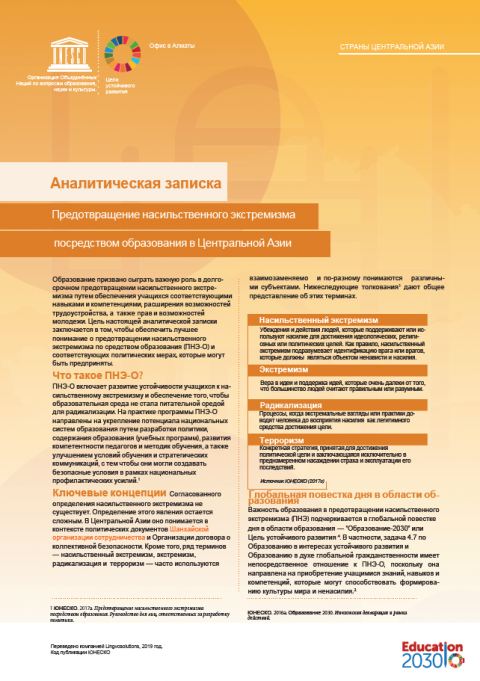 Policy Brief: Prevention of Violent Extremism Through Education in Central Asia Year of publication: 2019 Corporate author: UNESCO Almaty Education has a powerful role to play in long-term prevention of violent extremism by equipping learners with the right skills and competencies, increasing employment opportunities and empowering youth. This policy brief aims to provide a better understanding of Preventing Violent Extremism through Education (PVE-E) and the relevant policy interventions that could be taken. Аналитическая записка: предотвращение насильственного экстремизма посредством образования в Центральной Азии Year of publication: 2019 Corporate author: UNESCO Almaty Образование призвано сыграть важную роль в долго-срочном предотвращении насильственного экстре-мизма путем обеспечения учащихся соответствующими навыками и компетенциями, расширения возможностейтрудоустройства, а также прав и возможностеймолодежи. Цель настоящей аналитической записки заключается в том, чтобы обеспечить лучшее понимание о предотвращении насильственного экстремизма по средством образования (ПНЭ-О) и соответствующих политических мерах, которые могут быть предприняты.
  Overview of Central Asia on Education for Sustainable Development Year of publication: 2006 Corporate author: Regional Environmental Centre for Central Asia (CAREC) This review summarizes the great work carried out by the Central Asian countries in the framework of the implementation of the UN Decade on ESD and the CAREC EE and ESD Program, and aims to achieve significant results in the implementation of the ESD Strategy for the Ministerial Conference in Belgrade in 2007. Обзор Центральной Азии о прогрессе в области образования в интересах устойчивого развития Year of publication: 2006 Corporate author: Regional Environmental Centre for Central Asia (CAREC) Данный обзоре обобщает большую работу, проделанную странами Центральной Азии в рамках реализации Десятилетия ООН по ОУР и Программы ЦАРЭС в области ЭЭ и ОУР, и направлена на достижение значительных результатов в реализации Стратегии ОУР для Министерской конференции в Белграде в 2007 году.
 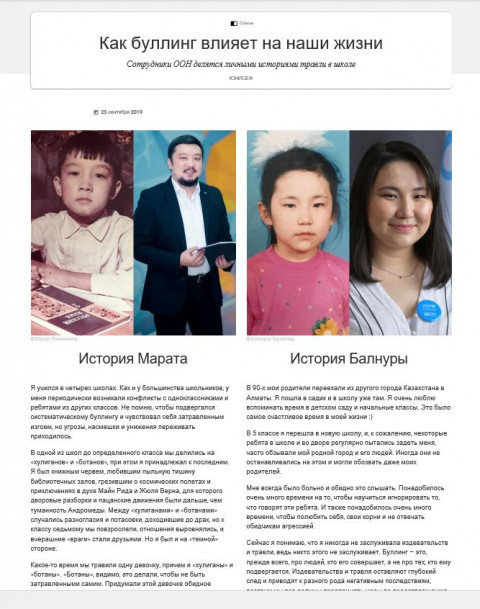 How Bullying Affects Our Lives Year of publication: 2019 Corporate author: UNICEF Kazakhstan In this article, UN staff members share personal stories showing how they dealt with bullying at school.