
Resources
Explore a wide range of valuable resources on GCED to deepen your understanding and enhance your research, advocacy, teaching, and learning.
55 Results found
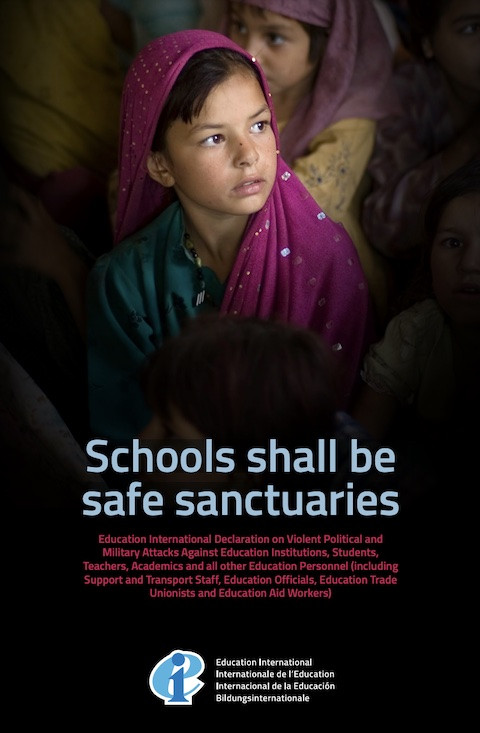 Schools Shall Be Safe Sanctuaries Year of publication: 2022 Corporate author: Education International (EI) This declaration voices the collective demand by teachers and their unions worldwide that the international community take action to ensure that education is both protected in conflicts and enabled to realize its potential as a force for peace in the world.
  The Transforming Education Summit: A Toolkit for Education Unions Year of publication: 2022 Corporate author: Education International (EI) For the first time ever, the Heads of State of the world are meeting to discuss progress in education. Convened by the UN Secretary General, the Transforming Education Summit (TES) is taking place on 19 September 2022 in New York. It is a very important opportunity for us as education unions to make our voices heard.The Summit is a crisis response: it aims to reverse the downward trends that we currently see in education, with deepened and exacerbated inequity, and cuts to education budgets. Not only is the world off track to achieve Sustainable Development Goal 4 (SDG 4), the COVID-19 pandemic has wiped out 20 years of education gains. This is why the UN Secretary-General is calling for urgent action.The Summit is the biggest international education event since the adoption of SDG4 and a significant political opportunity for all EI member organisations. There are multiple ways that education unions can engage in the lead up to the Summit.This toolkit includes EI’s key policy messages for the Summit and aims to support EI member organisations in their advocacy efforts to ensure the Summit has concrete, tangible outcomes that advance teachers’ status and rights and the fulfilment of the right to education for all.
  Are We There Yet?: Education Unions Assess the Bumpy Road to Inclusive Education Year of publication: 2018 Corporate author: Education International (EI) | Tania Principe This report is based on a global membership survey that Education International conducted in 2017-18. The report shows that while many countries have integrated the UN Conventions into their national laws, implementation is running far behind. School materials and facilities are often not accessible, teachers are not adequality supported or consulted, and there are too few education support personnel. In addition, public services are not consistently made available for families with children and youth with disabilities, which can be a major barrier to school attendance. The survey results are a wake-up call for governments to take action and show that a thorough rethinking of past policy-making and current implementation is urgently needed.
  Information Flows and Radicalization Leading to Violent Extremism in Central Asia Year of publication: 2019 Corporate author: Search for Common Ground This study was carried out as part of the regional project “Promoting Stability and Peace in Central Asia through Media Literacy, Effective Lighting and Regional Cooperation”, implemented by the Internews office and funded by the European Union. The project aims to support national and regional initiatives that help prevent radicalization in Central Asia by increasing the capacity of journalists, civic activists and media professionals in the production of high-quality media content and the level of critical media consumption of representatives of civil society, decision-makers and active citizens. Информационные потоки и радикализация, ведущая к насильственному экстремизму в Центральной Азии Year of publication: 2019 Corporate author: Search for Common Ground Данное исследование проведено в рамках регионального проекта «Содействие стабильности и миру в Центральной Азии посредством медиаграмотности, эффективного освещения и регионального сотрудничества», реализуемого офисом Интерньюс и финансируемого Европейским союзом. Проект нацелен на поддержку национальных и региональных инициатив, способствующих предотвращению радикализации в Центральной Азии через повышение потенциала журналистов, гражданских активистов и медиаспециалистов в вопросах производства качественного медиаконтента и уровня критического медиапотребления представителей гражданского общества, лиц, принимающих решения, и активных граждан.
 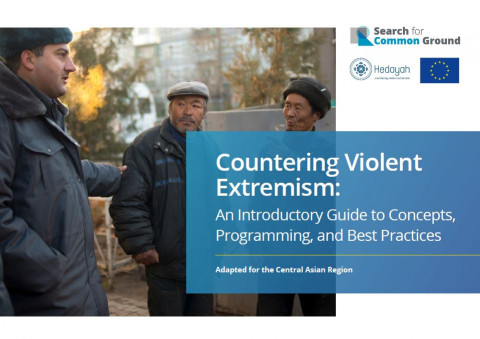 مكافحة التطرف العنيف: كتيب تمهيدي للمفاهيم والبرامج وأفضل الممارسات Year of publication: 2019 Corporate author: Search for Common Ground ان مجال مكافحة التطرف العنيف يتطور وينمو سريعاً ونحن نتعلم من الممارسة والبحث. لذلك ، فإن هذه التغييرات السريعة جعلت من الصعب على الممارسين والعاملين في هذا المجال في الحكومة أو المجتمع المدني فهم أحدث الممارسات الجيدة والدروس المستفادة.هذا المنهج / الرزمة التدريبية هي محاولة للتغلب على هذه التحديات. لذا تم إعداد هذا المنهج لتدريب العاملين في مجال مكافحة التطرف العنيف في الحكومة والمجتمع المدني ، سواء كانت لديهم خبرة سابقة ام لا. تم تصميمه في عشر وحدات تعليمية مترافقة مع مواد تدريبية بما في ذلك دليل الميسرين ، وعروض الشرائح ، ومنشورات أخرى ، بالإضافة إلى ندوات مسجلة مسبقاً عبر الإنترنت للسماح للراغبين بالحصول على هذا التدريب. هذه المواد تشمل مجموعة من الأنشطة والروابط لمقاطع من الفيديوهات التوضيحية توفر مساحة للمناقشة والتفكير.يقدم هذا المنهاج برنامجًا تدريبيًا في سياق مكافحة التطرف العنيف ورفع الوعي ذات الصلة بسياقك بطريقة يمكن الوصول إليها. فهو يسلط الضوء على فوائد النهج التشاركي التي يتجاوز استخدام التدخل والاستجابة العسكرية في سياق التطرف العنيف، بالارتكاز على الممارسات الجيدة ، ويوفر الأدوات والإرشادات للتكيف بسهولة مع السياق والثقافات المحلية. أخيرًا ، يشجع هذا البرنامج على التحديد والإكتشاف المبكر للمخاطر وتخفيفها، فضلاً عن ضمان اتباع نهج عدم الإضرار.تم إنتاج هذا المنهج التدريبي من قبل منظمة البحث عن أرضية مشتركة بالتعاون مع هداية وبتمويل من قبل الاتحاد الأوروبي من خلال البرنامج العالمي STRIVE. Countering Violent Extremism: An Introductory Guide to Concepts, Programming, and Best Practices Year of publication: 2019 Corporate author: Search for Common Ground This curriculum aims to update the best practices and experience gained in the process of countering violent extremism. The anti-violent extremism program, adapted for Central Asia, is designed to train civil servants and civil society organizations. This curriculum delivers a contextually literate countering violent extremism and awareness-raising training program that is relevant to your context in an accessible way. It highlights the benefits of collaborative approaches beyond the use of military or securitized responses to violent extremism, drawing on good practices, and offers tools and guidance for easy adaptation to your local context and cultures. Finally, it encourages the early identification and mitigation of risks with programming, as well as ensuring a Do No Harm approach.While this curriculum will offer guidance around how to design, implement, and monitor constructive responses to violent extremism, an understanding of project management is assumed. Therefore, it is not a training program on general project management skills, monitoring and evaluation, or on fundraising.Since the problem of violent extremism is complex and highly context-specific, it is also not a guide to the drivers of violent radicalization in your local context, nor does it proscribe the programs and policies that would be most effective. Instead, it introduces you to the guiding questions and tools necessary to make informed and effective choices in your own efforts to counter violent extremism. Противодействие насильственному экстремизму: Вводное руководство по концепциям, разработке программ и передовой практике Year of publication: 2019 Corporate author: Search for Common Ground Данная учебная программа направлена актуализацию передовых методов и опыта, накопленного в процессе противодействия насильственному экстремизму. Программа по противодействию насильственному экстремизму, адаптированная для Центральной Азии, предназначена для подготовки государственных служащих и работников из организаций гражданского общества. Это контекстуально грамотная и удобная для восприятия учебная программа по противодействию насильственному экстремизму и повышению осведомленности, учитывающая вашу специфику. В ней освещаются преимущества подходов к сотрудничеству, выходящих за рамки применения военных или секьюритизированных мер реагирования на насильственный экстремизм и подкрепленных передовой практикой, а также предлагаются инструменты и рекомендации для простойадаптации к вашим локальным условиям и культуре. Наконец, программа способствует раннему выявлению и смягчению рисков посредством разработки программ, а также использования подхода «Не навреди» (Do No Harm).Данная программа предлагает руководство по разработке, реализации и мониторингу конструктивных мер противодействия насильственному экстремизму, при этом также давая общее представление об управлении проектами. Таким образом, данная учебная программа не направлена на развитие общих навыков управления проектами, мониторинга и оценки или на привлечение средств. Поскольку проблема насильственного экстремизма сложна и в значительной степени зависит от локального контекста, программа также не является руководством по движущим силам радикализации в вашем местном контексте и не предлагает программы и политику, которые могли бы быть наиболее эффективными. Вместо этого программа познакомит вас с наводящими вопросами и инструментами, необходимыми для принятия обоснованных и эффективных решений в вашей работе по противодействию насильственному экстремизму.
 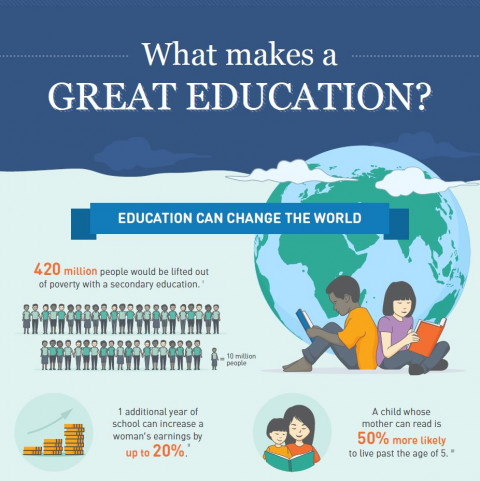 What Makes a Great Education? Year of publication: 2019 Corporate author: Global Partnership for Education (GPE) GPE works to strengthen national education systems to dramatically increase the number of children who are in school and learning.Since 2002, GPE has worked with more than 65 developing countries to improve education planning and implementation, with great results.
  Global Citizenship Education: How Much Do We Care? Year of publication: 2018 Corporate author: European confederation of Relief and Development NGOs (CONCORD) While Global Citizenship Education is recognised by many as a powerful tool to resolve the current global challenges our world is facing, the level of investment by national governments remains limited. Why is that? To answer this situation, CONCORD launches its new report “Global Citizenship Education – How much do we care?“. Based on a research across all EU Member States (+ Norway), this publication reveals the level of funding dedicated to Global Citizenship Education (GCE) in Europe between 2011 and 2015. Analysing the quantitative sources of investments by national governments as well as the qualitative narrative around GCE (How is GCE named? What is its framework of action?), this report digs into the complex world of GCE and provides a full picture of its current states in Europe. The report is composed of 2 parts:– a general overview and analysis– a comparative part made of an analysis per country of all EU member states (+ Norway), including interesting details on GCE definitions, concepts, funding trends.Strong of these analysis, the report draws conclusions and recommendations on where possible improvements at policy and advocacy level can be made.