
Resources
Explore a wide range of valuable resources on GCED to deepen your understanding and enhance your research, advocacy, teaching, and learning.
42 Results found
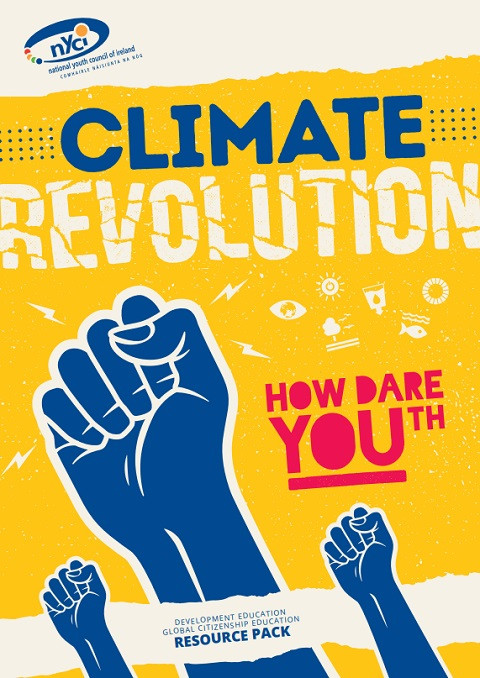 Climate Revolution: How Dare Youth; Resource Pack Year of publication: 2019 Author: Valerie Duffy | Leo Gilmartin | Valery Molay | Dermot O’Brien Corporate author: National Youth Council of Ireland (NYCI) This resource explores the issue of Climate Change and the Sustainable Development Goals. Produced as part of the national One World Week youth work programme and during an era of youth-led climate strikes, Climate Revolution contains many new and innovative activities that cover a wide range of learning levels on topics related to climate change and climate justice.It is designed for Global Educators, Youth Workers, Development Education practitioners, trainers, climate activists, changemakers of all shapes and sizes but in particular those working with the current generation of young people.
 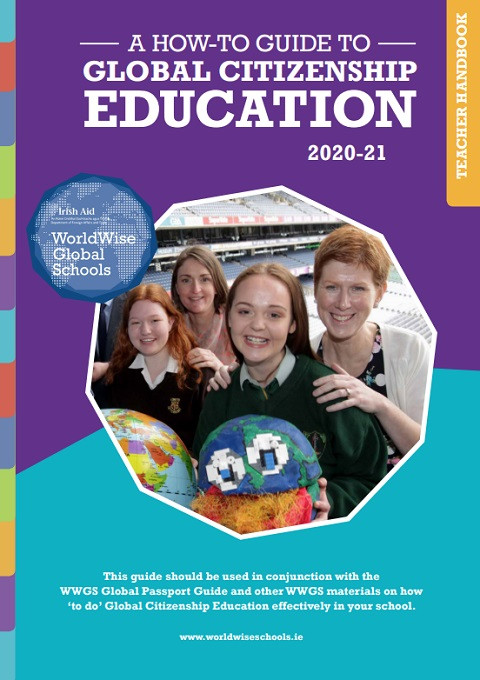 A How-To Guide to Global Citizenship Education: Teacher Handbook; 2020-21 Year of publication: 2020 Corporate author: WorldWise Global Schools (WWGS) | Irish Aid This guide is for post-primary schools that are working to embed Global Citizenship Education (GCE) into their school community, and are part of the WorldWise Global Schools (WWGS) Programme. It aims to support schools to integrate Global Citizenship Education and create global citizens in their schools. Whether you are just starting to explore, or you are experienced in Global Citizenship Education, this handbook will help to guide your GCE practice and offer some suggestions as to how you can approach your GCE work and engage with the WWGS programme.
 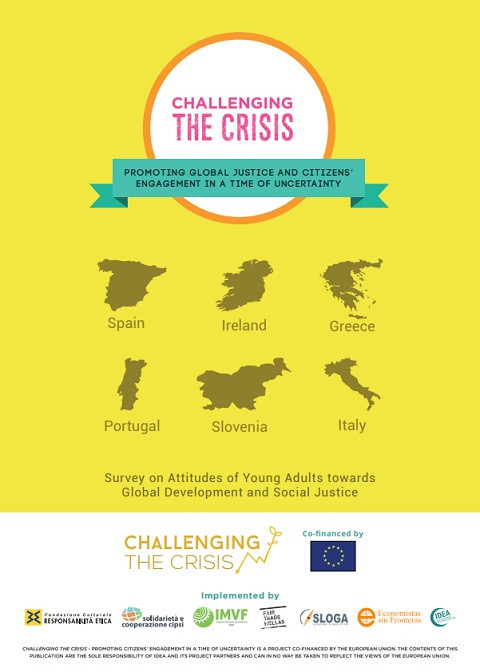 Challenging the Crisis: Promoting Global Justice and Citizens’ Engagement in a Time of Uncertainty; Survey on Attitudes of Young Adults Towards Global Development and Social Justice Year of publication: 2015 Corporate author: Irish Development Education Association (IDEA) This report outlines the views of young people, aged 15-34 from Portugal, Ireland, Italy, Greece, Spain and Slovenia, on international development, and their understanding of related concepts and issues. The aim of the research was to assess whether global solidarity and development aid are priorities for European youth in a time of economic and political crisis and high unemployment.
  Digital Technologies to Advance Global Citizenship Education in Schools Year of publication: 2020 Author: Maria Barry | Gabriela Martinez Sainz Corporate author: Dublin City University. Institute of Education. Centre for Human Rights and Citizenship Education | Trócaire How can technology be used in classrooms to advance Global Citizenship Education? That is the general question that guides the present report as a result of a research project conducted at the Centre for Human Rights and Citizenship Education in partnership with Trócaire. The overall aim of the project was to develop a knowledge base on the contribution of digital technologies (DT) to school-based GCE programmes and teaching. It consisted of a systematic review of the most recent literature and published evidence, a discussion with experts in the field of digital technologies and education, and an exploration of teacher practices in Ireland and beyond.
  Human Rights Stories: Tales of Human Rights Defenders for Primary Schools Year of publication: 2012 Author: Claire Glavey | Fiona O’Shea | Valeria Navarro Corporate author: Amnesty International Ireland | Irish Aid This resource pack has been developed by Amnesty International Ireland in consultation with an advisory and piloting group of primary school teachers. The concept for the resource pack originated with primary school teachers who identified storytelling as a powerful medium through which a range of concepts and topics can be introduced in the classroom. Human rights issues can appear daunting, distant and theoretical. Through the familiar medium of storytelling, human rights situations can be explored on a level at which children can encounter the real life impact of human rights in practice. Engaging with stories through discussion, creative thinking and character exploration develops the skill of empathy. This brings about the realisation that human rights belong to everyone and that we all have a role to play in ensuring that human rights are protected locally and globally.
  Tackling Controversial Issues in the Citizenship Classroom: A Resource for Citizenship Education Year of publication: 2012 Author: Lesley Emerson | Mary Gannon | Conor Harrison | Valerie Lewis | Anne-Marie Poynor Corporate author: City of Dublin Vocational Education Committee (CDVEC). Curriculum Development Unit | European Union (EU) The purpose of this resource is to provide teachers with the opportunity to reflect on a number of issues associated with teaching controversial issues in the classroom. It offers a practical approach which allows students to explore controversial issues which arise in citizenship and other areas of the curriculum in a way which is safe for both teacher and students.
  Equality & Diversity: Building a Culture of Equality in Our Society; A Citizenship Education Resource for Transition Year and Key Stage 4 Year of publication: 2012 Author: Mary Gannon | Aoife Ruane-Kelly Corporate author: City of Dublin Vocational Education Committee (CDVEC). Curriculum Development Unit | Centre for Cross Border Studies This resource is intended to support young people in critically exploring the concepts of equality and diversity and in acting to build a culture of equality within their own environment and within society. Looking specifically at equality and diversity within the school, community and society, the resource provides an opportunity for students to increase their knowledge and understanding of equality, develop the skills to critically analyse inequality, and become empowered to actively promote equality within their school and/or community.The resource is intended primarily for use in Citizenship Education in Transition Year (Ireland) and Key Stage 4 (Northern Ireland). As a resource on equality and diversity, it is clearly based on human rights, which underpin the citizenship curricula in both jurisdictions. It meets the aims of the KS 4 curriculum for Local and Global Citizenship by helping students:Respond to the specific challenges and opportunities which diversity and inclusion present in Northern Ireland and the wider worldIdentify and exercise their rights and social responsibilities in relation to local, national and global issuesDevelop their understanding of the role of society and government in safeguarding individual and collective rights in order to promote equality and to ensure that everyone is treated fairlyDevelop their understanding of how to participate in a range of democratic processesDevelop awareness of key democratic institutions and their role in promoting inclusion, justice and democracy.
  Action on Global Goals: Community Toolkit Year of publication: 2019 Author: Julia Haimlinger Corporate author: Global Action Plan (GAP) Ireland This toolkit aims to bring Development Education (DevEd) and Education for Sustainable Development (ESD), already established in the formal education sector, to the non-formal adult and community sector. Our toolkit is based on the idea to not have knowledge for knowledge sake, but through critical thinking and reflection we can aim to work towards taking action for positive change. For the goals to be reached, everyone needs to do their part: governments, the private sector, civil society and you! These are universal goals for all countries to be achieved. This resource pack will give you some fun and creative ideas on how to get informed about the Sustainable Development Goals, to create active global citizens and do your bit for the planet.
 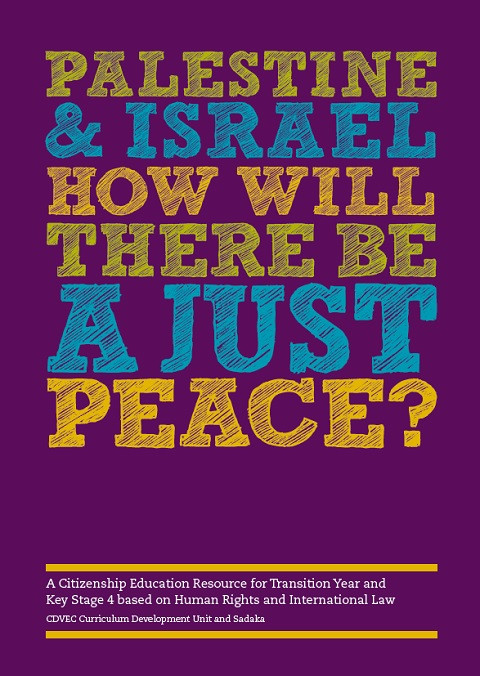 Palestine & Israel: How Will There Be a Just Peace?; A Citizenship Education Resource for Transition Year and Key Stage 4 based on Human Rights and International Law Year of publication: 2012 Author: Mary Gannon | Elaine Murtagh Corporate author: City of Dublin Vocational Education Committee (CDVEC). Curriculum Development Unit | Centre for Cross Border Studies This resource is an important development in helping post-primary students throughout the island of Ireland to explore the Palestinian Israeli situation within the context of Human Rights and International Law.The resource addresses key issues underlying the origins of the conflict and current obstacles to bringing about a just peace.
  From Volunteers to Active Citizens Year of publication: 2015 Author: Grainne O’Neil Corporate author: Comhlámh This is a practical guide for volunteer sending-organisations, which aims to build capacity to support and deepen volunteers’ ongoing learning and critical engagement with international development issues, and to help volunteers “to address the structural and underlying causes of inequality and injustice to participate in social change making.”