
Resources
Explore a wide range of valuable resources on GCED to deepen your understanding and enhance your research, advocacy, teaching, and learning.
126 Results found
 Learning-service and Citizenship Education Year of publication: 2011 Author: Josep M.ª Puig Rovira | Mònica Gijón Casares | Xus Martín García | Laura Rubio Serrano Corporate author: Universidad de Barcelona The aim of this article is to present the methodology of service learning as an especially significant contribution to citizenship education. Service learning is an activity that combines community service and curricular learning. It is an educational setup in which a circular link is formed between participation in services created to meet a community need and the learning of knowledge and values. The project presents an initiative for education in values and citizenship based on experience, participation and critique. Service learning is at the same time an excellent instrument for making education more inclusive and for helping students develop a set of basic skills that can only be acquired through a comprehensive, contextualized activity. Through service learning, students acquire a real, committed engagement with the search for the common good; this acquisition of commitment is a key formative mechanism in achieving a complete education for citizenship. The article begins by analyzing the different elements that make up citizenship education and the pedagogical means required for their acquisition. The concepts of ‘practice’ and ‘citizenship practice’ are the basis for proposing service learning as an ideal methodology for educating participative citizens who can contribute to the common good. The rest of the article is devoted to analyzing each of the constitutive aspects of service learning. This portion of the article begins by presenting a more-precise definition of ‘service learning’ and continues with an analysis of the components of service learning: social needs, the learning of contents and competences, community service, partnerships between institutions and the required networking. The article concludes by reviewing the different levels at which service learning has an impact and identifying and organizing the various personal acquisitions and institutional achievements that this type of educational activity provides. Aprendizaje-servicio y Educación para la Ciudadanía Year of publication: 2011 Author: Josep M.ª Puig Rovira | Mònica Gijón Casares | Xus Martín García | Laura Rubio Serrano Corporate author: Universidad de Barcelona El objetivo de este artículo es presentar la metodología del aprendizaje-servicio como una aportación especialmente relevante para la Educación para la Ciudadanía. El aprendizaje- servicio es una actividad que combina el servicio a la comunidad con el aprendizaje curricular. Es una propuesta educativa que vincula de una manera circular la participación en servicios pensados para satisfacer alguna necesidad de la comunidad y el aprendizaje de conocimientos y valores. Con ella, la educación en valores se pone en práctica de una manera participativa y crítica. Al mismo tiempo, también es un buen instrumento para hacer una educación más inclusiva y para desarrollar un conjunto de competencias básicas que solo pueden adquirirse a través de un trabajo global y contextualizado. Incorporar la intervención real y comprometida de los educandos en la búsqueda del bien común es un mecanismo formativo imprescindible para lograr una completa Educación para la Ciudadanía. Para lograr este objetivo, el escrito empieza analizando los distintos aprendizajes que supone la Educación para la Ciudadanía, así como los medios pedagógicos para alcanzarlos. Los conceptos de práctica y de práctica de ciudadanía permiten proponer el aprendizaje-servicio como una metodología idónea para lograr la formación de una ciudadanía participativa y capaz de contribuir al bien común. A continuación, se analizan los aspectos constitutivos del aprendizaje-servicio. Se presenta primero una aproximación más exacta a su definición y luego se desglosan sus componentes: las necesidades sociales, el aprendizaje de contenidos y competencias, el servicio a la comunidad, el partenariado entre instituciones y el trabajo en red que requiere. Al final del artículo se muestran los distintos niveles en los que impacta el aprendizaje-servicio, y se señalan y ordenan las distintas adquisiciones personales y logros institucionales que proporciona este tipo de actividad educativa.
  The Right to Education of Migrants and Refugees Year of publication: 2014 Author: Vernor Muñoz Villalobos The focus of this report is on those who have crossed national borders, who generally are at risk of marginalization and specifically to discrimination in the provision of education. The research addresses six core issues, the consideration of which follows an analysis of the contextual background. Attention to these issues is viewed as indispensable in meeting the educational challenges and opportunities related to migration. These core, but inevitably interrelated themes are: the legal and normative framework; social and cultural issues; language and curriculum; teachers; accreditation and lifelong learning. The preparation of the report has benefitted greatly from the active and constructive engagement of many relevant actors including Governments, international organizations, academics, non-governmental organizations and concerned individuals. Together they have offered a wealth of different perspectives and which form the basis of a number of recommendations ending the text. El Derecho a la Educación de las Personas Migrantes y Refugiadas Year of publication: 2014 Author: Vernor Muñoz Villalobos El objetivo de este artículo es sobre las personas que han cruzado las fronteras nacionales, quienes generalmente se encuentran en riesgo de exclusión social y se enfrentan a la discriminación en el acceso y las oportunidades educativas. El texto aborda seis temas principales, seguido de un análisis del marco contextual. La atención a estas cuestiones es indispensable para enfrentar los desafíos y las oportunidades educativas relacionadas con la migración. Los temas tratados están inevitablemente interrelacionados son el marco legal y normativo, las cuestiones sociales y culturales, el lenguaje y el currículo, los maestros, acreditación y el aprendizaje a lo largo de la vida. La elaboración de la investigación que nutre este artículo se ha beneficiado en gran medida de la participación activa y constructiva de muchas partes interesadas, incluidos los gobiernos, organizaciones internacionales, académicos, organizaciones no gubernamentales y personas interesadas. Juntos han ofrecido una gran cantidad de diferentes perspectivas y que forman la base de una serie de recomendaciones con las que termina el texto.
  Education for Global Citizenship: Promoting Democracy Year of publication: 2019 Author: Manuela Mesa Corporate author: Autonomous University of Madrid | Red Iberoamericana de Investigación sobre Cambio y Eficacia Escolar (RINACE) This paper makes a reflection on the role of education in the current international context, marked by profound changes and by a situation of uncertainty and instability and reverse in rights. It discusses the various interpretative frameworks that explain the current world and that are articulated around the global-local axis and ethnic-national identities and multiple identities. In a world characterized by the complexity and speed of changes, it is very important to overcome the the compartmentalization of knowledge in areas such as mathematics, social, language, etc and look for global approaches. Education as a transformative practice cannot be outside of the major challenges facing humanity at the national and multilateral. The 2030 Agenda and the Sustainable Development Goals gives opportunities for the consolidation of the Education for Global Citizenship. La Educación para la ciudadanía global: Una apuesta por la democracia Year of publication: 2019 Author: Manuela Mesa Corporate author: Autonomous University of Madrid | Red Iberoamericana de Investigación sobre Cambio y Eficacia Escolar (RINACE) En este artículo se hace una reflexión sobre el papel de la educación en el actual contexto internacional, marcado por profundos cambios y por una situación de incertidumbre e inestabilidad y de retroceso en derechos. Se abordan los diversos marcos interpretativos que explican el mundo actual y que se articulan en torno al eje global-local y al eje identitario. En un mundo caracterizado por la complejidad y la rapidez de cambios es muy importante superar la compartimentalización del conocimiento en áreas estanco (matemáticas, sociales, lengua, etc.) para abordarlo de manera global. La educación como práctica transformadora no puede estar al margen de los grandes retos que enfrenta la humanidad en el ámbito nacional y multilateral. La Agenda 2030 y los Objetivos de Desarrollo Sostenible abre oportunidades para consolidar la educación para la ciudadanía global.
 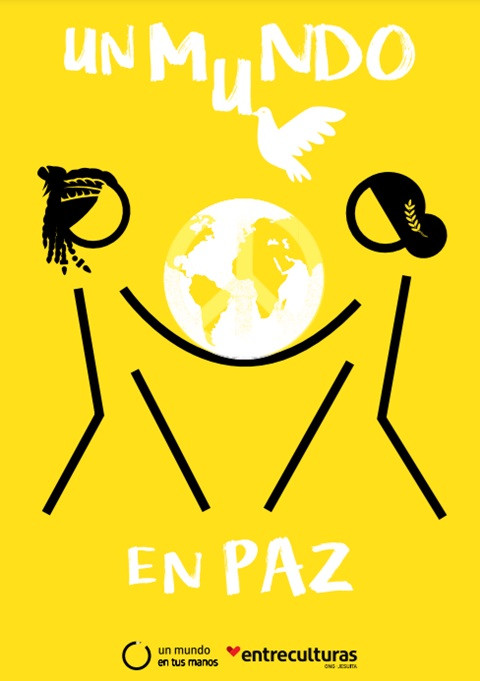 A World at Peace Year of publication: 2022 Corporate author: Entreculturas A world in peace is part of “A world in your hands”, Entreculturas’ pedagogical proposal to educate in global citizenship. With it we aim to contribute to the training of people capable of exercising active and committed citizenship, of transforming their environment and of assuming as their own the global challenges of our time such as the fulfillment of the 2030 Agenda and the Sustainable Development Goals. In this publication we collect proposals to work on the culture of peace and develop knowledge, values and social and civic skills that allow people who work on them to actively commit to coexistence, conflict resolution and the creation of a culture of peace in their environments and at a global level. Un mundo en paz Year of publication: 2022 Corporate author: Entreculturas Un mundo en paz forma parte de “Un mundo en tus manos”, la propuesta pedagógica de Entreculturas para educar en una ciudadanía global. Con ella pretendemos contribuir a la formación de personas capaces de ejercer una ciudadanía activa y comprometida, de transformar su entorno y de asumir como suyos tantos los retos globales de nuestro tiempo como el cumplimiento de la Agenda 2030 y de los Objetivos de Desarrollo Sostenible. En esta publicación recogemos propuestas para trabajar la cultura de paz y desarrollar conocimientos, valores y competencias sociales y ciudadanas que permitan a las personas que los trabajen comprometerse de forma activa con la convivencia, la resolución de conflictos y la creación de cultura de paz en sus entornos y a nivel global.
  Culture of Peace and Education for Democratic Citizenship Year of publication: 2006 Author: Jose Tuvilla Rayo The Culture of Peace understood as the synthesis concept - sum of human rights, democracy, disarmament and sustainable human development - demands, as a humanizing response of globalization, important efforts of educational systems towards the achievement of four world social contracts ( Lisbon Group, 1995): the contract of basic needs aimed at suppressing inequalities, the cultural contract aimed at promoting tolerance and dialogue between cultures, the contract of democracy aimed at a system of world government; and, the Earth contract to promote stable and lasting human development. To do this - remembering Juan Carlos Tedesco (2001) - learning to live together, one of the pillars of 21st century education, can not be maintained in the exclusive domain of merely rhetorical adherence. Cultura de Paz y educación para la ciudadanía democrática Year of publication: 2006 Author: Jose Tuvilla Rayo La Cultura de Paz entendida como el concepto síntesis --suma de derechos humanos, democracia, desarme y desarrollo humano sostenible--, demanda, como respuesta humanizadora de la globalización, importantes esfuerzos de los sistemas educativos hacia la consecución de cuatro contratos sociales mundiales (Grupo de Lisboa, 1995): el contrato de las necesidades básicas destinado a suprimir las desigualdades, el contrato cultural destinado a promover la tolerancia y el diálogo entre culturas, el contrato de la democracia encaminado hacia un sistema de gobierno mundial; y, el contrato de la Tierra para promover un desarrollo humano estable y duradero. Para ello – recordando a Juan Carlos Tedesco (2001) – aprender a vivir juntos, uno de los pilares de la educación del siglo XXI, no puede ser mantenido en el terreno exclusivo de la adhesión meramente retórica.