
Resources
Explore a wide range of valuable resources on GCED to deepen your understanding and enhance your research, advocacy, teaching, and learning.
950 Results found
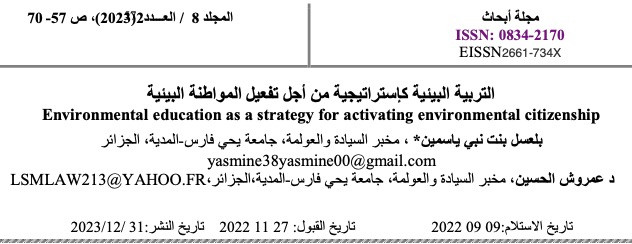 Environmental Education as a Strategy for Activating Environmental Citizenship (vol.8, no.2; Research Journal) Year of publication: 2023 Author: Bel'asal Bint Nabi Yasmine | Amroush Al Houcine Corporate author: Yahia Fares University of Medea This research paper aims to explore environmental education as a strategy for promoting environmental citizenship. Throughout the latter half of the twentieth century, the environment became a focal point for numerous thinkers and researchers across various fields. The concept of environmental citizenship emerged as a crucial term aimed at fostering individual responsibility towards the environment. Achieving environmental citizenship necessitates effective environmental education, which endeavors to impart direction, values, and behaviors conducive to environmental stewardship. It seeks to elucidate key concepts and cultivate essential skills for comprehending and appreciating the intricate relationships between humanity, culture, and the environment. Topics explored include citizenship, environment, environmental education, the Tbilisi conference, and responsible environmental behavior. التربية البيئية كإستراتيجية من أجل تفعيل المواطنة البيئية (vol.8, no.2 مجلة أبحاث) Year of publication: 2023 Author: بلعسل بنت نبي ياسمين | عمروش الحسين Corporate author: Yahia Fares University of Medea في هذه الورقة البحثية سنحاول التطرق إلى التربية البيئية كإستراتيجية من أجل تفعيل المواطنة البيئية، فقد شغلت البيئة بال الكثير من المفكرين والباحثين على مختلف اختصاصاتهم في بدايات النصف الثاني من القرن الماضي فبرز مفهوم المواطنة البيئية كمصطلح حيوي يتم استخدامه لتعزيز مسؤولية المواطن تجاه بيئته، وحتى تتحقق المواطنة البيئية لابد من وجود تربية بيئية تعمل على غرس الاتجاهات والقيم والسلوكيات البيئية، وتهدف إلى توضيح المفاهيم وتنمية المهارات اللازمة لفهم وتقدير العلاقات التي تربط بين الإنسان وثقافته وبيئته.
  Environmental Science Course Year of publication: 2021 Author: Ula Madwer | Sakher Ajouz | Ali Alsahyouni Corporate author: University of Hama This document provides an explanation of the initial practical session in the environment science course. The practical part of the environment science course contains a set of practical exercises. It includes the following objectives: Familiarize students with the tools and equipment of the environmental laboratory Determine the types and sources of environmental pollution Air quality standards and measurement units Measurement of carbon dioxide concentration مقرر علم البيئة Year of publication: 2021 Author: Ula Madwer | Sakher Ajouz | Ali Alsahyouni Corporate author: University of Hama يقدم المستند توضيحا للجلسة العملية الأولي في مقرر علم البيئة. ويحتوي الجزء العملي من مقرر علم البيئة على مجموعة من التدريبات العملية. وتتضمن الأهداف التالية: التعرف على أدوات وأجهزة المختبر البيئي تحديد أنواع ومصادر التلوث البيئي معايير جودة الهواء ووحدات القيا س قياس تركيز ثاني أوكسيد الكربون
 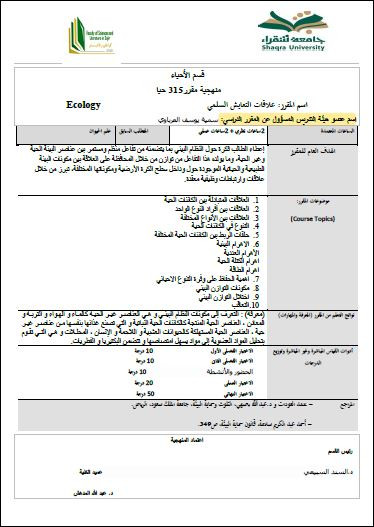 University Course: Relationships of Peaceful Coexistence Year of publication: 2021 Author: Somaya Youssef Al-Arabawy Corporate author: Shaqra University The goal is to give the student an idea about the ecosystem, including the organized and continuous interaction between the elements of the living and non-living environment, and the balance this interaction generates by maintaining the relationship between the components of the natural and living environment around and within the surface of the globe and its various components, which are highlighted through the relationships and complex functional connections. مقرر جامعي: علاقات التعايش السلمي Year of publication: 2021 Author: Somaya Youssef Al-Arabawy Corporate author: Shaqra University الهدف هو اعطاء الطالب فكرة حول النظام البيئي بما يتضمنه من تفاعل منظم ومستمر بين عناصر البيئة الحية وغير الحية، وما يولده هذا التفاعل من توازن من خلال المحافظة على العلاقة بين مكونات البيئة الطبيعية والحياتية الموجودة حول وداخل سطح الكرة الأرضية ومكوناتها المختلفة، تبرز من خلال علاقات وارتباطات وظيفية معقدة.
  The Impact of a Program Based on Education for Sustainability Principles in Developing Awareness of Climate Change and the Environmental Citizenship Values Among Middle School Students in Slum Areas. (vol.48, no.2; International Journal for Research in Education) Year of publication: 2024 Author: Nermin Awny Mohammad | Ibrahim Ahmed Abdelhady Corporate author: United Arab Emirates University The research aimed to investigate the impact of a program grounded in sustainability education principles on the development of climate change awareness and environmental citizenship values among second-grade middle school students residing in slum areas. The study utilized a quasi-experimental approach. أثر برنامج قائم على مبادئ التربية من أجل الاستدامة في تنمية الوعي بالتغيرات المناخية، وقيم المواطنة البيئية لدى تلاميذ المرحلة المتوسطة بالمناطق العشوائية (vol.48, no.2 المجلة الدولية للأبحاث والتربوية) Year of publication: 2024 Author: Nermin Awny Mohammad | Ibrahim Ahmed Abdelhady Corporate author: United Arab Emirates University هدف البحث إلى الكشف عن أثر برنامج قائم على مبادئ التربية من أجل الاستدامة في تنمية الوعي بالتغيرات المناخية، وقيم المواطنة البيئية لدى تلاميذ الصف الثاني من المرحلة المتوسطة بالمناطق العشوائية، واعتمد البحث على المنهج شبه التجريبي
  ESCWA Water Development Report 8: The Water-related Sustainable Development Goals in the Arab Region Year of publication: 2019 Corporate author: UN. Economic and Social Commission for Western Asia (UN. ESCWA) Water-related SDGs have a central role in achieving the 2030 Agenda for Sustainable Development and its interlinked Sustainable Development Goals (SDGs) and targets. While the dedicated goal on water (SDG6) aims to ensure availability and the sustainable management of water and sanitation for all, pursing this goal supports the achievement many other goals. Regional monitoring and reporting of the water-related SDGs thus supports a better understanding of water across the sustainable development agenda and provides insights on the progress and challenges facing the Arab region as it aims to achieve the SDGs and associated national targets under conditions of water scarcity and increasing water stress. This eighth issue of the Water Development Report of the Economic and Social Commission for Western Asia (ESCWA) examines the water-related SDGs from the perspective of water security and scarcity in the Arab region. It identifies ways to assess and address present and projected water scarcity at the regional and national levels for various climate change scenarios. It reviews regional and national water strategies and action plans coherency with global water-related goals and targets. The study analyses how the water-related SDG targets and indicators can guide the development of policy measures to tackle water challenges in the Arab region. Proposed policy interventions include measures to conserve and protect water resources and generate additional nonconventional water resources. Selected policy options are quantified and analysed for two climate scenarios for the future period 2030-2050 in view of informing sustainable planning and appropriate decision support systems to optimize and rationalize water use. The report also provides insights on institutional mechanisms in place for monitoring and implementing water-related SDGs at various scales. تقرير المياه والتنمية الثامن: أهداف التنمية المستدامة المتعلقة بالمياه في المنطقة العربية Year of publication: 2019 Corporate author: UN. Economic and Social Commission for Western Asia (UN. ESCWA) لأهداف التنمية المستدامة ذات الصلة بالمياه دور رئيسي في تحقيق خطة التنمية المستدامة لعام 2030 وأهداف التنمية المستدامة الأخرى ومقاصدها. ويسعى الهدف المكرّس للمياه (الهدف 6) إلى ضمان توفر المياه وإتاحة خدمات الصرف الصحي للجميع وإدارتهما بشكل مستدام. وفي العمل على بلوغه ما يدعم تحقيق العديد من الأهداف الأخرى. ويساهم رصد أهداف التنمية المستدامة ذات الصلة بالمياه والإبلاغ عنها على الصعيد الإقليمي في فهم أفضل لموقع المياه في خطة التنمية المستدامة، ويعطي فكرة عما حققته المنطقة العربية من تقدم وما واجهته من تحديات في سعيها إلى تحقيق أهداف التنمية المستدامة والغايات الوطنية المرتبطة بها، في ظل ندرة المياه وزيادة الإجهاد المائي. ويبحث العدد الثامن من تقرير اللجنة الاقتصادية والاجتماعية لغربي آسيا (الإسكوا) حول تنمية المياه في أهداف التنمية المستدامة ذات الصلة بالمياه من منظور الأمن المائي وندرة المياه في المنطقة العربية. ويحدّد طرقاً لتقييم ومعالجة ندرة المياه الحالية والمتوقعة على المستويين الإقليمي والوطني على ضوء سيناريوهات مختلفة لتغيُّر المناخ. ويستعرض مدى اتساق الاستراتيجيات وخطط العمل المائية الإقليمية والوطنية مع الأهداف والمقاصد العالمية ذات الصلة بالمياه. وتبيّن الدراسة كيف يمكن الاسترشاد بمقاصد ومؤشرات أهداف التنمية المستدامة ذات الصلة بالمياه في وضع تدابير في السياسة العامة لمواجهة تحديات المياه في المنطقة العربية. وتشمل التدخلات المقترحة على صعيد السياسات العامة تدابير للحفاظ على موارد المياه وحمايتها، وتوليد موارد مائية إضافية غير تقليدية. ويتم تقدير السياسات العامة المختارة وتحليلها ضمن سيناريوهين مناخيين للفترة المستقبلية 2030-2050 بهدف توجيه التخطيط المستدام والنُظُم الداعمة لعمليات اتخاذ القرارات بما يؤدي إلى تحسين استخدام المياه وترشيده. ويستعرض التقرير الآليات المؤسسية القائمة لرصد أهداف التنمية المستدامة ذات الصلة بالمياه وتنفيذها على مستويات مختلفة.