
Resources
Explore a wide range of valuable resources on GCED to deepen your understanding and enhance your research, advocacy, teaching, and learning.
875 Results found
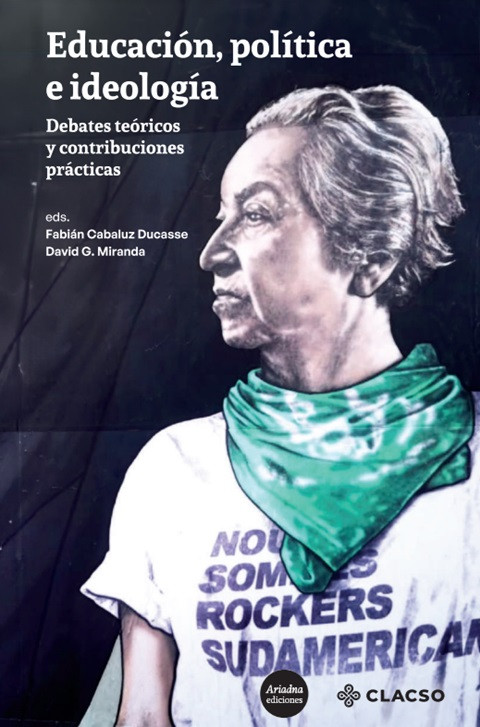 Education, Politics and Ideology: Theoretical Debates and Practical Contributions Year of publication: 2024 Author: David G. Miranda | Jorge Fabián Cabaluz Ducasse Corporate author: Latin American Council of Social Sciences (CLACSO) This book, "Education, Politics and Ideology: Theoretical Debates and Practical Contributions", is a work by the Latin American Pedagogies Research Group at the University of Playa Ancha, which is positioned from a critical perspective in the educational and pedagogical field. This currently implies, among other things, the relevance of discussing, polemizing and confronting those perspectives that have technified and instrumentalized pedagogy, reducing it to a merely practical, technical field, unrelated to epistemological, ethical, philosophical and/or political issues. In this direction, the essays that make up the book distance themselves substantially from those perspectives that conceive our field as a terrain that must advocate for neutrality, impartiality, and asepsis; and they propose clear and explicit positions with respect to social justice, democracy, equality, and dignity. Educación, política e ideología: Debates teóricos y contribuciones prácticas Year of publication: 2024 Author: David G. Miranda | Jorge Fabián Cabaluz Ducasse Corporate author: Latin American Council of Social Sciences (CLACSO) Este libro "Educación, política e ideología: debates teóricos y contribuciones prácticas", surge desde el Grupo de Investigación de Pedagogías Latinoamericanas de la Universidad de Playa Ancha, el cual se encuentra posicionado desde las perspectivas críticas del campo educativo y pedagógico, lo que implica en la actualidad, entre otras cosas, la relevancia de discutir, polemizar y confrontar aquellas perspectivas que han tecnificado e instrumentalizado la pedagogía, reduciéndola a un campo meramente práctico, técnico, ajeno a cuestiones epistemológicas, éticas, filosóficas y/o políticas. En esta dirección, los ensayos que componen el libro se distancian sustancialmente de aquellas perspectivas que conciben nuestro campo como un terreno que debe abogar por la neutralidad, la imparcialidad, la asepsia; y proponen posicionamientos claros y explícitos con respecto a la justicia social, la democracia, la igualdad, la dignidad.
 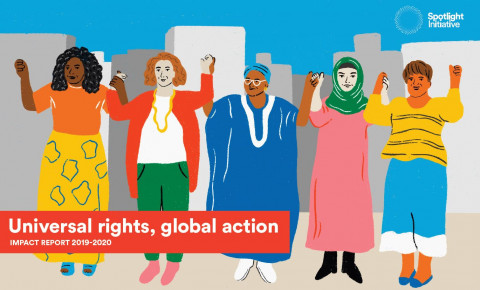 Universal Rights, Global Action: Impact Report 2019-2020 Year of publication: 2020 Corporate author: Spotlight Initiative Universal rights, global action is a shortened, visual adaptation of the 2019 Global Annual Narrative Progress Report. The Spotlight Initiative is a global, multi-year partnership between the European Union and the United Nations to eliminate all forms of violence against women and girls by 2030. This report outlines the Spotlight Initiative’s key signature results from 2019.The 32-page document highlights the ways the Spotlight Initiative country and regional programmes have meaningfully reached women and girls, including those facing multiple and intersecting forms of discrimination.
 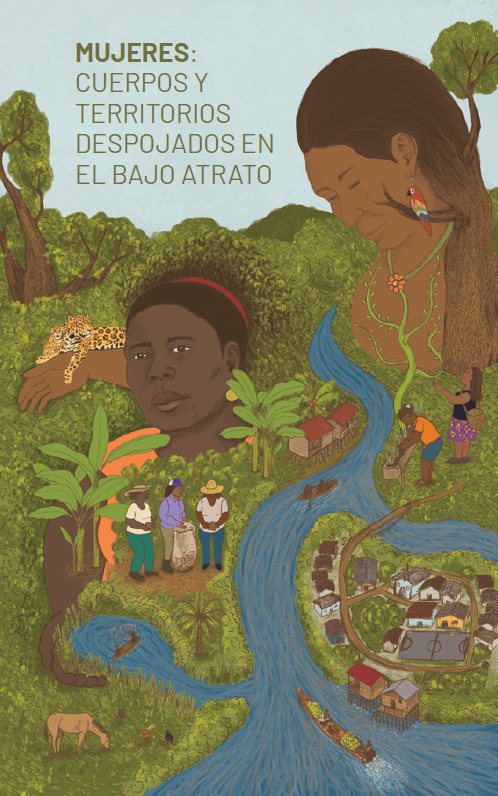 Women: Dispossessed Bodies and Territories in the Bajo Atrato Year of publication: 2022 Author: Magda Rocio Martínez Montoya Corporate author: Centro de Investigación y Educación Popular (CINEP) The violence exerted against the bodies of women is also a violence exerted against the territories. For the black, indigenous and mestizo women of the Bajo Atrato, their bodies are a substantive part of the territories and, from there, they have built and defended it. The rivers, swamps and streams are the extension of their arms and legs, waters in which they remain submerged carrying out daily tasks together with other women, their sons and daughters. In said construction and defense, their body-territories have been severely dispossessed and violated. However, they have fought and resisted, and continue to do so despite enormous risks, serious human rights violations and state abandonment. In Women: dispossessed bodies and territories in the Bajo AtratoAnalytical and contextual elements are presented that help to understand the complex relationship between gender-based violence and the processes of defending the rights to land and territory. With the delivery of this report to the Special Jurisdiction for Peace (JEP), the CINEP/PPP and the Inter-Church Commission for Justice and Peace, within the framework of the Vamos por la Paz project, provide relevant information to case 004, which prioritizes the events that occurred in the region of Urabá, Bajo Atrato and Darién. Mujeres: cuerpos y territorios despojados en el Bajo Atrato Year of publication: 2022 Author: Magda Rocio Martínez Montoya Corporate author: Centro de Investigación y Educación Popular (CINEP) La violencia ejercida contra los cuerpos de las mujeres también es una violencia ejercida contra los territorios. Para las mujeres negras, indígenas y mestizas del Bajo Atrato sus cuerpos son parte sustantiva de los territorios y, desde allí, lo han construido y defendido. Los ríos, ciénagas y quebradas son la extensión de sus brazos y sus piernas, aguas en las que permanecen sumergidas desarrollando labores cotidianas junto a otras mujeres, sus hijos e hijas. En dicha construcción y defensa, sus cuerpos-territorios han sido fuertemente despojados y violentados. Sin embargo, ellas han luchado y resistido, y lo siguen haciendo a pesar de los enormes riesgos, las graves violaciones a los derechos humanos y el abandono estatal. En Mujeres: cuerpos y territorios despojados en el Bajo Atrato se presentan elementos analíticos y contextuales que ayudan a comprender la compleja relación entre las violencias basadas en género y los procesos de defensa de los derechos a la tierra y el territorio. Con la entrega de este informe a la Jurisdicción Especial para la Paz (JEP), el Cinep/PPP y la Comisión Intereclesial de Justicia y Paz, en el marco del proyecto Vamos por la Paz, aportan información relevante al caso 004, que prioriza los hechos ocurridos en la región de Urabá, Bajo Atrato y Darién.
  Gender Violence in Childhood and Adolescence: Challenges and Realities Year of publication: 2022 Corporate author: Red Papaz In this space, the guests talk about the challenges that girls face in their daily lives and how the school and the family together can build strategies to respond to them. In addition, they will invite us to reflect on the important role of boys and men in the consolidation of protective environments free of gender-based violence. Las violencias de género en la infancia y la adolescencia: retos y realidades Year of publication: 2022 Corporate author: Red Papaz En este espacio los invitados conversan sobre los retos a los que se enfrentan las niñas en sus cotidianidades y cómo la escuela y la familia en conjunto pueden construir estrategias para responder ante ellos. Además, nos invitarán a reflexionar sobre el papel importante de los niños y hombres para la consolidación de entornos protectores libres de violencias de género.
 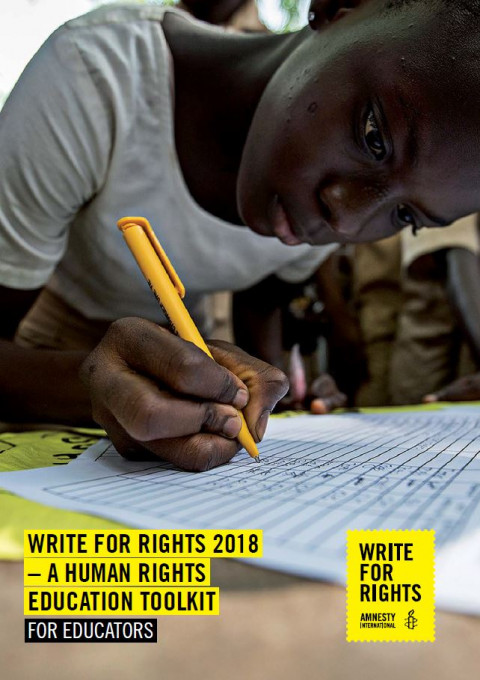 Write for Rights 2018: A Human Rights Education Toolkit for Educators Year of publication: 2018 Corporate author: Amnesty International The annual Write for Rights (W4R) campaign is one of Amnesty International’s biggest human rights events. In 2018 the campaign focuses on women human rights defenders who have suffered human rights violations or are at great risk because of the positions they have taken on certain human rights issues.This Human Rights Education toolkit was created to support teachers’ participation with their students in the W4R campaign. It provides a broad perspective on human rights issues and offers the opportunity to open young people’s minds to global concerns. By learning about and writing persuasive letters to help end human rights violations and achieve justice, teachers and students contribute to the international human rights movement and see for themselves how words can make a difference in the world.This toolkit was created for students aged 13 and above and is primarily designed for use in a school setting: both inside the classroom as well as in clubs or school-wide events. Activities can also be adapted for use in other, non-formal education contexts such as youth groups and community settings. The toolkit contains general activities on human rights and highlights six women human rights defenders from the W4R campaign who have made extraordinary contributions to the advancement of human rights around the world. Écrire pour les droits 2018: Manuel d´éducation aux droits humains pou les éducateurs et éducatrices Year of publication: 2018 Corporate author: Amnesty International La campagne annuelle Écrire pour les droits est l’une des plus importantes actions d’Amnesty International autour des droits humains. L’édition 2018 est axée sur les défenseures des droits humains qui sont victimes de violations de leurs droits fondamentaux ou en grand danger du fait de leur position sur certaines questions relatives aux droits humains.Le manuel Éducation aux droits humains vise à favoriser la participation des enseignant-e-s et de leurs élèves à la campagne Écrire pour les droits. Il offre une perspective large sur les questions relatives aux droits humains et la possibilité de sensibiliser les jeunes à des préoccupations mondiales. En en apprenant davantage et en rédigeant des lettres convaincantes pour aider à mettre fin aux violations des droits humains et à obtenir justice, les enseignant-e-s et leurs élèves contribuent au mouvement international des droits humains et voient par elles/eux-mêmes que les mots peuvent faire la différence.Ce manuel est destiné aux élèves de 13 ans et plus pour une utilisation en contexte scolaire, tant en classe que dans des clubs ou des manifestations organisées à l’école. Les activités peuvent cependant être adaptées à des contextes d’apprentissage plus informels comme des groupes de jeunes et des associations. Le manuel propose des activités générales sur les droits humains et met en avant six défenseures des droits humains choisies au titre de la campagne Écrire pour les droits qui ont apporté des contributions extraordinaires à la progression des droits fondamentaux dans le monde entier. Escribe por los derechos 2018: Carpeta de materiales de educación en derechos humanos para educadores/as Year of publication: 2018 Corporate author: Amnesty International La campaña anual Escribe por los Derechos es uno de los mayores eventos de derechos humanos de Amnistía Internacional. En 2018, la campaña se centra en defensoras de los derechos humanos que han sufrido violaciones de derechos humanos o corren grave riesgo a causa de la postura que han adoptado respecto a ciertas cuestiones de derechos humanos.Esta carpeta de materiales de Educación en Derechos Humanos se creó para ayudar a profesores y profesoras a participar con sus estudiantes en la campaña Escribe por los Derechos. Ofrece una amplia perspectiva de cuestiones de derechos humanos y brinda la oportunidad de abrir la mente de los y las jóvenes a cuestiones de preocupación mundiales. Al aprender sobre estas cuestiones y escribir cartas convincentes para ayudar a poner fin a las violaciones de derechos humanos y lograr justicia, los profesores y profesoras y sus estudiantes contribuyen al movimiento internacional de derechos humanos y ven con sus propios ojos cómo las palabras pueden hacer cambiar las cosas en el mundo.Esta carpeta se creó para estudiantes de a partir de 13 años y está concebida principalmente para utilizarla en un entorno escolar: tanto dentro del aula como en clubes o eventos de toda la escuela. Las actividades también se pueden adaptar para utilizarlas en otros contextos de educación no formal, como grupos de jóvenes y entornos comunitarios. La carpeta contiene actividades generales sobre derechos humanos y destaca el caso de seis defensoras de los derechos humanos de la campaña Escribe por los Derechos que han hecho contribuciones extraordinarias al progreso de los derechos humanos en todo el mundo.