
Resources
Explore a wide range of valuable resources on GCED to deepen your understanding and enhance your research, advocacy, teaching, and learning.
1,725 Results found
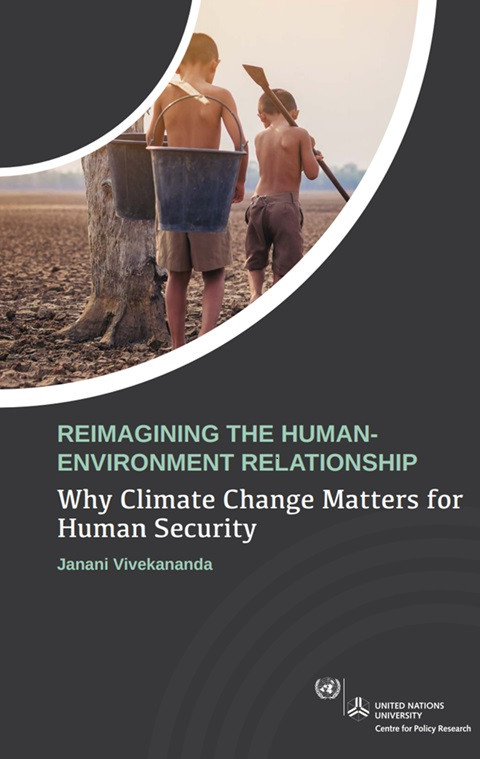 Why Climate Change Matters for Human Security Year of publication: 2022 Author: Janani Vivekananda Corporate author: United Nations University | United Nations Environment Programme (UNEP) This paper outlines the state of knowledge regarding security risks related to climate change, synthesizing the existing scientific evidence to set out five broad pathways of risk. Climate change itself is rarely a direct cause of conflict. Yet, there is ample evidence that its effects exacerbate important drivers and contextual factors of conflict and fragility, thereby challenging the stability of states and societies. Climate change impacts such as coral bleaching, diversity loss, and erratic rainfall can stress livelihoods and drive displacement, increase resource conflicts, and challenge the security and stability of people and states worldwide. Managing these security risks requires action across the entire impact chain: work to mitigate climate change; reducing its consequences on ecosystems; adapting socioeconomic systems; better management of climate-induced heightened resource competition; and strengthening governance and conflict management institutions. And every dimension of the response must be conflict-sensitive and climate proof. Without the right responses, climate change will mean more fragility, less peace and less security. But this paper sets out illustrative examples of how, with a greater understanding of how climate change interacts with social, political, economic and environmental drivers of conflict and fragility, we will be better placed to make the kind of risk-informed decisions is integral to achieving international peace and security.
  Global Environment Outlook 4 (GEO-4): Environment for Development Year of publication: 2007 Corporate author: United Nations Environment Programme (UNEP) The fourth Global Environment Outlook – environment for development ( GEO-4 ) places sustainable development at the core of the assessment, particularly on issues dealing with intra- and intergenerational equity. The analyses include the need and usefulness of valuation of environmental goods and services, and the role of such services in enhancing development and human well-being, and minimizing human vulnerability to environmental change. The GEO-4 temporal baseline is 1987, the year in which the World Commission on Environment and Development (WCED) published its seminal report, Our Common Future . The Brundtland Commission was established in 1983, under UN General Assembly resolution 38/161 to look at critical environment and development challenges. It was established at a time of an unprecedented rise in pressures on the global environment, and when grave predictions about the human future were becoming commonplace. تقرير التوقعات البيئية العالمية الرابع: البيئة من أجل التنمية المستدامة Year of publication: 2007 Corporate author: United Nations Environment Programme (UNEP) تضع توقعات البيئة العالمية الرابعة - البيئة من أجل التنمية (GEO-4) التنمية المستدامة في صميم التقييم ، لا سيما فيما يتعلق بالقضايا التي تتناول المساواة بين الأجيال وبين الأجيال. تشمل التحليلات الحاجة والفائدة في تقييم السلع والخدمات البيئية ، ودور هذه الخدمات في تعزيز التنمية ورفاهية الإنسان ، وتقليل تعرض الإنسان للتغير البيئي. خط الأساس الزمني لتوقعات البيئة العالمية الرابع هو عام 1987 ، وهو العام الذي نشرت فيه اللجنة العالمية للبيئة والتنمية (WCED) تقريرها الأساسي ، مستقبلنا المشترك. تأسست لجنة برونتلاند في عام 1983 ، بموجب قرار الجمعية العامة للأمم المتحدة 38/161 للنظر في تحديات البيئة والتنمية الحرجة. تم تأسيسه في وقت ارتفاع غير مسبوق في الضغوط على البيئة العالمية ، وعندما أصبحت التنبؤات الخطيرة حول مستقبل الإنسان أمرًا شائعًا.
  Climate Change Adaptation Policy, 10 years: Tracking Adaptation and Suggesting the Way Forward (Ⅲ) Year of publication: 2021 Author: YoungiI Song | Jiyoung Shin | Jinhan Park | Songmi Park | Mirae Kim Corporate author: Korea Environment Institute (KEI) This study suggested the direction of preparing and wrote the climate change adaptation gap report by sector. This study defined the adaptation gap as the degree of implementation compared to the adaptation goal and evaluated the effect of reducing climate change risk.This study prepared a climate change adaptation gap report through the process of selecting representative indicators, setting adaptation goals, and analyzing national climate change adaptation policies for five sectors: forest/ecosystem, agriculture and fisheries, water, health, and territory/coast.Through the writing of the climate change adaptation gap report, We identified the insufficient climate change adaptation measures and suggested the policy directions to effectively reduce climate change risk and ensure the effectiveness of future climate change adaptation policies.As a result, we emphasized the climate change adaptation efforts are needed, such as establishing climate change adaptation policies directly related to climate change risk, building the data to understand the effectiveness of climate change adaptation measures, and setting goals for climate change adaptation. 기후변화 적응정책 10년: 현주소 진단과 개선방안 모색을 중심으로 (Ⅲ) Year of publication: 2021 Author: 송영일 | 신지영 | 박진한 | 박송미 | 김미래 Corporate author: 한국환경연구원 IPCC 제5차 평가보고서(2013년) 발간 이후 8년만인 올해 발간된 제6차 평가보고서에서는 전 세계 평균기온이 산업혁명 이전보다 1.09℃ 증가한 것으로 발표하였는데, 이는 제5차 보고서 발간 당시 발표한 0.78℃에 비하여 0.31℃가 증가한 것입니다. 전 세계적으로 온실가스 발생을 감축하기 위해 꾸준히 노력해 왔음에도 불구하고 지난 8년 정도의 시간 동안 이와 같은 기온상승이 있었습니다. 이는 기후변화가 우리의 생각보다 빨리 진행되고 있으며 이미 배출된 온실가스만으로도 기후변화가 지속적으로 발생할 수 있다는 사실을 뒷받침합니다. 신 기후체제의 근간이 되는 파리협정에서는 감축과 함께 적응을 중요한 기후변화 대응방안으로 평가하고 있습니다.우리나라에서는 기후변화의 부정적 영향에 대비하고 기후탄력성을 키워 기후 안전 사회를 이루기 위하여 2010년부터 적응정책을 이행하고 있습니다. 지난 10년간 적응정책 이행 과정에서 발생한 성과와 한계를 진단하고 이를 토대로 개선방안을 제시하기 위하여 총 3년에 걸쳐 본 과제가 수행되었습니다. 3년 차인 2021년에는 제도적 측면의 평가와 기후변화 리스크 저감 효과 측면에서 적응정책을 살펴보았습니다. 본 연구에서 도출한 해외주요 국가들과의 적응정책 비교·분석 결과 및 적응목표와 이행 정도에 대한 갭(gap) 분석 결과는 적응정책을 개선하고 실효성을 높이는 데 이바지할 것으로 기대합니다. * 본 저작물은 한국환경연구원에서 '2021'년에 작성하여 공공누리 제'4'유형으로 개방한 ‘기후변화 적응정책 10년: 현주소 진단과 개선방안 모색을 중심으로 (Ⅲ)(작성자: 송영일 외)’를 이용하였으며 해당 저작물은 한국환경연구원 홈페이지(http://www.kei.re.kr)’에서 무료로 다운받으실 수 있습니다.
 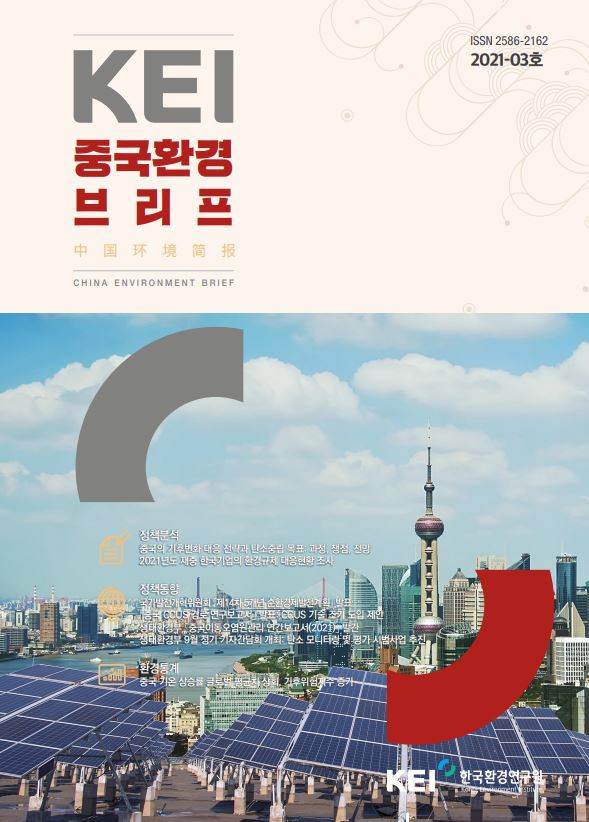 [KEI 중국환경브리프] 2021-03호 Year of publication: 2021 Corporate author: 한국환경연구원 탄소중립이 국제사회의 정책 패러다임으로 주류화, 내재화되는 현 상황 속에서, 세계 최대의 온실가스 배출국이자 G2 리더 중 하나인 중국의 행태는 가장 중요한 사안 중 하나이다. 중국의 탄소중립 추진전략은 중국 국내뿐 아니라 세계 전체가 주목해야 할 사안이라고 말할 수 있으며, 중국의 탄소중립 목표 선언을 전후로 한 중국의 의도와 행태에 대해 심도 있는 연구가 필요한 상황이다.중국의 탄소중립 전략을 상세히 이해하는 일에 앞서 반드시 선행되어야 할 사항은 중국이 탄소중립 목표 선언에 도달하게 된 과정에 대한 고찰이다. 본고에서는 중국이 탄소중립 선언을 하기까지 추진해온 20여 년 간의 기후변화정책을 대내외적인 측면에서 모두 살펴본다. 본 저작물은 한국환경연구원에서 2021년 작성하여 공공누리 제4유형으로 개방한 '[KEI 중국환경브리프] 2021-03호(작성자: 한국환경연구원)'을 이용하였으며, 해당 저작물은 한국환경연구원 홈페이지(https://www.kei.re.kr/)에서 무료로 내려받으실 수 있습니다.
  환경과 국제협력 (해외환경정책동향 2021-04호) Year of publication: 2021 Corporate author: 한국환경연구원 국제사회는 개발도상국의 재정·기술·역량개발에 지원함으로써 개발도상국이 더욱 적극적으로 저탄소 전환과 넷제로(Net-Zero) 달성에 동참하도록 협조할 필요가 있다. 어떤 국가의 탄소저감 노력으로 얻게 되는 혜택은 모든 국가가 함께 누릴 수 있다. 반대로 어떤 국가가 탄소저감 노력을 외면했을 때, 그로 인한 비용 또한 모든 국가가 같이 짊어져야 한다. 그래서 국제협력은 글로벌 넷제로 달성을 위해 필수적이며 공적개발원조(ODA: Official Development Assistance) 또한 필요한 역할을 해야만 한다. ODA, 특히 무상원조는 인도주의적인 목적으로 시행되기도 하지만 산업·경제협력 측면에서 ODA 외에 공적·민간 투자를 촉진할 수 있다는 점에서 중요하다. 본고에서는 현재 글로벌 탄소중립 ODA와 우리나라의 탄소중립 ODA 추진 현황을 살펴보고, 마지막으로 향후 탄소중립 ODA가 나아가야 할 방향에 대해 고찰해 보고자 한다. 본 저작물은 한국환경연구원에서 2021년 작성하여 공공누리 제4유형으로 개방한 '환경과 국제협력 (해외환경정책동향 2021-04호)'을 이용하였으며, 해당 저작물은 한국환경연구원 홈페이지(https://www.kei.re.kr/)에서 무료로 내려받으실 수 있습니다.
 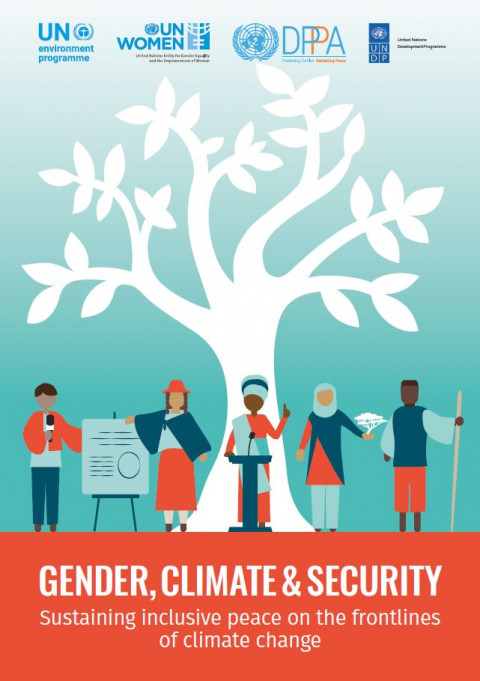 Gender, Climate & Security: Sustaining Inclusive Peace on the Frontlines of Climate Change Year of publication: 2020 Corporate author: United Nations Environment Programme (UNEP) | United Nations Entity for Gender Equality and the Empowerment of Women (UN Women) | United Nations Development Programme (UNDP) Climate change is a defining threat to peace and security in the 21st century – its impacts felt by everyone, but not equally. Gender norms and power dynamics shape how women and men of different backgrounds experience or contribute to insecurity in a changing climate. Grounded in a series of case studies from research and programming experience, this report offers a comprehensive framework for understanding how gender, climate and security are inextricably linked. The report assesses entry points for action across existing global agendas and suggests concrete recommendations for how policymakers, development practitioners and donors can advance three inter-related goals: peace and security, climate action and gender equality.
  Diagnosing and Enhancing Environmental Literacy of Citizens to Raise Green Awareness Year of publication: 2021 Author: Jeongyoon Yeom | Namsoo Kim | Haengwoon Jeong | Woohyeon Jeong Corporate author: Korea Environment Institute (KEI) 1. Research purposeA nationwide consensus on the understanding on and necessity of the environmental policy is needed in order to successfully achieve the policy objectives.The necessity of environmental education is being highlighted but in reality, there is a lack of objectives and specific indicators to verify its effect.The goal of environmental education should be the expansion of environmental literacy and indicators to measure this should be developed. 2. Research scopeSummarize the concept of environmental literacy and develop the scales for adultsMeasure the level of environmental literacy of citizensConfirm the predictors and consequences of environmental literacyUnderstand citizen types via cluster analysis 시민 인식의 녹색 전환을 위한 환경 리터러시 진단 및 강화 방안 Year of publication: 2021 Author: 염정윤 | 김남수 | 정행운 | 정우현 Corporate author: 한국환경연구원 1. 연구의 필요성 및 목적 환경 정책이 성공적으로 정책 목표를 달성하기 위해서는 정책 이해와 필요성에 대한 범국민적 공감대가 필수 환경교육의 중요성을 강조하고 있지만 실질적으로 교육의 효과를 확인할 수 있는 객관적이고 구체적인 지표가 부재함 환경교육의 목표를 환경 리터러시의 증대로 설정하고 이를 측정할 지표 개발이 필요2. 연구의 범위 환경 리터러시 개념 정리 및 성인 대상의 측정 도구 개발 일반 시민의 환경 리터러시 수준 측정 환경 리터러시의 예측 요인과 결과 요인 확인 군집 분석을 통한 시민 유형 파악* 본 저작물은 한국환경연구원에서 '2021'년에 작성하여 공공누리 제'4'유형으로 개방한 ‘시민 인식의 녹색 전환을 위한 환경 리터러시 진단 및 강화 방안(작성자: 염정윤)’을 이용하였으며 해당 저작물은 한국환경연구원 홈페이지(http://www.kei.re.kr)’에서 무료로 다운받으실 수 있습니다.