
Resources
Explore a wide range of valuable resources on GCED to deepen your understanding and enhance your research, advocacy, teaching, and learning.
874 Results found
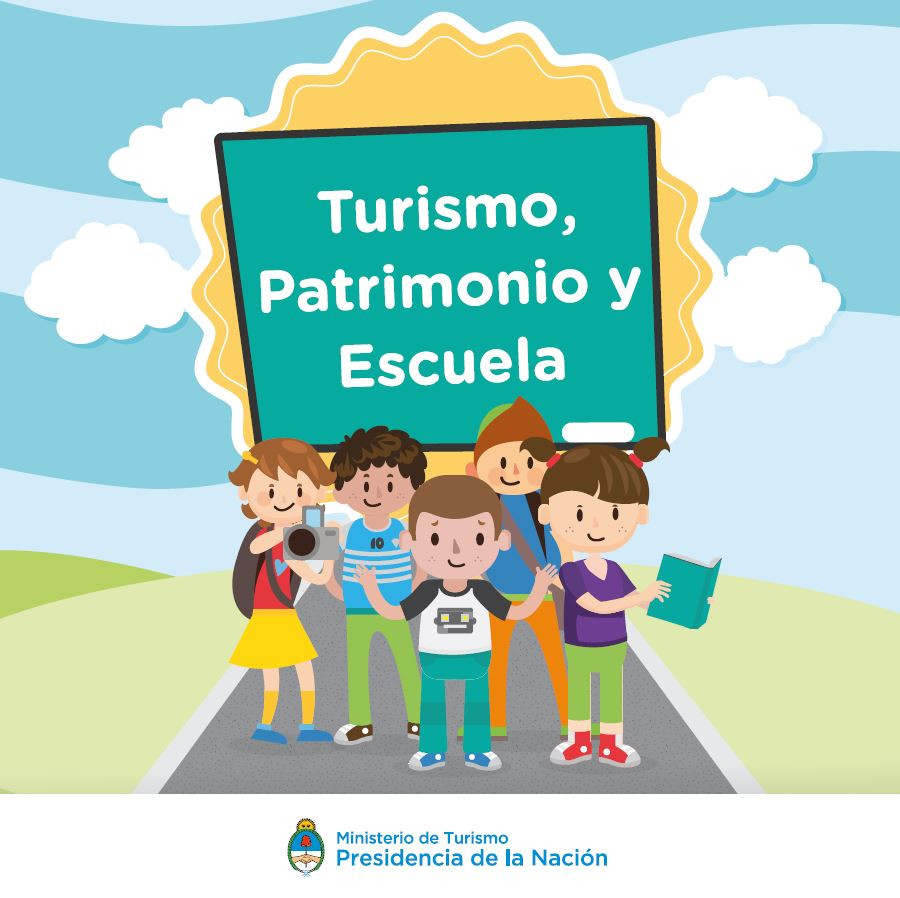 Tourism, Heritage and School: A Journey through the Heritage of Our Country Year of publication: 2017 Corporate author: Argentina. Ministry of Tourism Aimed at students in the final years of primary school, this manual is a tool for the study and learning of world heritage sites in Argentina and their relationship with tourist activity. Designed and created by the Tourism Training Directorate of the Ministry of Tourism of the Argentine Nation. Turismo, Patrimonio y Escuela: Un viaje por el patrimonio de nuestro país Year of publication: 2017 Corporate author: Argentina. Ministry of Tourism Orientado a estudiantes de los últimos años de nivel primario, este manual es una herramienta para el estudio y el aprendizaje de los sitios de patrimonio mundial en la Argentina y su relación con la actividad turística. Pensado y creado desde la Dirección de Formación en Turismo del Ministerio de Turismo de la Nación Argentina.
  Popular Education and Critical Pedagogies in Latin America and the Caribbean: Emancipatory Currents for Public Education in the 21st Century Year of publication: 2018 Author: Estela Quintar | Inés Cappellacci | Anahí Guelman | Claudia Loyola | María Mercedes Palumbo | Shirly Said | Laura Tarrio | Silvya De Alarcón | Beatriz Areyuana | Fabián Cabaluz | Felipe Zurita | Jonathan Piedrahita | Yicel Giraldo | Cindy Guzmán | Yolanda Pino | Andrés Castaño | Mónica Salazar Castilla | Héctor Fabio Ospina | Piedad Ortega Valencia | María Teresa Cruz Bustamante | Juan Carlos Hernández | Cándida Chávez | Ariana Celeste Aquino | Suyapa Pérez | Danilo R. Streck | Alfonso Torres Carrillo | Alfredo Manuel Ghiso | Oscar Jara Holliday Corporate author: Consejo Latinoamericano de Ciencias Sociales (CLACSO) In the pages and chapters of the book you walk through the corners of Bolivia with indigenous voices and struggles, through a Chile and an Argentina that go through stories, struggles and disputes over public affairs in the midst of hostile contexts, through a Central America (El Salvador, Costa Rica and Mexico) that rescues a tremendous legacy of organizational and revolutionary processes, and for Colombia, which in its fight for peace, collects the voices of organized youth. At the same time, this construction takes up great thinkers and collective actors who have enriched the paths of Popular Education and Critical Pedagogies.Thus, crossed by our Latin American history, by the distressing challenges and tensions that democracies go through today in each of our territories and contexts, by the conservative restorations that condition and surround us, Critical Pedagogies and Popular Education cannot but, according to what we have been seeing, that working in defense of the right to education that seems to be liquefying in several of our countries, they cannot help but put on the attire of a teacher to resist, from the state public school, the right to learn from children and young people and the right to be a teacher, to teach, of thousands of teachers who seem to want to be replaced by “educational leaders” and canned technological programs, with very good dividends for their importers.
  Education and Cultural Diversity Lessons from Innovative Practice in Latin America Year of publication: 2008 Author: Carolina Hirmas R. Corporate author: UNESCO Santiago This publication, which is the second volume of the collection, is the result of analysis and reflection on a series of innovative educational experiences from several Latin American countries, which respond with pedagogical relevance to the students' cultural context and offer an education oriented towards knowledge, understanding and dialogue between people of different cultures. The significant contribution of the aforementioned experiences lies in the recognition and appreciation of the ethnic and cultural diversity of its students and communities, as a starting point for the development of new learning and affirmation of their identity. In turn, life in educational centers promotes intercultural relations of respect and fraternity in a local and subregional sociogeographic context, characterized by multiculturalism.
  Education for a Democratic Citizenship in the Countries of Latin America: A Critical Look Year of publication: 2007 Author: Bradley A.U. Levinson | Juan G. Berumen This report is a contribution to the discussion of the Regional Policy Dialogue on training for democracy and secondary education in Latin America. In this text, we present an analysis of the results of a survey on education for democracy carried out as part of the activities of the Education Network, which was sent by the Bank to the member countries of the Dialogue. We frame these results in a conceptualization of what it means to educate for democracy. We complement the discussion with information from additional sources that illuminate different aspects of the conceptual framework proposed here. Educación para una Ciudadanía Democrática en los Países de América Latina: Una Mirada Crítica Year of publication: 2007 Author: Bradley A.U. Levinson | Juan G. Berumen Este informe es un aporte a la discusión del Diálogo Regional de Política sobre la formación para la democracia y la educación secundaria en América Latina. En este texto presentamos un análisis de los resultados de una encuesta sobre la educación para la democracia realizada como parte de las actividades de la Red de Educación, que fue enviada por el Banco a los países miembros del Diálogo. Enmarcamos estos resultados en una conceptualización sobre qué significa educar para la democracia. Complementamos la discusión con información de fuentes adicionales que iluminan distintos aspectos del marco conceptual que aquí proponemos.
  Education for Democratic Citizenship in Secondary Schools in Latin America Year of publication: 2005 Author: Fernando Reimers, Eleonora Villegas Reimers Corporate author: Banco InterAmericano de Desarrollo (BID) This document was commissioned by the Educational Network of the Regional Policy Dialogue for the VII Hemispheric Meeting held on February 17 and 18, 2005. This report is a contribution to the discussion of the Dialogue on Formation for Democracy and Secondary Education in Latin America. In this text, we present an analysis of the results of a survey on education for democracy carried out as part of the activities of the Education Network, which was sent by the Bank to the member countries of the Dialogue2. We frame these results in a conceptualization of what it means to educate for democracy. We complement the discussion with information from additional sources that illuminate different aspects of the conceptual framework proposed here. Educación para la Ciudadanía Democrática en Escuelas Secundarias en América Latina Year of publication: 2005 Author: Fernando Reimers, Eleonora Villegas Reimers Corporate author: Banco InterAmericano de Desarrollo (BID) Este documento fue comisionado por la Red de Educación del Diálogo Regional de Política para la VII Reunión Hemisférica celebrada los días 17 y 18 de febrero de 2005. Este informe es un aporte a la discusión del Diálogo sobre la formación para la democracia y la educación secundaria en América Latina. En este texto presentamos un análisis de los resultados de una encuesta sobre la educación para la democracia realizada como parte de las actividades de la Red de Educación, que fue enviada por el Banco a los países miembros del Diálogo2. Enmarcamos estos resultados en una conceptualización sobre qué significa educar para la democracia. Complementamos la discusión con información de fuentes adicionales que iluminan distintos aspectos del marco conceptual que aquí proponemos.
  SDG 4 Data Digest 2018: Data to Nurture Learning Year of publication: 2018 Corporate author: UNESCO Institute for Statistics (UIS) The world is facing a crisis of learning, with many children leaving school without the basic skills they need for a prosperous and productive adult life. Two-thirds of the estimated 617 million children and adolescents who cannot read a simple sentence or manage a basic mathematics calculation are in the classroom. Too many are waiting for a quality education that never comes.As the 2018 SDG 4 Data Digest shows, it is not enough to hope that they will stay in school and somehow acquire skills in reading and mathematics. It is critical to monitor those skills as children progress through school. That requires comparable data, over time, to ensure that children – and the education systems that serve them – are on track.Given the critical importance of learning for the achievement of all the Sustainable Development Goals (SDGs), from poverty reduction to peaceful societies, this year’s edition of the SDG 4 Data Digest is dedicated to the theme of learning outcomes. It showcases the most comprehensive and up-to-date compilation of work to inform the learning indicators of SDG 4.The Digest discusses learning evidence on early child development, mathematics and reading skills among school-aged children, and digital and work-related skills among youth and adults. It highlights the conceptual frameworks and tools developed by leading authors and institutions to understand, measure, monitor and support learning for all. It also considers the implications of reporting for SDG 4. ЦУР 4 Дайджест данных 2018: данные для обучения Year of publication: 2018 Corporate author: UNESCO Institute for Statistics (UIS) Мир сталкивается с кризисом обучения, когда многие дети покидают школу без базовых навыков, необходимых для процветающей и продуктивной взрослой жизни. Две трети из примерно 617 миллионов детей и подростков, посещающих школу, не могут прочитать простое предложение или произвести элементарные математические вычисления. При этом качественное образование для очень многих продолжает оставаться недоступным.Как показывает Дайджест данных ЦУР 4 2018 года, недостаточно просто надеяться, что они, оставаясь в школе, каким-то образом приобретут навыки чтения и математики. Очень важно следить за развитием этих навыков по мере того, как дети учатся в школе. Сопоставление данных с течением времени является необходимым фактором, гарантирующим, что дети и системы образования, которые их обслуживают, находятся на правильном пути.Учитывая исключительную важность обучения для достижения всех Целей в области устойчивого развития (ЦУР), от сокращения бедности до мирных обществ, выпуск Дайджеста данных ЦУР 4 в этом году посвящен теме результатов обучения. Он демонстрирует наиболее полную и актуальную подборку работ для информирования об учебных показателях ЦУР 4.В Дайджесте обсуждаются фактические данные о раннем развитии детей, математике и навыках чтения среди детей школьного возраста, а также трудовые навыки и навыки работы с цифровыми технологиями среди молодежи и взрослых. В нем освещаются концептуальные основы и инструменты, разработанные ведущими авторами и учреждениями для понимания, измерения, мониторинга и поддержки обучения для всех. В нем также рассматриваются результаты отчетности для ЦУР 4.