
Resources
Explore a wide range of valuable resources on GCED to deepen your understanding and enhance your research, advocacy, teaching, and learning.
1,187 Results found
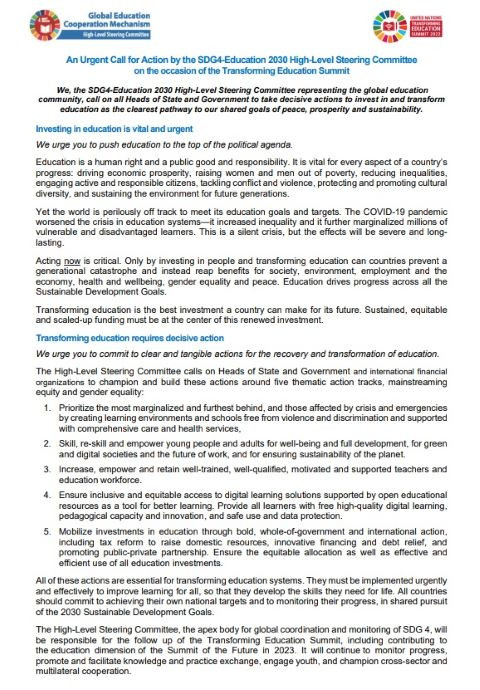 نداء عاجل من أجل العمل صادر عن اللجنة التوجيهية الرفيعة املستوى املعنية هبدف التنمية املستدامة 4 اخلاص ابلتعليم حىت عام 2 مبناسبة قمة التحول املنشود يف التعليم Year of publication: 2022 Corporate author: United Nations (UN) نحن ، اللجنة التوجيهية رفيعة المستوى للهدف الرابع من أهداف التنمية المستدامة للتعليم لعام 2030 التي تمثل مجتمع التعليم العالمي ، ندعو جميع رؤساء الدول والحكومات إلى اتخاذ إجراءات حاسمة للاستثمار في التعليم وتحويله باعتباره أوضح مسار لأهدافنا المشتركة المتمثلة في السلام والازدهار والاستدامة. An Urgent Call for Action by the SDG4-Education 2030 High-Level Steering Committee Year of publication: 2022 Corporate author: United Nations (UN) We, the SDG4-Education 2030 High-Level Steering Committee representing the global education community, call on all Heads of State and Government to take decisive actions to invest in and transform education as the clearest pathway to our shared goals of peace, prosperity and sustainability. Llamamiento a la acción urgente del Comité de Dirección de Alto Nivel para el ODS 4-Educación 2030 con motivo de la Cumbre sobre la Transformación de la Educación Year of publication: 2022 Corporate author: United Nations (UN) Nosotros, el Comité Directivo de Alto Nivel del ODS4-Educación 2030 que representa a la comunidad educativa mundial, hacemos un llamado a todos los Jefes de Estado y de Gobierno para que tomen medidas decisivas para invertir y transformar la educación como el camino más claro hacia nuestros objetivos compartidos de paz, prosperidad y sostenibilidad. Appel urgent à l’action du Comité directeur de haut niveau ODD 4 – Éducation 2030 lancé à l’occasion du Sommet sur la transformation de l’éducation Year of publication: 2022 Corporate author: United Nations (UN) Nous, le Comité directeur de haut niveau ODD4-Éducation 2030 représentant la communauté mondiale de l'éducation, appelons tous les chefs d'État et de gouvernement à prendre des mesures décisives pour investir dans l'éducation et la transformer en voie la plus claire vers nos objectifs communs de paix, de prospérité et de durabilité.
  My Plan, My Life and My Future: Pedagogical Guidelines for Economic and Financial Education Year of publication: 2014 Corporate author: Colombia. Ministry of National Education | Asobancaria This document is circumscribed within the framework of the pedagogical component of the EFE program (economic and financial education) and provides pedagogical guidance and tools to teachers, educational directors, parents and officials of the offices of education so that from the role that corresponds to them and, in accordance with the school autonomy established in the General Law of Education, lead the process of incorporating the EFE in the school curricula of the country's educational establishments. Mi plan, mi vida y mi futuro: Orientaciones Pedagógicas para la Educación Económica y Financiera Year of publication: 2014 Corporate author: Colombia. Ministry of National Education | Asobancaria Este documento se circunscribe en el marco del componente pedagógico del programa de EEF (educación económica y financiera) y brinda orientaciones pedagógicas y herramientas a docentes, directivos docentes, padres de familia y servidores de las secretarías de educación para que desde el rol que les corresponde y,en concordancia con la autonomía escolar establecida en la Ley General de Educación, lideren el proceso de incorporación de la EEF en los currículos escolares de los establecimientos educativos del país.
 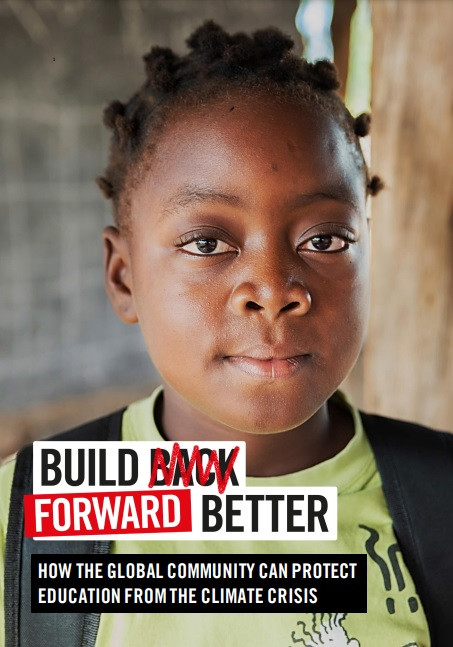 Build Forward Better: How the Global Community Can Protect Education from the Climate Crisis Year of publication: 2021 Author: Anya Cowley | Mathias Slettholm Corporate author: Save the Children Children’s increasing exposure to extreme weather events has serious implications for children’s access to quality education. 75 million children have their education disrupted each year – of which around half are due to environmental threats such as floods and drought. This briefing paper sets out how leaders can protect children’s learning from the impacts of the climate crisis, and the role that education can play in equipping the next generation with the tools they need to protect against its worst impacts.
 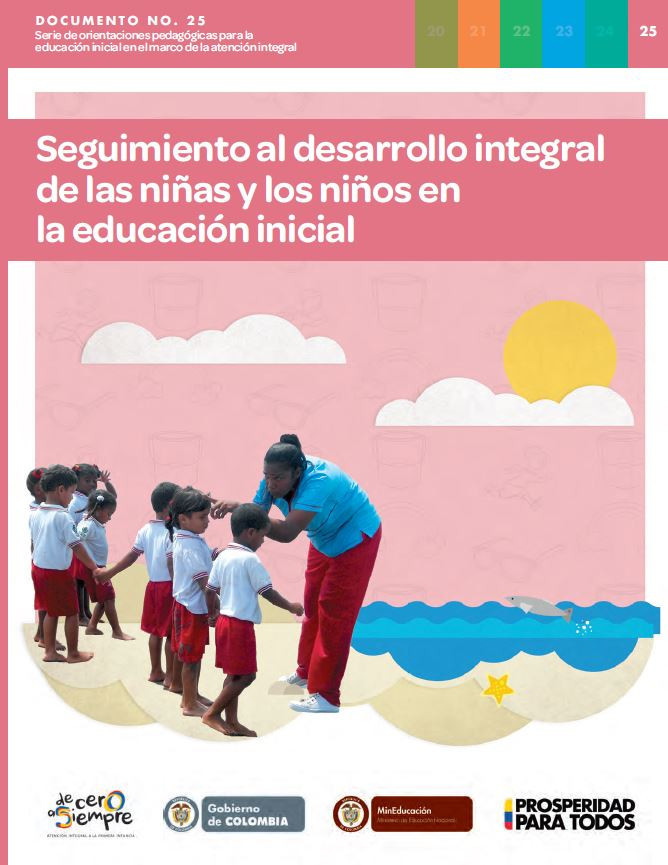 Tracing the Integral Development of Girls and Boys in Early Childhood Education Year of publication: 2014 Author: Sonia Marcela Tellez Corporate author: Colombia. Ministry of National Education This series of pedagogical guidelines for initial education takes up elements of the base document for the construction of the pedagogical guideline for initial education of the Ministry of National Education of Colombia and presents the technical line to favor the development and implementation of initial education within the framework of the Comprehensive care in a pertinent, timely and quality manner, through technical references. Seguimiento al desarrollo integral de las niñas y los niños en la educación inicial Year of publication: 2014 Author: Sonia Marcela Tellez Corporate author: Colombia. Ministry of National Education Esta serie de orientaciones pedagógicas para la educación inicial retoma elementos del documento base para la construcción del lineamiento pedagógico de educación inicial del Ministerio de Educación Nacional de Colombia y presenta la línea técnica para favorecer el desarrollo e implementación de la educación inicial en el marco de la atención integral de manera pertinente, oportuna y con calidad, a través de referentes técnicos.
 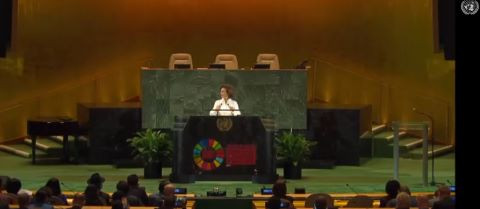 Audrey Azoulay (UNESCO) at the Transforming Education Summit Year of publication: 2022 Corporate author: United Nations (UN) This video shows the remarks made by Director-General of UNESCO Audrey Azoulay at the Opening segment of the UN Transforming Education Summit.