
Resources
Explore a wide range of valuable resources on GCED to deepen your understanding and enhance your research, advocacy, teaching, and learning.
3,376 Results found
 Indigenous peoples’ right to education Year of publication: 2019 Corporate author: UNESCO This document follows a previous series of thematic mappings on the implementation of the right to education regarding specifically Girls’ and Women’s Right to Education, the Right to Education for Persons with Disabilities, and the Right to Education and the Teaching Profession. It compiles practical examples related to indigenous people’s right to education, extracted from reports submitted by Member States within the framework of the Ninth Consultation on the implementation of the 1960 Convention and Recommendation against Discrimination in Education. It is intended to serve as a practical tool for both information sharingandadvocacy.
 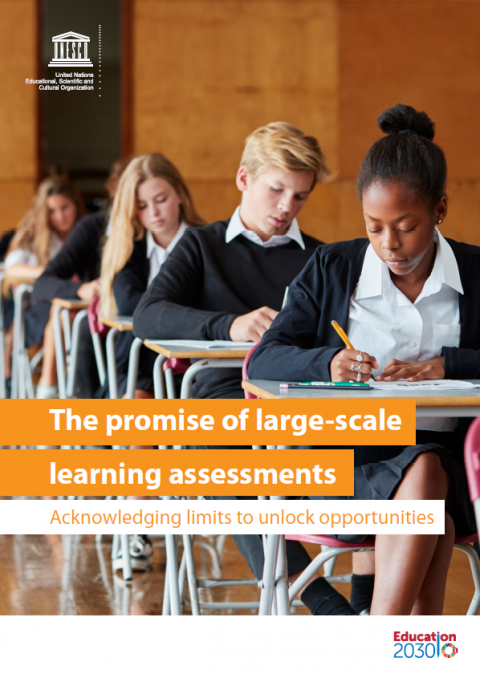 The promise of large-scale learning assessments Year of publication: 2019 Corporate author: UNESCO The benefits and advantages of Large-scale learning assessments(LSLAs) have been extensively reviewed in specialized literature, and there is growing recognition of the potential of assessment data to inform policy in a variety of ways. As a result, increasingly higher expectations have been placed on LSLAs as drivers of policy change over the past few decades. They are indeed expected to serve a range of uses, including monitoring, accountability, agenda-setting and analysis. The potential of such tools reaches far beyond reporting purposes. They can provide insight into areas in need of improvement and help pinpoint the most appropriate, promising and effective policy interventions. However, both national and cross-national learning assessments have raised some concerns. A growing volume of evidence calls attention to a range of unexpected and even negative effects resulting from such exercises. Drawing on a diverse body of evidence, including scholarly literature and the experience of a range of international organizations, development partners and assessment specialists, this publication reflects on the possible unintended consequences of LSLAs. Some concerns stem directly from the characteristics inherent to their design while others centre around the (mis)uses of data to inform agenda-setting and policy formulation.
 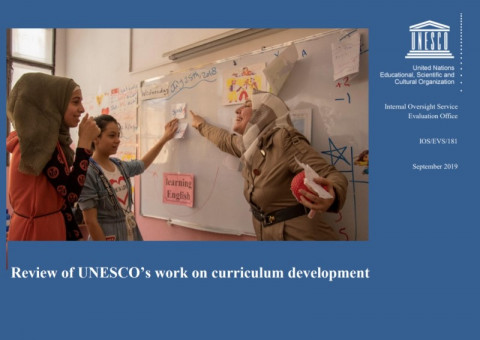 Review of UNESCO’s work on curriculum development Year of publication: 2019 Corporate author: UNESCO In response to a request from the UNESCO Executive Board in Spring 2019, the UNESCO Internal Oversight Service (IOS) Evaluation Office has undertaken this Review to provide a mapping and analysis of UNESCO’s activities in curriculum; to provide an overview of the roles typically played by other national, regional and international actors in the field of curriculum, and to assess the demand for services from UNESCO Member States and donors in the area of curriculum. The review found that curriculum is widely considered as the foundational building block of the education system, resulting from a pedagogical and political consensus with regard to what is important in learning and why, according to both the learner’s needs and societal visions. In light of challenges of the 21st century and the need to strengthen the role of the humanities in a context dominated by technology and data, the redefinition of curriculum has become one of the main concerns of national education authorities around the world. It is also widely accepted that quality curricula can support the attainment of Sustainable Development Goal 4 (SDG 4). The review concluded that curriculum, particularly curriculum development and reform processes, should remain an area of UNESCO’s education programme as it addresses a clear need from Member States. As curriculum implies both technical and political dimensions, UNESCO can act as a neutral broker, to facilitate informed and inclusive policy dialogue. It also has a long-term tradition in facilitating complex curriculum processes in often difficult and sensitive contexts. In addition, UNESCO has the capacity to serve as a platform for international exchanges and comparative research, including through networks such as UNESCO Chairs, and coordinating knowledge hubs and communities of practice. To address curriculum with added value in the future, UNESCO should focus on providing methodological technical assistance, capacity development, standard-setting and policy advice to support the curriculum processes, products and competences in Member States while ensuring a coordinated and holistic perspective. Complementary to work on curriculum from a methodological point of view, thematic Sections at Headquarters should continue elaborating content on specific crosscutting topics. Looking to the future, the review recommends (i) maintaining a specialized category 1 institute as a lead entity on curriculum development; (ii) refining the offer of technical assistance and capacity development to Member States on curriculum development and reform; (iii) developing and maintaining a knowledge base of materials and a roster of experts on curriculum; (iv) providing a platform for policy dialogue and exchange of experience among Member States; and (v) systematizing the inclusion of curriculum in standard-setting and normative work.
 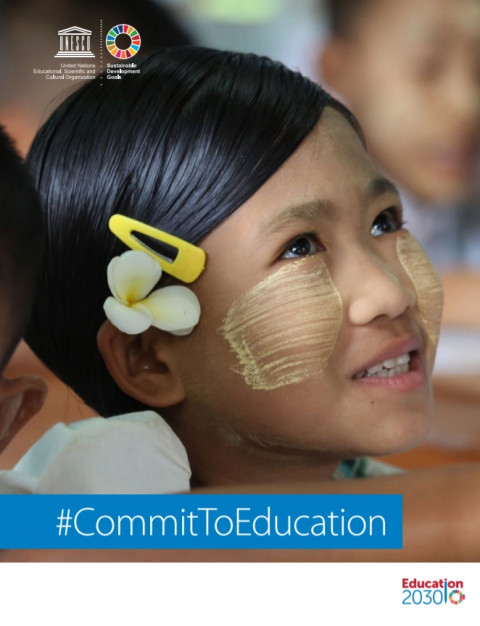 #CommitToEducation Year of publication: 2019 Corporate author: UNESCO In December 2018, building on a series of regional consultations, the education community struck a common chord at the Global Education Meeting in Brussels, the first gathering of its kind since the adoption of the 2030 Agenda. Ministers, representatives of government, multilateral organizations, civil society and other stakeholders agreed on a set of priorities for collective action. These include an overarching focus on the right to inclusive quality education; eradicating illiteracy; including migrants, displaced persons, refugees and stateless persons in education; quality gender-responsive education and training; strengthened education for global citizenship and sustainable development; more flexible and open learning systems providing a broader range of knowledge, skills and competences at all levels; qualified teachers and domestic and international resource mobilization. This set the ground for the first review of SDG 4 by the July 2019 High level Political Forum, the UN apex platform for the follow-up and review of Agenda 2030. As the UN agency responsible for the coordination of SDG 4, mandated by the World Education Forum in Incheon (Republic of Korea, 2015), UNESCO provided an analysis of where the world stands on SDG 4, how countries have taken up the goal in their policies, and made recommendations to act better, differently and collaboratively.
  United Nations Strategy and Plan of Action on Hate Speech Year of publication: 2019 Corporate author: United Nations (UN) In response to the alarming trend of rising hate speech around the world, Secretary-General António Guterres launched the United Nations Strategy and Plan of Action on Hate Speech, on 18 June 2019.Seeking to enhance the UN’s response to the global phenomenon of hate speech, this strategy is the outcome of close collaboration between 16 entities under the UN Working Group on Hate Speech and is coordinated by the United Nations Special Adviser on the Prevention of Genocide.The Strategy makes a firm commitment to step up coordinated action to tackle hate speech, both at global and national levels. Stratégie et Plan d’action des Nations Unies pour la lutte contre les discours de haine Year of publication: 2019 Corporate author: United Nations (UN) En réponse à l’alarmante montée de la xénophobie, du racisme et de l’intolérance, de la misogynie violente, de l’antisémitisme et de l’islamophobie dans le monde actuellement, le 18 juin 2019, le Secrétaire général, Antonio Guterres, a lancé la Stratégie et le Plan d’action des Nations Unies pour la lutte contre les discours de haine. Cette démarche part du constat qu’au cours des 75 dernières années, les discours de haine ont été annonciateurs des crimes atroces qui les ont suivis, génocide compris, comme au Rwanda, en Bosnie ou au Cambodge.La Stratégie et le Plan d’action des Nations Unies pour la lutte contre les discours de haine offrent au système des Nations Unies des orientations stratégiques pour lutter contre les discours de haine aux niveaux national et mondial. Y est précisé également comment le Secrétariat de l’ONU peut seconder les coordinateurs résidents des Nations Unies dans leur action face aux discours de haine.Les objectifs sont doubles : il s’agit premièrement de renforcer les efforts déployés par les entités des Nations Unies pour s’attaquer aux causes profondes et aux éléments moteurs des discours de haine, et deuxièmement, d’aider le système des Nations Unies à répondre efficacement aux conséquences sociétales des discours de haine. La estrategia y plan de acción de las Naciones Unidas para la lucha contra el discurso de odio Year of publication: 2019 Corporate author: United Nations (UN) En respuesta a la alarmante tendencia del aumento del discurso del odio por todo el mundo, el Secretario General, António Guterres, presentó la Estrategia y Plan de Acción de las Naciones Unidas para la lucha contra el Discurso de Odio, el 18 de junio de 2019.Con el objetivo de mejorar la respuesta de la ONU ante el fenómeno del discurso de odio, esta estrategia es el resultado de la estrecha colaboración entre 16 entidades dentro del Grupo de Trabajo de la ONU para la lucha contra el Discurso de Odio y está coordinada por la Asesora Especial de las Naciones Unidas para la Prevención del Genocidio.La Estrategia se compromete firmemente a intensificar la acción coordinada para hacer frente al discurso del odio, tanto a escala mundial como nacional. Стратегия и план действий Организации Объединенных Наций по борьбе с языком ненависти Year of publication: 2019 Corporate author: United Nations (UN) В ответ на тревожные тенденции роста ксенофобии, расизма и нетерпимости, воинствующего женоненавистничества, антисемитизма и ненависти в отношении мусульман во всем мире Генеральный секретарь Организации Объединенных Наций Антониу Гутерриш 18 июня 2019 года объявил о начале реализации Стратегии и плана действий Организации Объединенных Наций по борьбе с языком ненависти. Эта первая инициатива в рамках всей системы Организации Объединенных Наций, направленная на борьбу с языком ненависти, представляет собой дорожную карту того, как Организация может поддерживать и дополнять усилия государств. В стратегии подчеркивается необходимость комплексного противодействия ненависти при соблюдении свободы мнений и их выражения, а также сотрудничества с соответствующими заинтересованными сторонами, включая организации гражданского общества, средства массовой информации, технологические компании и платформы социальных сетей.
  Youth and changing realities: rethinking secondary education in Latin America Year of publication: 2017 Author: López.Néstor, Opertti.Renato, Vargas Tamez.Carlos Corporate author: UNESCO International Bureau of Education (IBE) | UNESCO IIEP Office for Latin America and the Caribbean Youth are central to UNESCO’s mandate. The more than one billion youth and adolescents in the world today hold the key to our shared future and to global sustainable development. With a focus on Latin America, this publication addresses the need to regain young learners’ trust in education and to arrive at more positive social constructions of youth among educators, parents and education authorities. In so doing, this study looks at educational experiences as meaning makers that shape youth cultures and identities as well as their attitudes toward education and its potential to improve individual and collective well-being. Adolescentes y jóvenes en realidades cambiantes: notas para repensar la educación secundaria en América Latina Year of publication: 2017 Author: López.Néstor, Opertti.Renato, Vargas Tamez.Carlos Corporate author: UNESCO International Bureau of Education (IBE) | UNESCO IIEP Oficina para América Latina y el Caribe La juventud es un tema central dentro del mandato de la UNESCO. Más de mil millones de jóvenes y adolescentes en el mundo actual tienen la llave de nuestro futuro en común y del desarrollo sostenible, justo e inclusivo a nivel mundial. Con el foco puesto en América Latina, la publicación aborda la necesidad de recuperar la confianza de las y los jóvenes y adolescentes en la educación y de llegar a construcciones sociales de la juventud más completas y positivas entre las y los educadores, los padres y madres, las comunidades y las autoridades educativas. De este modo, el estudio analiza las experiencias educativas en cuanto productoras de significado que configuran las culturas e identidades de la juventud, al igual que sus actitudes hacia la educación y su potencial para mejorar y sostener el bienestar individual y colectivo.