
Resources
Explore a wide range of valuable resources on GCED to deepen your understanding and enhance your research, advocacy, teaching, and learning.
3,438 Results found
 2024 세계시민교육 국내 모니터링 체제 구축 연구 Year of publication: 2024 Author: 박환보 | 박경희 | 강지영 | 김종훈 | 지선미 Corporate author: 유네스코 아시아태평양 국제이해교육원 본 연구는 SDG 4.7 달성을 위한 국내 이행 노력과 성과를 효과적으로 모니터링하기 위해 유네스코 아태교육원이 다년간 수행해 온 연구의 연장선에 있다. 2018년 기초연구를 시작으로 2019년에는 지표 개발, 2020년에는 지표 정교화, 2021년에는 관련 사례분석, 2022년에는 도구 개발, 2023년에는 조사 내용 확장을 통해 세계시민교육 이행 현황을 검토해 왔다. 이 과정에서 교육정책, 교육과정, 교사교육, 학생평가 영역의 세계시민교육 이행 및 모니터링의 발전 방향과 방법을 제시해 온 바 있다.본 연구에서는 선행 연구에서 제안된 국내 세계시민교육 지표 체계를 활용하여 각 시도교육청의 정책 자료와 조직 현황을 수집하고, 세계시민교육 관련 사업 및 인력 비중을 분석하여 지역별·연도별 국내 세계시민교육 정책 이행 현황을 비교하였다. 또한, 2015년 SDG 4.7 세부목표 설정 이후 처음 개정된 2022 개정 교육과정(중학교)에서 세계시민교육의 반영 정도를 분석함으로써 향후 효과적인 이행과 모니터링 체제 구축에 필요한 시사점을 도출하고자 하였다. 이를 위해 문헌 연구를 통해 국내외 자료를 종합적으로 검토하고, 전문가 자문 등을 활용하여 세계시민교육 정책과 교육과정 주류화 정도를 보다 체계적으로 분석하였다.
  세계시민교육 협력센터 구축을 위한 타당성 연구: 동아프리카를 중심으로 Year of publication: 2024 Author: 박환보 | 임진호 Corporate author: 유네스코 아시아태평양 국제이해교육원 본 연구는 유네스코 아태교육원의 '세계시민교육 협력센터 구축 사업'의 동아프리카 지역 내 추진을 위해 동아프리카 지역 3개국의 교육제도 및 세계시민교육 현황과 세계시민교육 협력센터 설립 타당성을 분석한 연구이다.유네스코 아태교육원은 세계시민교육 확산의 일환으로 2021년 태국과 말레이시아를 시작으로, 2022년 필리핀, 캄보디아, 2023년 인도네시아, 라오스, 2024년 네팔, 방글라데시 등 총 8개국에 세계시민교육 협력센터를 설립·운영하며 현지 교사 및 교사교육가의 세계시민교육 역량 강화를 지원해오고 있다. 세계시민교육 협력센터 사업은 처음에는 아세안 국가를 대상으로 시작하였지만, 점차 그 대상을 서남아시아 지역으로 확장시켰고, 향후 아프리카 지역까지 확대해 나갈 계획에 있다. 이러한 배경에서 영어 언어권에 위치하고 유네스코와의 협력 사업 참여 경험이 풍부한 동아프리카 3개국 케냐, 우간다, 탄자니아를 대상으로 세계시민교육 협력센터 설립의 타당성을 검토하였다.
  ACER-APCEIU Global Citizenship Education Monitoring Toolkit: For Teachers, Schools and System Leaders Year of publication: 2024 Author: Rachel Parker | Amy Berry | Payal Goundar | Karena Menzie-Ballantyne Corporate author: Australian Council for Educational Research (ACER) | APCEIU The APCEIU-ACER GCED Monitoring Toolkit was developed and informed by research conducted from 2022-2024 in collaboration with partners in Australia, Lao PDR, Philippines, and South Korea. The toolkit aims to assist education stakeholders to embed GCED within policy and practice in alignment with local, regional, and international frameworks. Target users of this toolkit include policy makers, education department and ministry personnel, leaders, and educators at all levels in both formal and non-formal education sectors.The toolkit explores effective GCED including how to conceptualise and define, plan, enact and monitor implementation, and how to measure success. By guiding educators and leaders to align their enactment and monitoring efforts to international guidance, research, theory and practice, this toolkit supports a robust and evidence-informed process for enacting GCED in ways that nurture learners as proactive and empowered global citizens.Phase I Report (Link): https://www.unescoapceiu.org/post/4995Phase II Report (Link): https://www.unescoapceiu.org/post/5184
  2023 세계시민교육 국내 모니터링 체제 구축 연구 Year of publication: 2023 Author: 박환보 | 박경희 | 김영식 | 김형렬 | 엄정민 Corporate author: 유네스코 아시아태평양 국제이해교육원 본 연구는 SDG 4.7 달성을 위한 국내 이행 노력의 효과적 모니터링을 위하여, 글로벌 지표(4.7.1)에 부합하면서 국내 맥락과 실효성이 반영된 국내 세계시민교육 이행 모니터링 체제 구축 방안을 모색하는 데 목적이 있다. 이를 위해 본 연구에서는 국제사회가 SDG 4.7 이행 상황을 구체적으로 어떠한 방식으로 모니터링하고 있는지를 추가 분석하는 한편, 기존 국내 모니터링 체계 구축 연구의 연장선상에서 시도교육청별 세계시민교육 정책 이행 실태를 전반적으로 파악하고, 이와 함께 서울시교육청을 중심으로 세계시민교육 정책 참여 학교 특성을 설명하는 요인을 실증적으로 분석하였다.
  2022 다문화가정 대상국가와의 교육교류사업 성과분석: 포스트코로나 온라인 교육교류 추진방안 연구 Year of publication: 2022 Author: 박순용 | 차보은 Corporate author: 연세대학교 산학협력단 | 유네스코 아시아태평양 국제이해교육원 이 연구는 ‘다문화가정 대상국가와의 온라인 교육교류사업’의 사업성과를 점검하고 미래지향 적인 교육교류사업으로의 재구조화와 방향성 제시를 위해 진행되었다. 연구의 주요 내용은 온라인 교육교류 현황을 분석하고, 온라인 교육교류에 참여한 국내·외 참여교사의 경험을 인터뷰한후 면밀히 분석하여 포스트-코로나-19 온라인 교육교류 추진방안을 위한 방향과 과제를 모색하는 것이다. 이를 위해 문헌연구와 더불어 다수의 국내·외 참가교사들에 대해 대면 초점집단면담(FGI)과 비대면 1대1 온라인 심층면담을 진행하였고 온라인 교육교류사업의 보완과 개선에 대한 가감 없는 의견을 수집하였다. 수집된 질적 자료를 토대로 분석한 내용을 통해 향후 국제 교육교류사업이 소기의 목적을 달성하기 위해 적용이 권고되는 몇 가지 정책 제안을 하였다.
  아태지역 관점에서 세계시민역량 정의: 예비연구 Year of publication: 2023 Author: 임현묵 | 박선운 | 이무성 | 고석영 Corporate author: 유네스코 아시아태평양 국제이해교육원 본 연구는 아태지역의 맥락과 관심에 비춰 세계시민역량을 해석하고 재개념화하는 작업을 준비하는 데에 목적이 있다. 이를 위해 세계시민역량에 관한 국내외 기존 문헌을 검토하면서, 재개념화 작업에 참여할 연구자를 파악하기 위해 아태지역의 연구 현황을 분석한다. 이와 함께 세계시민교육이 국제사회의 주요 의제로 포함된 2015년 이후 아태교육원이 지금까지 수행한 여러 세계시민교육 역량강화 프로그램의 주제와 내용을 분석하여 아태교육원이 추구하는 세계시민역량의 핵심을 밝히고자 한다.
  한국 평화교육의 비판적 검토: 유네스코 평화교육의 관점에서 Year of publication: 2020 Author: 앨런 스미스 | 강순원 | 오덕열 Corporate author: 유네스코 아시아태평양 국제이해교육원 본 연구는 평화・자유・정의・연대・문화적 다양성・관용・지속가능 발전 등 보편적 가치를 토대로 한 유네스코 평화교육이 동북아시아의 특수성을 반영한 지역 평화교육의 토대로 작용할 수 있다는 가정에서 출발한다. 본 연구에서는 우선 유네스코 및 유럽평의회가 제2차 세계대전 이후, 특히 냉전과 탈냉전 시대를 통해 발전시킨 평화교육을 개괄적으로 소개하는 한편, ‘평화・통일교육’으로 일컬어지기도 하는 한국 평화교육을 광범위하고 심도 있게 분석하고 있다. 평화교육으로서의 통일교육이 어떻게 유네스코 평화교육에 접목하는 것, 현재 통일교육의 범주에서 이루어지고 있는 평화・통일교육의 현황을 중심으로 향후 평화교육 과제를 제시하는 것에 목적을 둔다.
  국제이해교육 사진교실 개선 방안 연구 Year of publication: 2020 Author: 박순용 | 김종훈 Corporate author: 유네스코 아시아태평양 국제이해교육원 본 연구는 아태교육원이 운영한 국제이해교육 사진교실 (EIU Photo Class)의 역사와 기록들을 되짚어보며 청소년의 세계시민교육 함양 및 글로벌 역량 강화를 위해 나아갈 방향과 개선점을 모색하는데 그 목적이 있다. 본 연구에서는 관련 아카이브 자료를 검토 및 분석하고, 그동안 사진교실에 참가하였던 아시아·태평양 지역의 학생, 작가, 주최·협력기관 관계자들과의 면담을 실시하였으며, 사진교실을 통해 세계시민교육의 취지가 어떻게 구현되었는가와 앞으로의 진행방향을 청소년 및 교육관계자들의 관점에서 점검하였다.
 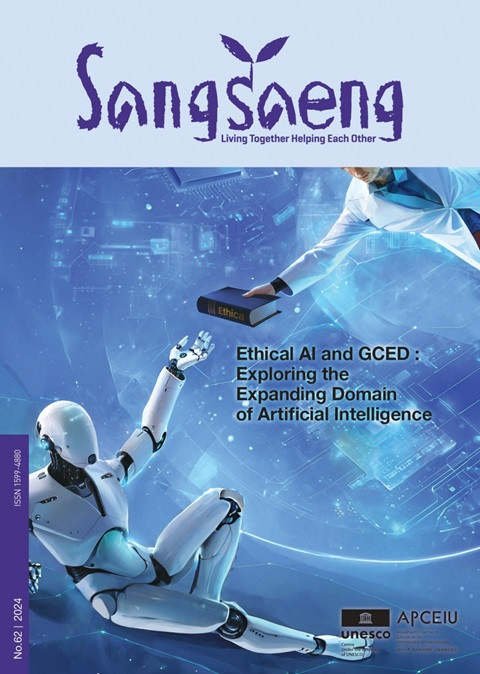 Ethical AI and GCED: Exploring the Expanding Domain of Artificial Intelligence (SangSaeng; No. 62, 2024) Year of publication: 2024 Corporate author: APCEIU The 62nd issue of SangSaeng has been published with the theme of “Ethical AI and GCED: Exploring the Expanding Domain of Artificial Intelligence.” AI has never been as pervasive and influential as it is in today’s rapidly changing world. Despite the convenience and cutting-edge technology AI has offered us, it has the potential to pose a threat to humanity. This is where ethics for AI should come forward. In this regard, this issue will lead readers to the alarming side of AI as well as its future developments, focusing on the importance of GCED and AI ethics in tackling any potential problems. Contents03 Editor's Note 04 Special ColumnEmbracing Change to Cultivate Success — Integrating Global Citizenship Education into Tertiary Education / Dendev Badarch 08 FOCUS: Ethical AI and GCED: Exploring the Expanding Domain of Artificial IntelligenceRole of Ethics in the Era of AI — Protecting and Guiding AI Processes for Humanity to Flourish / Emma Ruttkamp-BloemPaying Attention to AI Ethics — An Avenue for a New Competitive Edge in Business / Myoungshin KimDriving Innovative Education — Balancing Future Possibilities and Ethical Concerns: How GCED Can be Used to Address AI Issues / Angelique Southern 20 Special ReportEmpowering a Climate Generation — From Classrooms to Climate Frontlines: The Transformative Role of Education highlighted at COP28 / Djian Sadadou 22 Best PracticesNavigating an AI Future — Ethical AI and the Importance of Critical Thought / Hannah GrantGLACE Brings the World to a City — Empowering Youth as Global Citizens: Lessons from Navotas City’s Project GLAC / Marco D. MedurandaLowering Eco-Anxiety — Teaching Climate Change Through Media and Information Literacy / Laetitia Legrand 33 GCED YOUTH NETWORK New Wave of Youth Advocacy — Role of AI in Youth Advocacy and its Ethical Implications to Global Citizenship / Oshan M. Gunathilake and Diego Manrique 36 Understanding the Asia Pacific RegionDiscovering Auroville — Where Boundaries Fade, Nature Thrives, and Global Minds Unite / Akanksha Arya 39 Peace in My MemoryHappiness without Violence — Mindanao Peace ForumCelebrates Building a Culture of Peace / Ludivina Borja-DekitPeace Scholar Passes Away Amidst Turbulent Times / Kwang-Hyun KIM 45 Story TimeThe Right Footing — My Life Has Purpose Thanks to Football / Hajar Abulfazl 48 LetterShared Challenges of Global Citizens / Natsuki Nagata 50 APCEIU in Action
  2025 세계시민교육 국내 모니터링 체제 구축 연구 Year of publication: 2025 Author: 박환보 | 박경희 | 길혜지 | 강지영 | 김종훈 | 지선미 Corporate author: 유네스코 아시아태평양 국제이해교육원 유네스코 아시아태평양 국제이해교육원(APCEIU)은 한국의 맥락에서 지속가능발전목표(SDG) 4.7의 이행 현황을 파악하고자 2018년부터 세계시민교육 국내 모니터링 연구를 수행해왔다. 매년 정책, 교육과정, 교사교육, 학습자 평가 등 교육체계 전반을 대상으로 연구를 실시하며 국내 이행 현황을 분석하고, 이를 토대로 데이터 기반의 정책 환류를 도모해왔다. 2025년 연구는 이러한 연속적 노력의 일환으로, 국가·지역·학교 수준에서 세계시민교육이 어떻게 추진·실천되고 있는지를 종합적으로 검토하고자 실시되었다.본 연구는 세 가지 영역을 중심으로 이루어졌다. 첫째, 시·도교육청의 세계시민교육 관련 정책 및 사업 운영 현황을 분석하였다. 둘째, 2022 개정 초등학교 교육과정 내 세계시민교육 반영 양상을 과목별·영역별로 검토하였다. 셋째, 교사의 세계시민교육 실천 사례를 학습자 평가 측면에서 분석하였다. 이를 토대로 향후 국내 세계시민교육 모니터링을 위한 정책적 시사점도 제시하였다.이번 연구는 정책 적용 단계에서부터 현장 수업 과정에 이르기까지 국가 교육체계 전반에서 세계시민교육 이행 현황을 종합적으로 분석하였다는 점에서 의의를 지닌다. 연구 결과는 향후 세계시민교육 국내 모니터링 체제의 고도화와 SDG 4.7 글로벌 모니터링, 그리고 Post-2030 글로벌 교육 의제 논의에 참고 자료로 활용될 수 있을 것이다.