
Resources
Explore a wide range of valuable resources on GCED to deepen your understanding and enhance your research, advocacy, teaching, and learning.
1,402 Results found
 Segundo compendio de prácticas ejemplares en materia de educación para el desarrollo sostenible Year of publication: 2009 Corporate author: UNESCO Associated Schools Project Network (ASPnet) This second collection of ASPnet good practices for quality education takes stock of some of the contributions being made by UNESCO Associated Schools in support of the United Nations Decade of Education for Sustainable Development (DESD). Second recueil de bonnes pratiques: l'éducation pour le développement durable Year of publication: 2009 Corporate author: UNESCO Associated Schools Project Network (ASPnet) This second collection of ASPnet good practices for quality education takes stock of some of the contributions being made by UNESCO Associated Schools in support of the United Nations Decade of Education for Sustainable Development (DESD). Second collection of good practices: education for sustainable development Year of publication: 2009 Corporate author: UNESCO Associated Schools Project Network (ASPnet) This second collection of ASPnet good practices for quality education takes stock of some of the contributions being made by UNESCO Associated Schools in support of the United Nations Decade of Education for Sustainable Development (DESD). La Educación sobre el medio ambiente en acción: una historia de la reserva de biosfera Tonlé Sap de Camboya Year of publication: 2013 Author: Keat Kunthea Osmose is a not-for-profit association linking community-based conservation, ecotourism and environmental education in Prek Toal. Osmose has been supported by UNESCO in Phnom Penh in many projects including: production of a poster depicting the flooded forest and plants of the Tonle Sap Biosphere Reserve, handicraft, and particularly, environemental education (EE). EE was initiated in 2000 when Osmose realized there was an increase in the child population and that education was therefore needed in order to protect their natural resources. L'Education à l'environnement en action: l'exemple de la réserve de biosphère du Tonlé Sap au Cambodge Year of publication: 2013 Author: Keat Kunthea Osmose is a not-for-profit association linking community-based conservation, ecotourism and environmental education in Prek Toal. Osmose has been supported by UNESCO in Phnom Penh in many projects including: production of a poster depicting the flooded forest and plants of the Tonle Sap Biosphere Reserve, handicraft, and particularly, environemental education (EE). EE was initiated in 2000 when Osmose realized there was an increase in the child population and that education was therefore needed in order to protect their natural resources. Environmental education in action: a story from the Tonle Sap biosphere reserve in Cambodia Year of publication: 2013 Author: Keat Kunthea Osmose is a not-for-profit association linking community-based conservation, ecotourism and environmental education in Prek Toal. Osmose has been supported by UNESCO in Phnom Penh in many projects including: production of a poster depicting the flooded forest and plants of the Tonle Sap Biosphere Reserve, handicraft, and particularly, environemental education (EE). EE was initiated in 2000 when Osmose realized there was an increase in the child population and that education was therefore needed in order to protect their natural resources.
 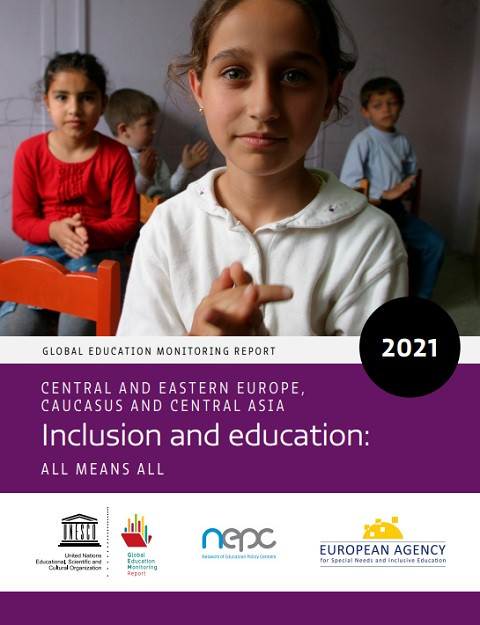 Global Education Monitoring Report, 2021, Central and Eastern Europe, Caucasus and Central Asia: Inclusion and Education; All Means All Year of publication: 2021 Corporate author: Global Education Monitoring Report Team | European Agency for Special Needs and Inclusive Education | Network of Education Policy Centers Prepared by the Global Education Monitoring (GEM) Report, in partnership with the European Agency for Special Needs and Inclusive Education and the Network of Education Policy Centers, the regional report on inclusion and education in Central and Eastern Europe, the Caucasus and Central Asia offers a deep dive into the core challenges and key solutions. The region is working hard to overcome a legacy, whereby children with disabilities attended special schools, once wrongly regarded as an effective solution, segregated by type of disability, if not fully excluded from education.The report draws on in-depth profiles of 30 education systems in the region. It also presents the additional risks to inclusion now posed by the COVID-19 pandemic. Building on the 2020 Global Education Monitoring Report, it documents barriers facing learners, particularly where multiple disadvantages intersect. Its recommendations provide a systematic framework for identifying and dismantling these barriers, according to the principle that ‘every learner matters and matters equally’.
 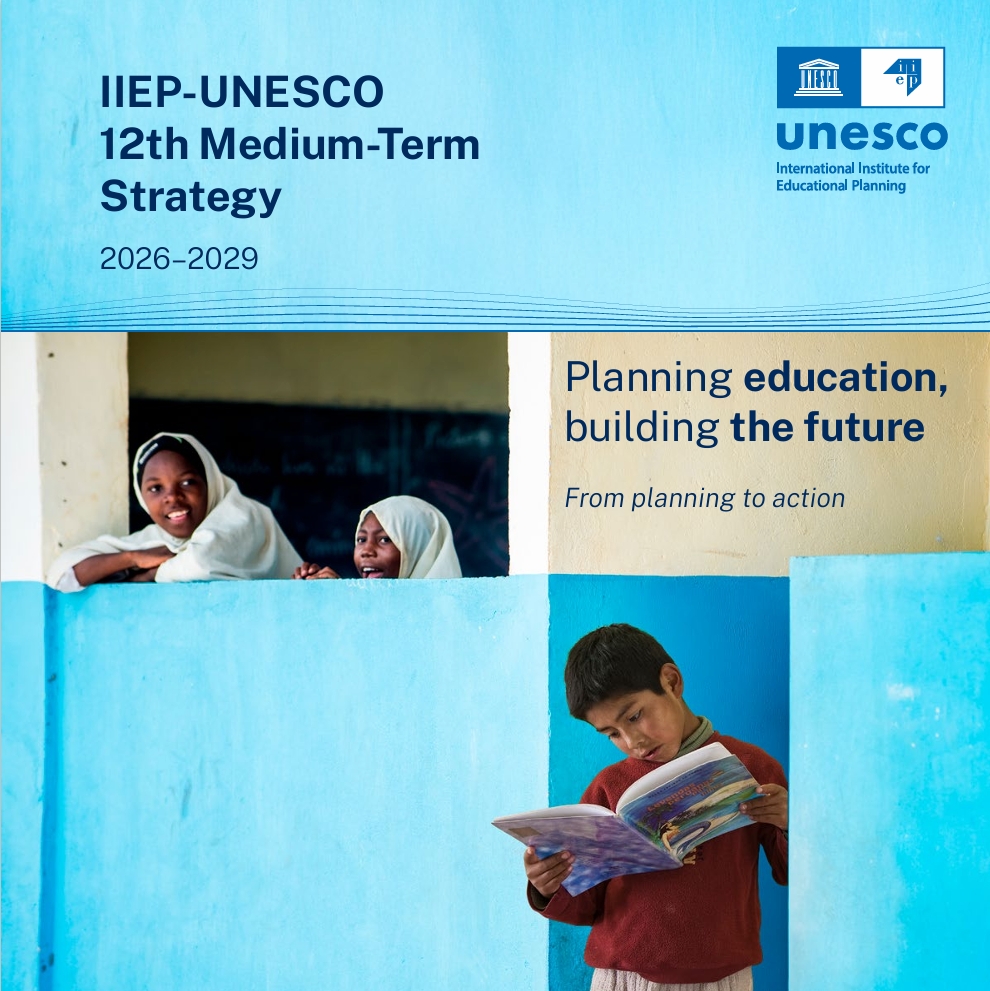 IIEP-UNESCO 12th Medium-Term Strategy: 2026–2029 Year of publication: 2026 Corporate author: UNESCO International Institute for Educational Planning (IIEP) The 2026-2029 Medium-Term Strategy of the UNESCO International Institute for Educational Planning provides a vision for transforming educational planning into tangible results for education systems across the globe. Building on more than 60 years of experience, the Strategy puts the focus not only on policy and plan design, but on collective and agile implementation.
  How Can We Talk About Climate Without Turning It Into a Contentious Issue? Year of publication: 2023 Author: Laurent Cordonier Corporate author: Le Monde How can we tackle the climate issue without talking only to the convinced? Debates on the climate issue run the risk of becoming a highly divisive political issue, hampering much-needed action, warns sociologist Laurent Cordonier in a new episode of “Chaleur humaine”, a weekly podcast for reflection and debate on ways of tackling the climate challenge. Comment parler du climat sans en faire un sujet d'affrontement ? Year of publication: 2023 Author: Laurent Cordonier Corporate author: Le Monde Comment aborder le sujet du climat sans parler seulement aux convaincus ? Les débats sur la question climatique risquent de devenir un sujet de clivage politique très fort, ce qui entraverait l’indispensable action, prévient le sociologue Laurent Cordonier dans un nouvel épisode du podcast « Chaleur humaine », podcast hebdomadaire de réflexion et de débat sur les manières de faire face au défi climatique.