
Resources
Explore a wide range of valuable resources on GCED to deepen your understanding and enhance your research, advocacy, teaching, and learning.
3,433 Results found
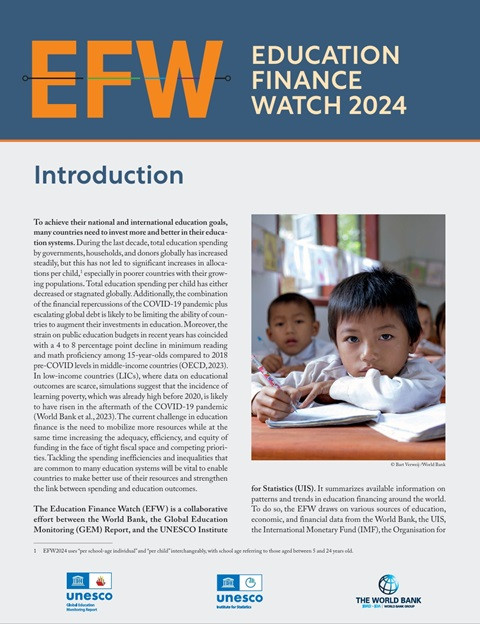 Education Finance Watch 2024 Year of publication: 2024 Corporate author: Global Education Monitoring Report Team | UNESCO Institute for Statistics (UIS) | World Bank The Education Finance Watch (EFW) is a collaborative effort between the World Bank, the GEM Report, and the UNESCO Institute for Statistics (UIS). The EFW aims to provide an analysis of trends, patterns, and issues in education financing around the world. The EFW uses various sources of education, economic, and financial data from the World Bank, UIS, the International Monetary Fund, and the Organization of Economic Co-operation and Development (OECD).
 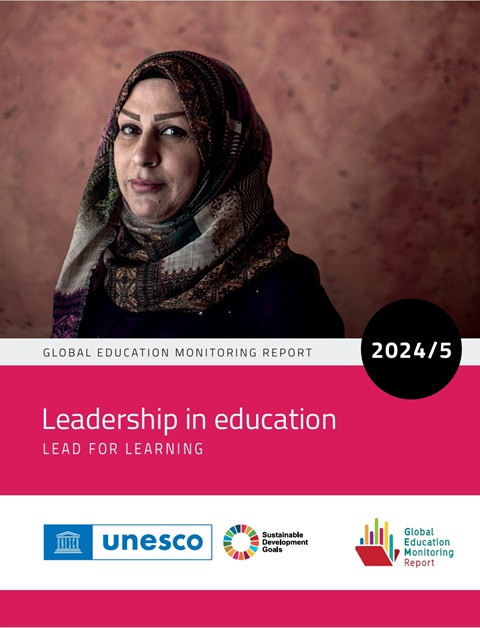 Global Education Monitoring Report 2024/5: Leadership in Education; Lead for Learning Year of publication: 2024 Corporate author: Global Education Monitoring Report Team Leadership matters in education. Strong leaders are needed to help institutions, systems and societies change for the better. Strong leaders work in collaboration with other actors towards the same goals. At the school level, they are the principals but also those who surround them, in the school and in the community, in positions of responsibility. At the system level, they are civil servants working as district officers, supervisors or planners. At the societal level, they are political leaders, as well as a very broad range of actors who help shape education goals, from unions and researchers to civil society and the media.Entitled Lead for learning, this report argues that, in pursuing specific goals, education leaders are more than just managers. They are change agents, who need the time, trust and support to focus on setting a vision and developing the people they serve and work with. The report calls for investment in and empowerment of school and system leaders. There should be fair hiring processes and growth opportunities that recognize the full scope of leaders’ roles. Moreover, leadership works best when it is shared, empowering others to lead as they can within their roles.There is no one leadership style that works. Different contexts, capacities and personalities mean that styles vary, and rightfully so. This, combined with the different goals that each leader is trying to achieve, means that their impact is hard to fully assess. Yet, all research points towards the critical need for strong leaders to continuously improve education quality. School leaders are second only to teachers for transforming student outcomes. Meanwhile, politicians wield huge influence in making equitable and inclusive education a national priority.Supporting this seventh Global Education Monitoring Report is a new series of country profiles on PEER, an online resource supporting policy dialogue and describing policies and regulations on school principal selection, preparation and development in the world’s education systems.
  Rapport mondial de suivi sur l'éducation 2024/5, Leadership dans l'éducation : diriger pour apprendre Year of publication: 2025 Corporate author: Global Education Monitoring Report Team Le Rapport mondial de suivi sur l'éducation 2024/5 évalue les progrès accomplis dans la réalisation des objectifs du Programme 2030 et montre que, si le nombre d'enfants scolarisés et achevant l'enseignement secondaire n'a jamais été aussi élevé, de nombreux domaines connaissent une stagnation. Le leadership joue un rôle central pour y remédier. Aucune école n’améliore les résultats des élèves sans un bon leader pour montrer la voie. Sur la base d’un examen des lois et politiques concernant la sélection, la préparation et les conditions de travail des chefs d'établissement de 211 systèmes éducatifs, le rapport analyse les leviers stratégiques permettant d'attirer et de retenir des leaders de talent.Les possibilités d’exercer un leadership ne se limitent pas aux dirigeants des écoles, elles s’étendent à des personnes qui occupent d’autres postes dans le système éducatif et en dehors de celui-ci, telles que les directeurs adjoints, les enseignants et les élèves lorsque le leadership est partagé, les responsables politiques, la société civile, les organisations internationales, les syndicats et les médias, qui contribuent à définir les objectifs en matière d’éducation.Le rapport préconise que des efforts soient faits pour former des leaders dans quatre dimensions essentielles : fixer des objectifs, donner la priorité à l’apprentissage, encourager la collaboration et faire évoluer les personnes. Pour que ces dimensions se concrétisent, il faut faire confiance aux personnes occupant des postes de direction et leur donner les moyens d’agir ; il faut les recruter grâce à des pratiques d’embauche équitables ; les soutenir dans leur évolution ; et les encourager à mettre en place une culture de collaboration. Le rapport appelle également à investir dans la capacité des responsables de l'éducation à jouer un rôle de leader au sein du système, en mettant particulièrement l'accent sur la direction pédagogique et l'assurance qualité
  Informe de seguimiento de la educación en el mundo, 2024/5: Liderazgo en la educación: liderar por el aprendizaje Year of publication: 2025 Corporate author: Global Education Monitoring Report Team El Informe de seguimiento de la educación en el mundo 2024-2025 evalúa los avances hacia el logro de las metas de 2030 y muestra que, aunque hay más niños escolarizados y que finalizan la educación secundaria que nunca, en muchos ámbitos hay estancamientos. El liderazgo es fundamental para abordar esta cuestión. Ninguna escuela puede mejorar los resultados de los alumnos sin un buen líder que muestre el camino a seguir. Partiendo de un examen de la legislación y las políticas relativas a la selección, preparación y condiciones laborales de los directores de escuela de 211 sistemas educativos, el informe analiza instrumentos de política para atraer y retener a líderes talentosos.El potencial de liderazgo no se limita a los líderes escolares, sino que abarca también a las personas que ocupan otros puestos en el sistema educativo, así como fuera de él, desde subdirectores, docentes y alumnos, cuando el liderazgo es compartido, hasta líderes políticos, la sociedad civil, organizaciones internacionales, sindicatos y medios de comunicación, que contribuyen a definir los objetivos de la educación.El informe insta a adoptar medidas para que los líderes desarrollen sus capacidades en las cuatro dimensiones fundamentales del liderazgo: establecer expectativas, centrarse en el aprendizaje, fomentar la colaboración y favorecer el perfeccionamiento personal. Para llevar a la práctica estas dimensiones, es esencial confiar en quienes ocupan puestos de liderazgo y empoderarlos; reclutarlos mediante prácticas de contratación justas; brindarles apoyo para que se perfeccionen; y motivarlos a fomentar culturas de colaboración. Asimismo, el informe pide que se invierta en fortalecer las capacidades de los funcionarios de educación para que actúen como líderes del sistema, especialmente en el liderazgo pedagógico y la garantía de la calidad.
 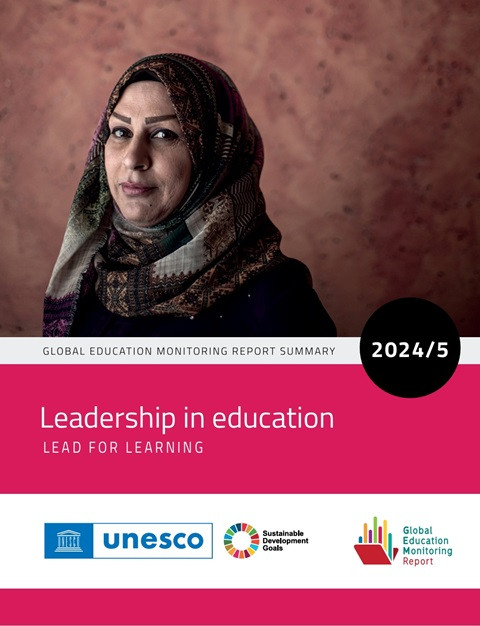 [Summary] Global Education Monitoring Report Summary 2024/5: Leadership in Education; Lead for Learning Year of publication: 2024 Corporate author: Global Education Monitoring Report Team The 2024/5 Global Education Monitoring Report assesses progress towards the 2030 targets and shows that, while more children are in school and completing secondary education than ever before, there is stagnation in many areas. Leadership is central to addressing this. There are no schools that improve student outcomes without a good leader showing the way. Building on a review of legislation and policies on the selection, preparation and working conditions of school principals in 211 education systems, the report discusses policy levers to attract and retain talented leaders.Leadership’s potential is not limited to school leaders: it extends to individuals in positions elsewhere in the education system as well as outside of it, from assistant principals, teachers and students, when leadership is shared, to political leaders, civil society, international organizations, unions and the media, who help shape education goals.The report calls for efforts to develop leaders in four key leadership dimensions so that they can set expectations, focus on learning, foster collaboration and develop people. For these dimensions to be realized, people in leadership positions should be trusted and empowered; recruited through fair hiring practices; supported to grow; and encouraged to develop collaborative cultures. The report also calls for investment in education officials’ capacity to serve as system leaders, with a particular emphasis on instructional leadership and quality assurance.
  UNESCO-UNEVOC Medium-Term Strategy for 2021-2023: Strengthening TVET Capacities and Cooperation in the Member States Year of publication: 2020 Corporate author: UNESCO International Centre for Technical and Vocational Education and Training (UNEVOC) The Medium-Term Strategy for 2021-2023 (MTS-III) sets out how UNESCO-UNEVOC will support TVET institutions to meet the demands of dynamic labour markets and provide quality skills training for a sustainable future of work. MTS-III focuses on developing the capacities of TVET leaders, supporting TVET institutions in implementing change programmes, and facilitating knowledge sharing and peer learning within the UNEVOC Network.
 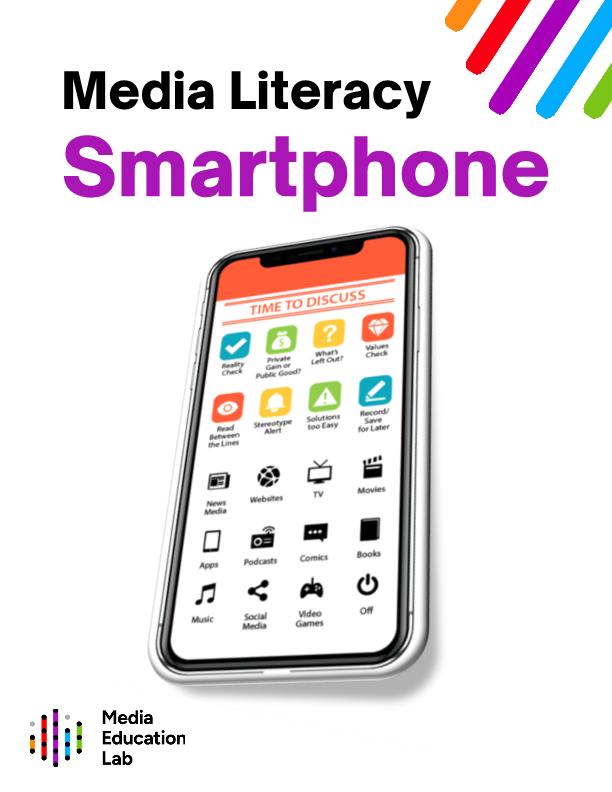 Media Literacy Smartphone Year of publication: 2020 Author: Renee Hobbs | Pam Steager Corporate author: Media Education Lab Learn how to use the Media Literacy Smartphone with learners of all ages! Download the free Learning Guide to bring the power of media literacy analysis to your learners!These easy-to-use cards, shaped exactly in the size of a smartphone, are available to educators for classroom use. You can use these simple paper cards to introduce a structured approach that helps students learn to critically analyze any media text --- web sites, books, advertising, news, TV shows, movies, video games, magazines and music. One side of the smartphone displays the various "apps" for analyzing a media text and the other side displays the "five critical questions" of media literacy developed by Renee Hobbs.Pair the smart phone with the LOVE IT OR HATE IT cards for a dynamic and fun learning experience.
 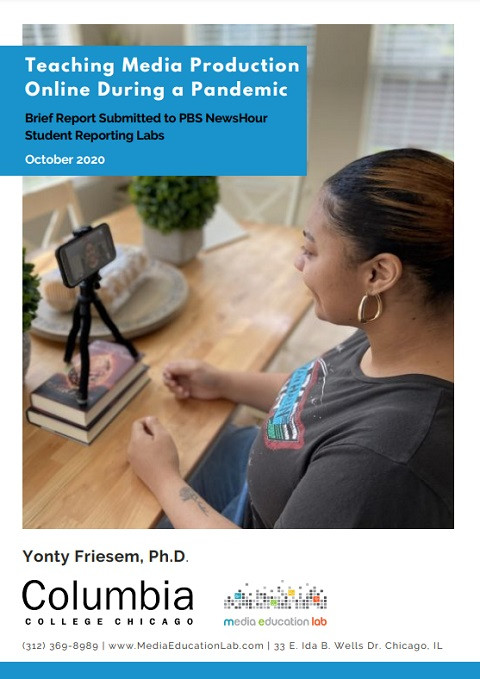 Teaching Media Production Online During a Pandemic: Brief Report Submitted to PBS NewsHour Student Reporting Labs Year of publication: 2020 Author: Yonty Friesem Corporate author: Media Education Lab How are media production teachers coping with remote video production with students?Starting in mid-March, US schools moved to remote instruction due to COVID-19 pandemic. Media production teachers had to shift their teaching to online without the possibility to use their high-end equipment in school. This report showcase the findings from Dr. Yonty Friesem’s research with media teachers who used the curriculum of PBS NewsHour Student Reporting Lab as they adapt to online and remote instruction. Dr. Friesem shared the report with PBS NewsHour Student Reporting Lab and the audience of the webinar.
  How to Understand Misinformation, Disinformation and Malinformation Year of publication: 2020 Corporate author: Shout Out UK | U.S. Embassy London | Association for Citizenship Teaching (ACT) We live in a world where information is very easy to fabricate. Now more than ever, media literacy (the ability to critically analyse information) is critical for us as citizens and for our democracy to function. This video explains the difference between Misinformation, Disinformation and Malinformation and presents you with some examples! This video is part of a resource pack created and designed by Shout Out UK, supported by the US Embassy in London and in collaboration with the Association For Citizenship Teaching.For more info: https://www.shoutoutuk.org/media-literacy/
  Information Neighbourhoods Year of publication: 2020 Corporate author: Shout Out UK | U.S. Embassy London | Association for Citizenship Teaching (ACT) We live in a world where information has a variety of purposes. So how can you identify what each type of information is trying to do? Now more than ever, media literacy (the ability to critically analyse information) is critical for us as citizens and for our democracy to function. This video explains what Information neighbourhoods exist and how to identify them.