
Resources
Explore a wide range of valuable resources on GCED to deepen your understanding and enhance your research, advocacy, teaching, and learning.
3,376 Results found
 Exploring ICCS 2016 to measure progress toward target 4.7 Year of publication: 2018 Author: Sandoval-Hernández.Andrés, Miranda.Daniel Corporate author: Global Education Monitoring Report Team The objective of this report is to analyse data from the last cycle of the International Civic and Citizenship Study (ICCS 2016) (Schulz et al., 2017)in order to demonstrate its potential for monitoring specific aspects of the SDG target 4.7. Furthermore, given the theme of the 2019 Global Education Monitoring (GEM) Report, this document will pay special attention to those questions addressed to students, teachers and school principals that are directly related to immigration.
  Textbooks and Inclusive Education: Background Paper Prepared for the 2020 Global Education Monitoring Report, Inclusion and Education Year of publication: 2020 Author: Eckhardt Fuchs | Marcus Otto | Simiao Yu Corporate author: UNESCO | Global Education Monitoring Report Team This report, based on an analysis of a sample of textbooks from 28 countries, shows that the subject of inclusion has become increasingly significant in terms of both structure and subject matter, and particularly in the contexts of human rights and citizenship. Social diversity is also increasingly taken into account and reflected upon, albeit with varying emphasis on the differing dimensions of diversity, given that genuinely intersectional perspectives via which these are linked only occur in isolated and rudimentary cases. With regard to inclusiveness in the gender-related dimension, the overall picture of the textbook sample under analysis here is a heterogeneous one; further, the incorporation of LGTBQIA+ perspectives remains insufficient. Nevertheless, the textbooks examined here do show increasing critical reflection on the social discrimination of different groups, and, ultimately, we do observe a significant trend towards a more pronounced consideration and representation of different social groups and minorities.
 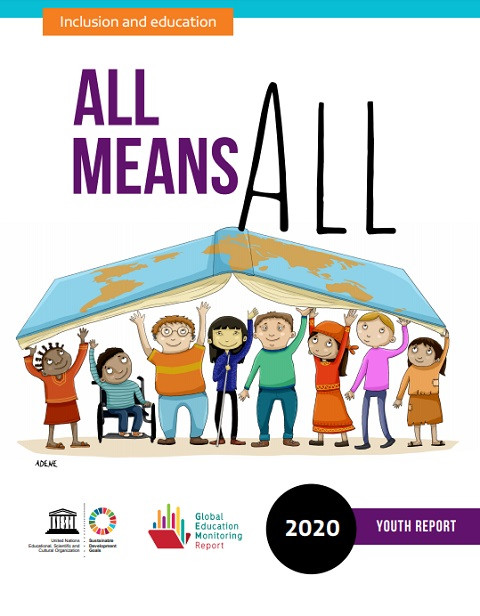 Youth Report 2020: Inclusion and Education; All Means All Year of publication: 2020 Corporate author: UNESCO | Global Education Monitoring Report Team This Youth Report is designed to help you learn about the social, economic and cultural factors that cause vulnerable children, youth and adults to be discriminated against and marginalized in education. It tells the stories of the people who fight to ensure that everyone is included in education, and of those who fought to uphold their own right to education. It brings to life the recommendations of the 2020 Global Education Monitoring Report: Inclusion and education: All means all and calls on youth and teachers to share and discuss the stories and messages, to use them in campaigns and as a teaching tool in class. An open letter to education ministers is included calling, for education systems to be built back more inclusive after the school closures during Covid-19.
 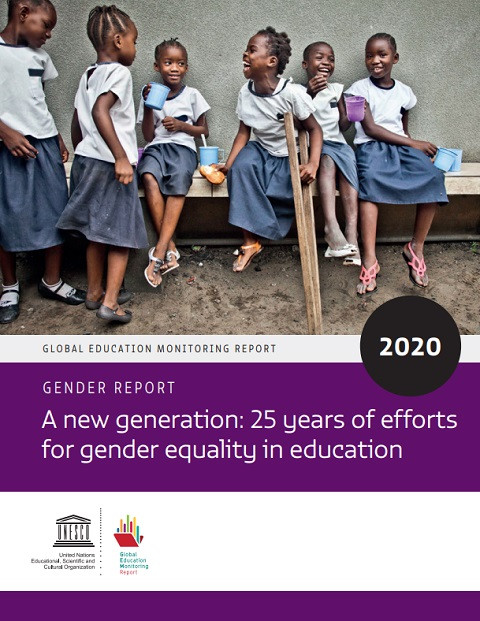 Gender Report 2020: A New Generation; 25 Years of Efforts for Gender Equality in Education (Global Education Monitoring Report) Year of publication: 2020 Corporate author: UNESCO | Global Education Monitoring Report Team Building on the 2020 Global Education Monitoring Report, this report investigates how inclusion in education can advance gender equality in and through education, which is critical to make progress towards gender equality in society. The goal of gender equality is, of course, not new. It was enshrined in the 1979 Convention on the Elimination of All Forms of Discrimination Against Women and was at the core of the 1995 Beijing Declaration and Platform for Action, whose 25th anniversary is marked in 2020.
  Early Childhood Development and Early Learning for Children in Crisis and Conflict Year of publication: 2018 Author: Kolleen Bouchane Corporate author: Global Education Monitoring Report Team There is an urgent need for a comprehensive response, including early learning and family support programs, to the rapidly growing population of young children worldwide living in crisis and conflict. Substantial evidence from neuroscience to economics indicates that the early years of a child’s life lay the foundation for long-term health, learning and behavior. The first months and years are not only a critical period in an individual child’s lifelong capacity for learning, but weak learning foundations of children can compromise the long-term development of nations. Yet a review of Refugee and Humanitarian Response Plans conducted for this paper revealed that only 9 percent of plans included the essential elements of early learning. Relative to health and nutrition programming, early education and parenting interventions were more likely to be omitted from the Response Plans.The rationale for focusing new attention on the educational needs of young children living in fragile conditions is strong: there is a broad body of scientific evidence; the international legal framework of the United Nations Convention of the Rights of the Child asserts that all children have the right to health, education, legal registration, and protection from violence and separation from parents, beginning at birth; and the Sustainable Development Goals for all will be not reached without a focus on the earliest years of life in crisis and conflict situations. This background paper presents the case for increased attention and investment in early childhood in conflict and crisis contexts, with focused attention on early learning and family support. The scale of the problem, current science and evidence, current global standards and principles, and case studies are all discussed and priority recommendations are offered.
  Rapport mondial de suivi de l'éducation 2019: rapport sur l'égalité des genres: Bâtir des ponts pour promouvoir l'égalité des genres Year of publication: 2019 Corporate author: Global Education Monitoring Report Team La réalisation de l’égalité des genres dans la participation à l’éducation, les processus d’enseignement et d’apprentissage et l’accès aux possibilités sociales et économiques offertes par l’éducation est une ambition majeure portée par deux des Objectifs du Programme de développement durable à l’horizon 2030: l’ODD 4 relatif à l’éducation et l’ODD 5 relatif à l’égalité des sexes. Cette ambition occupe également une place centrale dans le Cadre d’action Éducation 2030, qui appelle les pays à ne pas se limiter à l’accès à l’éducation pour tous dans les stratégies qu’ils adoptent mais à aborder également les questions de fonds relatives à l’égalité des genres: «nous prenons l’engagement de soutenir les politiques, la planification et les environnements d’apprentissage attentifs au genre, d’intégrer les questions de genre dans la formation des enseignants et dans les programmes d’enseignement, ainsi que d’éliminer les discriminations et la violence fondées sur le genre à l’école». Le Rapport 2019 sur l’égalité des genres s’appuie sur le cadre de mesure qui a été utilisé pour la première fois dans l’édition 2016 du Rapport mondial de suivi sur l’éducation.Tout en examinant en priorité la parité entre les genres dans la participation à l’éducation et les résultats et les acquis scolaires, le cadre analyse des données sociales et économiques (normes et institutions liées au genre) ainsi que les principales caractéristiques des systèmes éducatifs (lois et politiques, pratiques d’enseignement et d’apprentissage, environnements d’apprentissage et ressources). Le cadre s’intéresse en outre aux rapports entre l’éducation et certains résultats sociaux et économiques précis. Ainsi, une plus grande parité au niveau des résultats scolaires peut accroître le taux de participation des femmes au marché du travail tandis qu’une faible participation féminine au marché du travail renforce les normes existantes et freine le développement des possibilités d’éducation des femmes. التقرير العالمي لرصد التعليم 2019: التقرير عن المسائل الجنسانية; بناء الجسور لتحقيقالمساواة بين الجنسين Year of publication: 2019 Corporate author: Global Education Monitoring Report Team يمثل تحقيق المساواة بين الجنسين من حيث الالتحاق بالمدرسة والمشاركة في عمليات التعليم والتعلم والاستفادة من الفرص الاقتصادية والاجتماعية التي يمكن أن يتيحها التعليم طموحات أساسية مترابطة لهدفين من أهداف التنمية المستدامة المحددة في خطة التنمية المستدامة لعام 2030 ، هما: هدف التنمية المستدامة 4 الخاص بالتعليم وهدف التنمية المستدامة 5 الخاص بالمساواة بين الجنسين. وهذان الهدفان ضروريان أيضاً لتحقيق برنامج "التعليم حتى عام 2030 إطار العمل لتحقيق الهدف الرابع من أهداف التنمية المستدامة" الذي يدعو البلدان إلى اعتماد استراتيجيات لا تتطرق فقط إلى انتفاع الجميع بالتعليم بل تتناول أيضاً قضايا جوهرية تتعلق بالمساواة بين الجنسين منها: "دعم السياسات والخطط وبيئات التعلّم المراعية لقضايا الجنسين، وبتعميم مراعاة قضايا الجنسين في إعداد المعلمين وفي المناهج الدراسية، وبالقضاء على التمييز والعنف القائمين على نوع الجنس في المدارس".ويستند التقرير عن المسائل الجنسانية لعام 2019 إلى إطار رصد اعتُمد أول مرة في التقرير العالمي لرصد التعليم لعام 2016 . وهذا الإطار، فضلاً عن تركيزه على التكافؤ بين الجنسين في المشاركة في التعليم والتحصيل الدراسي والنتائج الدراسية، يدرس الظروف الاقتصادية والاجتماعية العامة )المعايير الجنسانية والمؤسسات( وسمات نظام التعليم الرئيسية )القوانين والسياسات وممارسات التعليم والتعلم وبيئات التعلم والموارد(. ويبحث الإطار أيضاً العلاقة القائمة بين التعليم ومجموعة مختارة من النتائج الاقتصادية والاجتماعية. فالتحرك باتجاه تحقيق التكافؤ بين الجنسين على مستوى التحصيل الدراسي، على سبيل المثال، يؤدي إلى ارتفاع معدلات مشاركة المرأة في القوة العاملة، غير أن مشاركتها هذه، إذا كانت منخفضة المستوى، تعزز المعايير السائدة وتحول دون زيادة فرص التعليم التي يمكن أن تتاح لها.
  Transformative Learning Journeys: Venturing Into the Wilds of Global Citizenship Education Year of publication: 2021 Corporate author: Bridge 47 With the intensive courses of the Transformative Learning Journey, Bridge 47 created experimental learning spaces for communities of practitioners, researchers and activists of transformative education from around the world.The courses endeavored to challenge common concepts of Global Citizenship Education, to explore questions like those below and to experiment with different, holistic and potentially more transformative, practices of learning and co-creating.What are the (cultural) root causes of the global multi-crisis?How to decolonize and transform a modern system that is broken beyond fixing?What do we have to learn, unlearn or let go of- individually and collectively - in order to allow, embrace and foster real change? What characterizes transformative learning, and how can education create holistic spaces to trigger, support and accompany such learning processes? How transformative is our own organizational and educational practice?Do we have to re-imagine education and activism and become more radical? Are we asking the right questions?Based on the positive resonance, Bridge 47 wants to share some of the learnings through this publication. The book gives insights into the design, content and methodology of the course. Featuring diverse contributions from participants, it is a mosaic of perspectives and experiences of transformation, decolonization and learning. It also comprises some tools and invitations for reflection. It is not a cohesive prescription of how to facilitate transformative learning – as there is none - but an invitation to relate to and play."This book is dedicated to all the curious people out there who are passionate about education in caring for our world and each other - the dreamers, the healers, the lovers, the teachers for a different future to emerge. It goes to the fighters who are desperate and overwhelmed in face of complex challenges and are worn out by their struggle for justice and change – to find inspiration, energy and courage to treat ourselves gently, to let go and to make space for new things to emerge."
  Latin America and the Caribbean 2020: Inclusion and Education; All Means All (Global Education Monitoring Report) Year of publication: 2020 Corporate author: Global Education Monitoring Report Team | UNESCO | Laboratory of Education Research and Innovation for Latin America and the Caribbean (SUMMA) Latin America and the Caribbean has the largest and most challenging socio-economic inequalities in the world, which have shaped its education systems over the decades. This report looks at everyone both in and excluded from education in the region, pinpointing barriers facing learners, especially when multiple disadvantages intersect. The report also explores challenges in education posed by COVID-19 and the need for urgent action to prevent an exacerbation of inequalities. Produced by the Global Education Monitoring (GEM) Report team, in partnership with the UNESCO Regional Bureau for Education in Latin America and the Caribbean (OREALC) and the Laboratory of Education Research and Innovation for Latin America and the Caribbean (SUMMA), the report assesses key solutions for greater inclusion through several case studies from the region. It provides in-depth analysis on challenges to inclusion in education arising from migration and displacement in Colombia and Costa Rica; remoteness in Brazil and Suriname; disability in Cuba and Nicaragua; gender in Peru and Jamaica; sexual orientation, gender identity and expression in Chile and Mexico; poverty in the Dominican Republic and Honduras; ethnicity in Bolivia and Ecuador; and incarceration in El Salvador and Uruguay. Building on the 2020 Global Education Monitoring Report, this regional edition concludes that strong laws and policies in Latin America and the Caribbean demonstrate a commitment to inclusion, but that the daily realities faced by learners suggest implementation is lagging. Recommendations are aimed at promoting more inclusive education systems to benefit all children and youth, no matter their background, identity or ability. The recommendations provide a systematic framework for identifying and dismantling barriers for vulnerable populations, according to the principle that ‘every learner matters and matters equally’. América Latina y el Caribe 2020: Inclusión y educación; Todos y todas sin excepción (Informe de seguimiento de la educación en el mundo) Year of publication: 2020 Corporate author: Global Education Monitoring Report Team | UNESCO | Laboratory of Education Research and Innovation for Latin America and the Caribbean (SUMMA) América Latina y el Caribe es la región con las mayores y más tenaces desigualdades socioeconómicas del mundo. Durante decenios estas desigualdades se han reflejado en sus sistemas educativos. El presente informe examina a quiénes incluyen y a quiénes excluyen estos sistemas y llama la atención sobre las barreras que enfrentan los educandos, especialmente cuando están expuestos a múltiples desventajas. El informe también explora los nuevos retos educativos que plantea la pandemia de la Covid-19 y la necesidad de actuar sin dilación para evitar que se agraven las desigualdades. El informe, elaborado por el equipo del Informe de Seguimiento de la Educación en el Mundo (Informe GEM), en colaboración con la Oficina Regional de Educación para América Latina y el Caribe (OREALC/ UNESCO Santiago) y el Laboratorio de Investigación e Innovación en Educación para América Latina y el Caribe -SUMMA, evalúa algunas de las principales iniciativas emprendidas para mejorar la inclusión, basándose en varios estudios de casos de la región. Analiza en profundidad algunos ejemplos de los grandes desafíos que amenazan la inclusión en la educación: migración y desplazamiento en Colombia y Costa Rica; aislamiento rural en el Brasil y Suriname; discapacidad en Cuba y Nicaragua; discriminación de género en el Perú y Jamaica; orientación sexual e identidad y expresión de género en Chile y México; pobreza en la República Dominicana y Honduras; etnicidad en Bolivia y el Ecuador; y jóvenes en situación de privación de libertad en El Salvador y el Uruguay. Esta edición regional del Informe de Seguimiento de la Educación en el Mundo 2020 concluye que, si bien las leyes y políticas de América Latina y el Caribe demuestran la firme determinación de promover la inclusión, la realidad cotidiana de los alumnos y las alumnas sugiere que la aplicación práctica lleva retraso. Se formulan recomendaciones con el objeto de promover sistemas de educación más inclusivos en beneficio de todos los niños, niñas y jóvenes, sin distinción de origen, identidad o capacidad. Las recomendaciones brindan un marco sistemático que permite identificar y eliminar barreras para las poblaciones marginadas, conforme al principio de que “cada alumno es importante y todos los alumnos importan por igual”.