
Resources
Explore a wide range of valuable resources on GCED to deepen your understanding and enhance your research, advocacy, teaching, and learning.
684 Results found
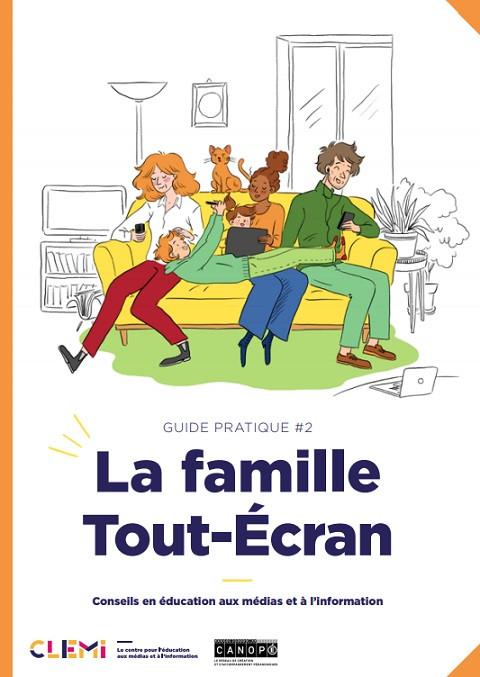 La famille Tout-Écran: Conseils en éducation aux médias et à l’information Year of publication: 2019 Corporate author: Centre pour l’éducation aux médias et à l’information (CLEMI) | Réseau Canopé L’Éducation aux Médias et à l'Information (EMI) devient une exigence républicaine au cœur du Parcours citoyen, un enjeu éducatif et sociétal incontournable dans un environnement où le numérique est omniprésent.Dans un monde globalisé et complexifié, la définition et la compréhension de la source de l’information constituent une priorité pour déjouer les tentatives de manipulation et de désinformation.Les enjeux sociétaux de l’EMI dépassent les murs de l’école et doivent mobiliser tous les acteurs pour renforcer le continuum entre temps scolaire et hors temps scolaire.Ce guide bénéficie de l’expertise des professionnels du CLEMI et de son réseau de pédagogues, de partenaires institutionnels, associatifs et médiatiques. Issu de cette mobilisation, cet ouvrage est le produit d’un groupe de travail dédié aux pratiques informationnelles des jeunes, composé de membres représentant du ministère de l’Éducation nationale et de la Jeunesse, du ministère de la Culture, France Télévisions, Radio France, le CSA, CNRS Images, Ceméa, la Ligue de l’enseignement, la CNAF, Jets d’encre et l’Icem-Pédagogie Freinet.
  디지털 시대 시민되기: 초등학교 저학년 (디지털 시민교육 시리즈 2nd) Year of publication: 2019 Author: 김양은 | 배은주 | 박정원 | 김영환 | 김형태 | 심성호 Corporate author: 방송통신위원회 | 한국정보화진흥원 본 자료는 초등 저학년(3~4학년) 대상 디지털시민교육을 위한 교육자료이다. 6가지의 역량별로 교수학습지도안과 학생 활동지로 구성되어 있다.
  초·중등 교과서의 미디어 리터러시 단원 개발 연구 Year of publication: 2016 Corporate author: 경인교육대학교 | 대한민국 교육부 본 연구는 21세기 핵심역량이 강조되고 국어, 미술, 도덕, 사회, 실과 등의 교과에 미디어 리터러시와 관련된 성취기준이 반영된 2015 개정 교육과정을 기반으로 하여, 통합 교육과정의 접근으로 학생들의 미디어 리터러시 향상을 도모하는 교과서 단원의 모형을 개발하고자 하였다.
  미디어 문해력(Media Literacy) 향상을 위한 교실수업 개선 방안 연구 Year of publication: 2015 Author: 박유선 | 전경란 | 박한철 Corporate author: 대한민국 교육부 우리가 살고 있는 지식기반사회에서는 다양한 미디어와 정보 기술을 통해 쏟아지는 방대한 양과 형태의 정보에 체계적으로 접근하여, 이를 비판적으로 분석하고 평가하여 활용할 수 있는 ‘미디어 리터러시(Media Literacy)’가 현대적 의사소통 및 지식정보처리 역량으로서 중요하게 부각 되고 있습니다.과거의 학교 교육에서는 ‘리터러시’가 주로 문자로 표현된 글이나 책의 내용을 읽고 쓸 수 있는 능력에 한정되어 모국어 과목에서 다루어졌습니다. 그러나 현대사회에는 ‘리터러시’가 글과 책의 범위를 넘어서 다양한 형태로 된 미디어의 의미를 이해하고 생산하는 것으로 확대되었습니다. 이에 따라 주요 국제기구, 교육단체 및 세계 여러 나라의 국가 교육과정에서는 미디어 리터러시와 관련된 학습을 중요하게 다루고 있습니다.본 보고서는 “미디어 문해력 향상을 위한 교실수업 개선 방안 연구”의 최종보고서로서 미디어 리터러시 교육의 이론적 배경과 연구 동향, 국내와 해외 교육과정의 미디어 리터러시 반영 상황, 우리나라 어린이와 청소년들의 미디어 이용 실태 등을 검토하고, 초·중·고 교사들의 인식 조사 결과 및 국내와 해외 전문가들의 견해를 바탕으로 하여, 미디어 리터러시 교육의 개념과 목표, 내용 체계를 도출하였습니다.
  장애 청소년(농아인) 미디어교육 프로그램 개발: 연구결과 보고서 Year of publication: 2022 Author: 최상배 | 김병련 | 오인혜 | 고은지 Corporate author: 시청자미디어재단 최근 들어 모든 사람을 위한 미디어리터러시가 강조되면서 청각장애인을 대상으로 한 미디어교육의 필요성이 대두되고 있다. 이 연구에서는 청각장애 청소년의 미디어교육 현황을 분석하여 청각장애인의 특성을 반영한 미디어교육 프로그램을 개발하고자 하였다.
 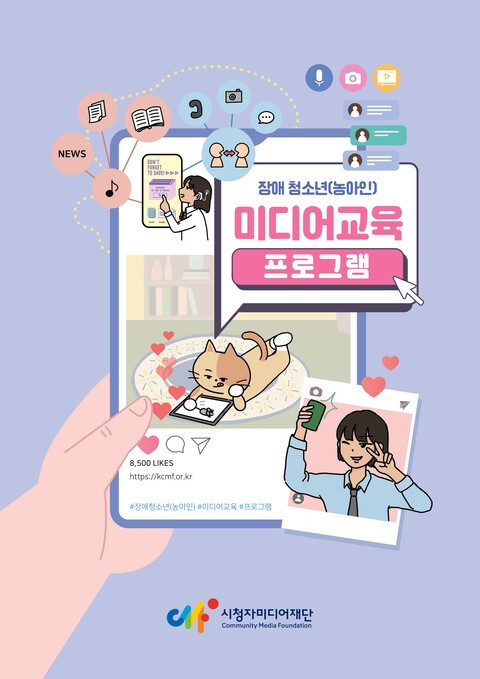 장애 청소년(농아인) 미디어교육 프로그램: 교육프로그램 Year of publication: 2022 Author: 최상배 | 김병련 | 오인혜 | 고은지 Corporate author: 시청자미디어재단 최근 들어 모든 사람을 위한 미디어리터러시가 강조되면서 청각장애인을 대상으로 한 미디어교육의 필요성이 대두되고 있다. 이 연구에서는 청각장애 청소년의 미디어교육 현황을 분석하여 청각장애인의 특성을 반영한 미디어교육 프로그램을 개발하고자 하였다.청각장애학습자의 교육적 요구를 반영할 수 있도록 지도시 유의사항, 지도 팁, 참고자료, 교구 제작과 활용, 수어 영상 자료 등을 제시하였다. 미디어 관련 수어 표현은 국립국어원의 한국수어사전 자료를 기초로 표현하였으며, 한국수어사전에 제시되지 어휘는 미국수어 표현을 참고하여 청각장애학교 교사와 농인에게 검토를 받아 표현하였다. 수어 자료는 QR코드를 제시하여 쉽게 동영상을 확인할 수 있도록 하였다.
  Orientaciones para los profesores: Cómo detectar y combatir la desinformación Year of publication: 2021 Corporate author: European Commission Este kit está concebido para presentar a los jóvenes el fenómeno de la desinformación, dándoles a conocer las amenazas que plantea, explicando de qué modo los alumnos pueden averiguar más al respecto y protegerse de este fenómeno, y brindándoles la oportunidad de examinar detalladamente ejemplos concretos. El kit está disponible para utilizarse libremente en cualquier centro de enseñanza. Aunque puede adaptarse y personalizarse a cualquier grupo de edad, el grupo destinatario principal es el de adolescentes de entre quince y dieciocho años. Lignes directrices à l’intention des enseignants: Comment repérer et combattre la désinformation Year of publication: 2021 Corporate author: European Commission La présente boîte à outils a été conçue pour sensibiliser les jeunes au phénomène de la désinformation, en leur faisant comprendre les menaces qu’elle représente, en leur expliquant comment trouver des informations pour s’en protéger et en leur donnant l’occasion de s’attarder sur certains exemples. La boîte à outils est gratuite et libre d’utilisation par tout établissement d’enseignement. Bien qu’elle puisse être adaptée et personnalisée pour n’importe quel groupe d’âge, le principal groupe cible est constitué des adolescents de 15 à 18 ans.
  Ministerial Forum: Global Dialogue on ICT and Education Innovation – Towards Sustainable Development Goal for Education (SDG 4); Proceedings Year of publication: 2019 Corporate author: UNESCO Institute for Information Technologies in Education (IITE) The present publication contains articles based on the outcomes of the Ministerial Forum “Global Dialogue on ICT and Education Innovation – Towards Sustainable Development Goal for Education (SDG 4)”, organized by UNESCO IITE in cooperation with the Ministry of Education and Science of the Russian Federation in Moscow (Russia) on 18-19 March, within the Moscow International Education Fair 2018 (MIEF 2018).The publication covers the flagship topics such as ICT potential for future teachers and future schools, digital pedagogy and OER, collaboration between public and private sectors in the use of ICT in education, digital technologies for quality and equity in education.
  온라인 수업 시대의 디지털 시민성 함양교육 (2020 이슈페이퍼 6호) Year of publication: 2020 Author: 김승호 Corporate author: 한국교육개발원 교육정책네트워크 신종 코로나바이러스 감염증(코로나19)으로 인하여 교육 현장은 격변의 시대에 접어 들게 되었다. 별다른 준비 없이 원격수업이 시작되었고 한 학기가 흘렀다. 이 과정에서 온라인상에서의 윤리성 문제가 지적되었다. 본고에서는 온라인 상황에서의 윤리성에 대한 기존의 연구를 바탕으로 디지털 시민성으로 명명되는 온라인 윤리교육의 논의를 점검하고, 디지털 시민교육이 이루어질 수 있는 구체적 방안에 대해 제시하였다. 본 저작물은 한국교육개발원에서 2020년 작성하여 공공누리 제 4유형으로 개방한 ‘온라인 수업 시대의 디지털 시민성 함양교육 (김승호)’을 이용하였으며 해당 저작물은 교육정책네트워크 정보센터(edpolicy.kedi.re.kr)에서 무료로 다운받으실 수 있습니다.