
Resources
Explore a wide range of valuable resources on GCED to deepen your understanding and enhance your research, advocacy, teaching, and learning.
1,187 Results found
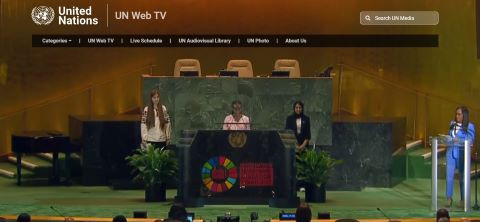 Vanessa Nakate (Climate Justice activist), Yelizaveta Posivnych (Student), Somaya Faruqi (Activist ) at the Transforming Education Summit (Leaders Day) Year of publication: 2022 Corporate author: United Nations (UN) Remarks by Vanessa Nakate, Climate Justice activist and UNICEF Goodwill Ambassador, Yelizaveta Posivnych, Student, Saint George Academy, New York; and Somaya Faruqi, Activist and former Captain of the Afghan Girls Robotics Team, on the rights of women and girls - Joint call to action, at the Youth Segment: The imperative for education transformation, at the transforming Education Summit (Leaders Day) - Opening segment.
 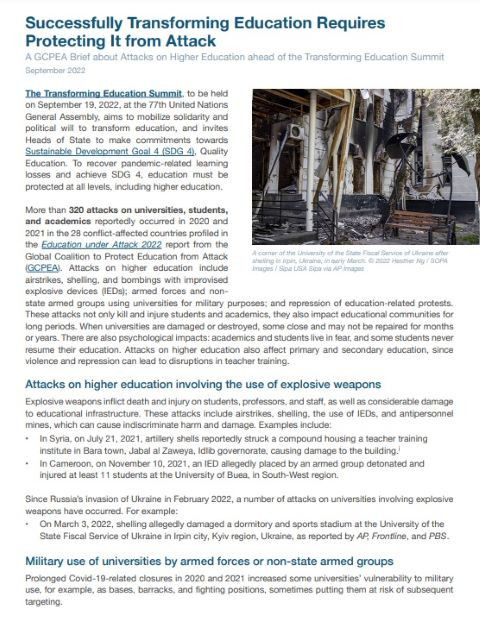 Successfully Transforming Education Requires Protecting It from Attack Year of publication: 2022 Corporate author: Global Coalition to Protect Education from Attack (GCPEA) The Transforming Education Summit, to be held on September 19, 2022, at the 77th United Nations General Assembly, aims to mobilize solidarity and political will to transform education, and invites Heads of State to make commitments towards Sustainable Development Goal 4 (SDG 4), Quality Education. To recover pandemic-related learning losses and achieve SDG 4, education must be protected at all levels, including higher education.
 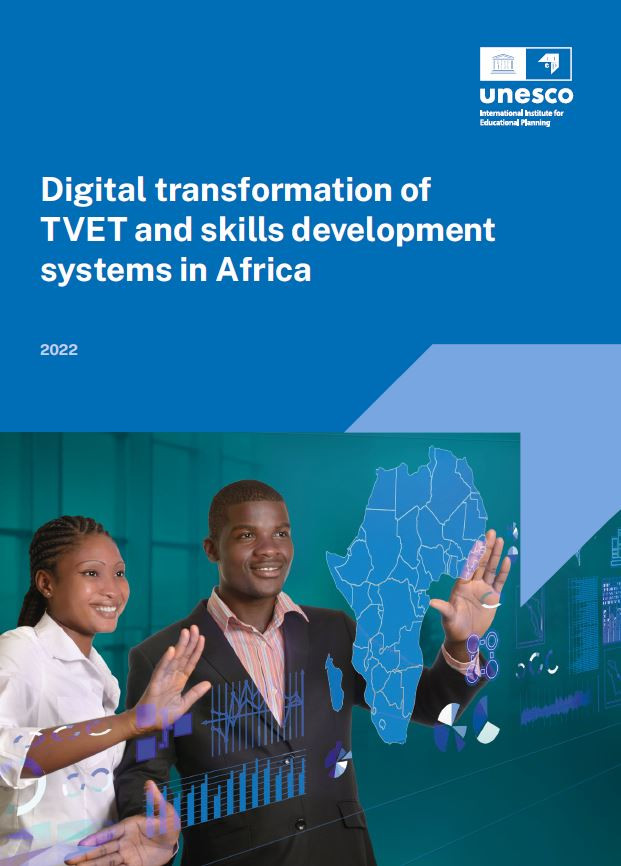 Transformation digitale de l'EFTP et des systèmes de développement des compétences en Afrique : état des lieux et perspectives Year of publication: 2022 Corporate author: UNESCO IIEP Regional Office for Africa Cette publication, réalisée par SOFRECO à la demande de l’IIPE-UNESCO, fait le point sur la digitalisation de l’enseignement et de la formation techniques et professionnels (EFTP) en Afrique sur la base d’un échantillon de cinq pays (Madagascar, Nigeria, Rwanda, Tunisie et Tchad). Cet état des lieux décrit les dispositifs de ces cinq pays au service de la population pour accéder non seulement aux outils numériques mais surtout aux compétences qui vont permettre à toute personne de se servir du numérique.
 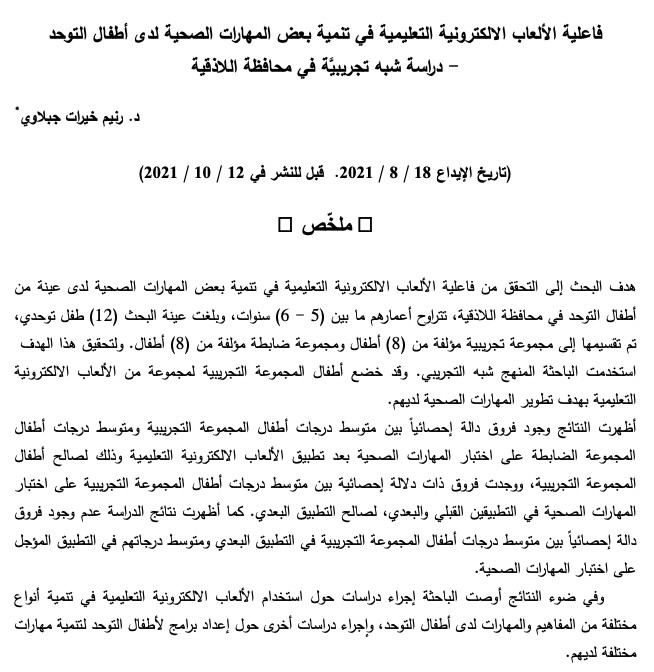 فاعلية الألعاب الالكترونية التعليمية في تنمية بعض المهارات الصحية لدى أطفال التوحد - دراسة شبه تجريبيَّة في محافظة اللاذقية (مجلة جامعة تشرين للبحوث والدراسات العلمية ، الآداب والعلوم الإنسانية ، المجلد 43 ، العدد 5) Year of publication: 2021 Author: Raneem Jablawi Corporate author: Tishreen University هدف البحث إلى التحقق من فاعلية الألعاب الالكترونية التعليمية في تنمية بعض المهارات الصحية لدى عينة من أطفال التوحد في محافظة اللاذقية، تتراوح أعمارهم ما بين (5 - 6) سنوات، وبلغت عينة البحث (12) طفل توحدي، تم تقسيمها إلى مجموعة تجريبية مؤلفة من (8) أطفال ومجموعة ضابطة مؤلفة من (8) أطفال. ولتحقيق هذا الهدف استخدمت الباحثة المنهج شبه التجريبي. وقد خضع أطفال المجموعة التجريبية لمجموعة من الألعاب الالكترونية التعليمية بهدف تطوير المهارات الصحية لديهم.أظهرت النتائج وجود فروق دالة إحصائياً بين متوسط درجات أطفال المجموعة التجريبية ومتوسط درجات أطفال المجموعة الضابطة على اختبار المهارات الصحية بعد تطبيق الألعاب الالكترونية التعليمية وذلك لصالح أطفال المجموعة التجريبية، ووجدت فروق ذات دلالة إحصائية بين متوسط درجات أطفال المجموعة التجريبية على اختبار المهارات الصحية في التطبيقين القبلي والبعدي، لصالح التطبيق البعدي. كما أظهرت نتائج الدراسة عدم وجود فروق دالة إحصائياً بين متوسط درجات أطفال المجموعة التجريبية في التطبيق البعدي ومتوسط درجاتهم في التطبيق المؤجل على اختبار المهارات الصحية.وفي ضوء النتائج أوصت الباحثة إجراء دراسات حول استخدام الألعاب الالكترونية التعليمية في تنمية أنواع مختلفة من المفاهيم والمهارات لدى أطفال التوحد، وإجراء دراسات أخرى حول إعداد برامج لأطفال التوحد لتنمية مهارات مختلفة لديهم.
  论“互联网+教育”背景下高校教学模式的改革 Year of publication: 2022 Author: 任爽 随着信息技术的飞速发展,我国高校教学也要紧跟时代潮流,积极进行教学手段和教学方式的创新和升级,探索新型教学方式,从而推动学生综合素养的全面发展。互联网➕教育理念的持续发展,对于高校教学改革提供了新的思路,它主要是基于科学技术的帮助,利用现代化的信息技术和手段,通过将互联网平台和传统的教学模式相融合,从而开拓教师的教学思路,促进教学的多元化发展,本文在研究中将主要围绕高校教学模式的改革展开,探讨在互联网加教育背景下,高校教学的改革方向和具体路径,以此为相关教育工作者提供可行性建议。
  小学数学教学中的创新教育 Year of publication: 2022 Author: 曹瑞霞 要使小学数学教育的总体质量得到改善,不仅要主动改变教育观念,从思想上进行全方位的改革,而且还要根据当前的实际情况,对教学方式和方法进行全方位的改革,以确保在小学数学教育中能达到全方位的创新性,从而使整个教育的质量得到改善。因此,必须充分意识到教育改革的重要性,把教育改革放在首位,以促进基础教育的发展。
  疫情防控背景下高校学生线上学习管理对策研究 Year of publication: 2022 Author: 姜志琳 疫情期间线上教学给高校师生带来了便利,同时也带来了挑战。本文以黑龙江农垦职业学院为例,分别从教师和学生两个主体了解疫情期间高校师生线上教学面临的挑战,进行统计分析。从教学经验、设备和网络、教学平台和教学管理,线上学习经验、网络和设备、居家学习环境、学习平台和学习资源等方面,提出相应的对策和建议,以期有针对性的解决线上教学中面临的诸多挑战,帮助提升线上教学质量和学习质量。
 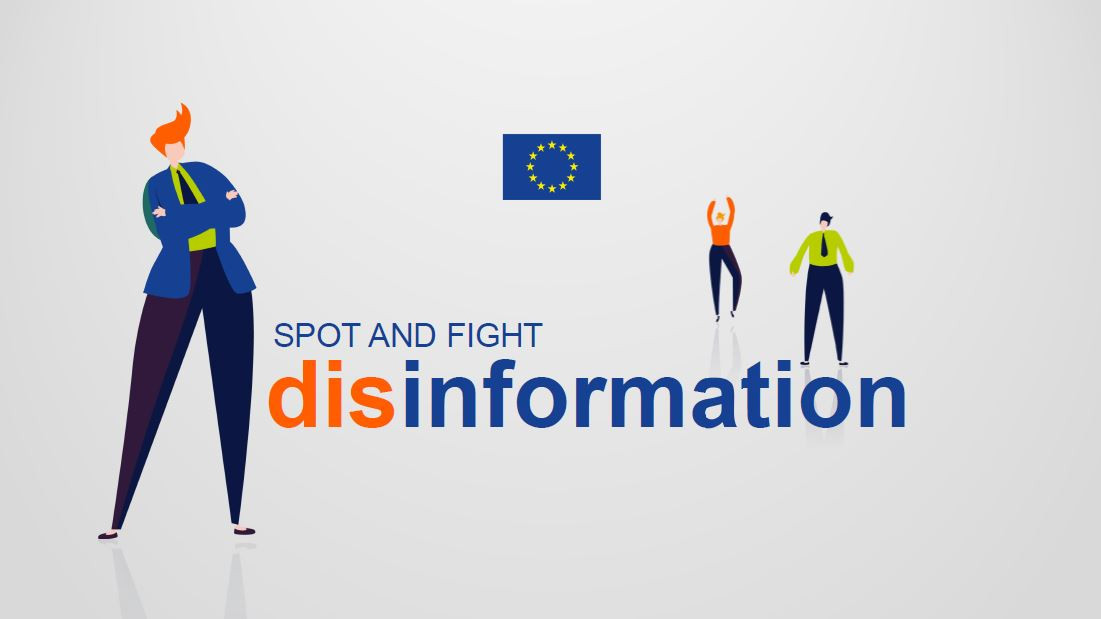 Spot and Fight Disinformation Year of publication: 2021 Corporate author: European Commission The pandemic demonstrated just how fast misleading or false information can spread online. With this toolkit, secondary school teachers can help their students separate what is real from what is fake when they are browsing online. The toolkit is comprised of an editable presentation (which includes real life examples and group exercises) and an instruction booklet for teachers. Detectar y combatir desinformación Year of publication: 2021 Corporate author: European Commission La pandemia ha puesto de manifiesto la rapidez con que informaciones falsas se propagan en línea. Con este kit de herramientas, los profesores de enseñanza secundaria pueden ayudar a sus alumnos a distinguir lo verdadero de lo falso cuando navegan por internet. El kit de herramientas se compone de una presentación editable y de un folleto de instrucciones. Repérer et combattre la désinformation Year of publication: 2021 Corporate author: European Commission La pandémie a montré à quel point les fausses informations se diffusent rapidement en ligne. Grâce à cette boîte à outils, les enseignants du secondaire peuvent aider leurs élèves à démêler le vrai du faux lorsqu’ils naviguent en ligne. Elle se compose d’une présentation éditable et d’une brochure contenant des instructions.