
Resources
Explore a wide range of valuable resources on GCED to deepen your understanding and enhance your research, advocacy, teaching, and learning.
3,225 Results found
 Mapping Cultural Policies in Small Island Developing States: Amplifying SIDS Voices in the Global Policy Dialogue on Culture and Sustainable Development Year of publication: 2025 Corporate author: UNESCO Mapping Cultural Policies in Small Island Developing StatesSpanning three sub-regions – the Atlantic, Indian Ocean and South China Sea (AIS), the Caribbean, and the Pacific – the Small Island Developing States (SIDS) represent 39 UNESCO Member States and 9 Associate Members. Countries and regional organizations have increasingly demonstrated their commitment in the context of fast-evolving policy landscape and cultural ecosystems, encompassing the different dimensions of culture through its diversity and a wide spectrum of concerned stakeholders. Today, a SIDS-specific, culture-led development vision is on the rise.Culture has a multifaceted impact on sustainable development pathways of the SIDS, from climate action, biodiversity protection and food security to economic diversification, social inclusion, gender equality or urban sustainability. The voices and aspirations of SIDS must be heard in the global policy dialogue, in acknowledgement of their priorities, opportunities and insights. International cooperation efforts by UNESCO and other organizations are also essential in identifying areas for future policy investment and adaptation at the national and regional levels.Following the UNESCO World Conference on Cultural Policies and Sustainable Development – MONDIACULT 2022, SIDS are championing culture for sustainable development towards the adoption of a new Programme of Action, the Antigua and Barbuda Agenda for SIDS 2024-2034.
  Transformer l’enseignement et la formation techniques et professionnels pour des transitions réussies et justes: Stratégie UNESCO 2022-2029 Year of publication: 2022 Corporate author: UNESCO Cette Stratégie couvrant la période 2022 à 2029 guide l’UNESCO pour promouvoir le développement des compétences en vue de l’autonomisation, de l’emploi productif et du travail décent, et faciliter la transition vers des économies et des sociétés plus numériques, vertes et inclusives. Conformément aux Objectifs de développement durable, à l’Agenda 2030 pour l’éducation et aux recommandations du Sommet sur la transformation de l’éducation, l’UNESCO soutiendra la transformation de l’enseignement et de la formation techniques et professionnels dans tous les États membres et travaillera aux côtés de partenaires bilatéraux et multilatéraux, des institutions, des gouvernements, du secteur privé et des éducateurs du monde entier pour placer l’EFTP en tête de l’agenda de l’éducation. Il est évident que des efforts collectifs doivent être mis en place pour donner aux jeunes et aux adultes les instruments pour acquerir de nouvelles compétences, tout en les aidant à libérer leur potentiel pour naviguer avec succès dans les changements sociaux, économiques et environnementaux que connait le monde. Преобразование технического и профессионального образования и подготовки для успешной и справедливой трансформации : Стратегия ЮНЕСКО на 2022-2029 гг. Year of publication: 2022 Corporate author: UNESCO Эта стратегия, охватывающая период 2022-2029 гг., помогает ЮНЕСКО содействовать развитию навыков для расширения прав и возможностей, продуктивной занятости и достойной работы, а также содействовать переходу к более цифровым, зеленым и инклюзивным экономикам и обществам. В соответствии с Целями Устойчивого Развития, программой «Образование 2030» и рекомендациями Саммита «Преобразование образования», ЮНЕСКО поддержит преобразование технического и профессионального образования и подготовки во всех государствахчленах и будет работать в двухстороннем и многостороннем порядке с партнерами, учреждениями, правительствами, частным сектором и педагогами со всего мира, чтобы поднять ТПОП в приоритеты программ по образованию. Очевидно, что необходимо приложить коллективные усилия, чтобы вооружить молодежь и взрослых новыми навыками и помочь им раскрыть свой потенциал для успешного ориентирования в социальных, экономических и экологических изменениях, которые происходят в мире. 变革职业技术教育与培训 实现成功和公正的转型 联合国教科文组织战略 2022–2029年 Year of publication: 2022 Corporate author: UNESCO 本战略时限涵盖2022年至2029年,指导联合国教科文组织推动技能开发工作,以提升能力,支持生产性就业和体面工作,并推动经济和社会向更加数字化、更加绿色化、更具包容性的方向转型。 根据可持续发展目标、2030年教育议程和教育变革峰会的建议,联合国教科文组织将支持所有成员国的职业技术教育与培训转型,并携手世界各地的双边及多边伙伴、机构、政府、私营部门及教育者,将职业技术教育与培训作为教育议程的最优先工作。 显而易见,各方必须做出共同努力,让青年和成人掌握新技能,并帮助他们释放潜能以便在世界正经历的社会、经济及环境变革中顺利前进。
 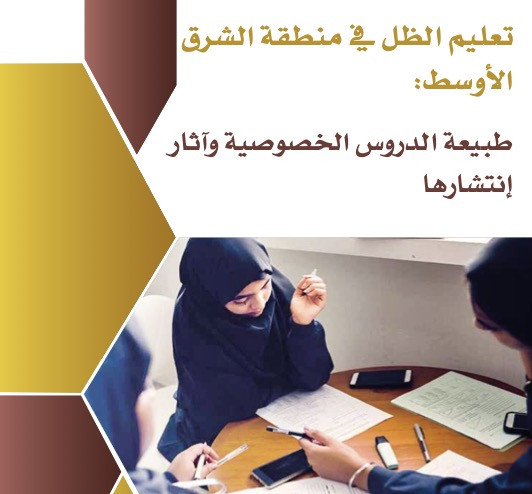 Shadow education in the Middle East: private supplementary tutoring and its policy implications Year of publication: 2023 Author: Mark Bray | Anas Hajar Corporate author: UNESCO An increasing number of students around the world are receiving private lessons to supplement their school education. In much academic literature, this is called shadow education; Because the content of private lessons closely mimics the content of school education, as its content changes with the change in the curriculum in schools. Private lessons can take many forms. They can be offered one-on-one, in small groups, in large classes, or online. Some private lessons are provided by the Ministry’s teachers in order to obtain additional income, and some commercial institutions also provide these lessons. As for the categoryThe third group of private lesson providers includes university students, retirees, and seasonal workers.While much research and policy has focused on the shadow education system in East Asia and some other regions of the world, there has been less interest in the topic in the Middle East. However, the topic deserves greater focus because of its far-reaching implications for prevailing social structures and education systems. This study begins with the global picture before comparing patterns within and between 12 Arabic-speaking countries in the Middle East. تحويل التعليم والتدريب في المجال التقني والمهني من أجل عملية انتقالية ناجحة وعادلة : استراتيجية اليونسكو 2022-2029 Year of publication: 2022 Corporate author: UNESCO نطاق ّ زمني يمتد من 2022 إلى 2029 ،تُ ّ رشد هذه االستراتيجية مساعي ّ منظ ّ مة األمم المت ّ حدة للتربية والعلم والثقافة )اليونسكو( لتعزيز تطوير ّ المهارات الر ّ امية لتحقيق الت ّ مكين، والت ُ وظيف الم ِنتج، والعمل الكريم، فضًاًل ً أشمل وأكثر رقمية ٍ عن تيسير انتقال المجتمعات واالقتصادات إلى واقع ّ ٍ ومراعاة للبيئة. اتساق ّ ا وأهداف التنمية المستدامة، وأجندة 2030 ّ للتعليم، وتوصيات قمة ّ تحويل الت ّ عليم، ستعكف اليونسكو على دعم تحويل الت ّ عليم والت ّ دريب التقني ّ والمهني في كاف ّ ة الد ٍ ول األعضاء والعمل عبر شراكات ّ ثنائي ّ ة ومتعددة ّ األطراف ومع المؤس ّ سات، والحكومات والقطاع الخاص، والكوادر الت ّ ربوية ّ والت ّ عليمي ّ ة في كاف ّ ة أرجاء العالم لوضع الت ّ عليم والت ّ دريب التقني والمهني على ّ رأس أجندة التعليم. لقد بات جلي ّ ا وجوب بذل جهود جمعي ّ ة لرفد الشباب والبالغات والبالغين ّ بمهارات جديدة تعينهم على إطالق عنان مكامنهم الجتياز الت ّغيرات ّ االجتماعي ّ ة، واالقتصادي ّ ة، والبيئي ّ ة ال ّ تي يمر بها العالم. Transforming Technical and Vocational Education and Training for Successful and Just Transitions: UNESCO Strategy 2022–2029 Year of publication: 2022 Corporate author: UNESCO This strategy covering 2022 to 2029 guides UNESCO to promote skills development for empowerment, productive employment and decent work, and facilitate the transition to more digital, green and inclusive economies and societies. In alignment with the Sustainable Development Goals, the Education 2030 Agenda, and the recommendations of the Transforming Education Summit, UNESCO will support the transformation of Technical and Vocational Education and Training in all Member States and will work alongside bilateral and multilateral partners, institutions, governments, the private sector and educators from all over the world to put TVET at the top of the education agenda. It is evident that collective efforts must be met to equip youth and adults in acquiring new skills, helping them unlock their potential to successfully navigate the social, economic, and environmental changes which the world is undergoing. Transformar la educación y formación técnica y profesional (EFTP) para transiciones exitosas y justas: Estrategia de la UNESCO 2022-2029 Year of publication: 2022 Corporate author: UNESCO Esta estrategia que abarca del 2022 al 2029, guía a la UNESCO para promover el desarrollo de competencias para el empoderamiento, empleo productivo y trabajo decente, y facilitar la transición hacia economías y sociedades más digitales, verdes e inclusivas. En línea con los Objetivos de Desarrollo Sostenible, la Agenda Educación 2030, y las recomendaciones de la Cumbre sobre la Transformación de la Educación, la UNESCO apoyará la transformación de la educación y formación técnica y profesional en todos los Estados Miembros y trabajara con socios bilaterales y multilaterales, instituciones, gobiernos, el sector privado y educadores de todo el mundo para posicionar a la EFTP como máxima prioridad en la agenda educativa. Es evidente que deben realizarse esfuerzos colectivos para preparar a los jóvenes y adultos en la adquisición de nuevas habilidades, ayudándolos a desarrollar su potencial para afrontar de manera exitosa los cambios sociales, económicos y medioambientales que el mundo está atravesando.
  Recommendation on Education for Peace and Human Rights, International Understanding, Cooperation, Fundamental Freedoms, Global Citizenship and Sustainable Development Year of publication: 2023 Corporate author: UNESCO Building more peaceful, just, and sustainable societies starts with education. It influences all aspects of our daily lives and our overall prospects while being impacted by our health and environment. In the global landscape of worsening climate change, democratic backsliding, persistent inequalities, rising discrimination, hate speech, violence and conflict, it can be a tool to address and prevent these problems in the future. And it can also be a long-term investment with increasing returns if shaped and deployed effectively. The new UNESCO Recommendation on Education for Peace and Human Rights, International Understanding, Cooperation, Fundamental Freedoms, Global Citizenship and Sustainable Development, which is commonly referred to as the Recommendation on Education for Peace, Human Rights and Sustainable Development is a landmark guidance document that defines what needs to evolve in and through education to accomplish these goals. 평화, 인권, 국제이해, 협력, 기본적 자유, 세계시민성, 지속가능발전을 위한 교육 권고 Year of publication: 2023 Corporate author: 유네스코 이 권고는 ‘국제이해, 협력, 평화를 위한 교육과 인권, 기본적 자유에 관한 교육 권고(1974)’를 개정하여 2023년 제42차 유네스코 총회가 채택한 것이다.