
Resources
Explore a wide range of valuable resources on GCED to deepen your understanding and enhance your research, advocacy, teaching, and learning.
3,436 Results found
 移民的故事 (The UNESCO Courier no. 4; October-December 2021) Year of publication: 2021 Corporate author: 联合国教科文组织 (UNESCO) 本专题报道通过9个关于移民的故事,探讨全球化背景下普遍的移民现象,并探讨与移民有关的困境及问题。
  Journalism is a Public Good: World Trends in Freedom of Expression and Media Development: Global Report 2021/2022; Highlights Year of publication: 2021 Corporate author: UNESCO This document is a report on world trends in freedom of expression and media development published by UNESCO in 2021/22 and focuses on the many challenges facing access to information since 2016, in terms of analysis of trends in media freedom, pluralism, independence and safety of journalists. 新闻是一种公共产品: 世界趋势、言论自由和媒体发展; 全球报告 2021/2022 Year of publication: 2021 Corporate author: 联合国教科文组织 (UNESCO) 本文件是2021/22年联合国教科文组织所发布的关于言论自由和媒体发展的世界趋势报告,主要从媒体自由、多元化、独立性和记者安全等趋势分析,探讨2016年以来信息获取所面临的众多挑战。
  Revised Recommendation Concerning Education for International Understanding, Co-operation and Peace and Education Relating to Human Rights and Fundamental Freedoms ('1974 Recommendation') Year of publication: 2022 Corporate author: UNESCO The revision of the 1974 Recommendation provides the international community with the opportunity to strengthen the instrument so that it can support the design and implementation of effective educational policies and programmes, which can put the world on a pathway to lasting peace and sustainable development for all, in line with the requirements of the 2030 Agenda and the body of international legal norms adopted since 1974. Recommandation révisée sur l’éducation pour la compréhension, la coopération et la paix internationales et l’éducation relative aux droits de l’homme et aux libertés fondamentales (« Recommandation de 1974 ») Year of publication: 2022 Corporate author: UNESCO La révision de la Recommandation de 1974 offre à la communauté internationale l'occasion de renforcer l'instrument afin qu'il puisse soutenir la conception et la mise en œuvre de politiques et de programmes éducatifs efficaces, susceptibles de mettre le monde sur la voie d'une paix durable et du développement durable pour tous, conformément aux exigences de l'Agenda 2030 et à l'ensemble des normes juridiques internationales adoptées depuis 1974.
  Culture in Times of COVID-19: Resilience, Recovery and Revival Year of publication: 2022 Corporate author: UNESCO | United Arab Emirates. Department of Culture and Tourism Culture in Times of COVID-19: Resilience, Recovery and Revival offers key insights on trends and structural transformations that can boost the culture sector as a cornerstone of an economy built on sustainability and well-being.A set of strategic development considerations are put forward for governments and their partners, in both the public and private sectors, to promote the value of culture as a public good, encourage cross-sector collaboration and holistically address the essential needs of the sector, while supporting cultural professionals in adapting to a changing world and providing equal access and opportunities across the culturalvalue chain.
 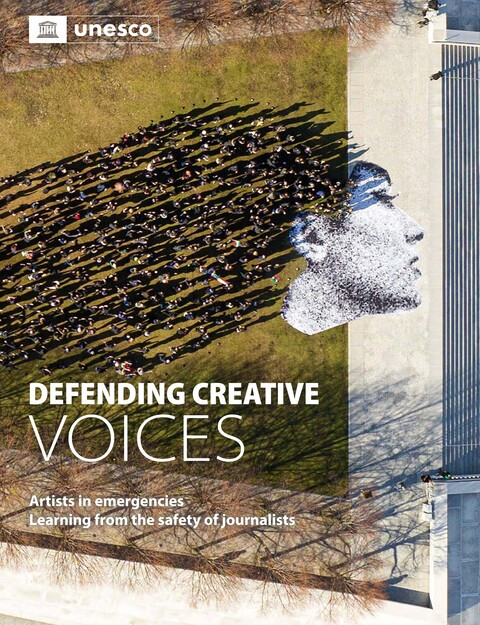 Defending Creative Voices: Artists in Emergencies, Learning from the Safety of Journalists Year of publication: 2023 Author: Rosario Soraide Corporate author: UNESCO Artists and cultural professionals often come across significant challenges to their freedom of expression, including violence and harassment – online and offline – legal persecution, detention, imprisonment and, in the worst of cases, murder. Emergency situations can result in additional risks for them, as many become increasingly targeted in connection to the visibility of their work and see their livelihoods impacted upon by income loss and unemployment in the cultural sector. While the attacks and threats that artists and cultural professionals face during emergencies are similar to those affecting journalists, they do not receive the same level of attention nor access to protection mechanisms and opportunities for assistance. Over the past decades, a strong framework has emerged to advance journalists’ safety at international, regional and national levels, including through legal and regulatory instruments, protection mechanisms, support networks and consistent collective mobilization for their rights. Despite growing awareness of the vulnerability of artists and cultural professionals in emergency contexts and increased efforts to safeguard their rights and ensure their safety, progress in this regard remains comparatively much more incipient. With the support of UNESCO’s Culture and Communication and Information Sector, and based on a comparative analysis, this study therefore aims to strengthen the protection of artists and cultural professionals during emergencies by drawing lessons from the experience, challenges, and achievements in the field of journalists’ safety. It presents actionable recommendations and identifies areas in which synergies between key stakeholders promoting, respectively, artistic and media freedom could serve to reinforce the protection of both at-risk artists and journalists.
 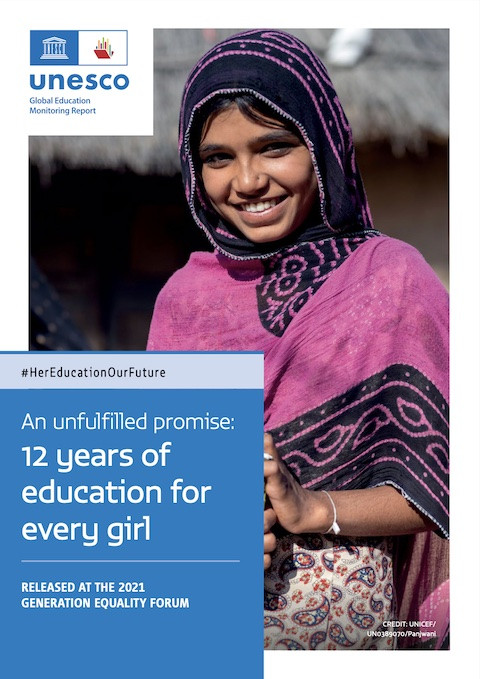 Une promesse non tenue: 12 années d’enseignement pour toutes les filles Year of publication: 2021 Corporate author: UNESCO | Global Education Monitoring Report Team En 1995, il y a un peu plus de 25 ans, 189 gouvernements ont adopté la Déclaration et le Programme d’action de Beijing – un programme visionnaire en faveur de l’autonomisation des femmes et le cadre stratégique mondial le plus complet à ce jour pour promouvoir l’égalité des genres. Le document faisait de l’éducation et de la formation des filles et des femmes l’un des 12 domaines clés dans lesquels il était urgent d’agir pour assurer une plus grande égalité.Depuis Beijing, la communauté internationale a mis l’accent sur le pouvoir transformateur de l’éducation des filles et des femmes, et sur ses avantages – non seulement pour les filles et les femmes, mais aussi pour des sociétés entières et même pour les générations futures. Dans le Programme de développement durable à l’horizon 2030, l’objectif de développement durable (ODD) 4, relatif à l’accès de tous à une éducation de qualité sur un pied d’égalité et à l’apprentissage tout au long de la vie, définit des cibles ambitieuses pour garantir l’égalité des chances – notamment une cible visant à faire en sorte, d’ici à 2030, que toutes les filles et tous les garçons suivent un cyclede 12 années d’enseignement.Ce bref document étudie l’évolution des taux d’achèvement des études primaires et secondaires des filles et des garçons depuis 1995, et appelle à agir pour que nous tenions notre engagement de ne laisser personne de côté.
 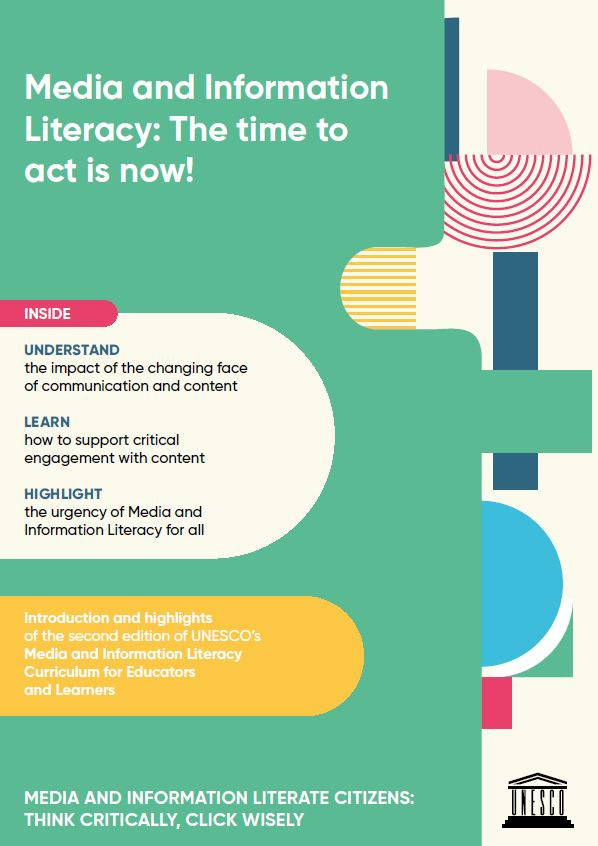 [Summary] Media and Information Literacy: The Time to Act is Now! Year of publication: 2021 Corporate author: UNESCO UNESCO has developed a comprehensive Curriculum which provides a framework for training teachers. But it is also a foundation that will also be of help to others: to learners, to content providers like internet companies and news media outlets, and to citizens of all ages as they consume, create and use content, including information.The second edition of the learning resource has been significantly expanded since the first publication in 2011. The MIL Curriculum reflects the changing nature of the information landscape. It now includes insight from a broader range of content providers than before, including libraries, archives, museums, media, and digital communications companies.The Curriculum is designed to empower educators and learners in general – from schoolteachers to those involved in training, the media and libraries, governments, and NGOs – to train people to spot misrepresentations and disinformation, and most importantly develop critical thinking competencies.
 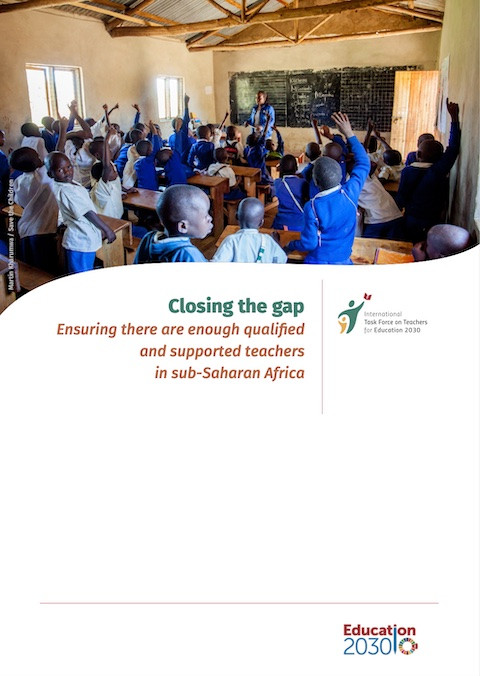 Closing the Gap: Ensuring There Are Enough Qualified and Supported Teachers in Sub-Saharan Africa Year of publication: 2021 Corporate author: International Task Force on Teachers for Education 2030 | UNESCO The fourth Sustainable Development Goal (SDG 4) aims to ensure better learning opportunities and outcomes and more equitable and inclusive education for all. SDG target 4.c calls for an increase in the supply of qualified teachers, particularly in low-income countries. To achieve this ambitious target, the international community needs to pay renewed attention to teacher support and preparation.This advocacy brief considers what it will take to increase the supply of qualified teachers in sub-Saharan Africa, the region where the teacher shortage is most acute. It analyses the causes for teacher shortages, looks at trends affecting the region and describes the scale of the shortages. It examines the fiscal pressures on low-income countries to cover salary costs and the costs of initial teacher education and continuing professional development, and it proposes some recommendations for governments and the international community to achieve the essential target of substantially increasing the supply of well qualified teachers.