
Resources
Explore a wide range of valuable resources on GCED to deepen your understanding and enhance your research, advocacy, teaching, and learning.
3,376 Results found
 5th UNESCO Forum on Transformative Education for Sustainable Development, Global Citizenship, Health and Well-being (Strand 4) Year of publication: 2021 Author: Alexander Leicht | Nilantha Gunasekara | Aaron Benavot | Umair Mushtaq | Elena Diryugina | Libby Giles | Mónika Réti | Le Anh Vinh Corporate author: 유네스코 | 유네스코 아시아태평양 국제이해교육원 Strand 4 – What does progress in transformative education look like – conclusions and next steps Plenary session 4The Strand assessed how to best capture progress including possible benchmarks and success indicators in addressing different aspects of transformative education and discussed the way forward.Moderator: Ms Vibeke Jensen, Director, Division of Peace and Sustainable Development, UNESCOPresentation of the key ideas for recommendation:Mr Alexander Leicht, Chief of Section of Education for Sustainable Development, UNESCODiscussants:Mr Nilantha Gunasekara, Deputy Director, School Health and Nutrition Branch, Ministry of Education, Sri LankaMs Chandrika Bahadur, Director, SDG AcademyMs Katarina Popovic, Professor, Department of Andragogy, University of Belgrade, Serbia & Secretary General, the International Council for Adult Education (ICAE)Mr Hyun Mook Lim, Director, APCEIUMr Aaron Benavot, Professor, University of Albany, USA Concurrent sessions 4In the concurrent sessions, concrete policy recommendations on advancing transformative education and creating enabling conditions were formulated by policymakers, practitioners and monitoring experts. Session 4.1 – Policy makersModerator: Mr Sam Loni, Programme Director, UN Sustainable Development Solutions Network, USASpeakers:Ms Catherine Matara, Assistant Director of Education, Ministry of Education, KenyaMs Sandra Allison Soria Mendoza, Head of the Environmental Education Unit and Environmental Education Specialist, Ministry of Education of PeruMs Saher Baig, Representative, Youth4Climate Session 4.2 – PractitionersModerator: Ms Monica Froehler, CEO, Ban Ki-moon Centre for Global CitizensSpeakers:Mr Umair Mushtaq, Project Manager, The Little Art, PakistanMs Elena Diryugina, Head of methodology and evaluation department, Investment to the Future, Russian FederationMs Libby Giles, Head of Global Citizenship, St Cuthbert’s College, Director, New Zealand Centre for Global Studies, New Zealand Session 4.3 – Monitoring experts on measurement frameworks, M&E, and dataModerator: Mr Ralph Carstens, Senior Research Advisor, International Association for the Evaluation of Educational Achievement (IEA)Speakers:Ms Mónika Réti, Representative of Hungary, UNECE working group on monitoring of the ESD strategyMr Le Anh Vinh, Deputy Director General, Viet Nam Institute of Educational Sciences (VNIES)Mr Hilaire Hounkpodoté, Coordinator of the Programme for the Analysis of Education Systems (PASEC), CONFEMENMr Guy-Roger Kaba, Coordinator of the Observatory on the Quality of Education, CONFEMEN Links to Strand 1 / Strand 2 & Special Session / Strand 3
 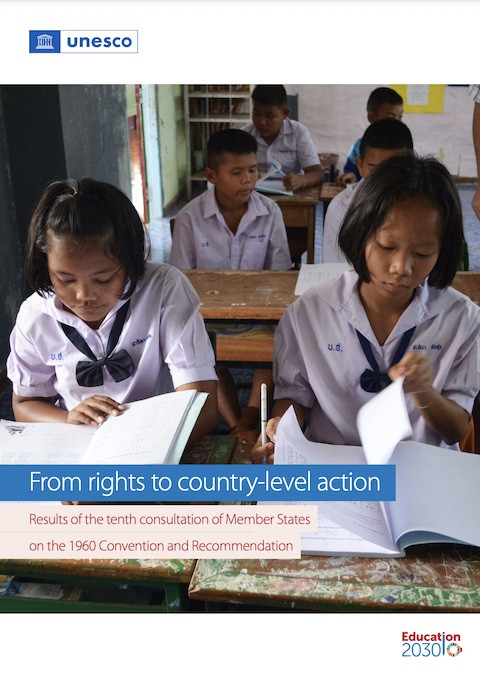 From Rights to Country-Level Action: Results of the Tenth Consultation of Member States on the 1960 Convention and Recommendation Year of publication: 2022 Author: Rolla Moumné | Sharlene Bianchi Corporate author: UNESCO The year 2020 marked a turning point for education worldwide. The impact of the COVID-19 pandemic not only amplified the difficulties and revealed existing weaknesses, but also brought the unpreparedness and lack of resilience of national education systems to the fore.The tenth consultation on the 1960 Convention against Discrimination in Education was conducted in precisely this context.Providing a valuable opportunity for States to take stock of the progress made in implementing Convention and sharing interesting national practices, the Consultation revealed continuous and new challenges the education sector faces. The unique timing of the consultation also created an opportunity to report on actions taken to faceadverse effects of the pandemic. This report analyzes and presents the Consultation findings, draws trends, and provides guidance for action. It shows how, by implementing the provisions of the Consultation, States can accelerate progress towards achieving Sustainable Development Goal 4, while invites a reflection on possibly reviewing the framework of the right to education to further respond to new challenges and put an end to increased inequalities worldwide.
  5th UNESCO Forum on Transformative Education for Sustainable Development, Global Citizenship, Health and Well-being (Strand 1) Year of publication: 2021 Author: Shadreck Majwabe | Thomas Greiner | Taka Horio | Niveen Jouhar | Arjen Wals | Lynndina Essack | Didier Jourdan | James O’Higgins Norman | Bolorchimeg Dagva Corporate author: UNESCO | APCEIU Plenary session 1In this first plenary, countries shared their vision, practice and progress underpinning their understanding of “transformative education”. The impact of current practices related to learners’ behavior and the educational system was discussed, highlighting success indicators.Moderator: Ms Krista Pikkat, Director, UNESCO Almaty OfficeMr Shadreck Majwabe, Director of the Department of Curriculum Development and Evaluation, Ministry of Basic Education, BotswanaMr Thomas Greiner, Head of Subdivision, Lifelong Learning, Federal Ministry of Education and Research, GermanyMs Taka Horio, Assistant Secretary-General, the Japanese National Commission for UNESCO & ASP National Coordinator, Ministry of Education, Culture, Sports, Science and Technology, JapanMs Niveen Jouhar, Member of Directorate of Curricula, Ministry of Education, Jordan Concurrent sessions 1Following the plenary session, the concurrent sessions discussed the different components that need to be transformed in the education system, and how to bring about these changes and further advance. Session 1.1 – PolicyModerator: Ms Akpezi Ogbuigwe, Founder, Anpez Centre for Environment and Development, Nigeria Mr Arjen Wals, UNESCO Chair, Social Learning and Sustainable Development, University of Wageningen, Netherlands Ms Anna-Karin Johansson, Swedish National Commission for UNESCO, Ministry of Education, Sweden Mr Felipe de Souza Costa, São Paulo Municipal Secretariat of Education, Brazil Mr El Hadji Gueye, Founder, Banlieu UP, Senegal Session 1.2 – Curricula, pedagogy and assessmentModerator: Mr Yao Ydo, Director, UNESCO International Bureau of Education (IBE)Dr Esther Care, Professor, University of Melbourne, AustraliaMs Lynndina Essack, Senior Education Officer, Department of Education Services, Ministry of Education, SeychellesMr Daehoon Jho, Professor, Sungshin Women's University, Republic of KoreaDr Jinan Karameh Chaya, Principal, Al Manar Modern School (UNESCO Associated Schools Network member), Lebanon Session 1.3 – Learning environmentModerator: Mr Chris Castle, Chief of Section of Education for Health and Well-being, UNESCOProf Didier Jourdan, UNESCO Chair and Head of the World Health Organization (WHO) Collaborating Center "Global Health & Education"Prof James O’Higgins Norman, Director of the National Anti-Bullying Centre, the Dublin City University, Ireland & UNESCO Chair on Tackling Bullying in Schools and CyberspaceMs Bolorchimeg Dagva, Adolescents and HIV Specialist, UNICEF, Mongolia Links to Strand 2 & Special session / Strand 3 / Strand 4
  5th UNESCO Forum on Transformative Education for Sustainable Development, Global Citizenship, Health and Well-being (Strand 2 & Special Session) Year of publication: 2021 Author: Miho Taguma | Leanne Riley | Valeria Damiani | Nandini Chatterjee | Valerie Shapiro | Pablo Pincheira | Nicolas Jonas | Denis Barrett | Doug McCall | Antoine Marivin | Cheoljin Yang | Sunkyung Lee Corporate author: UNESCO | APCEIU Strand 2 – What does progress in transformative education look like – a look at recent global and regional data Plenary session 2Building upon Strand 1, this session examined transformative education through the lens of regional and global comparative data in relation to SDG Target 4.7. The discussion identified the progress made, and remaining gaps in existing monitoring and assessment frameworks.Moderator: Mr Sobhi Tawil, Director, Future of Learning and Innovation, UNESCOMs Miho Taguma, Senior Policy Analyst on OECD Learning Compass 2030 and SDG 4.7Ms Leanne Riley, Unit Head, Surveillance, Monitoring and Reporting, Department of Noncommunicable Diseases (NCDs), World Health OrganizationMs Valeria Damiani, Associate Professor, La Libera Università Maria SS. Assunta (LUMSA) University, ItalyMr Carlos Henríquez Calderon, Coordinator of the Latin American Laboratory for Assessment of the Quality Education (LLECE), Regional Bureau for Education in Latin America and the Caribbean (OREALC), UNESCO Santiago Office Concurrent sessions 2The concurrent sessions engaged in an in-depth discussion on three selected major gaps in transformative education, identified opportunities and made suggestions on the way forward. Session 2.1 – How to address social and emotional dimensions of learning in assessment?The increasing integration of social and emotional learning (SEL) into curricula has raised questions regarding feedback and assessment. Drawing on research, policy and practice, this session examined possibilities and gaps in SEL.Moderator: Ms Cecilia Barbieri, Chief, Section of Education for Global Citizenship & Peace, UNESCOMs Nandini Chatterjee, Senior National Project Officer, UNESCO Mahatma Gandhi Institute of Education for Peace and Sustainable Development (MGIEP)Ms Valerie Shapiro, Associate Professor, University of California Berkeley, USAMr Pablo Pincheira, Training Director, Forja Chile, Chile Session 2.2 – Making adult learning and education visible within lifelong learning: strengthening non-formal education for individual, social and system level transformationThis session presented local initiatives that have embedded ESD and GCED into lifelong learning systems through policy/strategy development and project implementation, as well as progress made in building learning cities. Moderator: Mr Jose Roberto Guevara, President, International Council for Adult EducationSpeakers:Mr Nicolas Jonas, Programme Specialist, UNESCO Institute for Lifelong Learning (UIL)Ms Mo Winnie Wang, Programme Specialist, UNESCO Institute for Lifelong Learning (UIL)Mr Denis Barrett, Coordinator of Cork Learning City, Ireland Session 2.3 – What do we need to monitor/measure/assess in transformative education - gaps and opportunities?The session focused on promising practices and remaining gaps in capturing the transformation of individuals, societies and education. The key question addressed was how quality teaching and learning can be guided based on the evidence available.Moderator: Dr Marcia McKenzie, Director, MEECE Project and SEPN, and Professor, the University of Melbourne, AustraliaMr Doug McCall, Executive Director, International School Health NetworkMr Antoine Marivin, Project Manager, UNICEF-East Asia and Pacific Regional Office (EAPRO)Dr Julia Kim, Programme Director, the Gross National Happiness Centre, Bhutan Special Session by the Host Country (Plenary) – Experiences from the Republic of Korea and Beyond: Progress, Challenges and New VisionsThe Special Session discussed the Korean experience on SDG Target 4.7, at the domestic and international level. Good practices, emerging trends and lessons learnt were shared, suggesting key agendas, challenges, and visions towards 2030 and transformative education.Moderator: Mr Soon-yong Pak, Professor, Yonsei University, Republic of KoreaSpeakers:Mr Hwanbo Park, Professor, Chungnam University, Republic of KoreaMr Cheol-Jin Yang, Teacher at Songwoo Middle School & Co-Founder/Director of Neuroo, Republic of KoreaDiscussants:Ms Sun-Kyung Lee, Professor, Cheongju National University of Education, Republic of KoreaMr Aaron Benavot, Professor, University of Albany, USA Links to Strand 1 / Strand 3 / Strand 4
  How Can People With Disabilities Find Employment in Uzbekistan? Year of publication: 2023 Author: Abror Kurbanmuratov As in most other Central Asian countries, it is difficult for people with disabilities in Uzbekistan to survive. In addition to problems with health and social adaptation, it is difficult for them to find employment and feel themselves needed by society. Despite the adopted state laws and support programs, most cities and districts lack mechanisms for their implementation, as well as adapted infrastructure, accessible environment and employment system. Как трудоустроиться людям с инвалидностью в Узбекистане? Year of publication: 2023 Author: Abror Kurbanmuratov Как и в большинстве других стран Центральной Азии, людям с инвалидностью в Узбекистане выживать сложно. Помимо проблем со здоровьем, социальной адаптацией, им трудно трудоустроиться, почувствовать себя нужными обществу гражданами. Несмотря на принятые государственные законы и программы поддержки, в большинстве городов и районов отсутствуют механизмы их реализации, как и адаптированная инфраструктура, доступная среда и система трудоустройства.
  ПЕРЕОСМЫСЛИМ НАШЕ БУДУЩЕЕ Year of publication: 2021 Corporate author: International Commission on the Futures of Education | UNESCO Наше человечество, наша планета находятся в опасности, пандемия лишь подтвердила нашу хрупкость и взаимозависимость, чтобы изменить ход вещей и переосмыслить наше будущее, необходимы неотложные совместные действия; в этом докладе Международной комиссии по перспективам образования подтверждается способность образования к осуществлению коренных изменений. Перед нами стоит двойная задача – выполнить невыполненное обещание обеспечить право на качественное образование для каждого ребёнка, молодого человека и взрослого и полностью реализовать преобразующий потенциал образования, способного проложить путь к устойчивому коллективному будущему. Для этого нам нужен новый общественный договор в области образования, который сможет устранять проявления несправедливости, преобразуя будущее.Этот новый общественный договор должен основываться на принципах прав человека, недопущения дискриминации, социальной справедливости, уважения жизни, человеческого достоинства и культурного разнообразия. Он должен включать в себя этику заботы о людях, взаимности и солидарности. Он должен укреплять позиции образования как общественного дела и общего блага.Этот доклад, который готовился два года на основе глобального процесса консультаций с участием миллиона человек, предлагает правительствам, учреждениям, организациям и гражданам всего мира разработать новый общественный договор в области образования, который поможет нам построить мирное, справедливое и устойчивое будущее, отвечающее всеобщим интересам.Представленные здесь концепции, принципы и предложения являются лишь отправной точкой. Их воплощение в практику в конкретных условиях – это коллективная работа. Уже есть много положительных моментов, и в настоящем докладе предпринята попытка их отразить и развить. Это не инструкция и не план, а начало жизненно важного разговора.
 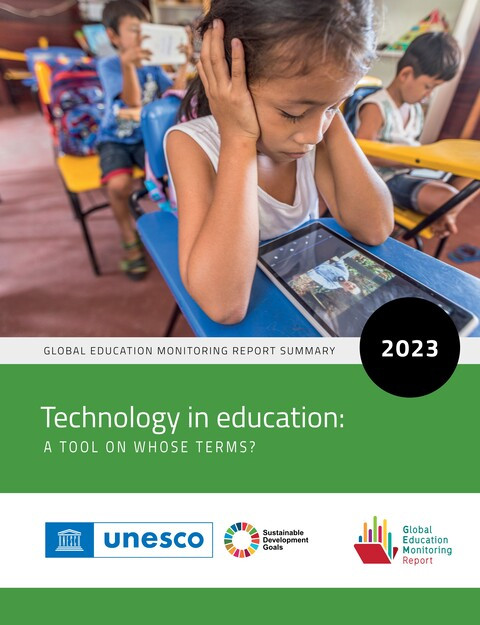 [Résumé] Résumé du rapport mondial de suivi sur l’éducation 2023 : les technologies dans l’éducation; qui est aux commandes? Year of publication: 2023 Corporate author: UNESCO | Global Education Monitoring Report Team Le rôle de la technologie dans l’éducation suscite depuis longtemps un débat intense. Est-ce qu’elle démocratise le savoir ou menace la démocratie en permettant à quelques-uns de contrôler l’information? Offre-t-elle des opportunités sans limite ou mène-t-elle vers un avenir dépendant de la technologie sans retour en arrière possible ? Est-ce qu’elle égalise les chances ou aggrave les inégalités? Devrait-elle être utilisée pour enseigner aux jeunes enfants ou présente-t-elle des risques pour leur développement? Ce débat a été alimenté par les fermetures d’écoles dues à la COVID-19 et l’émergence de l’intelligence artificielle générative. Mais comme les développeurs sont souvent en avance sur les décideurs, la recherche sur la technologie éducative est complexe. Les preuves solides et impartiales sont rares. Les sociétés posent-elles même les bonnes questions sur l’éducation avant de se tourner vers la technologie comme solution? Reconnaissent-elles ses risques tout en cherchant ses avantages? Les technologies de l’information et de la communication ont le potentiel de favoriser l’équité et l’inclusion en permettant d’atteindre les apprenants défavorisés et de diffuser plus de connaissances dans des formats attrayants et abordables. Dans certains contextes et pour certains types d’apprentissage, elles peuvent améliorer la qualité de l’enseignement et l’apprentissage des compétences de base. De toute évidence, les compétences numériques font désormais partie des compétences de base. La technologie numérique peut également soutenir la gestion et accroître l’efficacité en aidant à traiter de plus grands volumes de données éducatives. Mais la technologie peut également exclure, être inappropriée et pesante, voire carrément nuisible. Les gouvernements doivent veiller à créer les bonnes conditions pour assurer un accès équitable à l’éducation pour tous, réguler l’utilisation de la technologie afin de protéger les apprenants de ses influences négatives, et former les enseignants. Ce rapport recommande que la technologie soit introduite dans l’éducation sur la base de preuves montrant qu’elle serait appropriée, équitable, évolutive et durable. En d’autres termes, son utilisation devrait être dans l’intérêt des apprenants et compléter l’interaction en face-à-face avec les enseignants. Elle devrait être considérée comme un outil à utiliser dans ces conditions. À mi-parcours de l’échéance, le Rapport mondial de suivi sur l'éducation 2023 évalue la distance qu’il reste à parcourir pour atteindre les objectifs éducatifs de 2030. L’éducation est la clé pour débloquer la réalisation d’autres objectifs de développement, notamment le progrès technologique.
  نحو عقد اجتماعي جديد للتربية والتعليم: الأخذ بترابط العلاقات نموذجاً فكرياً Year of publication: 2023 Author: Elena Toukan Corporate author: UNESCO إىل إبرام »عقد اجتماعي جديد للرتبية والتعليم« وذلك بمنظار تتناول هذه املقالة الدعوات الصادرة مؤخرا العالقات الوجودية بني البرش والكوكب الحي، وتفحص من خالل التحليل النقدي لنظرية العقد االجتماعي ً إىل إحداث تحول أعمق عىل مستوى النموذج الفكري عند تناول كيف يمكن أن توفر تلك الدعوات مدخال مسألة العدالة والتنظيم االجتماعي والتعليم بحد ذاته. وتقرتح املقالة التحول من نموذج املعامالت القائمة عىل قواعد محددة إىل نموذج قائم عىل العالقات يرتكز عىل إدراك عالقات الرتابط والتداخل وتقديرها حق ً للبرشية والكوكب، ال بد للعقد االجتماعي الجديد للرتبية ً واستدامة ً إىل بناء مستقبل أكثر عدال قدرها. وسعيا والتعليم من تجاوز الديناميات االجتماعية الفردية الذرية والقائمة عىل املعامالت والصدام، بل أن ينتظم حول ترابط العالقات املتشابكة. A New Social Contract for Education: Advancing a Paradigm of Relational Interconnectedness Year of publication: 2023 Author: Elena Toukan Corporate author: UNESCO This paper looks at recent calls for “a new social contract for education” through the lens of a relational ontology for humanity and a living planet. Through a critical view of social contract theory, the paper looks at how this call can be an entry point to a deeper paradigmatic shift in framing questions of justice, social organization, and education itself. It proposes a shift from a rules-based transactional model to a relationship-based model grounded in understanding and appreciation of interdependence and interconnectedness. In order to shape more just and sustainable futures for humanity and the planet, a new social contract for education will need to transcend atomistic, transactional, and adversarial social dynamics and instead be organized around relational interconnectedness.