
Resources
Explore a wide range of valuable resources on GCED to deepen your understanding and enhance your research, advocacy, teaching, and learning.
3,376 Results found
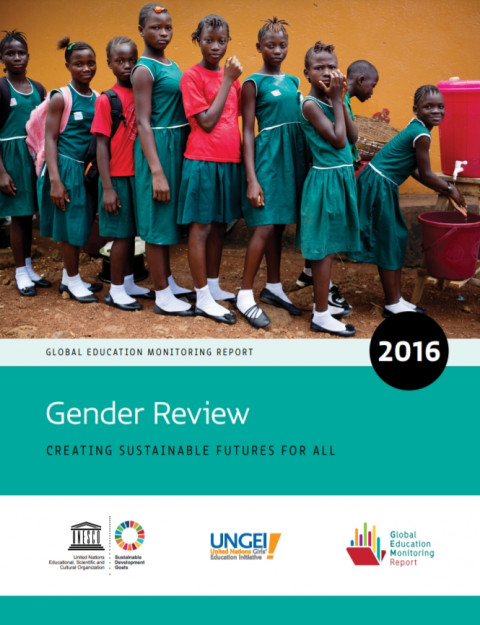 Creating sustainable futures for all; Global education monitoring report, 2016; gender review Year of publication: 2016 Author: Sachs, Jeffrey D Corporate author: Global Education Monitoring Report Team Education and gender equality are central concerns in the new sustainable development agenda. The Education 2030 Framework for Action, agreed by the global education community in November 2015 to accompany the SDG agenda, recognizes that gender equality is inextricably linked to the right to education for all, and that achieving gender equality requires an approach that ‘ensures that girls and boys, women and men not only gain access to and complete education cycles, but are empowered equally in and through education’ (UNESCO, 2016a, p. 8). Women, girls, boys and men all need to be given opportunities for active participation in society, for their voices to be heard and their needs met (UN Women, 2016a). To facilitate and achieve this, better evidence-based knowledge and understanding of gender issues in and through education are needed. The Gender Review of the 2016 Global Education Monitoring Report (GEM Report) recognizes and largely focuses on the challenges facing girls and women because of the disproportionate overall disadvantage they continue to experience in and beyond education. But it also understands that gender disadvantage can be experienced by boys and men, and that gender equality involves males, relationships and power. Gender inequality affects us all. Achieving gender equality must involve us all. Résumé sur l'égalité des genres: créer des avenirs durables pour tous; Rapport mondial de suivi sur l'éducation, 2016 Year of publication: 2016 Author: Sachs, Jeffrey D Corporate author: Global Education Monitoring Report Team L’éducation et l’égalité des genres sont des préoccupations essentielles dans le nouveau programme de développement durable. Le Cadre d’action Éducation 2030, approuvé par la communauté mondiale de l’éducation en novembre 2015 en complément du Programme 2030, reconnaît que l’égalité des genres est indissociable du droit à l’éducation pour tous, et que, pour qu’elle devienne une réalité, il faut adopter une démarche « qui garantisse que les filles et les garçons, les femmes et les hommes non seulement ont le même accès aux différents cycles d’enseignement, jusqu’à leur terme, mais aussi qu’ils ont les mêmes possibilités de s’épanouir dans l’éducation et grâce à l’éducation » (UNESCO, 2016a, p. 8). Femmes, filles, hommes et garçons ont tous besoin que des possibilités leur soient données de participer activement à la vie sociale et de faire entendre leur voix et qu’il soit répondu à leurs besoins (ONU Femmes, 2016a). Faciliter et permettre la réalisation de cet objectif exige une connaissance et une compréhension mieux étayées par des données factuelles de la manière dont l’égalité des genres peut être assurée dans l’éducation et par l’éducation. Le Résumé sur l’égalité des genres de l’édition 2016 du Rapport mondial de suivi sur l’éducation (Rapport GEM) reconnaît les difficultés rencontrées par les filles et les femmes du fait du désavantage global disproportionné auquel elles continuent de se heurter dans leurs études et au-delà, et est grande partie centré sur ces difficultés. Mais il admet aussi que les garçons et les hommes peuvent eux aussi être désavantagés du fait de leur sexe et que l’égalité des genres les concerne et est affaire de relations et d’exercice du pouvoir. L’inégalité entre les genres nous touche tous. Instaurer l’égalité entre les genres est notre responsabilité à tous. Resumen sobre género: creación de futuros sostenibles para todos; Informe de seguimiento de la educación en el mundo, 2016 Year of publication: 2016 Author: Sachs, Jeffrey D Corporate author: Global Education Monitoring Report Team Para la nueva agenda internacional de desarrollo sostenible, la educación y la igualdad de género constituyen preocupaciones básicas. El Marco de Acción Educación 2030, suscrito por la comunidad educativa mundial en noviembre del 2015, en sintonía con la agenda para los ODS, reconoce que la igualdad de género está íntimamente ligada al derecho a la educación para todos y que para alcanzar la igualdad de género se requiere un enfoque que “garantice no solo que las niñas, los niños, las mujeres y los hombres obtengan acceso a los distintos niveles de enseñanza y los cursen con éxito, sino que adquieran las mismas competencias en la educación y mediante ella” (UNESCO 2016a, p.28). Todas las mujeres, las niñas, los niños y los hombres han de tener la posibilidad de participar activamente en la sociedad, de que se oigan sus voces y se satisfagan sus necesidades (ONU-Mujeres, 2016a). Para facilitar y alcanzar estos objetivos, es necesario disponer de conocimientos basados en evidencia, acerca de los temas relacionados con el género en el ámbito de la educación y mediante ella. El Resumen sobre Género del Informe de Seguimiento de la Educación en el Mundo (Informe GEM) identifica y se centra principalmente en los desafíos a los que han de hacer frente las niñas y las mujeres a causa de las desventajas globales y desproporcionadas que siguen experimentando en su período de formación y después de él. Pero tiene presente asimismo que los niños y los hombres pueden sufrir desventajas de género, y que la igualdad de género también afecta a los varones, a sus relaciones y al poder. Por tanto, todos debemos participar en lograr la igualdad de género.
 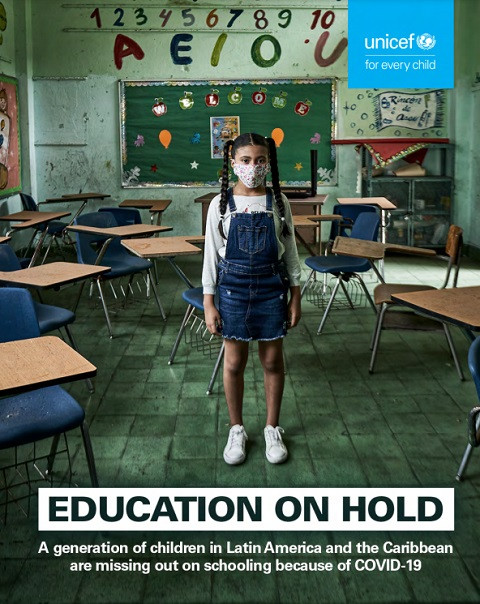 Education on Hold: A Generation of Children in Latin and the Caribbean Are Missing Out on School Because of COVID-19 Year of publication: 2020 Author: Laura Andreea Seusan | Rocío Maradiegue Corporate author: United Nations Children's Fund (UNICEF) More than seven months into the pandemic, COVID-19 is putting education on hold for more than 137 million children in Latin America and the Caribbean. This is according to a new UNICEF report about the devastating impacts of COVID-19 on education. The report also finds that COVID-19 has further widened the education gaps between rich and poor families in Latin America and the Caribbean. New UNICEF data shows that the percentage of children not receiving any form of education across the region has soared dramatically, from 4 to 18 per cent in the past few months. UN projections reveal that COVID-19 may push up to 3 million additional children out of school in Latin America and the Caribbean. Educación en Pausa: Una generación de niños y niñas en América Latina y el Caribe está perdiendo la escolarización debido al COVID-19 Year of publication: 2020 Author: Laura Andreea Seusan | Rocío Maradiegue Corporate author: United Nations Children's Fund (UNICEF) Más de siete meses después de que iniciara la pandemia, el COVID-19 está poniendo la educación en pausa de más de 137 millones de niños, niñas y adolescentes en América Latina y el Caribe, según un nuevo informe de UNICEF acerca de los devastadores impactos del COVID-19 en la educación.El informe encuentra también que el COVID-19 ha ampliado aún más las brechas educativas entre las familias ricas y las pobres en América Latina y el Caribe. Los nuevos datos de UNICEF muestran que el porcentaje de niños, niñas y adolescentes que no reciben ninguna forma de educación en la región se ha disparado drásticamente, del 4 al 18 por ciento en los últimos meses. Las proyecciones de la ONU revelan que el COVID-19 podría sacar de la escuela hasta 3 millones de niños más en América Latina y el Caribe.
  ‘Hate Speech’ Explained: A Toolkit Year of publication: 2015 Corporate author: ARTICLE 19 In this toolkit, ARTICLE 19 provides a guide to identifying ’hate speech‘ and how effectively counter it, while protecting the rights to freedom of expression and equality. It responds to a growing demand for clear guidance on identifying “hate speech,” and for responding to the challenges ‘hate speech’ poses within a human rights framework.The toolkit is guided by the principle that coordinated and focused action taken to promote the rights to freedom of expression and equality is essential for fostering a tolerant, pluralistic and diverse democratic society in which all human rights can be realised for all people.As such, it addresses three key questions: How do we identify ‘hate speech’ that can be restricted, and distinguish it from protected speech?What positive measures can States and others take to counter ‘hate speech’? Which types of ‘hate speech’ should be prohibited by States, and under which circumstances? The toolkit is guided by the principle that coordinated and focused action taken to promote the rights to freedom of expression and equality is essential for fostering a tolerant, pluralistic and diverse democratic society in which all human rights can be realised for all people. It is informed by, and builds upon, ARTICLE 19’s existing policy work in this field.In Part I, we outline that there is no uniform definition of ‘hate speech’ under international human rights law, rather, it is a broad concept which captures a wide range of expression. The toolkit advances a typology for identifying and distinguishing different forms of ‘hate speech’ according to their severity, guided by states’ international human rights law obligations. In Part II, we provide guidance on what policy measures State and non-state actors can undertake to create an enabling environment for freedom of expression and equality that addresses the underlying causes of ‘hate speech’ while maximising opportunities to counter it.Finally, in Part III, we outline the exceptional circumstances in which the State is obliged by international law to prohibit the most severe forms of ‘hate speech’, and where also States may under international law place other restrictions on ‘hate speech’. This includes guidance on ensuring that such prohibitions are not abused, and to ensure that where sanctions are imposed they are appropriate and proportionate, as well as ensuring support and redress for victims.ARTICLE 19 believes that ensuring that responses to ‘hate speech’ comply with international human rights law is crucial. Prohibitions that censor offensive viewpoints are often counter-productive to the aim of promoting equality, as they fail to address the underlying social roots of the kinds of prejudice that drive ‘hate speech’. In most instances, equality is better-promoted through positive measures which increase understanding and tolerance, rather than through censorship.This toolkit is not a definitive version, and will be continuously updated to reflect the developing case law and best practices in this area.
  Issue to Action: Mathematics; Teaching Toolkit for a Fairer World Year of publication: 2021 Author: Corinne Angier Corporate author: Scotdec These resources offer maths teams an opportunity to take an applications approach within the BGE phase. You might want to make connections to the UN Sustainable Development Goals and you can find some introductory activities to the goals here.The materials explore 3 broad themes – climate change, gender equality and migration – with 2 sets of activities for each theme supported with a PowerPoint presentation.The lessons and worksheets in the booklet and accompanying PowerPoints are all free to download below. All activities are mapped to ‘Experiences and Outcomes’, benchmarks and core maths skills are highlighter.
  The Role of Education in Addressing Future Challenges Year of publication: 2020 Corporate author: Bridge 47 In response to UNESCO’s Futures of Education consultation, Bridge 47 has released the following report on the power that transformative education has to address future challenges, including those linked to inequalities, climate change and health.Through the consultation process UNESCO raises questions about the importance and purpose of education by 2050. In a fast-evolving world, Bridge 47 supports the idea that education should foster the kind of education that helps learners of all ages to become active global citizens and thus contribute to building a more just and sustainable report world for all.The report, ‘The Role of Education in Addressing Future Challenges’, further emphasises the importance of measuring and monitoring the progress towards achieving the transformative vision of education as outlined in Sustainable Development Goal Target 4.7. It is hoped that the overall Future of Education report will encourage a measuring framework for SDG 4.7 that acknowledges the connection between non-formal and formal education as well as supporting dialogue between key actors that the reflect any conceptual shifts within the fields of Education for Sustainable Development and Global Citizenship Education.
  The Global Citizen's Journey: A Resource for Global Citizenship Education Year of publication: 2021 Corporate author: GOAL Global This resource for Global Citizenship Education is designed by our Global Youth Programme for educators and leaders of 14–18-year-olds all over the world. Centring on the themes of interconnectedness, development, power and inequality this free, downloadable booklet of activities encourages critical thinking, reflection, and empower the pursuit of positive change.To find out more, watch our introductory video here.
  The prospects of development education in African countries: building a critical mass of citizenry for civic engagement Year of publication: 2015 Author: Simon Eten Corporate author: Centre for Global Education (CGE) This article argues that development education is often framed in an African context within notions of national citizenship designed to engender support for public institutions and policies rather than develop critical thinking skills. This limited concept and application of development education often results in public apathy and disengagement from participation in community, national and global development initiatives. The author argues that recourse to the more radical, Freirean conception of development education practice in African states could potentially support more engaged public activism in issues underpinning poverty and injustice locally and globally. The author draws upon his knowledge and experience of the public sector in Ghana and general trends across Africa to propose potentially fertile areas of research that could support more effective DE practice that nurtures enhanced civic engagement.