
Resources
Explore a wide range of valuable resources on GCED to deepen your understanding and enhance your research, advocacy, teaching, and learning.
1,187 Results found
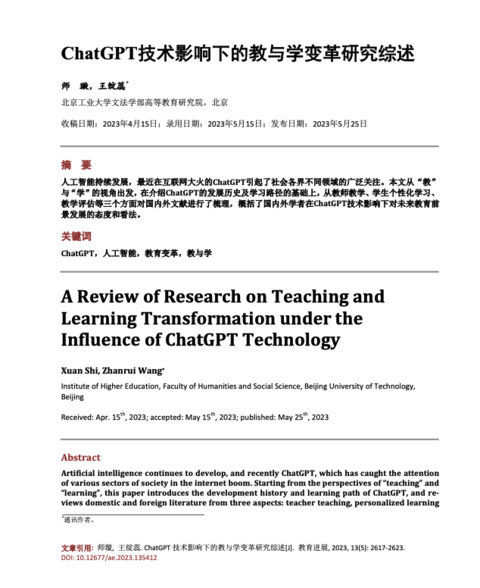 A Review of Research on Teaching and Learning Transformation under the Influence of ChatGPT Technology (Advances in Education; Vol.13, No.5) Year of publication: 2023 Author: 师璇 | 王绽蕊 Artificial intelligence continues to develop, and recently ChatGPT, which has caught the attention of various sectors of society in the internet boom. Starting from the perspectives of “teaching” and “learning”, this paper introduces the development history and learning path of ChatGPT, and reviews domestic and foreign literature from three aspects: teacher teaching, personalized learning for students, and teaching evaluation. It summarizes the attitudes and views of domestic and foreign scholars on the future development of education under the influence of ChatGPT technology. ChatGPT技术影响下的教与学变革研究综述 (教育进展; Vol.13, No.5) Year of publication: 2023 Author: 师璇 | 王绽蕊 人工智能持续发展,最近在互联网大火的ChatGPT引起了社会各界不同领域的广泛关注。本文从“教”与“学”的视角出发,在介绍ChatGPT的发展历史及学习路径的基础上,从教师教学、学生个性化学习、教学评估等三个方面对国内外文献进行了梳理,概括了国内外学者在ChatGPT技术影响下对未来教育前景发展的态度和看法。
  Distance Learning: A Guide to Playful Distance Learning – Online and Offline Year of publication: 2020 Corporate author: LEGO Foundation The LEGO Foundation Distance Learning Guide offers ideas, evidence and links to useful resources and learning communities, to help you make children’s distance learning more playful, engaging, joyful and effective, whether children are learning online or offline. El aprendizaje a distancia: Una guía para el aprendizaje a distancia a través del juego, online y offline Year of publication: 2020 Corporate author: LEGO Foundation La Guía para el aprendizaje a distancia de la Fundación LEGO ofrece ideas, evidencia y vínculos a recursos útiles y a comunidades de aprendizaje, para ayudarle a hacer el aprendizaje a distancia de los niños y las niñas más lúdico, involucrado, alegre y efectivo, ya sea que los niños y las niñas estén aprendiendo de manera online u offline.
  Education for Sustainable Development and COVID-19 in Southern Africa: Intersecting Perspectives on Why Water, Food and Livelihoods Matter in Transforming Education for Sustainable Futures Year of publication: 2021 Author: Heila Lotz-Sisitka | Injairu Kulundu | Rachel Neville | Anna James | Ayanda Buhlebenkosi Moyo | Esthery Kunkwenzu | Domingos Carlos Mirione | Gibson Mphepo | Kgosietsile Velempini | Lwanda Maqwelane | Phila Dyantyi | Rutendo Mushishi | Selemani Abdul Makwita | Yeukai Musariri | Zenani Mhlanga Corporate author: JET Education Services | Rhodes University The main question of this book is ‘What can we learn from this intersecting crisis for transforming education for sustainable futures in southern African countries’.The research process will generate a few additional questions including, but not limited to:Can stronger school-community-government partnerships help to reduce risks and challenges such as those being faced now under the COVID-19 crisis?What can our governments do better?What can communities and parents do?What can educators and learners do?What systems need to be generated to ensure an alternative, transformed future and what is the role of education in this story?
  School Closures and Regional Policies to Mitigate Learning Loss due to COVID-19: A Focus on the Asia-Pacific Year of publication: 2021 Corporate author: UNESCO Institute for Statistics (UIS) Global school closures as a result of COVID-19 have caused learning losses for millions of children despite efforts to deploy remote learning options. Greater economic insecurity among families may also affect school enrolment as many struggle to pay school fees, or require children to work to supplement family income. Ultimately, this will lead to rising dropout rates, estimated to be as much as 4% in a region where 128 million children and young people were already out of school before COVID-19. The largest number of learners at risk reside in South and West Asia.Together, the education and economic fallout from the pandemic threaten progress toward the Sustainable Development Goal for education (SDG 4). Even prior to the COVID-19 disruptions, progress towards SDG 4 was lagging in many countries in the Asia-Pacific and without significant contributions to education finance, the pandemic threatens to push the region even further behind.This report breaks down the effects of school closures. It considers, for example, how many schools were closed, and when, across the Asia-Pacific, and the effects on different levels of education from early childhood education, through to primary and secondary school. The report analyses country efforts to implement remote learning, and strategies to mitigate learning losses as the proportion of students expected to fall below minimum proficiency levels is expected to rise.To achieve SDG 4, all children and young people, and especially those in marginalized groups, need support to get the education they need and deserve.
 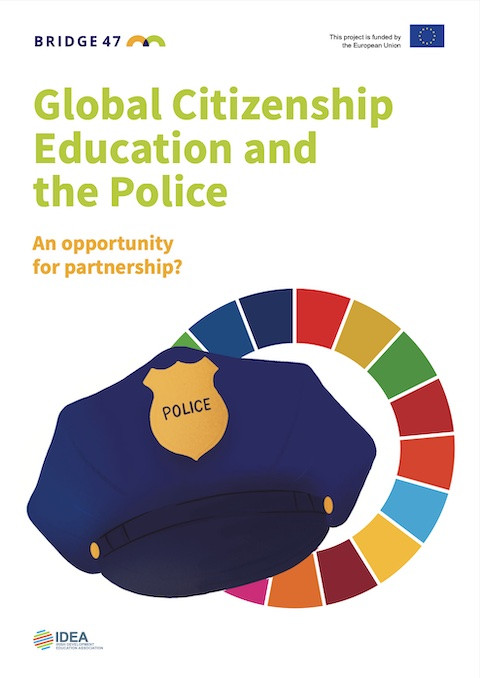 Global Citizenship Education and the Police: An Opportunity For Partnership? Year of publication: 2021 Author: Robin Young Corporate author: Bridge 47 This publication aims to provide some reflective questions and practicalities to consider before embarking on a partnership with the police sector and to contribute to a wider reflection, dialogue and knowledge sharing within the GCE sector globally about the opportunities and challenges for advancing the mission of GCE through engagement with the police sector.
  Transformative Education: Bridging Education for Change Year of publication: 2021 Author: Jana Arbeiter | Maja Bučar Corporate author: Bridge 47 This publication suggests that improvements in the areas of coordination, cooperation, awareness raising and capability development are needed, as outlined in the recommendations below. Policies and strategies at national, regional and global level should adopt overarching visions for transformative education in the form of overarching strategies for SDG Target 4.7. Mechanisms for coordination and collaboration between the different components of SDG Target 4.7 should be established at national, regional and global levels. Awareness of the role of transformative education and SDG Target 4.7 in contributing to more just and sustainable futures should be raised jointly between the different components of SDG Target 4.7. Opportunities for capacity building and upskilling of practitioners and learners linked to transformative education should be enabled and created at national, regional and global levels.
  Transformative Competencies: How to Define and Implement Competencies for SDG Target 4.7 Year of publication: 2021 Author: Johanna Helin Corporate author: Bridge 47 This paper was commissioned to support advocacy for SDG Target 4.7 in European and global policies by exploring the concept of ‘Competencies for SDG Target 4.7’. This advocacy paper draws from a desk review of existing global and regional competency frameworks at national, regional and global levels. The aim is to get a clearer understanding of these transformative competencies and how they help the implementation and assessment of Target 4.7.This paper is divided in three sections. The first section provides background to the different world views that frame the discussion on competencies, before turning to presenting some of the competency frameworks for Target 4.7. The second section gives some examples of how these competencies are being introduced into national education policies, professional skills training and lifelong learning. The paper finishes with conclusions and policy recommendations.
  Indicators: The Need and Challenges of Tracking Implementation of Target 4.7 Year of publication: 2021 Author: Johanna Helin Corporate author: Bridge 47 This paper investigates the existing and proposed indicators and monitoring frame- works for 4.7. Examining efforts at national, regional, and global levels will identify the main challenges in measurement initiatives. The paper will start by looking at the context of SDGs and the special character of Target 4.7. Thereafter, it will discuss the process and limitations of defining the indicators at the global level. It will also review regional developments, tools, and ideas for national and local level assessment frameworks in Asia-Pacific and Europe. The paper ends with conclusions and policy recommendations.