
Resources
Explore a wide range of valuable resources on GCED to deepen your understanding and enhance your research, advocacy, teaching, and learning.
3,436 Results found
 세계시민의식 함양을 위한 청소년활동 활성화 방안 Year of publication: 2017 Author: 황세영 | 최정원 | 문지혜 | 최윤 Corporate author: 한국청소년정책연구원 본 연구는 최근 국제사회 의제와 우리나라 교육정책에서 강조되고 있는 세계시민의식의 함양을 위하여 청소년 활동 활성화 방안을 제시하는데 목적이 있다. 이를 위해 본 연구에서는 기존 국제교류 활동 위주의 청소년 활동에서 확장된 개념으로서, 청소년 세계시민의식 함양을 목표로 하는 글로벌 청소년 활동의 필요성을 제기하였다. 연구내용으로는 먼저 세계시민의식 개념에 대한 국제사회와 학계의 논의, 인접 교육 분야와의 관련성 등을 살피고, 모든 청소년들이 지향하고 내재화할 수 있는 시민의식의 관점에서 세계시민의식에 대해 고찰하였다. 또한 전문가 델파이 조사를 통하여 세계시민의식의 정의 및 구성요소에 대한 합의를 도출하였다. 그리고 국내 세계시민교육, 국제교류, 다문화 이해교육, 국제개발협 력 등의 정책 사업과 민간 청소년 단체 및 개발 NGOs 등의 현황을 살펴보았다. 그 결과 아직까지 청소년 세계시민의식 함양을 위한 종합적인 정책체계가 미진하고, 민관 협력이 강조되고 있지만 청소년 분야에서의 지원과 협력은 미약하다는 점을 알 수 있었다. 이와 관련하여 영국의 글로벌 청소년 활동 역사와 아일랜드의 청소년 정책 사례를 살펴보았는데, 이를 통해 청소년 분야에서 국제개발협력의 접근을 모색하고, 한국형 글로벌 청소년 활동 개념 및 모델 정립의 필요성을 제기하였다. 한편 우리나라 청소년 3,000명을 대상으로 한 설문 조사를 진행하고, 세계시민 정체성과 관련 교육 경험이 전반적인 세계시민의식 형성에 영향을 미치는 주요 변수임을 밝혔으며, 관련 프로그램의 다각화와 양질의 경험 제공이 필요함을 제안하였다. 또한 다섯 가지 청소년 프로그램 사례 및 참여자 경험 분석을 통해 향후 청소년 활동 프로그램의 실행 전략 개발에 시사점을 도출하였다. 마지막으로 전문가 델파이 조사를 통하여 청소년의 세계시민의식 함양에 필요한 교사와 청소년지도자의 필수 역량을 10가지로 제안하고, 향후 전문가 양성과정에 활용할 수 있도록 하였다. 이러한 연구 결과에 따라 본 연구에서는 세계시민의식 함양을 위한 청소년 주도의 활동에 대한 높은 수요에 비해 청소년 활동정책의 추진 동력이 부족하다는 점을 지적하고, 청소년계의 역량에만 의존하기보다는 추진 주체 간 네트워크가 중요함을 강조하였다. 또한 청소년의 세계시민의식 함양을 목표로 하는 한국형 글로벌 청소년활동의 개념과 정책 영역 정립을 제안하였다. 이를 위한 정책 비전으로 “글로벌 청소년활동을 통한 청소년 세계시민의식 함양”을 제시하고, 이를 달성하기 위하여 1) 글로벌 청소년활동 기반구축, 2) 글로벌 청소년활 동 사업 추진, 3) 글로벌 협력 네트워크 구축 등의 정책과제와 17개 세부과제를 제시하였다.
  청소년문화 활성화를 위한 소셜 미디어 활용 연구 Year of publication: 2015 Author: 배상률 Corporate author: 한국청소년정책연구원 본 연구는 청소년 문화라는 키워드에 함축된 교육, 여가, 참여 등 청소년들의 전반적인 삶의 실태와 이들이 가지는 문제의식과 가치를 살펴보고, 청소년들을 위한 소셜미디어의 활용범위와 가능성을 탐구하는데 일차적인 목적을 두고 있다. 이를 통해, 청소년의 건전한 문화형성을 위한 효과적인 수단(tool)이자 소통의 장(field)으로 기여할 수 있는 무한한 잠재력을 갖고 있는 소셜미디어의 활용을 위해 우리 사회와 정부가 마련해야 할 정책 방안을 제시하는 것이 본 연구가 가지는 궁극적인 목적이다. 유해콘텐츠가 소셜미디어를 통해 급속히 확산되고 있는 상황에서, 청소년들은 선별적 규제를 위한 엄격한 기준 마련과 함께 집단지성이란 소셜미디어의 대표적 장점이 사회에 제대로 발현될 수 있도록 디지털 리터러시 역량을 키우는 것이 필요하다. 이를 위해, 본 보고서는 청소년의 디지털 리터러시 함양을 위한 학교단위의 미디어교육의 제도화 및 건전한 소셜미디어 사용을 위한 인터넷드림마을과 같은 캠프의 증설 및 운영의 확대를 제언하였다. 또한 부모 교육 확대 및 정부 차원의 홍보노력도 개선될 필요가 있다. 본 저작물은 '한국청소년정책연구원'에서 '2015년' 작성하여 공공누리 제4유형으로 개방한 '청소년문화 활성화를 위한 소셜 미디어 활용 연구(배상률)'를 이용하였으며, 해당 저작물은 '한국청소년정책연구원 홈페이지(www.nypi.re.kr)'에서 무료로 다운받으실 수 있습니다.
  미디어 리터러시 교육 지원체계 구축방안 연구 Year of publication: 2021 Author: 배상률 | 심우민 | 최현정 Corporate author: 한국청소년정책연구원 | 대한민국 교육부 본 연구는 미디어 리터러시 교육 정책추진의 효과성 및 효율성 제고와 개인(유아, 초중고학생, 성인 등) 생애주기별 맞춤형 서비스 제공을 위한 범부처 통합지원 체계 방안을 마련하는데 주요 목적을 두고 있다. 본 저작물은 한국청소년정책연구원에서 2021년 작성하여 공공누리 제 4유형으로 개방한 ‘미디어 리터러시 교육 지원체계 구축방안 연구(배상률, 심우민, 최현정)’ 를 이용하였으며 해당 저작물은 미리네 (www.miline.or.kr)에서 무료로 다운받으실 수 있습니다.
  2022 개정 교육과정의 미디어 리터러시 교육 강화 방안 Year of publication: 2021 Author: 장은주 Corporate author: 한국청소년정책연구원 | 대한민국 교육부 본 연구는 2022 개정 교육과정의 미디어 리터러시 교육을 강화하기 위한 교과 교육과정의 교수학습・평가 방법 및 유의점에 통합 교육과정 운영에 관한 사항을 명시하였다. 학교급별로 맞춤형 전략을 적용할 것을 제안하고, 각 전략 관련 국내외 사례를 제시하였다.본 저작물은 한국청소년정책연구원에서 2021년 작성하여 공공누리 제 4유형으로 개방한 ‘2022 개정 교육과정의 미디어 리터러시 교육 강화 방안(정현선, 장은주)’ 를 이용하였으며 해당 저작물은 미리네 (www.miline.or.kr)에서 무료로 다운받으실 수 있습니다.
  청소년 미디어 이용 실태 및 대상별 정책대응방안 연구Ⅱ: 10대 청소년 Year of publication: 2021 Author: 배상률 | 이창호 | 김남두 Corporate author: 한국청소년정책연구원 본 연구의 목적은 10대 청소년들의 미디어 이용에 대한 심층 분석과 함께 청소년들의 디지털 시민성을 함양할 수 있는 증거기반의 정책방안을 도출하는 것이다. 총 3년간 진행되는 본 연구(2020년∼2022년)는 2020년도 1차 연도 연구에서는 미디어노출과 이용이 본격화되는 초등학생들의 미디어 이용 실태를 파악하였고 2021년도 2차 연도 연구에서는 SNS 사용이 활발하고 미디어를 통한 사회참여가 두드러지는 시기인 중고등학생과 학교 밖 청소년을 대상으로 미디어 이용 실태를 분석하였다. 2차 연구에서는 소셜리빙랩 연구 방법론을 적용하여, 부모들이 참여자로서의 실천적 경험을 공유하면서 청소년의 미디어 이용에 대한 이해를 주도적으로 재구성하고 확장할 수 있는 부모 교육의 기회를 만들어갈 수 있는 부모 참여형 미디어교육 프로그램 운영 방안 제시를 목표로 한다.본 저작물은 한국청소년정책연구원에서 2021년 작성하여 공공누리 제 4유형으로 개방한 ‘청소년 미디어 이용 실태 및 대상별 정책대응방안 연구Ⅱ: 10대 청소년(배상률, 이창호, 김남두)’ 을 이용하였으며 해당 저작물은 미리네 (www.miline.or.kr)에서 무료로 다운받으실 수 있습니다.
  학교미디어교육센터 설치 유형별 지역 안착방안 Year of publication: 2021 Author: 배상률 Corporate author: 한국청소년정책연구원 본 연구에서는 교육부를 포함한 학교미디어교육을 담당하는 부처 및 산하 기관 그리고 지역 미디어센터에 대해 살펴보고, 미디어교육 법제 현황과 한국청소년정책연구원이 최근 수행한 초중고 재학생들의 미디어 리터러시 교육 현황 및 인식 조사 결과를 고찰하였다. 또한 전문가 의견조사 및 설문조사를 통해 학생들의 미디어 리터러시 함양에 궁극적인 기여를 하는 학교미디어교육센터로 자리매김하기 위한 정책 방안을 제시하였다.본 저작물은 한국청소년정책연구원에서 2021년 작성하여 공공누리 제 4유형으로 개방한 ‘학교미디어교육센터 설치 유형별 지역 안착방안(배상률)’ 을 이용하였으며 해당 저작물은 한국청소년정책연구원 (www.nypi.re.kr)에서 무료로 다운받으실 수 있습니다.
  후기청소년(19-24세)의 미디어 리터러시 교육과 미디어 정책에 대한 인식 연구 Year of publication: 2022 Author: 강진숙 | 권오현 Corporate author: 한국청소년정책연구원 이 연구는 후기청소년의 미디어 리터러시 교육과 미디어 정책에 대한 인식 연구로서 후기청소년의 미디어 리터러시 교육적 쟁점과 국내외 사례를 살펴보고, 후기청소년 및 미디어 관련 전문가들의 인식을 통해 후기청소년이 미디어 리터러시 교육과 미디어 정책을 제안하는 데 목적이 있다.연구 진행을 위해 문헌연구, 전문가 자문, FGI(Focus group Interview) 및 심층인터뷰를 진행하였으며, 국내외 후기청소년의 미디어 이용 현황과 관련 정책을 문헌연구를 통해 알아보고, 함의를 도출하였다. 본 저작물은 한국청소년정책연구원에서 2022년 작성하여 공공누리 제4유형으로 개방한 ‘후기청소년(19-24세)의 미디어 리터러시 교육과 미디어 정책에 대한 인식 연구(강진숙, 권오현)’를 이용하였으며 해당 저작물은 한국청소년정책연구원 홈페이지 (https://www.nypi.re.kr)에서 무료로 다운받으실 수 있습니다.
  World Heritage Forests: Carbon Sinks Under Pressure Year of publication: 2021 Author: Tales Carvalho Resende | David Gibbs | Nancy Harris | Elena Osipova Corporate author: UNESCO | International Union for Conservation of Nature (IUCN) | World Resources Institute This report provides the first global scientific assessment of greenhouse gas emissions and sequestration in forests found in UNESCO World Heritage sites.World Heritage forests, whose combined area of 69 million hectares is roughly twice the size of Germany, are some of the most biodiversity-rich habitats on Earth and play a crucial role in climate regulation by absorbing carbon dioxide (CO2) from the atmosphere. However, these forests are under increasing anthropogenic pressures, including climate change.By combining remote sensing data with site-level monitoring, this report has quantified the climate benefits of World Heritage forests for the first time, assessed the impacts on carbon of common threats to World Heritage forests and identified sites that are net carbon sources. It therefore provides information to facilitate dialogues between policymakers and local stakeholders for the development of effective solutions aimed at maintaining the continuing role of World Heritage forests as sinks and stable carbon stores for future generations.
 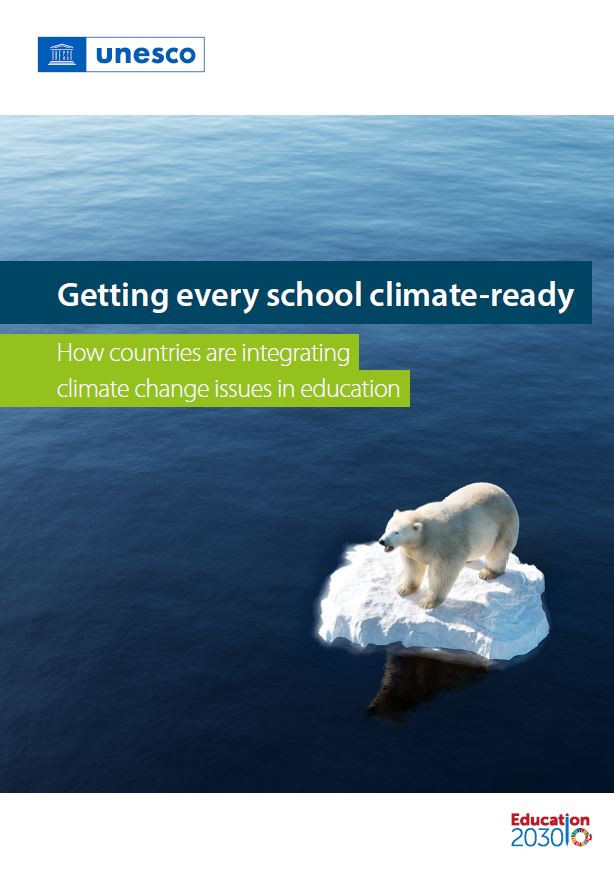 Getting Every School Climate-ready: How Countries are Integrating Climate Change Issues in Education Year of publication: 2021 Corporate author: UNESCO This document summarizes the findings of selected studies by UNESCO and its partners on how climate change issues are integrated in education.These findings shed light on four key questions: where do we stand on climate change education; what do teachers say; what are the examples of country good practices on climate change education; and what does inter-ministerial collaboration on education for sustainable development look like?
  어린이와 미디어 리터러시 Year of publication: 2022 Author: 이원섭 | 조재희 | 최지선 Corporate author: 한국언론진흥재단 본 연구에서는 초등학생들의 미디어 이용에 대한 전반적인 특징을 진단하고 해외 사례 분석과 부모와 교사, 미디어 강사와의 심층인터뷰, 전문가 자문, 학생과 부모 대상의 설문조사를 통해 어린이의 미디어 리터러시 향상을 위한 정책 방안을 제시하고자 한다. 본 저작물은 한국언론진흥재단에서 2022년 작성하여 공공누리 제4유형으로 개방한 '어린이와 미디어 리터러시(작성자:이원섭, 조재희, 최지선)'를 이용하였으며, 해당 저작물은 한국언론진흥재단 홈페이지(https://www.kpf.or.kr/)에서 무료로 내려받으실 수 있습니다.