
Resources
Explore a wide range of valuable resources on GCED to deepen your understanding and enhance your research, advocacy, teaching, and learning.
1,451 Results found
 Analyse (Didactique) d’un jeu vidéo historique: Démocratie et éducation à la citoyenneté dans civilization VI (Revue de recherches en littératie médiatique multimodale; no. 9) Year of publication: 2019 Author: Vincent Boutonnet Corporate author: Groupe de recherche en littératie médiatique multimodale Civilization VI, publié en 2016, est un jeu de stratégie tour par tour qui permet de traverser les ères historiques à la tête d’une nation grâce au développement culturel, économique, militaire et technologique. Ce nouvel opus introduit l’arbre des dogmes qui permet de nouvelles mécaniques en lien avec les modes de gouvernement et la citoyenneté. La recherche est de nature descriptive et vise une analyse formelle des mécaniques du jeu. Nous examinons les éléments constitutifs du jeu, les principes qui le régissent ainsi que les limites conceptuelles et civiques d’une telle ressource. Cependant, nous y voyons aussi une occasion de discuter de ces lacunes avec des élèves afin de les engager authentiquement dans une réflexion critique sur la démocratie et la citoyenneté.
  L'introduction de services-learnings dans l'enseignement universitaire de Belgique francophone, un instrument d'éducation à la citoyenneté mondiale et solidaire? Year of publication: 2019 Author: Frédérique Marsin Corporate author: Université de Liège Née d’une remise en question de l’éducation à la citoyenneté mondiale et solidaire (ECMS) dans les universités belges francophones, l’ambition de ce travail était de déceler l’influence que pourrait avoir sur celles-ci l’instauration des services-learnings comme pédagogie universitaire. Une telle interrogation nous a amené à nous questionner sur l’universalité de l’ECMS. Considérant qu’elle devrait être accessible à tous au regard de son essence même, cela n’est pourtant pas le cas, notamment du fait qu’elle est réservée à un public limité, à savoir aux élèves de l’enseignement fondamental et du secondaire ainsi qu’une portion infime d’étudiants universitaires, déjà sensibilisés aux thématiques de l’ECMS (SONECOM, 2018 ; cfr. annexe). Dès lors, nous questionnons l’efficacité des activités actuelles d’ECMS, organisées à l’université, grâce à une grille d’analyse adaptée des travaux de GÉRARD, psychopédagogue. Cette dernière nous permet de dresser l’état des lieux de l’ECMS, pouvant être résumé de la sorte : les activités d’ECMS actuelles à l’Université sont réservées, presqu’exclusivement, à des étudiants de master, sensibilisés par les enjeux globaux, issus de filières plutôt humanistes, comme les sciences sociales (SONECOM, 2018 ; Pirotte et Fettweis, 2018). Pourtant, le large pourcentage des étudiants restants n’est pas contre l’expression d’une citoyenneté plus active ; beaucoup y sont même très favorables mais expliquent leur inaction par un manque d’opportunités (SONECOM, 2018 ; cfr. annexe). Ne doutant pas pour autant de la qualité des activités d’ECMS, nous nous demandons quelle est la capacité pour ces acteurs de capter de nouveaux publics. Afin de pallier à ce manque de visibilité, nous proposons aux étudiants de s’essayer à l’ECMS, grâce à une application contraignante de la pédagogie des services-learnings.
  Le jeu de rôle en éducation à la citoyenneté mondiale, entre expérience et empathie Year of publication: 2017 Author: Clémentine Tasiaux Corporate author: Université de Liège L’éducation à la citoyenneté mondiale (ECM) est un secteur de la coopération au développement en Belgique. En un mot, ce type d’éducation vaste et complexe présente la particularité d’avoir pour objectif l'éveil des consciences aux interdépendances existant dans notre monde. L’ECM a la caractéristique de prendre forme dans l’oeil de celui qui la pratique et sa mise en pratique dépend donc de celui qui la met en place. En Belgique, l’ECM est majoritairement mise en pratique par la société civile qui voit en cette dernière un moyen de susciter un changement social. Pour ce faire, le monde associatif développe diverses stratégies dont un processus de sensibilisation qui repose, entre-autres, sur des ressources ou des outils pédagogiques. Ceux-ci présentent des formes variées et sont généralement basés sur des approches pédagogiques participatives. Au cours d’un stage de pratique professionnelle effectué en première année de Master en Sciences de la population et du développement, j’ai eu l’occasion de me familiariser avec le monde ludique et participatif de l’éducation à la citoyenneté mondiale. L’hôte de mon stage, l’Organisation Non Gouvernementale (ONG), le Service Civil International - Projets Internationaux (SCI est spécialisée dans l’animation et la réalisation d’outils pédagogiques mettant en oeuvre des techniques du jeu de rôle. D’abord un peu sceptique, je regardais d’un oeil curieux ces outils pédagogiques sous forme de jeux de rôle. Sensibiliser un public adulte en jouant? Voilà quelque chose qui m’était étranger.
 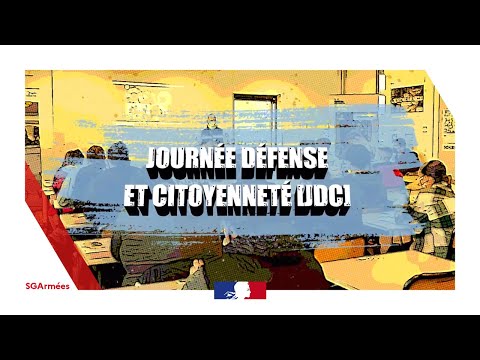 Defense and Citizenship Day Year of publication: 2022 Corporate author: Secretary General for Administration of the Ministry of Armed Forces (France) The JDC is a key step not to be missed. This mandatory day raises young people's awareness of the spirit of Defense and commitment to society. Coming after the census, this is the third and final stage of the citizenship journey. For one day, it presents young people with the issues and general objectives of defense and national security, raising their awareness of the rights and duties related to citizenship, road safety, organ donation, etc. This day also makes it possible to evaluate the basic learning of the French language or even to detect young people without diplomas and without jobs to offer them solutions. The JDC is the keystone of the Armed Forces Youth Ambition Plan to follow young people, introduce them to the professions of the armed forces and support them until they are hired. La Journée défense et citoyenneté (JDC) Year of publication: 2022 Corporate author: Secretary General for Administration of the Ministry of Armed Forces (France) La JDC est une étape clé à ne pas manquer. Cette journée obligatoire permet de sensibiliser les jeunes à l’esprit de Défense et à l’engagement dans la société. Intervenant à la suite du recensement, c’est la troisième et dernière étape du parcours de citoyenneté. Durant une journée, elle permet de présenter aux jeunes les enjeux et les objectifs généraux de la défense et de la sécurité nationale, les sensibiliser aux droits et devoirs liés à la citoyenneté, à la sécurité routière, au don d’organes, etc. Cette journée permet également d’évaluer les apprentissages fondamentaux de la langue française ou encore de détecter des jeunes sans diplômes et sans emploi pour leur proposer des solutions. La JDC constitue la clé de voûte du Plan Ambition Armées Jeunesse pour suivre les jeunes, leur présenter les métiers des armées et les accompagner jusqu’à leur engagement.
  Human Rights Education in the School System Europe, Central Asia, and North America: A Compendium of Good Practices Year of publication: 2010 Corporate author: OSCE. Office for Democratic Institutions and Human Rights (ODIHR) The Compendium of Good Practices: Human Rights Education in the School System in Europe, Central Asia, and North America includes 101 good practices in human rights education in primary, secondary, and teacher training institutions in the OSCE region, also covered by the UNESCO, OHCHR mandate. Образование в области прав человека в школьной системе Европы, Центральной Азии и Северной Америки: Сборник примеров успешных практик Year of publication: 2010 Corporate author: OSCE. Office for Democratic Institutions and Human Rights (ODIHR) Сборник примеров успешных практик «Образование в области прав человека в школьной системе Европы, Центральной Азии и Северной Америки» включает 101 пример успешных практик в сфере образования в области прав человека в начальной, средней школе и в педагогических учебных заведениях в регионе ОБСЕ, на который также распространяются полномочия ЮНЕСКО, УВКПЧ ООН.
 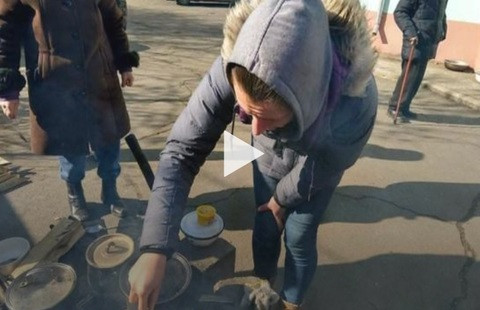 From IT Elite to Refugee in an Instant - a Young Ukrainian Man Describes His Experience of War Year of publication: 2022 Corporate author: United Nations (UN) This audio presents a young Ukrainian woman's own personal account of her experience of the conflict in Ukraine. 从IT精英瞬间变为难民 — 一位乌克兰年轻人述说战争经历 Year of publication: 2022 Corporate author: United Nations (UN) 本音频介绍了一位乌克兰年轻人本人讲述乌克兰冲突中的亲身经历。
 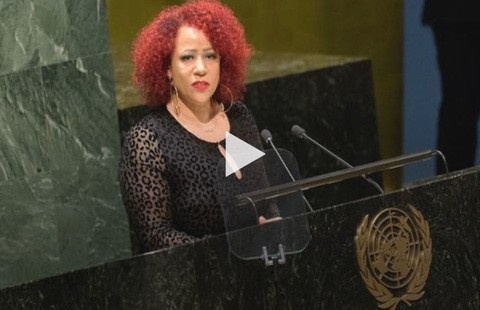 Remembering the Tragic History of Slavery in America is About Real Reconciliation - Interview with Hannah Jones, New York Times Year of publication: 2022 Corporate author: United Nations (UN) This audio is a UN News interview with New York Times reporter Hannah Jones, looking back at the history of slavery in the United States and highlighting the need to reflect on this history in order to address social problems such as the issue of racism today.