
Resources
Explore a wide range of valuable resources on GCED to deepen your understanding and enhance your research, advocacy, teaching, and learning.
3,436 Results found
 미디어 리터러시 교육의 융합적 접근 Year of publication: 2020 Author: 진민정 | 김반야 | 박유신 | 최숙 Corporate author: 한국언론진흥재단 본 연구서에는 미디어 리터러시 교육에서의 융합 논의를 기반으로 미디어 리터러시 교육의 패러다임 전환의 필요성을 더욱 공고히 하고, 국내와 해외의 구체적인 사례와 더불어 현재 학교 수업에서 사용 가능한 프로그램을 제시하며 이를 토대로 융합적 미디어 리터러시 교육의 유형과 나아가 융합적 교육의 실현 방안을 살펴보고자 한다.본 연구에서 말하는 융합적 접근이란 미디어 재현 테크놀로지가 호환되고 통합되면서 변화되는 협의적 의미의 융합이라기보다는 좀 더 총체적인 차원의 미디어 교육 패러다임의 변화를 강조하는 제안이다. 다시 말해, 시대적 한계로 인해 고착된 국내 미디어 교육 현장의 분절성을 극복하고 비판적 리터러시의 제고라는 공통의 목표를 위해 주제 간, 참여 주체들 간, 교육 내용 간, 방식 간의 교차, 공유, 협력으로 공동의 성과를 내는 것을 의미한다.
  대학의 미디어 리터러시 교육 활성화 방안 Year of publication: 2020 Author: 김경희 | 정윤경 | 오연주 Corporate author: 한국언론진흥재단 본 연구는 한국언론진흥재단에서 공모연구로 수행한 지정주제 연구보고서로 국내외 대학의 미디어 리터러시 교육 및 관련 사업 현황과 우수 사례의 분석을 토대로 대학 내 미디어 리터러시 교육의 활성화 방안을 마련하고 대학이 미디어 리터러시 교육의 지역거점으로 거듭나기 위한 정책적 제언을 도출하는 것을 목표로 한다. 1. 서론2. 국내 대학의 미디어 리터러시 교육 현황3. 해외 대학의 미디어 리터러시 교육 우수 사례 분석4. 국내 대학의 미디어 리터러시 교육 우수 사례 분석5. 대학 미디어 리터러시 교육 활성화 및 대학 거점화 방안6. 결론
  노년층 미디어교육 활성화 방안 Year of publication: 2019 Author: 조재희 | 나은영 | 이혜선 Corporate author: 한국언론진흥재단 미디어 생태계가 급격히 변하고 있는 현대 사회에서 미디어 소수자들에 대한 디지털 격차는 여전히 확장되고 있다. 특히 환경의 변화에 유연하게 적응하기 어려운 노년층들은 이러한 미디어 생태계 변화에 적절히 대처하기 어려우며 이로 인해 디지털 격차를 겪게 된다. 이에 미디어 소수자로서의 노년층에 대한 미디어교육의 필요성이 강조되고 있고 정부와 지자체를 비롯한 다양한 기관에서 노년층을 대상으로 미디어교육을 실시하고 있다.본 연구는 다양한 방법론을 통해 노인 미디어교육을 활성화시키기 위한 방안을 다각도로 탐색해 보았다. 본 연구의 연구결과는 노년층에 특화된 미디어교육 프로그램을 개발하고 진행하기 위한 실질적인 제언을 줄 수 있으며 노인 미디어교육 활성화를 위한 정책 마련을 위해 고려해야 하는 구체적인 사항들을 제시한다.
  미디어교육의 재구조화: 21세기 한국의 미디어교육 영역 및 구성 Year of publication: 2019 Author: 양정애 | 김아미 | 박한철 Corporate author: 한국언론진흥재단 본 연구의 목적은 미디어교육 개념을 현재 미디어환경의 특성에 맞게 업데이트하는 한편, 실제로 이뤄지고 있는 현장의 교육양상을 최대 한 반영해서 좀 더 현실적인 형태로 재구조화하는 데 있다. 이를 위해 1차적으로 는 미디어교육과 관련된 다양한 영역의 관계자들을 광범위하게 섭외해 인터뷰를 실시하고, 이들이 어떤 교육을 하거나 받아왔는지, 이들이 생각하는 미디어교육 은 무엇인지, 미디어교육이 좀 더 체계를 잡으려면 어떠한 노력이 필요하다고 생각하는지 등을 물어보았다. 이와 더불어 기존 문헌상에 나타난 미디어교육 및 미디어 리터러시 개념을 정리함으로써 이론적으로는 미디어교육 개념에 어떠 한 변화가 있었으며, 어떤 하위요소들이 강조돼 왔는지를 함께 검토해 보았다. 이는 미디어교육 개념을 재구조화해 현재 한국 상황에 맞는 미디어교육의 영역들 을 도출하고 구성하는 데 있어 이론적・실제적 양상을 모두 반영하기 위해서이다.
 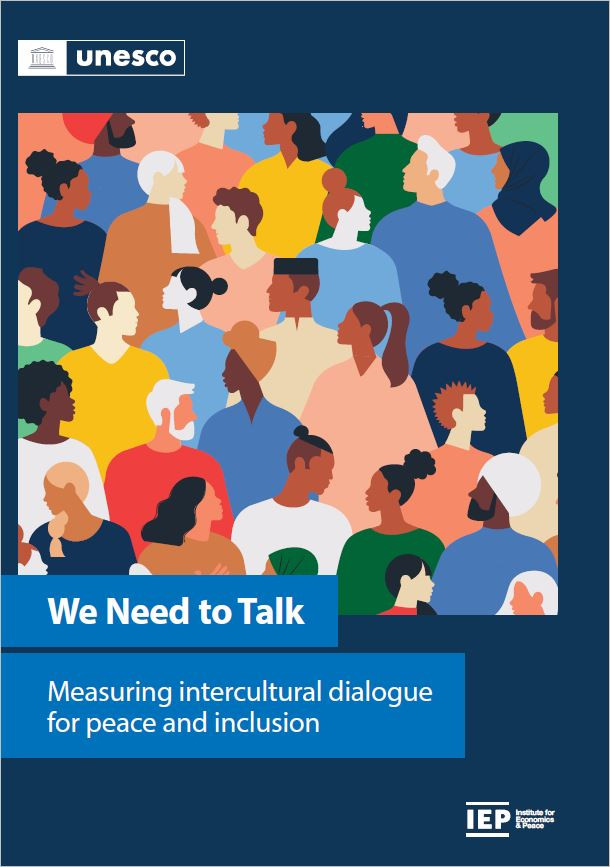 We Need to Talk: Measuring Intercultural Dialogue for Peace and Inclusion Year of publication: 2022 Corporate author: UNESCO | Institute for Economics and Peace An analysis into the power of intercultural dialogue and the new UNESCO Framework for Enabling Intercultural Dialogue, We Need to Talk presents the first evidence of the link between intercultural dialogue and peace, conflict prevention and non-fragility, and human rights. Using data covering over 160 countries in all regions, the report presents a framework of the structures, processes and values needed to support intercultural dialogue, examining the dynamics and interlinkages between them to reveal substantial policy opportunities with broad spanning benefits. Providing policy support and guidance, the report also includes information on regional trends as well as deep diving case studies.The data, case studies, and think pieces contained in this report highlight key policy and intervention opportunities for intercultural dialogue as an instrument for inclusion, peace and wider societal benefits. Policy makers, development workers, peace and security actors, academics and more are invited to leverage the analysis in this report and findings of the Framework to strengthen intercultural dialogue around the world. Parlons-en : mesurer le dialogue interculturel pour la paix et l’inclusion Year of publication: 2022 Corporate author: Organisation des Nations Unies pour l'éducation, la science et la culture (UNESCO) | Institute for Economics and Peace Parlons-en ! Alors que le monde devient de plus en plus interconnecté, l’amélioration des capacités à engager et à mener un dialogue efficace est nécessaire afin de relever les défis mondiaux. Actuellement, 1,5 milliard de personnes vivent dans des pays où le dialogue interculturel est faible et où les enjeux mondiaux tels que la pauvreté absolue, le terrorisme et les déplacements forcés de population sont plus répandus. Pour forger une coopération efficace et maintenir la paix, le renforcement du dialogue interculturel doit être une priorité.Pour la première fois, Parlons-en présente des preuves empiriques du lien entre le dialogue interculturel et la paix, la prévention de conflits, la non-fragilité, ainsi que les droits de l'Homme. En s'appuyant sur les données innovantes du nouveau Cadre de l'UNESCO pour favoriser le dialogue interculturel, ce rapport met en évidence les principales politiques et opportunités d'intervention pour le dialogue interculturel en tant qu'instrument d'inclusion et de paix.À l'aide de données couvrant plus de 160 pays dans toutes les régions, le rapport présente un cadre des structures, des processus et des valeurs nécessaires pour soutenir le dialogue interculturel, en examinant les dynamiques et les liens entre eux pour révéler des opportunités politiques substantielles aux avantages étendus.Les décideurs politiques, les agents de développement, les acteurs de la paix et de la sécurité, les universitaires et bien d'autres sont invités à tirer parti de l'analyse de ce rapport et des conclusions du Cadre pour renforcer le dialogue interculturel à travers le monde.Ensemble, parlons-en !
  National Distance Learning Programmes in Response to the COVID-19 Education Disruption: Case Study of the Republic of Korea Year of publication: 2022 Corporate author: UNESCO This document is one of several case studies on national distance learning programmes in response to the COVID-19 education disruptions. The case of the Republic of Korea was drawn from the 2020 edition of Mobile Learning Week, organized online in October 2020 under the theme of 'Beyond Disruption: Technology Enabled Learning Futures'. Envisaged to be a continuously enriched mechanism for knowledge sharing and dissemination, the case studies aim to surface best practices worldwide in leveraging digital technology to build inclusive and crisis-resilient learning systems, and to inform the planning of digital transformation of education towards SDG 4 and the futures of learning. Each case study documents governance and funding mechanisms, needs-driven planning of distance learning solutions, evaluation of digital learning’s effects on mitigating disruptions and ensuring inclusion, and pedagogical innovations to maintain or improve the quality of learning.
 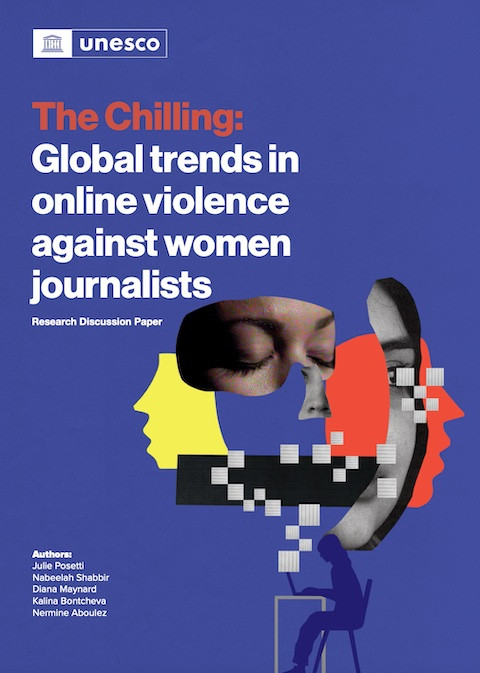 The Chilling: Global Trends in Online Violence Against Women Journalists; Research Discussion Paper Year of publication: 2021 Author: Julie Posetti | Nabeelah Shabbir | Diana Maynard | Kalina Bontcheva | Nermine Aboulez Corporate author: UNESCO This report demonstrates that online violence against women journalists is a global phenomenon, albeit one with uneven impacts that are heightened at various intersectional points, including racism, religious bigotry, sectarianism, homophobia and disinformation. There is a climate of impunity surrounding online attacks on women journalists which must be more urgently and effectively addressed because impunity emboldens the perpetrators, demoralises the victim, erodes the foundations of journalism, and undermines freedom of expression. For too long, the emphasis has been on making women journalists responsible for their own defence and protection, rather than making the perpetrators and instigators, the platform enablers, and law enforcement and media employers accountable.These methods of attack are growing more sophisticated, and they are evolving with technology. They are also increasingly networked and fuelled by political actors. This points to the need for responses to online violence to grow equally in technological sophistication and collaborative coordination. Another point highlighted by this research: most women journalists do not report or make public the online attacks they experience, in line with low levels of reporting when it comes to violence against women more broadly. Many media employers still appear reluctant to take online violence seriously. This aligns with the evident failure of the internet communications companies - whose social networks, messaging and search services facilitate much of the harassment, intimidation, abuse and threats targeting women journalists - to take effective action to address this freedom of expression and gender equality crisis.
 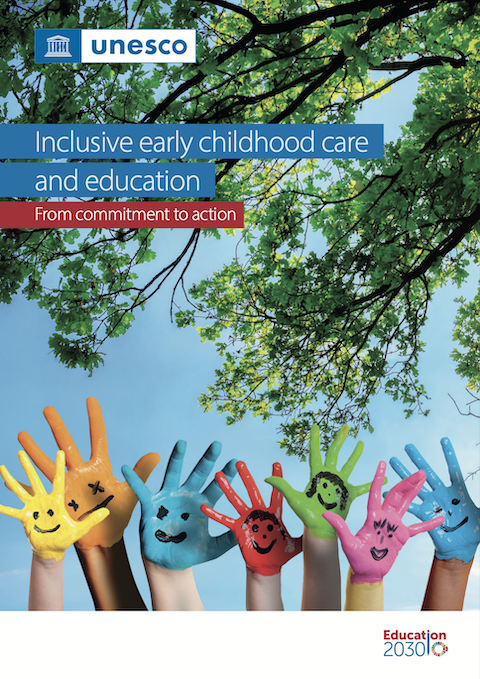 Inclusive Early Childhood Care and Education: From Commitment to Action Year of publication: 2023 Corporate author: UNESCO The development of inclusive programmes and services for early childhood care and education is a priority of Sustainable Development Goal 4 on education to which the international community has committed itself to achieve by 2030.This publication calls for a renewed global commitment to early childhood inclusion through the presentation of qualitative and quantitative data and action-oriented thinking. It presents lessons from country practices and recent research to provide policy-makers, partners, and ECCD practitioners with guidelines for action.The publication contains key messages that stakeholders can draw upon for actions that address the diversity and trajectory of each child. Pour une inclusion dans l’éducation dès la petite enfance: De l’engagement à l’action Year of publication: 2023 Corporate author: Organisation des Nations Unies pour l'éducation, la science et la culture (UNESCO) Développer des programmes et offrir des services inclusifs pour l’éducation et la protection de la petite enfance est une priorité de l’Objectif de développement 4 sur l’éducation que la communauté internationale s’est engagée à atteindre en 2030.Cette publication appelle à un engagement mondial renouvelé en faveur de l’inclusion dès la petite enfance par la présentation de données qualitatives et quantitatives et des réflexions orientées vers l’action. Elle présente des leçons tirées de pratiques de divers pays, ainsi que des travaux de recherche récents, afin d’offrir aux décideurs politiques, aux partenaires et aux praticiens de la petite enfance des repères pour l’action.La publication contient des messages clés que les parties prenantes pourront s’approprier pour mener des actions qui tiennent compte de la diversité et du parcours de chaque enfant.