
Resources
Explore a wide range of valuable resources on GCED to deepen your understanding and enhance your research, advocacy, teaching, and learning.
3,376 Results found
 3rd Global Forum Against Racism and Discrimination: Final Document Year of publication: 2024 Corporate author: UNESCO The third edition of the Global Forum against Racism and Discrimination with the theme “Race to the top: putting racial equity and justice at the forefront of development agendas” was held in São Paulo, Brazil, on 29 November 2023 and 1 December 2023. At the invitation of Brazil, in partnership with the Ford Foundation, the Open Society Foundations, the Mover Foundation, Instituto Ibirapitanga, the Global Forum highlighted the importance of placing racial issues at the core of development and implementation strategies, with a view to socioeconomic development. The Global Forum welcomed Ministers, high-ranking officials of national bodies responsible for combating discrimination and promoting equality, mayors of the International Coalition of Inclusive and Sustainable Cities - ICCAR, academics, scientists, civil society actors, NGOs, artists and digital influencers to share good practices, strengthen commitments and discuss effective strategies to combat racism and various forms of discriminations, including recommendations on how to proceed. The Global Forum’s agenda covered several topics, such as co-creating inclusive policies with impacted communities’ inputs; increasing awareness-raising on historical systems such as transatlantic enslavement to better comprehend and dismantle their contemporary legacies such as racism; progress towards gender equality; enhancing the capacities of civil society to be an agent of change; addressing artificial intelligence and its role in perpetuating racism; protecting the rights of indigenous peoples; establishing legal and policy frameworks prioritizing anti-racism and anti-discrimination on a local and global scale; strengthening the roles of cities, civic spaces, artistic and academic communities; enhancing the importance of informed data baseline on equality for governments; and promoting social philanthropy to address racial inequality. The 2023 edition was also marked by the launch of new initiatives. One of the main outcomes of the Global Forum is the establishment of the UNESCO Network of Anti-Racism and Anti-Discrimination Officials aiming to strengthen the development of innovative and inclusive policy solutions for peace, equity and non-discrimination. UNESCO has launched the new UNESCO Anti-Racism Toolkit, the Gender-Based Resilience Framework, the ‘Let’s Talk‘ project with Harvard University to combat prejudice against migrants, and the development of a new joint OECD-UNESCO briefing on combating discrimination against migrants. Volume X of the UNESCO General History of Africa, entitled Africa and its Diasporas, was also launched during the Global Forum. The publication offers a mapping of African diasporas throughout the world, valorizing their contributions to modern societies.
 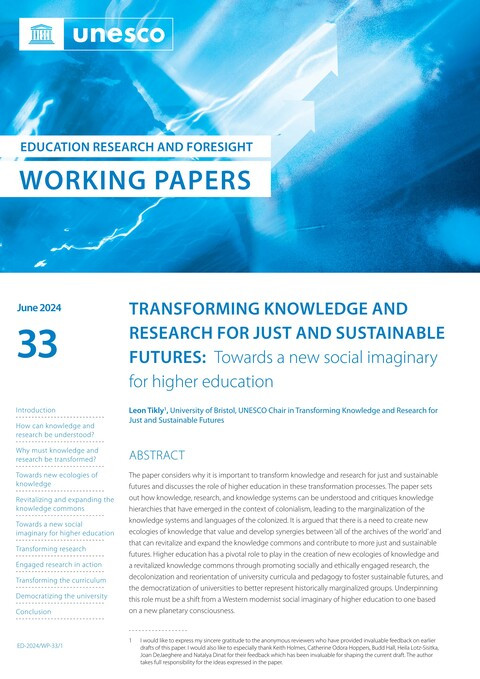 Transforming Knowledge and Research for Just and Sustainable Futures: Towards a New Social Imaginary for Higher Education (Education, Research and Foresight: Working Papers; No.33, 2024) Year of publication: 2024 Author: Leon Tikly Corporate author: UNESCO The paper considers why it is important to transform knowledge and research for just and sustainable futures and discusses the role of higher education in these transformation processes. The paper sets out how knowledge, research, and knowledge systems can be understood and critiques knowledge hierarchies that have emerged in the context of colonialism, leading to the marginalization of the knowledge systems and languages of the colonized. It is argued that there is a need to create new ecologies of knowledge that value and develop synergies between ‘all of the archives of the world’ and that can revitalize and expand the knowledge commons and contribute to more just and sustainable futures. Higher education has a pivotal role to play in the creation of new ecologies of knowledge and a revitalized knowledge commons through promoting socially and ethically engaged research, the decolonization and reorientation of university curricula and pedagogy to foster sustainable futures, and the democratization of universities to better represent historically marginalized groups. Underpinning this role must be a shift from a Western modernist social imaginary of higher education to one based on a new planetary consciousness.
 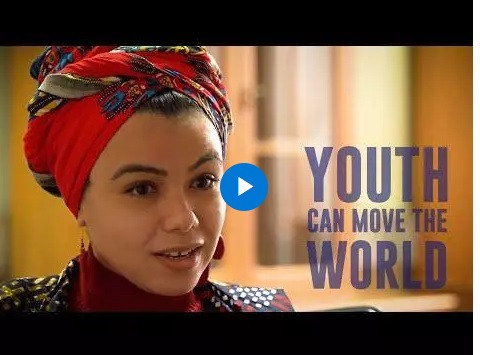 Youth Can Move the World Year of publication: 2021 Corporate author: UNESCO The COVID-19 pandemic brought unprecedented educational disruption with 1.2 billion children and youth impacted by school closures. Yet, despite these challenges, there is hope. This documentary focuses on the power and agency of youth. It is developed under the framework of the long-term partnership between UNESCO's Global Citizenship and Peace Education and UNODC that bridges the justice and education sectors to guide young people towards building strong, just and democratic societies. Youth’s voices are in the forefront with sentiments echoed by world leaders, policy makers, justice actors and educators to deliver a compelling message on the power of youth to move the world.
  وضع تصورات جديدة لمستقبلنا معاً: عقد اجتماعي جديد للتربية والتعليم Year of publication: 2022 Corporate author: International Commission on the Futures of Education | UNESCO تُستشف من أحوال العالم في الوضع الراهن أن البشرية وكوكب الأرض معرضان للخطر. وقد قدمت الجائحة التي حلت بنا في الفترة الأخيرة دليلاً دامغاً على أن العالم الذي نعيش فيه يتسم بالهشاشة وتترابط أجزاؤه ترابطاً وثيقاً. ولا بد لنا الآن من اتخاذ إجراءات عاجلة معاً لتغيير المسار ووضع تصورات جديدة لمستقبلنا. وينطوي هذا التقرير الصادر عن اللجنة الدولية المعنية بمستقبل التربية والتعليم على إقرار بقدرة التربية والتعليم على إحداث تغيير عميق في الأوضاع الراهنة. وثمة تحديان ماثلان أمامنا الآن، أولهما هو الوفاء بالوعد المتمثل في ضمان الحق في التعليم الجيد لجميع الأطفال والشباب والكبار، وهو وعد لم يتحقق بعد، وثانيهما هو تحقيق كامل الإمكانات الكفيلة بإحداث التغيير الجذري المنشود، التي ينطوي عليها التعليم بوصفه سبيلاً إلى بناء مستقبل جماعي مستدام. ولا سبيل إلى بلوغ هذه الغاية إلا بإبرام عقد اجتماعي جديد للتربية والتعليم يتيح إصلاح المظالم والاضطلاع في الوقت نفسه بتغيير المستقبل على النحو المنشود. ويجب أن يقوم هذا العقد الاجتماعي الجديد على حقوق الإنسان وأن يستند إلى مبادئ عدم التمييز، والعدالة الاجتماعية، واحترام الحياة، والكرامة الإنسانية، والتنوع الثقافي. ويجب أن يشتمل على أخلاقيات الرعاية والتبادل والتضامن. ويجب أن يعزز التعليم باعتباره عملاً ومنفعة مشتركة. وينطوي هذا التقرير، الذي استغرق إعداده عامين واسترشد معدوه بعملية تشاور عالمية شارك فيها نحو مليون شخص، على دعوة موجهة إلى الحكومات والمؤسسات والمنظمات والمواطنين في جميع أنحاء العالم لصياغة عقد اجتماعي جديد للتربية والتعليم يساعدنا في بناء مستقبل مستدام ينعم فيه الجميع بالسلام والعدل. وليست الرؤى والمبادئ والمقترحات المعروضة ههنا سوى منطلق لمزيد من العمل، إذ ينبغي بذل جهد جماعي لتجسيد هذه الرؤى والمبادئ والمقترحات بما يتماشى مع الظروف والبيئات التي تندرج فيها. وقد تحقق بالفعل العديد من المنجزات البارزة في هذا الشأن. ويسعى في هذا التقرير إلى استعراضها والارتكاز عليها لبناء صرح جديد. وليس هذا التقرير دليلاً إرشادياً ولا خطة لإيجاد حلول، بل هو فتح لباب التحاور في شأن يتسم بأهمية حيوية.
  Reimagining Our Futures Together: A New Social Contract for Education Year of publication: 2021 Corporate author: International Commission on the Futures of Education | UNESCO Our humanity and planet Earth are under threat. The pandemic has only served to prove our fragility and our interconnectedness. Now urgent action, taken together, is needed to change course and reimagine our futures. This report by the International Commission on the Futures of Education acknowledges the power of education to bring about profound change. We face a dual challenge of making good on the unfulfilled promise to ensure the right to quality education for every child, youth and adult and fully realizing the transformational potential of education as a route for sustainable collective futures. To do this, we need a new social contract for education that can repair injustices while transforming the future.This new social contract must be grounded in human rights and based on principles of non-discrimination, social justice, respect for life, human dignity and cultural diversity. It must encompass an ethic of care, reciprocity, and solidarity. It must strengthen education as a public endeavour and a common good.This report, two years in the making and informed by a global consultation process engaging around one million people, invites governments, institutions, organizations and citizens around the world to forge a new social contract for education that will help us build peaceful, just, and sustainable futures for all.The visions, principles, and proposals presented here are merely a starting point. Translating and contextualizing them is a collective effort. Many bright spots already exist. This report attempts to capture and build on them. It is neither a manual nor a blueprint but the opening up of a vital conversation.
  Reimaginar juntos nuestros futuros: un nuevo contrato social para la educación Year of publication: 2022 Corporate author: International Commission on the Futures of Education | UNESCO La humanidad y el planeta Tierra están amenazados. La pandemia solo ha servido para demostrar nuestra fragilidad y nuestra interconexión. Ahora es necesario actuar urgentemente, de forma conjunta, para cambiar el rumbo y reimaginar nuestros futuros. Este informe de la Comisión Internacional sobre los Futuros de la Educación reconoce el poder de la educación para provocar un cambio profundo. Nos enfrentamos a un doble reto: cumplir la promesa de garantizar el derecho a una educación de calidad para todos los niños, jóvenes y adultos, y aprovechar plenamente el potencial transformador de la educación como vía para un futuro colectivo sostenible. Para ello, necesitamos un nuevo contrato social para la educación que pueda reparar las injusticias, al tiempo que transforma el futuro. Este nuevo contrato social debe basarse en los derechos humanos y en los principios de no discriminación, justicia social, respeto a la vida, dignidad humana y diversidad cultural. Debe incluir una ética de cuidado, reciprocidad y solidaridad. Debe reforzar la educación como un proyecto público y un bien común. Este informe, que se ha elaborado en dos años y se ha basado en un proceso de consulta mundial en el que han participado alrededor de un millón de personas, invita a gobiernos, instituciones, organizaciones y ciudadanos de todo el mundo a forjar un nuevo contrato social para la educación que nos ayude a construir un futuro pacífico, justo y sostenible para todos. Las visiones, los principios y las propuestas que aquí se presentan deben considerarse simplemente un punto de partida. Traducirlos y contextualizarlos es un esfuerzo colectivo. Existen ya muchos aspectos positivos. Este informe intenta recogerlos y aprovecharlos. No se trata de un manual ni de un modelo, sino de un punto de partida para una conversación fundamental.