
Resources
Explore a wide range of valuable resources on GCED to deepen your understanding and enhance your research, advocacy, teaching, and learning.
1,402 Results found
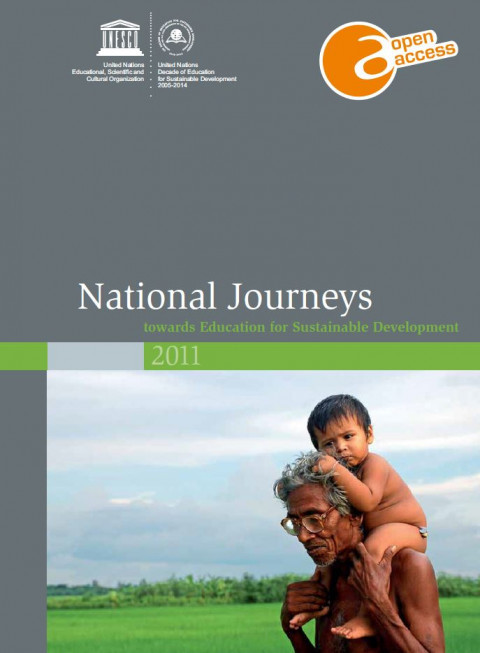 National journeys towards education for sustainable development, 2011: reviewing national experiences from Chile, Indonesia, Kenya, the Netherlands, Oman Year of publication: 2011 Author: I. Mulà | Daniella Tilbury Corporate author: UNESCO This publication has sourced information from a series of national reviews commissioned by UNESCO in 2010 and written by authoritative stakeholders in Chile, Indonesia, Kenya, the Netherlands and Oman. The selection of countries was based on: i) work showcased at the 2009 World Conference on Education for Sustainable Development held in Bonn, Germany; ii) submissions to the monitoring and evaluation process for the Decade of Education for Sustainable Development (DESD); as well as iii) through evaluation material submitted by UNESCO staff in regional bureaux of education.The countries showcased in this report are not necessarily the ‘best’ examples of the region, as many other countries are also progressing effectively towards implementing ESD. Rather, the countries selected illustrate the wide diversity of ESD approaches and initiatives taking place in different parts of the learnt world. The national studies were then edited and harmonized before common themes and lessons learned were identified to support other national efforts in moving towards the second half of the UN Decade of Education for Sustainable Development.
  UN decade of education for sustainable development: success stories Year of publication: 2011 Corporate author: UNESCO The UN Decade of Education for Sustainable Development (DESD, 2005-2014) is a global initiative led by UNESCO. It aims at reorienting education worldwide: everyone should have the opportunity to acquire the values, competencies, skills and knowledge that are needed to contribute to sustainable development. This document includes some achievements of the UN DESD. UN decade of education for sustainable development: success stories Year of publication: 2011 Corporate author: UNESCO La Décennie de l'Éducation pour le Développement Durable (DEDD, 2005-2014) de l’ONU est une initiative mondiale menée par l'UNESCO. Il vise à réorienter l'éducation dans le monde entier: tout le monde devrait avoir la possibilité d'acquérir les valeurs, les compétences, les aptitudes et les connaissances qui sont nécessaires pour contribuer au développement durable. Ce document comprend quelques réalisations de la DEDD de l’ONU. 유엔 지속가능발전교육 10년: 성공 사례 Year of publication: 2011 Corporate author: 유네스코 유엔 지속가능발전교육 10년(UN Decade of Education for Sustainable Development , DESD, 2005-2014)은 유네스코가 주도하는 글로벌 이니셔티브이다. 이것은 전세계의 교육 방향을 재조정하는 것을 목표로 한다. 즉, 지속 가능한 발전에 기여하도록 모든 사람들은 필요한 가치, 역량, 기술과 지식을 습득할 수 있는 기회를 가져야 한다. 이 문서는 유엔 DESD의 일부 업적을 포함한다. Education for sustainable development lens: a policy and practice review tool Year of publication: 2010 Corporate author: UNESCO The Education for Sustainable Development (ESD) Lens has been prepared to support UN Member States to respond to these challenges through implementation of the United Nations Decade of Education for Sustainable Development (DESD, 2005- 2014). The ESD Lens supports the goals of the DESD, and encourages policy-makers and practitioners in Member States to initiate the process of re-orienting education, particularly the formal education system, towards sustainable development. The overall goal of the UN Decade of Education for Sustainable Development (DESD) is for countries to integrate the understandings, skills and values inherent in sustainable development into all aspects of national education plans to encourage changes in lifestyles and behaviour that allow for a more sustainable and just society for all. This complements existing Education for All initiatives, and strengthens the objectives of the Millennium Development Goals. Education for Sustainable Development has the potential to improve the quality and relevance of education everywhere. 联合国 可持续发展教育十年 后半期战略 Year of publication: 2010 Corporate author: 联合国教科文组织 (UNESCO) The UNESCO Strategy for the Second Half of the United Nations (UN) Decade of Education for Sustainable Development (DESD) draws on the findings and lessons learnt from the first phase of the DESD monitoring and evaluation (M&E) process (as reflected in the 2009 DESD M&E report Learning for a Sustainable World: Review of Contexts and Structures for Education for Sustainable Development. It also builds on the UNESCO World Conference on ESD and the Bonn Declaration as well as on the outcomes of other key international ESD meetings. The Bonn Declaration gives particular emphasis to the importance of education for the global development agenda and underlines the essential contribution of ESD to shaping the purpose, content and quality of all education. The UNESCO strategy will be implemented in line with the International Implementation Scheme (IIS), which, along with the Bonn Declaration, will provide the global strategic framework for UNESCO and its DESD partners during the second half of the Decade. The Strategy takes into account key DESD regional challenges and opportunities. It is also shaped by the shared vision of education emerging from the four 2008-2009 UNESCO international education conferences: one of education systems that encourage equity and inclusion, quality learning, flexibility and innovation. While UNESCO puts highest emphasis on achieving Education for All (EFA), the Organization’s actions in education extend beyond this, to pay explicit attention to inclusion, social cohesion and social justice, to lifelong learning and to the crucial role of higher education and research. The overall goal of the UNESCO Strategy for the Second Half of the DESD is to support Member States and other stakeholders in addressing global sustainable development challenges at regional, national and global level through ESD, thus addressing the challenges of learning for bringing about a more sustainable world. من أجل التنمية المستدامة الأمم المتحدة للتعليم للنصف الثاني من العقد استراتيجية اليونسكو Year of publication: 2010 Corporate author: UNESCO The UNESCO Strategy for the Second Half of the United Nations (UN) Decade of Education for Sustainable Development (DESD) draws on the findings and lessons learnt from the first phase of the DESD monitoring and evaluation (M&E) process (as reflected in the 2009 DESD M&E report Learning for a Sustainable World: Review of Contexts and Structures for Education for Sustainable Development. It also builds on the UNESCO World Conference on ESD and the Bonn Declaration as well as on the outcomes of other key international ESD meetings. The Bonn Declaration gives particular emphasis to the importance of education for the global development agenda and underlines the essential contribution of ESD to shaping the purpose, content and quality of all education. The UNESCO strategy will be implemented in line with the International Implementation Scheme (IIS), which, along with the Bonn Declaration, will provide the global strategic framework for UNESCO and its DESD partners during the second half of the Decade. The Strategy takes into account key DESD regional challenges and opportunities. It is also shaped by the shared vision of education emerging from the four 2008-2009 UNESCO international education conferences: one of education systems that encourage equity and inclusion, quality learning, flexibility and innovation. While UNESCO puts highest emphasis on achieving Education for All (EFA), the Organization’s actions in education extend beyond this, to pay explicit attention to inclusion, social cohesion and social justice, to lifelong learning and to the crucial role of higher education and research. The overall goal of the UNESCO Strategy for the Second Half of the DESD is to support Member States and other stakeholders in addressing global sustainable development challenges at regional, national and global level through ESD, thus addressing the challenges of learning for bringing about a more sustainable world. Стратегии ЮНЕСКО на вторую половину Десятилетия образования в интересах устойчивого развития Организации Объединенных Наций Year of publication: 2010 Corporate author: Организация Объединенных Наций по вопросам образования, науки и культуры (UNESCO) The UNESCO Strategy for the Second Half of the United Nations (UN) Decade of Education for Sustainable Development (DESD) draws on the findings and lessons learnt from the first phase of the DESD monitoring and evaluation (M&E) process (as reflected in the 2009 DESD M&E report Learning for a Sustainable World: Review of Contexts and Structures for Education for Sustainable Development. It also builds on the UNESCO World Conference on ESD and the Bonn Declaration as well as on the outcomes of other key international ESD meetings. The Bonn Declaration gives particular emphasis to the importance of education for the global development agenda and underlines the essential contribution of ESD to shaping the purpose, content and quality of all education. The UNESCO strategy will be implemented in line with the International Implementation Scheme (IIS), which, along with the Bonn Declaration, will provide the global strategic framework for UNESCO and its DESD partners during the second half of the Decade. The Strategy takes into account key DESD regional challenges and opportunities. It is also shaped by the shared vision of education emerging from the four 2008-2009 UNESCO international education conferences: one of education systems that encourage equity and inclusion, quality learning, flexibility and innovation. While UNESCO puts highest emphasis on achieving Education for All (EFA), the Organization’s actions in education extend beyond this, to pay explicit attention to inclusion, social cohesion and social justice, to lifelong learning and to the crucial role of higher education and research. The overall goal of the UNESCO Strategy for the Second Half of the DESD is to support Member States and other stakeholders in addressing global sustainable development challenges at regional, national and global level through ESD, thus addressing the challenges of learning for bringing about a more sustainable world. Estrategia de la UNESCO para la segunda mitad del decenio de las Naciones Unidas de la educación para el desarrollo sostenible Year of publication: 2010 Corporate author: Organización de las Naciones Unidas para la Educación, la Ciencia y la Cultura (UNESCO) The UNESCO Strategy for the Second Half of the United Nations (UN) Decade of Education for Sustainable Development (DESD) draws on the findings and lessons learnt from the first phase of the DESD monitoring and evaluation (M&E) process (as reflected in the 2009 DESD M&E report Learning for a Sustainable World: Review of Contexts and Structures for Education for Sustainable Development. It also builds on the UNESCO World Conference on ESD and the Bonn Declaration as well as on the outcomes of other key international ESD meetings. The Bonn Declaration gives particular emphasis to the importance of education for the global development agenda and underlines the essential contribution of ESD to shaping the purpose, content and quality of all education. The UNESCO strategy will be implemented in line with the International Implementation Scheme (IIS), which, along with the Bonn Declaration, will provide the global strategic framework for UNESCO and its DESD partners during the second half of the Decade. The Strategy takes into account key DESD regional challenges and opportunities. It is also shaped by the shared vision of education emerging from the four 2008-2009 UNESCO international education conferences: one of education systems that encourage equity and inclusion, quality learning, flexibility and innovation. While UNESCO puts highest emphasis on achieving Education for All (EFA), the Organization’s actions in education extend beyond this, to pay explicit attention to inclusion, social cohesion and social justice, to lifelong learning and to the crucial role of higher education and research. The overall goal of the UNESCO Strategy for the Second Half of the DESD is to support Member States and other stakeholders in addressing global sustainable development challenges at regional, national and global level through ESD, thus addressing the challenges of learning for bringing about a more sustainable world. ESD レンズ政策および実践のためのリビュー・ツール Year of publication: 2010 Corporate author: UNESCO The Education for Sustainable Development (ESD) Lens has been prepared to support UN Member States to respond to these challenges through implementation of the United Nations Decade of Education for Sustainable Development (DESD, 2005- 2014). The ESD Lens supports the goals of the DESD, and encourages policy-makers and practitioners in Member States to initiate the process of re-orienting education, particularly the formal education system, towards sustainable development. The overall goal of the UN Decade of Education for Sustainable Development (DESD) is for countries to integrate the understandings, skills and values inherent in sustainable development into all aspects of national education plans to encourage changes in lifestyles and behaviour that allow for a more sustainable and just society for all. This complements existing Education for All initiatives, and strengthens the objectives of the Millennium Development Goals. Education for Sustainable Development has the potential to improve the quality and relevance of education everywhere.