
Resources
Explore a wide range of valuable resources on GCED to deepen your understanding and enhance your research, advocacy, teaching, and learning.
874 Results found
 Citizenship and Collective Action in Latin America. Recent Trends Year of publication: 2005 Author: Marisa Revilla Blanco The following text intends to analyze those forms of collective action through which citizens have been present in the streets of the region during the last thirty years. It seeks to understand the actors and the conditions of their appearance and continuity; In this way, it is also intended to make a small contribution to the theoretical development of the analysis of social movements in Latin America. Ciudadanía y Acción Colectiva en América Latina. Tendencias Recientes Year of publication: 2005 Author: Marisa Revilla Blanco En el siguiente texto se pretende analizar esas formas de acción colectiva mediante las cuales la ciudadanía se ha estado haciendo presente en las calles de la región durante los treinta años más recientes. Se busca comprender los actores y las condiciones de su aparición y continuidad; de este modo, también se pretende hacer un pequeño aporte al desarrollo teórico del análisis de los movimientos sociales en América Latina.Este artículo está publicado en Estudios Políticos. [en linea] 2005, (Julio-Diciembre)
  Gender Justice, Citizenship and Difference in Latin America Year of publication: 2010 Author: Maxine Molyneux This article surveys feminist citizenship practices and scholarship on gender, justice, citizenship and rights in Latin America. Feminism’s critique of patriarchal privilege expressed a modern desire for greater individual freedom and collective recognition, a combination that produced tensions and some inconsistencies in regard to the «difference» question, notably in its encounter with indigenous populations. However, central to feminism’s project was the pursuit of both recognition and redistribution, which achieved greater success in the realm of law and politics than in the distribution of public and private goods. A review of Latin American feminism’s achievements reveals a history of substantial advances but a striking persistence of gender inequality, which provides a rich agenda for further investigation. Justicia de Género, Ciudadanía y Diferencia en América Latina Year of publication: 2010 Author: Maxine Molyneux Este artículo hace un recorrido por las prácticas feministas ciudadanas y los estudios sobre género, justicia, ciudadanía y derechos en América Latina. La crítica al privilegio patriarcal realizada desde el feminismo expresa un deseo moderno de mayor libertad individual y reconocimiento colectivo. Unas peticiones que han producido tensiones y algunas contradicciones en relación a la cuestión de la «diferencia», especialmente en el encuentro con los pueblos indígenas. No obstante, el feminismo siempre se ha dedicado a lograr tanto el reconocimiento como la redistribución; si bien, ha alcanzado más éxito en los terrenos legales y políticos que en la redistribución de recursos públicos y privados. El análisis de los logros del feminismo en América Latina revela una historia de éxitos significativos, pero parciales; y una serie de desafíos para futuras investigaciones al respecto.
  Education and Disability: Analysis of Data from 49 Countries (UIS Information Paper No. 49) Year of publication: 2018 Corporate author: UNESCO Institute for Statistics (UIS) Sustainable Development Goal (SDG) 4 calls for “inclusive and quality education for all”. Persons with a disability are among the population groups most likely to suffer from exclusion from education but data that permit an analysis of the links between disability and education remain scarce.This paper examines educational disparities linked to disability based on data from 49 countries and territories for five education indicators: Proportion of 15- to 29-year-olds who ever attended school Out-of-school rate (primary school age, lower secondary school age) Completion rate (primary education, lower secondary education) Mean years of schooling of the population 25 years and older Adult literacy rate (population 15 years and older)
 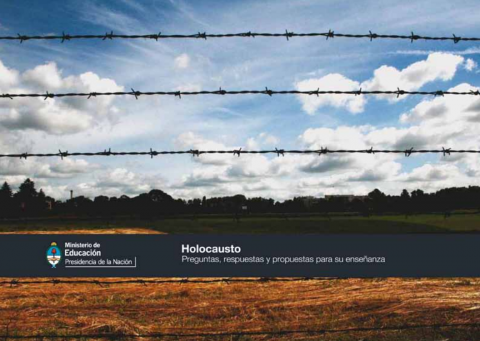 Holocausto : Preguntas, respuestas y propuestas para su ensenanza Year of publication: 2010 Corporate author: Argentina. Ministerio de Educacion This publication, released by the "Education and Memory" department of the Ministry of National Education of Argentina, is a handout to think about, debate and discuss some of the issues relevant to teaching about the Holocaust. Holocausto : Preguntas, respuestas y propuestas para su ensenanza Year of publication: 2010 Corporate author: Argentina. Ministerio de Educacion This publication, released by the "Education and Memory" department of the Ministry of National Education of Argentina, is a handout to think about, debate and discuss some of the issues relevant to teaching about the Holocaust. Holocauste: questions, réponses et propositions pour l'enseignement Year of publication: 2010 Corporate author: Argentina. Ministerio de Educacion Cette publication, publiée par le «Education et Mémoire » département du Ministère de l'Education Nationale de l'Argentine, est un document à réfléchir, débattre et discuter de certaines des questions relatives à l'enseignement de l'Holocauste.
 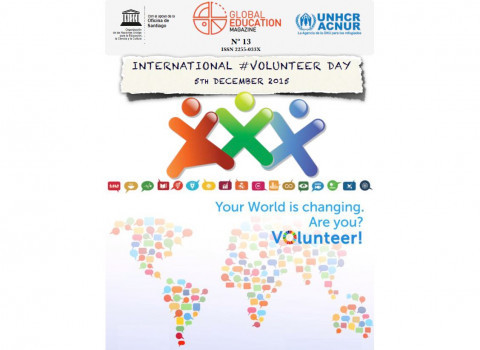 Global Education Magazine No. 13: International #Volunteer Day Year of publication: 2015 Author: Global Education Magazine This year’s International Volunteer Day (IVD) theme, "The world is changing. Are you? Volunteer!" is challenging each and every one of us to be part of implementing the newly launched Global Goals. The 2030 Agenda for Sustainable Development is a plan of action for ending poverty in all its dimensions, irreversibly, everywhere. Volunteerism, and each one of your volunteer actions, are critical to ensure we “leave no one behind” in this effort.The contribution of volunteers in the new development agenda is two-fold. Volunteerism is a way for us all to be directly involved in achieving sustainable development and peace. At the same time, this essential way of fostering people’s participation makes it a key element for success when striving for sustainability of development. Volunteer organizations can be brokers of civic engagement, connecting institutional initiatives with volunteer action at local, national and global levels.
  Los derechos humanos, el holocausto y los genocidos recientes Year of publication: 2008 Corporate author: Ecuador. Ministerio de Educacion This resource guide designed for high school students in Ecuador broaches Holocaust history through broader thematics such as Human Rights, mass violence and a comparative analysis with other genocides. It is an valuable document for understanding worldwide issues.