
Resources
Explore a wide range of valuable resources on GCED to deepen your understanding and enhance your research, advocacy, teaching, and learning.
3,401 Results found
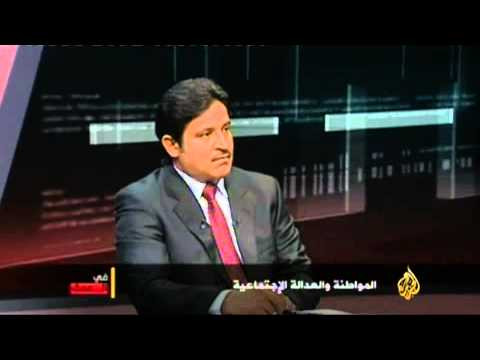 المواطنة والعدالة الاجتماعية Year of publication: 2013 Corporate author: Al Jazeera Channel لقة تعرضها قناة الجزيرة تستعرض فيها المواطنة والعدالة الاجتماعية مع الأخذ في الاعتبار سياق الربيع العربي. وتركز الحلقة على بناء الدولة الحديثة في ضوء المواطنة والعدالة الاجتماعية. يستضيف المذيع 3 من أساتذة الجامعات للتحدث عن الموضوع. الحلقة تتعرض للمشاكل التي تواجه الدولة الحديثة في الوطن العربي مع التركيز على المواطنة والعدالة الاجتماعية.
  A New Era of Social Justice: International Labour Conference, 100th Session, 2011; Report of the Director-General, Report I(A) Year of publication: 2011 Corporate author: International Labour Organization (ILO) This report specifically presents to the conference what the Director believes are the fundamental problems the ILO faces as it oversees a century of its inception in 2019. These problems are the remnants of an ineffective growth pattern that has increased inequality around the world over the past 30 years. The mission of the organization is to continue to work together to develop effective responses to these challenges - within the ILO itself, with national bodies such as governments, employers and workers, and through ILO cooperation with others. حقبـة جديـدة من العدالـة الاجتماعيـة: مؤتمر العمل الدولي، الدورة المائة ٢٠١١ Year of publication: 2011 Corporate author: International Labour Organization (ILO) يعرض هذا التقرير بالتحديد على المؤتمر ما يعتقد المدير أنها مشاكل جوهرية تواجهها منظمة العمل الدولية وهي تشرف على بلوغ قرن من إنشائها في عام ٢٠١٩. وتتجسد هذه المشاكل في مخلفات نمط نمو غير مجد أدى إلى زيادة انعدام المساواة في جميع أنحاء العالم خلال السنوات الثلاثين الماضية. وتتمثل مهمة المنظمة في مواصلة العمل معاً لبلورة استجابات فعالة حيال هذه التحديات - داخل منظمة العمل الدولية نفسها، ومع الهيئات الوطنية من حكومات وأصحاب عمل وعمال، ومن خلال تعاون منظمة العمل الدولية مع جهات أخرى.
  The Saudi Woman Awareness about the Rights of the Housemaid Year of publication: 2014 Author: Haya Saleh Saud Al Harbi Corporate author: King Saud University The study aims to identify the extent of Saudi women's awareness of the physical, psychological, live and social rights of the domestic worker. The study reached an agreement that the worker should get a suitable room for accommodation and a healthy food, and treat her in the right way. The study gives a clear idea of the extent to which Saudi women understand the needs of the domestic worker. وعي المرأة السعودية بحقوق العاملة المنزلية Year of publication: 2016 Author: Haya Saleh Saud Al Harbi Corporate author: King Saud University تهدف الدراسة على التعرف على مدى وعي المرأة السعودية بحقوق العاملة المنزلية المادية والنفسية والحية والاجتماعية. توصلت الدراسة الى اتفاق بأن العاملة يجب أن تحصل على غرفة مناسبة للإقامة وعلى المأكل الصحي، ومعاملتها بالطريقة الصحيحة. الدراسة تعطى فكرة واضحة لمدى فهم المرأة السعودية لاحتياجات العاملة المنزلية.
  The Right to Non-Discrimination Year of publication: 2018 Corporate author: National Commission for Human Rights This document talks about the concept of discrimination, its origins and the concepts that this phenomenon contains: stereotypes, prejudices, systematic discrimination. It also reviews the forms as discrimination is presented and its consequences, to later refer to the right to non-discrimination and what can be done in case of being a victim. El derecho a la no discriminación Year of publication: 2018 Corporate author: National Commission for Human Rights Documento que habla sobre el concepto de la discriminación, sus origenes y los cocepto que encierra este fenomeno, tales como: estereotipos, prejuicios y discriminación sistemática. También revisa las formas como se presenta la discriminación y sus consecuencias, para posteriormente refirse al derecho a la no discriminación y qué se puede hacer en caso de ser víctima.
 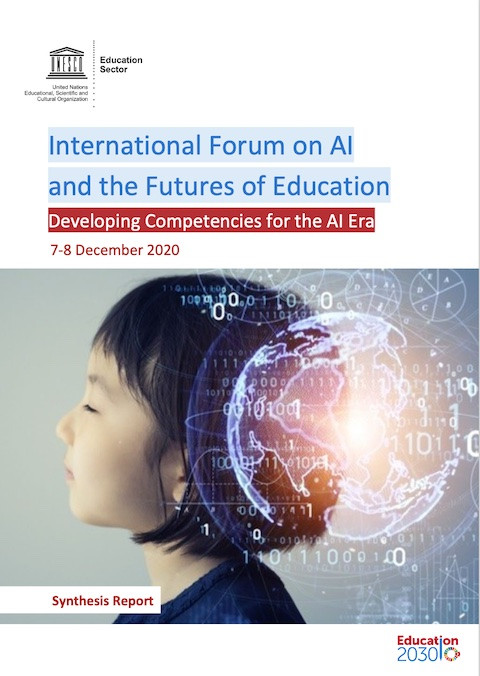 International Forum on AI and the Futures of Education: Developing Competencies for the AI Era Synthesis Report; 7-8 December 2020 Year of publication: 2021 Author: Fengchun Miao | Wayne Holmes Corporate author: UNESCO This synthesis report has been developed by the UNESCO Unit for Technology and Artificial Intelligence in Education within the Future of Learning and Innovation Team, drawing on the International Forum on AI and the Futures of Education held in Beijing and simultaneously online from 7 to 8 December 2020.The Forum underlined the importance of reviewing the very purpose of education, together with the opportunity for real transformation, and the role that AI might play. It is widely acknowledged that current educational practices and educational environment are very rigid, and that the future of education should be more flexible and responsive to changing circumstances and innovation. National education authorities should identify what skills young people need to enable them to live and thrive in the new realities of a constantly changing world, and what digital transformation makes possible in the national and international context. In short, new education models are needed to put students at the centre, to move away from a focus on memorizing content, to integrate the digital and the analogue, and to foster human cognitive, socioemotional and critical skills, all of which might – with foresight and careful attention – be enabled by AI and other digital technologies.
 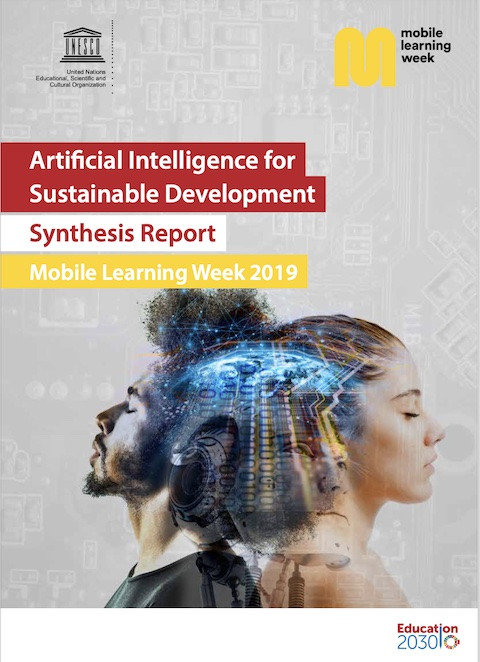 Artificial Intelligence for Sustainable Development: Synthesis Report; Mobile Learning Week 2019 Year of publication: 2019 Corporate author: UNESCO During the five-day event for Mobile Learning Week 2019, UNESCO gathered participants from around the world to share experiences, initiatives and plan joint actions with a view to harnessing artificial intelligence (AI) to achieve Sustainable Development Goal (SDG) 4. The report stems from the work that the speakers presented and the insights that all the participants shared at the event.
 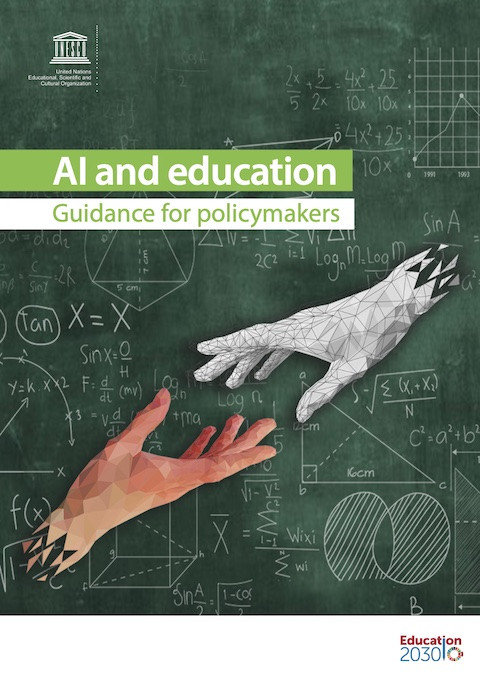 AI and Education: Guidance for Policy-Makers Year of publication: 2021 Author: Fengchun Miao | Wayne Holmes | Ronghuai Huang | Hui Zhang Corporate author: UNESCO Artificial intelligence (AI) is envisioned as a new tool to accelerate the progress towards the achievement of SDG 4. Policies and strategies for using AI in education are central to maximizing AI’s benefits and mitigating its potential risks. Fostering AI-ready policy-makers is the starting point of the policy development process.This publication offers guidance to policy-makers in understanding AI and responding to the challenges and opportunities in education presented by AI. Specifically, it introduces the essentials of AI such as its definition, techniques, technologies, capacities and limitations. It also delineates the emerging practices and benefit-risk assessment on leveraging AI to enhance education and learning, and to ensure inclusion and equity, as well as the reciprocal role of education in preparing humans to live and work with AI.The publication summarizes three approaches to the policy responses from existing practices: independent approach, integrated approach and thematic approach. In a further step, it proposes more detailed recommendations and examples for planning AI and education policies, aligned with the recommendations made in the 2019 Beijing Consensus on AI and Education.