
Resources
Explore a wide range of valuable resources on GCED to deepen your understanding and enhance your research, advocacy, teaching, and learning.
1,448 Results found
 Responsible History as a Tool for Historical Reconciliation? EUROCLIO, the European Association of History Educators as a Case Study? Year of publication: 2012 Author: فان دير لييو-رورد، يوكي Corporate author: Lebanese Association for Educational Studies (LAES) Many university researchers specialized in the theory of history and in teaching history write about reconciliation using history learning and teaching. However, there are almost no empirical data on practical applications of such approaches nor on the process of implementation. In this contribution. I’d like to have a close look at the working methods of the European Association of History Educators EUROCLIO, in countries with internal political, racial and religious tensions, such as Bulgaria, Estonia, Latvia, Moldovia, Romania, Russia, Ukraine, Turkey and in the countries and regions that were recently exposed to severe conflicts such as Bosnia, Croatia, Cyprus, Georgia, Republic of Macedonia and Serbia. Then I’d want to ask the question about how EUROCLIO functions and explore what applies to be an example of reconciliation through teaching history, and whether the reconciliation approach creates a history teaching and learning that would be supportive of sustainable political entities.
  Wherever We Go, Someone Does Us Harm: Violence against Refugee and Migrant Children Arriving in Europe through the Balkans Year of publication: 2022 Author: Anita Burgund Isakov | Dženana Husremović | Bogdan Krasić | Violeta Marković | Nikolina Milic | Tatjana Ristić | Alina Trkulja | Nevenka Žegarac Corporate author: Save the Children Children, including thousands of unaccompanied and separated children, comprise about one-third of all refugees and migrants arriving in Europe. Many of these children come through the Balkans, travelling through countries including Greece, Bulgaria, Serbia, and Bosnia and Herzegovina. These are seen as transit countries by refugees and migrants as they try to continue their way toward Western Europe.In this report, Save the Children and the Center for Interdisciplinary Studies at the University of Sarajevo present in-depth research into the level and types of violence that children experience while attempting to reach Western Europe via the Balkans route, the circumstances of that violence, and the policies and practices that exist to support children. They also make recommendations for governments, NGOs and other stakeholders to strengthen the protection and support available to these children.The research was conducted in Bosnia and Herzegovina and Serbia, key transit countries on the threshold of the European Union and on the way to Western Europe. It is based on in-depth interviews with 48 children aged between 13 and 19 years old. This report also draws on focus group discussions with 27 professionals in Bosnia and Herzegovina and Serbia, mostly field workers who had extensive experience working with refugee and migrant children, and an extensive literature review. The findings of this research were analyzed thematically and interpreted within several keys: using ecological systems theory, an approach based on the rights of the child, and on trauma and resilience-based knowledge.
  Spot and Fight Disinformation Year of publication: 2021 Corporate author: European Commission The pandemic demonstrated just how fast misleading or false information can spread online. With this toolkit, secondary school teachers can help their students separate what is real from what is fake when they are browsing online. The toolkit is comprised of an editable presentation (which includes real life examples and group exercises) and an instruction booklet for teachers. Detectar y combatir desinformación Year of publication: 2021 Corporate author: European Commission La pandemia ha puesto de manifiesto la rapidez con que informaciones falsas se propagan en línea. Con este kit de herramientas, los profesores de enseñanza secundaria pueden ayudar a sus alumnos a distinguir lo verdadero de lo falso cuando navegan por internet. El kit de herramientas se compone de una presentación editable y de un folleto de instrucciones. Repérer et combattre la désinformation Year of publication: 2021 Corporate author: European Commission La pandémie a montré à quel point les fausses informations se diffusent rapidement en ligne. Grâce à cette boîte à outils, les enseignants du secondaire peuvent aider leurs élèves à démêler le vrai du faux lorsqu’ils naviguent en ligne. Elle se compose d’une présentation éditable et d’une brochure contenant des instructions.
  The European Benchmark for Refugee Integration: A Comparative Analysis of the National Integration Evaluation Mechanism in 14 EU Countries Year of publication: 2019 Author: Alexander Wolffhardt | Carmine Conte | Thomas Huddleston Corporate author: National Integration Evaluation Mechanism (NIEM) The National Integration Evaluation Mechanism (NIEM) has published its baseline study presenting a comparative, indicator-based assessment of the refugee integration frameworks of 14 EU countries. The study’s results point out concrete steps that policymakers need to take to build a refugee integration framework in line with international and European standards.The report evaluates governments’ responses to the challenge of long-term integration of refugees and beneficiaries of subsidiary protection. The study considers several dimensions of integration and uses scores to assess relevant provisions at the national level.
 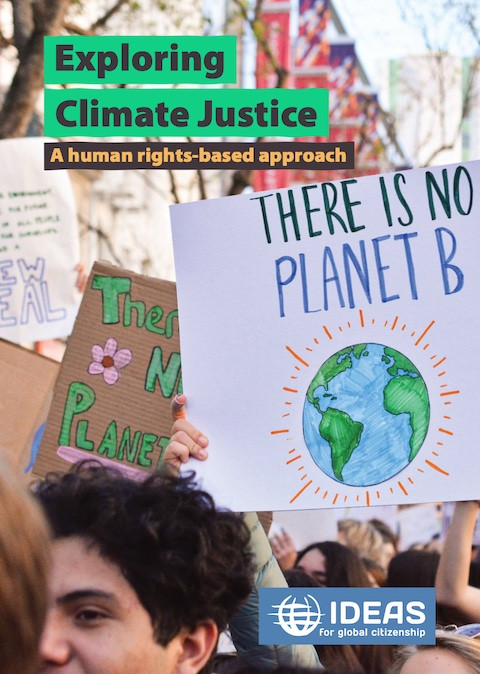 Exploring Climate Justice: A Human Rights-Based Approach Year of publication: 2021 Corporate author: International Development Education Association Scotland (IDEAS) The resource follows our Inform, Investigate and Instigate model, and aims to support teachers and learners to: explore the current human rights impact of the Climate Emergency on people’s lives in Scotland and Somaliland. make connections with the universal quests for equitable access to food, water, healthcare, education, gender justice and racial justice. take action to have your voice heard before, during and after the 2021 COP. measure attitudinal change towards these issues.
 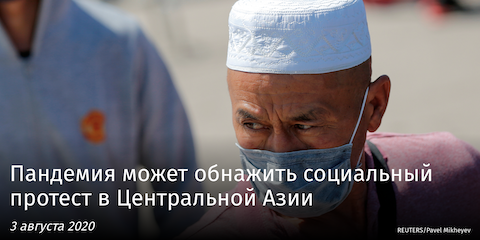 Pandemic May Expose Social Protest in Central Asia Year of publication: 2020 Author: Alexey Malashenko Corporate author: Russian International Affairs Council The coronavirus has become a serious test of the strength of the political systems of Central Asian countries. Despite the severe socio-economic impact of the pandemic, stability has been ensured. But in the long run, quarantines and tight restrictions will remind of themselves and expose old problems. Among the most acute are unemployment and the threat of violent extremism. Moreover, both problems are related. Пандемия может обнажить социальный протест в Центральной Азии Year of publication: 2020 Author: Alexey Malashenko Corporate author: Russian International Affairs Council Коронавирус стал серьезным тестом на прочность политических систем стран Центральной Азии. Несмотря на серьезные социально-экономические последствия пандемии, стабильность была обеспечена. Но в долгосрочной перспективе карантин и введенные жесткие ограничения напомнят о себе и обнажат старые проблемы. Среди наиболее острых из них — безработица и угроза насильственного экстремизма. Причем обе проблемы связаны.
  Radicalization in Central Asia: Have We Managed to Avoid It? Year of publication: 2020 Author: Milan Lazovic Corporate author: Russian International Affairs Council Central Asia is a very multifaceted, multi-ethnic, multi-confessional region, where many cultures, national traditions and ways of life intersect, united by a common factor - religious. The authors of the chapter on the role of religion in Central Asia in the book "Religion, Conflict, and Stability in the Former Soviet Union", prepared by the analytical center "RAND Corporation", touched upon a very important, significant and influential topic on the region. Experts note that, despite the success of Central Asia's attempts to avoid large-scale radicalization, there is a risk of its expansion today.