
Resources
Explore a wide range of valuable resources on GCED to deepen your understanding and enhance your research, advocacy, teaching, and learning.
2,772 Results found
 Legal Mechanisms for Participation of Legal Minorities in Tajikistan and Their Implementation: Comparison of the Framework Convention and Tajikistan’s Legislation Year of publication: 2022 Author: Berdikulov A. Corporate author: Central Asian Bureau for Analytical Reporting (CABAR) The policy analyzes the legal framework and provisions aimed at protecting the rights of national minorities in Tajikistan, and also provides a comparison of Tajik and European legislation regarding national minorities. Particular emphasis is placed on what legislative and legal practices from the European experience can be used as examples in the Tajik context in order to improve national legislation for the protection of national minorities and their rights. Recommendations are formulated for a number of ministries and the government of Tajikistan, for international donors, as well as for representatives of national minorities. Правовые механизмы по обеспечению участия национальных меньшинств в Таджикистане и их имплементация: Сравнение Рамочной Конвенции и законодательства РТ Year of publication: 2022 Author: Berdikulov A. Corporate author: Central Asian Bureau for Analytical Reporting (CABAR) Проведен анализ правовых рамок и положений, направленных на защиту прав национальных меньшинств в Таджикистане, а также дано сравнение таджикского и европейского законодательств касательно национальных меньшинств. Особый акцент сделан на том, какие законодательные и правовые практики из европейского опыта могут быть использованы в качестве примеров в таджикском контексте с целью совершенствования национального законодательства по защите национальных меньшинств и их прав. Сформулированы рекомендации, предназначенные для ряда министерств и правительства Таджикистана, для международных доноров, а также для представителей национальных меньшинств.
  Отчёт по результатам картирования организаций гражданского общества республики Таджикистан, работающих в сферах доступа к правосудию, расширения прав и возможностей женщин и продвижения прав и возможностей лиц с инвалидностью Year of publication: 2022 Corporate author: Бюро по правам человека и соблюдению законности Картирование проведено общественной организацией «Бюро по правам человека и соблюдению законности» в рамках проекта ПРООН «Укрепление верховенства закона и прав человека с целью обеспечения возможностей для реализации прав людей в Таджикистане», финансируемого Правительством Финляндии, с целью определения ОГО, работающих в сфере продвижения прав человека, расширения прав и возможностей женщин и вопросов инвалидности», осуществленного при поддержке ПРООН в Таджикистане с целью определения ОГО, работающих в данных сферах, для доступа заинтересованных лиц и организаций к информации о деятельности данных организаций и их контактам, а также для дальнейшего повышения их потенциала.
 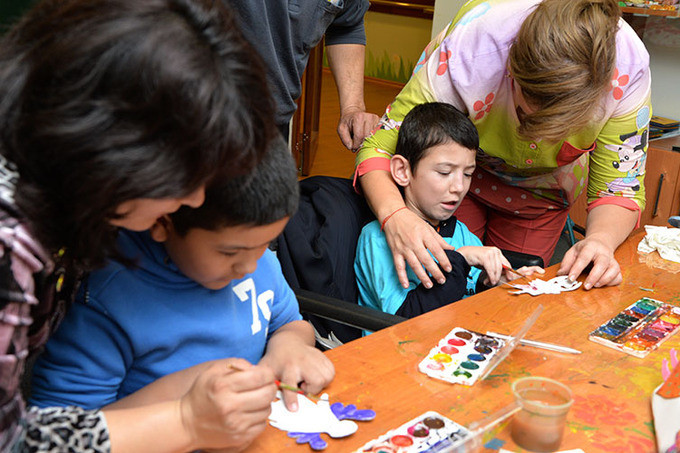 Новый закон «Об образовании» и инклюзия: как должно быть Year of publication: 2020 Author: Дильмурад Юсупов 19 мая 2020 года Законодательная палата Олий Мажлиса приняла закон «Об образовании» в новой редакции, в который впервые было внесено понятие инклюзивного образования. Ассоциация инвалидов Узбекистана совместно с экспертами провела анализ документа на его соответствие принципам инклюзивного образования. Анализ документа показал, что несмотря на включение инклюзивного образования как одной из форм получения образования, исключающего дискриминацию детей с инвалидностью, законопроект не соответствует принципам инклюзии.
  المظاهر الثقافية في الديانتين المسيحية والإسلامية Year of publication: 2011 Corporate author: UNESCO Beirut | Université Saint Joseph de Beyrouth This book allows the readers the opportunity to know about the cultural aspects related to religions, mainly in Lebanon and the Near East, their meaning and their aim. This knowledge will help the reader, firstly, to grasp the meaning of these various aspects, whether they concern him directly or the people who live in the same country, with whom he shares common space and living. Secondly, the book contributes to the Lebanese understanding one another’s behaviors and their own behavior concerning these aspects. Therefore, the book also contributes to the Lebanese looking at one another with more trust before starting to criticize. This book includes chapters that cover most of the different cultural aspects in Christian and Islamic religions. The first chapter deals with time, passing through each month of the year and its days, in a chronological manner. The second chapter delves into religious occasions in the Christian then Islamic religions. It explains the meaning of Holidays and remembrances of God and their particular aspects as well as the religious reasons of each. This chapter includes a part about al-‘awliya’ and Saints who are mentioned in some of the Lebanese daily rituals. Chapter three delves into the individual’s life stages from birth to religious vows, to marriage and death. The aspects that go with these stages constitute an important part in the life of the Lebanese. This chapter details the aspects and traditions of all these stages in which people take part, thus creating a common ground in a multi-religious society. Chapter four deals with religious practices, acts of worship, and legal prescriptions. It describes them and deals with their spiritual meaning to individuals who express their faith when practicing them. Prayer, Mass, and Pilgrimage, among others, are religious practices that are detailed in a way to make the reader understand what they mean to those who perform them. Chapter five leads us into religious places and their meaning, from churches to mosques and monasteries, khalwat and husayniyyat, all of which have different and divergent meanings to visitors. Yet, they all show the importance given by man to the place when expressing his faith and his relation with the Creator. Chapter six takes us to religious habits and customs, such as the clothes worn by religious dignitaries, their symbolism and meaning. It also deals with some general habits and customs. The reader may find that some chapters overlap. In fact, we have tried to make each part related to the others yet independent from them. This method facilitates the reading and understanding of any subject on its own without the need to refer to prior or subsequent parts. Finally, those who had any – minor or major – contribution in this book – despite the lacks that some readers might see – hope that they have offered a useful work in the process of discovering others who are different and who hold rich traditions as well human and spiritual values. Les aspects culturels dans les religions chrétienne et musulmane Year of publication: 2011 Corporate author: UNESCO Beirut | Université Saint Joseph de Beyrouth This book allows the readers the opportunity to know about the cultural aspects related to religions, mainly in Lebanon and the Near East, their meaning and their aim. This knowledge will help the reader, firstly, to grasp the meaning of these various aspects, whether they concern him directly or the people who live in the same country, with whom he shares common space and living. Secondly, the book contributes to the Lebanese understanding one another’s behaviors and their own behavior concerning these aspects. Therefore, the book also contributes to the Lebanese looking at one another with more trust before starting to criticize. This book includes chapters that cover most of the different cultural aspects in Christian and Islamic religions. The first chapter deals with time, passing through each month of the year and its days, in a chronological manner. The second chapter delves into religious occasions in the Christian then Islamic religions. It explains the meaning of Holidays and remembrances of God and their particular aspects as well as the religious reasons of each. This chapter includes a part about al-‘awliya’ and Saints who are mentioned in some of the Lebanese daily rituals. Chapter three delves into the individual’s life stages from birth to religious vows, to marriage and death. The aspects that go with these stages constitute an important part in the life of the Lebanese. This chapter details the aspects and traditions of all these stages in which people take part, thus creating a common ground in a multi-religious society. Chapter four deals with religious practices, acts of worship, and legal prescriptions. It describes them and deals with their spiritual meaning to individuals who express their faith when practicing them. Prayer, Mass, and Pilgrimage, among others, are religious practices that are detailed in a way to make the reader understand what they mean to those who perform them. Chapter five leads us into religious places and their meaning, from churches to mosques and monasteries, khalwat and husayniyyat, all of which have different and divergent meanings to visitors. Yet, they all show the importance given by man to the place when expressing his faith and his relation with the Creator. Chapter six takes us to religious habits and customs, such as the clothes worn by religious dignitaries, their symbolism and meaning. It also deals with some general habits and customs. The reader may find that some chapters overlap. In fact, we have tried to make each part related to the others yet independent from them. This method facilitates the reading and understanding of any subject on its own without the need to refer to prior or subsequent parts. Finally, those who had any – minor or major – contribution in this book – despite the lacks that some readers might see – hope that they have offered a useful work in the process of discovering others who are different and who hold rich traditions as well human and spiritual values.
  Asia and the Pacific SDG Progress Report 2025: Engaging Communities to Close the Evidence Gap Year of publication: 2025 Corporate author: UN. Economic and Social Commission for Asia and the Pacific (UN. ESCAP) The SDG progress report 2025 presents the latest data and insights on progress toward the Sustainable Development Goals (SDGs) in the Asia-Pacific region. While celebrating regional achievements, it also highlights persistent challenges—such as climate change, natural disasters, and critical data gaps—that risk leaving marginalized communities behind. By showcasing innovative community-level partnerships, the report explores how local efforts can help bridge the evidence gap, ensuring that progress toward the SDGs is inclusive and leaves no one behind.
  Education for Democratic Citizenship and a Culture of Peace Year of publication: 2022 Author: Jéssica Marisol Vera Carrera Corporate author: University of Santiago de Cali Education for peace and citizen training as a promotion of peace construction. It is a global need in educational centers, particularly when making a comparison in Colombia and Mexico, to understand that education is a dynamic, continuous and permanent educational process by playing a fundamental role in the formation of the citizen; It is also the conducive setting for the promotion of socio-emotional skills that allow students to have sufficient tools to be a citizen agent of peace. Educación para la ciudadanía democrática y cultura de paz Year of publication: 2022 Author: Jéssica Marisol Vera Carrera Corporate author: University of Santiago de Cali La educación para la paz y formación ciudadana como fomento de construcción de paz. Es una necesidad global en los centros educativos, particularmente al realizar un comparativo en Colombia y México, comprender que la educación es un proceso educativo, dinámico, continuo y permanente al desempeñar un papel fundamental en la formación del ciudadano; además es el escenario propicio para el fomento de habilidades socioemocionales que le permitan a los estudiantes contar con las herramientas suficientes para ser un ciudadano agente de paz.
  A World at Peace Year of publication: 2022 Corporate author: Entreculturas A world in peace is part of “A world in your hands”, Entreculturas’ pedagogical proposal to educate in global citizenship. With it we aim to contribute to the training of people capable of exercising active and committed citizenship, of transforming their environment and of assuming as their own the global challenges of our time such as the fulfillment of the 2030 Agenda and the Sustainable Development Goals. In this publication we collect proposals to work on the culture of peace and develop knowledge, values and social and civic skills that allow people who work on them to actively commit to coexistence, conflict resolution and the creation of a culture of peace in their environments and at a global level.