
Resources
Explore a wide range of valuable resources on GCED to deepen your understanding and enhance your research, advocacy, teaching, and learning.
3,376 Results found
 Bridge Zambia Project Report Year of publication: 2019 Corporate author: Korean National Commission for UNESCO | Zambia National Commission for UNESCO The Bridge Zambia Project (the Project) has been implemented jointly between the Korean National Commission for UNESCO (KNCU) and its partners in Zambia since October 2010. In March 2019, KNCU’s involvement in the Project will come to an end and Zambia will take over full responsibility for the Project as it goes forward. The Project has supported grassroots activities through the establishment of a Community Learning Centre (CLC), which acts as a hub of community-led development activities in non-formal education. The Project has mobilized and empowered communities and local leadership to take charge of non-formal education programmes with the aim of assisting Zambia to attain UNESCO’s Education for All goals and UN Sustainable Development Goal 4 (SDG 4), concerning education quality.
 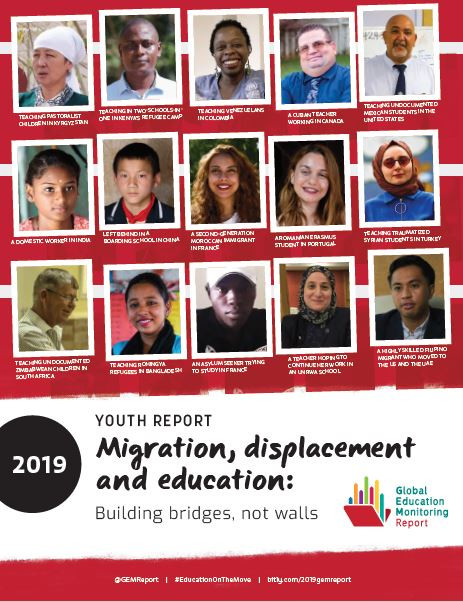 Migration, displacement and education: building bridges, not walls; Global education monitoring report, youth report, 2019 Year of publication: 2018 Corporate author: Global Education Monitoring Report Team The Education 2030 Incheon Declaration and Framework for Action specifies that the mandate of the Global Education Monitoring Report is to be ‘the mechanism for monitoring and reporting on SDG 4 and on education in the other SDGs’ with the responsibility to ‘report on the implementation of national and international strategies to help hold all relevant partners to account for their commitments as part of the overall SDG follow-up and review’. It is prepared by an independent team hosted by UNESCO. This is among the most aspirational global commitments of the United Nations 2030 Agenda for Sustainable Development. Migration and displacement are two global challenges the agenda needs to address in achieving the 17 Sustainable Development Goals (SDGs), including SDG4: ‘Ensure inclusive and equitable quality education and promote lifelong learning opportunities for all’.
  Integrating education for sustainable development (ESD) in teacher education in South-East Asia: a guide for teacher educators Year of publication: 2018 Corporate author: UNESCO Bangkok This publication is a cumulative output of the project Sustainability Begins with Teachers in South-East Asia, implemented by UNESCO Bangkok, in cooperation with SEAMEO from 2017 to 2018, with the generous support of the Government of Japan. The initial content was developed together with the representatives of the universities and teacher education institutions who participated in the South-East Asia Sub-Regional Workshop on Education for Sustainable Development for Teacher Education Institutions, held from 5 to 9 June 2017 in Chiang Rai, Thailand. Content has since been enhanced through the sharing of knowledge and experiences gathered from a series of in-country workshops held in Cebu, Philippines; Luang Prabang, Lao PDR; Kampot, Cambodia; Bangkok, Thailand; and Yogyakarta, Indonesia. This culminated in a project review workshop in Bangkok from 24 to 26 April 2018 in which different in-country experiences were shared and comments on the guidebook collected. Twenty-six universities and teacher education institutions have taken part in the project process in total. This guidebook is a result of this collaborative journey.
 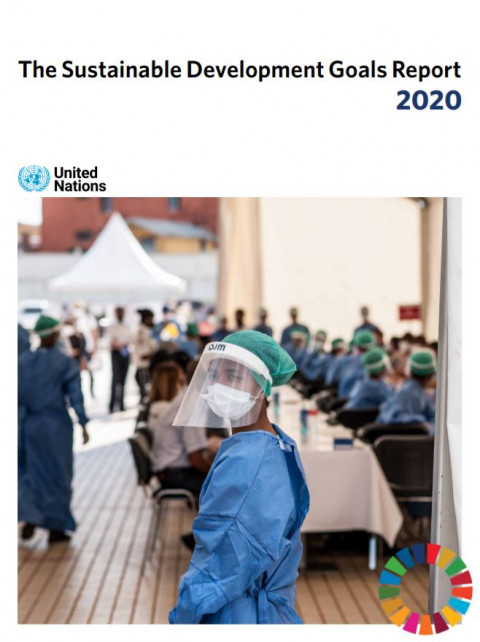 The Sustainable Development Goals Report 2020 Year of publication: 2020 Corporate author: United Nations (UN) The annual Sustainable Development Goals Report provides an overview of the world’s implementation efforts to date, highlighting areas of progress and areas where more action needs to be taken to ensure no one is left behind. Now, in only a short period of time, the COVID-19 pandemic has unleashed an unprecedented crisis, causing further disruption to SDG progress, with the world’s poorest and most vulnerable affected the most.Using the latest data and estimates, this annual stocktaking report on progress across the 17 Goals shows that it is the poorest and most vulnerable – including children, older persons, persons with disabilities, migrants and refugees – who are being hit the hardest by the effects of the COVID-19 pandemic. Women are also bearing the heaviest brunt of the pandemic’s effects.The report also shows that climate change is still occurring much faster than anticipated.
  Portugal: Youth Emigration Year of publication: 2014 Corporate author: United Nations (UN) It's becoming more and more difficult to find a job which matches the skills acquired at university for highly educated young Europeans. In Portugal, nearly two in five young people are unemployed. Now many of Portugal’s best and brightest young graduates may be forced to find employment opportunities abroad.
  Is every child counted? Status of data for children in the SDGs Year of publication: 2017 Corporate author: United Nations Children's Fund (UNICEF) “Is every child counted”, a recent status report by UNICEF, shows that sufficient data are available for less than half of child-related SDG indicators. Many indicators, such as those on poverty and violence, are not comparable across countries, and are either too limited or of poor quality, leaving governments without the information they need to accurately address challenges facing millions of children, or to track progress towards achieving the Goals. Data are also very limited on the situation of the most disadvantaged populations within each country. Better disaggregated data on these populations is necessary. The report also identifies priorities for enhancing the collection, analysis and use of data for children.
  Is every child counted? Summary of the status of data for children in the SDGs Year of publication: 2017 Corporate author: United Nations Children's Fund (UNICEF) “Is every child counted”, a recent status report by UNICEF, shows that sufficient data are available for less than half of child-related SDG indicators. Many indicators, such as those on poverty and violence, are not comparable across countries, and are either too limited or of poor quality, leaving governments without the information they need to accurately address challenges facing millions of children, or to track progress towards achieving the Goals. Data are also very limited on the situation of the most disadvantaged populations within each country. Better disaggregated data on these populations is necessary. The report also identifies priorities for enhancing the collection, analysis and use of data for children.
  A Review of Education for Sustainable Development and Global Citizenship Education in Teacher Education Year of publication: 2017 Author: Douglas Bourn, Frances Hunt, Phil Bamber Corporate author: University College London. Institute of Education This paper has been produced to inform UNESCO in its preparation for the 2017 Global Education Monitoring Report (GEM) Report. Its purpose is to examine the current preparation of teachers in Education for Sustainable Development (ESD) and Global Citizenship Education (GCED) as outlined in the Sustainable Development Goal (SDG) target 4.7.The literature for this study is based on looking not only at material that makes direct reference to ESD and GCED, but also broader themes that have a potential bearing on these areas such as a sense of global, social and environmental responsibility and a commitment to social justice.In this paper teacher education includes the initial and in-service continuing professional development (CPD) of teachers.
 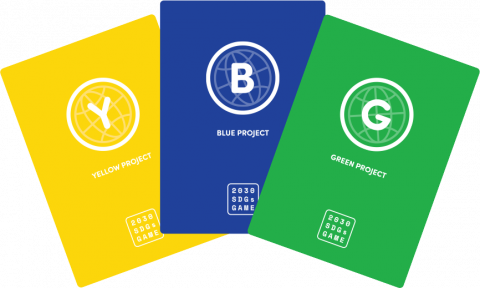 2030 SDGs GAME Year of publication: 2016 Corporate author: Imacocollabo The 2030 SDGs Game is a multiplayer, in-person, card-based game that simulates taking the “real world” into the year 2030. Designed in Japan in 2016, this experience has become a powerful and impactful social phenomenon in Japan, earning extensive media coverage and reaching over 12,000 participants last year. 2030 SDGs Game events are held in corporate, governmental, educational, and community settings, and now has over 100 trained facilitators in a rapidly growing community within Japan. Now, due to a growing demand to bring the game to the rest of the world, we have created an English edition and are beginning to introduce it to a wider audience overseas. The game is designed to be played with anywhere from 5 to 50 players. (That number can be expanded to a maximum of around 200 with multiple parallel ‘worlds’ operating at the same time.) Play time is approximately 1 hour; with the necessary explanation and reflection afterward, it requires a minimum of 90 minutes, and generally works best in a 2 ½ hour time frame.
  تقرير أهداف التنمية المستدامة 2017 Year of publication: 2017 Corporate author: United Nations (UN) يستعرض تقرير أهداف التنمية املستدامة لعام 2017 التقدم المحرز نحو تحقيق الأهداف السبعة عشر في السنة الثانية من تنفيذ خطة التنمية المستدامة لعام 2030 .ويستند التقرير إلى أحدث البيانات المتاحة. وهو يسلط الضوء على المكاسب والتحديات في الوقت الذي يتحرك فيه المجتمع الدولي صوب تحقيق الطموحات والمباديء التي تبناها في خطة عام 2030.