
Resources
Explore a wide range of valuable resources on GCED to deepen your understanding and enhance your research, advocacy, teaching, and learning.
1,727 Results found
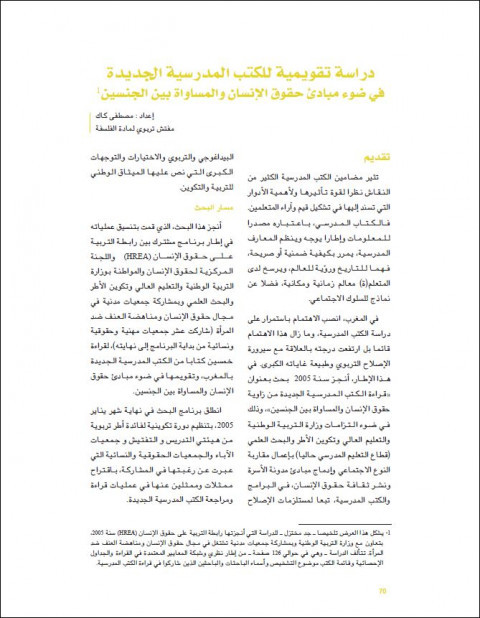 An Evaluation Study of the New School Books in Light of Human Rights Principles and Gender Equality Year of publication: 2010 Author: كاك، مصطفى Corporate author: Conseil Supérieur de l'éducation, de la Formation et de la Recherche Scientifique The study was part of a joint program between the Association of Education on Human Rights in Morocco and the Central Committee for Human Rights at the Ministry of National Education and Higher Education, with the participation of civil organizations active in the fields of human rights and combatting violence against women. The program consisted of reading fifty school books and evaluating them regarding human rights and gender equality. The team started from the specific assumption: Has the situation of the school book actually changed from a single book that is solely concerned with contents to multiple books according to a modern pedagogical engineering that is centered around the teachers’ needs and respecting their mental and linguistic levels and their learning processes, with the objective of developing democratic reactions arising from citizenship values and human rights? The outcomes of the study came in three levels: The image of women in school books, gender equality in some of the fundamental human rights and the principles of human rights that the school book promotes.
  تطوير وحدات تعليمية في ضوء منظومة القيم الديمقراطية لمبحث التربية الوطنية والمدنية وأثره في المشاركة السياسية والمدنية ومهارات السلام لدى طالبات المرحلة الأساسية العليا في الأردن Year of publication: 2015 Author: حداد، نهلا أمجد Corporate author: Al-Quds Open University تهدف هذه الدراسة إلى الوقوف على تطوير وحدات تعليمية في ضوء منظومة القيم الديمقراطية لدى الطلبة في مديرية تربية قصبة المفرق، واستقصاء أثره في تنمية المشاركة السياسية والمدنية ومهارات السلام لدى طالبات الصف التاسع الأساسي، ومهارات السلام لدى ولهذه الغاية وضع الباحثان قائمة لمنظومة القيم الديمقراطية وتطوير ثلاث وحدات تدريسية في ضوء هذه المنظومة والتأكد من صدقها، ومنظومة القيم الديمقراطية التي اعتمد عايها كانت لتطوير المشاركة المدنية لدى طالبات الصف العاشر الأساسي، والمشاركة السياسية لدى طالبات الصف التاسع الأساسي, ومهارات السلام لدى طالبات الصف الثامن الأساسي، وأعدت ثلاثة اختبارات وتأكد الباحثان من صدقها وثباتها. وطُبقت الاختبارات - قبل تطبيق الوحدات التدريسية وبعد تطبيقها- على عينة الدراسة التي تكونت في الصف الثامن من 87 طالبة قُسمن إلى مجموعتين (46 ضابطة و41 تجريبية)، وعينة الصف التاسع تكونت من 74 طالبة قُسمن إلى مجموعتين (37 ضابطة و37 تجريبية)، وعينة الصف العاشر تكونت من 86 طالبة قُسمن إلى مجموعتين (42 ضابطة و44 تجريبية)، وبعد معالجة البيانات إحصائياً بوساطة اختبار تحليل التباين المصاحب (ANCOVA) وجود فروق ذات دلالة إحصائية عند مستوى الدلالة ( a ≤ 0.05 ) تعزى لمتغير المجموعة في جميع الاختبارات وكانت الفروق لصالح المجموعات التجريبية الثلاث التي تلقت الوحدات المطورة في الصفوف الثلاثة. وفي ضوء هذه النتائج وضعت مجموعة من التوصيات من أبرزها الاعتماد على منظومة القيم الديمقراطية في تطوير المشاركة السياسية والمدنية ومهارات السلام لطلبة المرحلة الأساسية العليا. Developing Education Units in the Light of Democratic Values in the National and Civic Education Course and Its Impact on Political and Civic Participation and Peace Skills on Females Students in High Basic Female Schools in Jordan Year of publication: 2015 Author: حداد، نهلا أمجد Corporate author: Al-Quds Open University This article aims to study the development of education units in the light of democratic values in the National and Civic Education Course and its impact on political and civic participation and peace skills on females students in high basic female schools in the Directorate of Mafraq. For this purpose, the researchers conducted a list of democratic values, and developed three units of teaching in the light of this system. The democratic values that have been relied upon were to develop the civic participation of the tenth grade students, the political participation among the ninth grade students, and the skills of peace among the eighth grade students.Three tests have been prepared and confirmed. Tests were applied before the application of targeted educational units on a sample formed of the eighth grade consists of (87) divided into two groups (46 control and 41 experimental) . The ninth grade sample consists of 74 female students who were divided into two groups (37 control and 37 experimental) , and the tenth grade sample consists of 86 students who were divided into two groups (42 control and 44 experimental) . After processing the data statistically by (ANCOVA) , the results showed a statistically significant difference at the level of significance (a ≤ 0.05) due to the variable of the group in all the tests, and the differences were in favor of the three experimental groups which received the developed units in the three classes. In the light of these results, a number of recommendations are suggested.
  Genocide Timeline Year of publication: 2024 Corporate author: United States Holocaust Memorial Museum (USHMM) This timeline proposed by the United States Holocaust Memorial Museum shows the major conceptual and legal advances in the evolution of the term "genocide" . It does not seek to detail every case that could be considered genocide, but to show how the term has entered the political, legal and ethical vocabulary from 1900 to 2016 to express threats of violence against groups. Chronologie du génocide Year of publication: 2024 Corporate author: United States Holocaust Memorial Museum (USHMM) Cette chronologie proposée par le Musée du mémorial américain sur la Shoah montre les avancées conceptuelles et juridiques majeures dans l’évolution du terme « génocide » . Elle ne cherche pas à détailler tous les cas pouvant être considérés comme des génocides, mais à montrer comment le terme a intégré le vocabulaire politique, juridique et éthique de 1900 à 2016 pour exprimer les menaces de violences contre des groupes.
 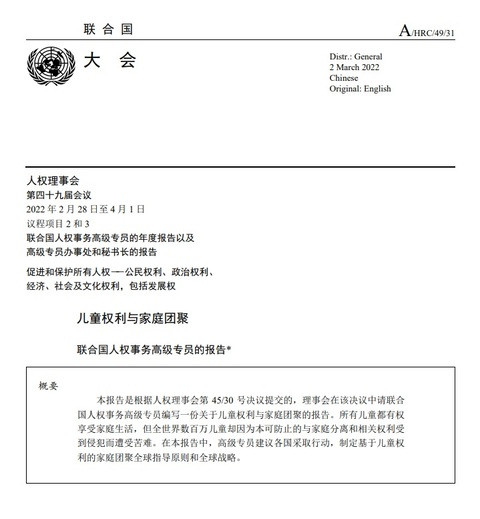 Report on the Rights of the Child and Family Reunification Year of publication: 2022 Corporate author: UN Human Rights This document is a report by the UN Special Rapporteur on Human Rights on the issue of separation of children from their families, describing the different forms the issue takes, as well as addressing the relevant international legal framework, and making relevant recommendations for each situation. 关于儿童权利和家庭团聚的报告 Year of publication: 2022 Corporate author: UN Human Rights 该文件是联合国人权事务特别报告员关于儿童与家庭分离问题的报告,介绍了该问题的不同形式,以及涉及相关国际法律框架,并针对各种情况提出相关建议。
 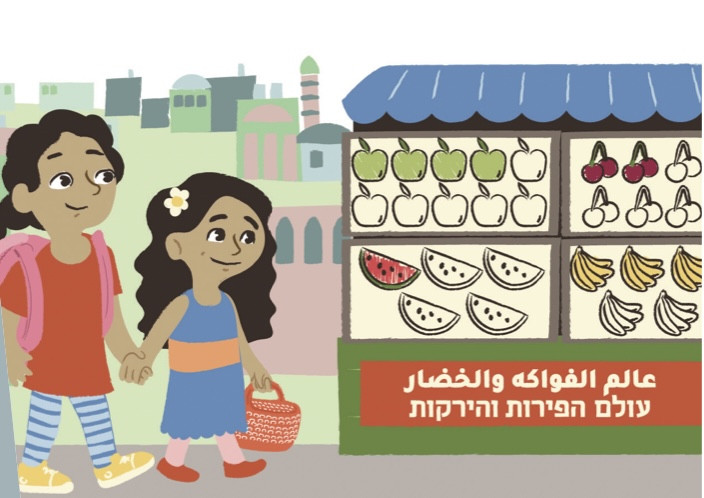 تمثيل وحضور المجتمع العربي في مواد التعليم Year of publication: 2019 Author: Yael Maayan Corporate author: Sikkuy-Aufoq تسعى هذه الورقة لبحث تمثيل وحضور المجتمع العربي في مواد التعليم في إسرائيل. وتهدف إلى تعميق التمعن في الوضع القائم في مجال مواد التعليم والسياسة القائمة واقتراح التغييرات المطلوبة. وهي سياسة تحاول أن تقدم لطلاب المدارس اليهودية أشكال متنوعة من النظر والتعاطي مع المواطنين العرب في إسرائيل. Representation and Presence of the Arab Community in Education Materials Year of publication: 2019 Author: Yael Maayan Corporate author: Sikkuy-Aufoq This paper seeks to examine the representation and presence of the Arab community in education subjects in Israel. It aims to deepen and reflect on the current situation in the field of education materials and the existing policy, and to suggest the required changes. It is a policy that attempts to offer Jewish school students a variety of forms of consideration and interaction with the Arab citizens of Israel.
 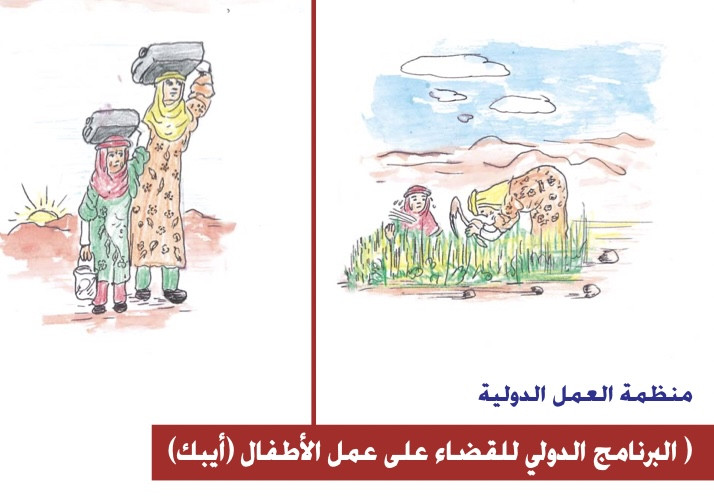 المساواة بين الجنسين وعمل الأطفال: أداة تربوية للمدربين والمدربات Year of publication: 2006 Author: Anita Amorim | UnaMurray | Ségolène Samouiller | Sandhya Badrinath Corporate author: International Labour Organization (ILO) إن القضاء على عمل الأطفال وترويج المساواة بين الفتيان والفتيات، الرجال والنساء، مساران متلازمان. وقد صُممت الأداة التربوية هذه لإظهار ضرورة تبنّي مفهوم النوع الاجتماعي من أجل فهم تعقيد ظاهرة عمل الفتيات والفتيان وإبراز تأثير النوع الاجتماعي على خيارات الأطفال، سواء فيما يتعلق بفرص العمل أو بالموارد المالية المتوفرة والمختلفة بالنسبة للفتيان والفتيات.وتهدف الأداة التربوية هذه إلى مساعدة المدربين والمدربات في اليمن على تحفيز الوعي لدى الصغار، وبخاصة المراهقين منهم، وعلى إفهامهم عمل الأطفال والمساواة بين الجنسين. فهي تستند إلى مبدأ أساسي قائلا إن للمراهقين دورا مهما يلعبونه من خلال تقوية وعيهم بقضايا العدالة الاجتماعية وعبر تأثيرهم في الوقت عينه على مجتمعهم بغية إحداث تغيير إيجابي فيه. فبواسطة تحميل الفتيات والفتيان المسؤوليات والاعتراف بقيمة مساهماتهم، نأمل أن نسخّر الثراء الإبداعي والالتزام الموجودين لدى المراهقين لمكافحة عمل الأطفال وترويج المساواة بين الجنسين.