
Resources
Explore a wide range of valuable resources on GCED to deepen your understanding and enhance your research, advocacy, teaching, and learning.
884 Results found
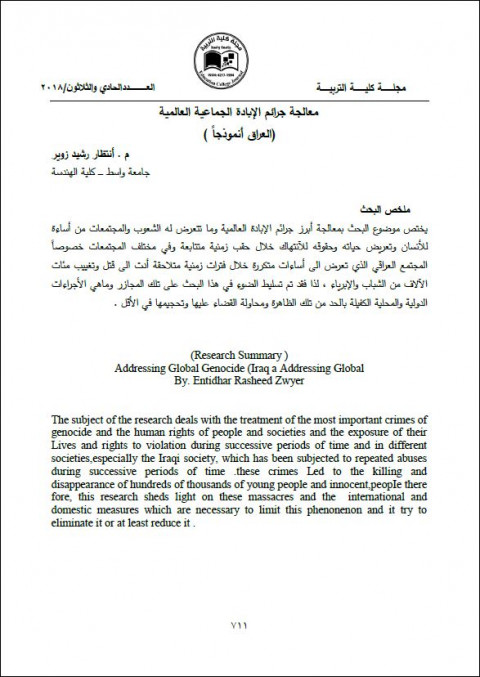 معالجة ج ا رئم الإبادة الجماعية العالمية Year of publication: 2018 Author: Entidhar Rasheed Zwyer يختز مػضػع البحث بسعالجة أبخز ج ا خئع الإبادة العالسية وما تتعخض لو الذعػب والسجتسعات مغ أساءة للؤنداف وتعخيس حياتو وحقػقو للآنتياؾ خلبؿ حقب زمشية متتابعة وفي مختمف السجتسعات خرػصاً السجتسع الع ا خقي الحي تعخض الى أساءات متكخرة خلبؿ فت ا خت زمشية متلبحقة أدت الى قتل وتغييب مئات الآلاؼ مغ الذباب والإبخياء ، لحا فقج تع تدميط الزػء في ىحا البحث عمى تمظ السجازر وماىي الأج ا خءات الجولية والسحمية الكفيمة بالحج مغ تمظ الطاىخة ومحاولة القزاء عمييا وتحجيسيا في الأقل . Addressing Global Genocide (Iraq a Addressing Global) Year of publication: 2018 Author: Entidhar Rasheed Zwyer The subject of the research is to deal with the most prominent crimes of global genocide and the abuse of peoples and communities to human beings and to expose his life and his rights to violation during successive periods of time in various societies, especially Iraqi society, which has been subjected to repeated abuses during successive periods of time led to the killing and absence of hundreds Thousands of young people and innocent people, so it was highlighted in this research on these massacres and what are the procedures International and domestic efforts to reduce this phenomenon and try to eliminate it and reduce it at least.
 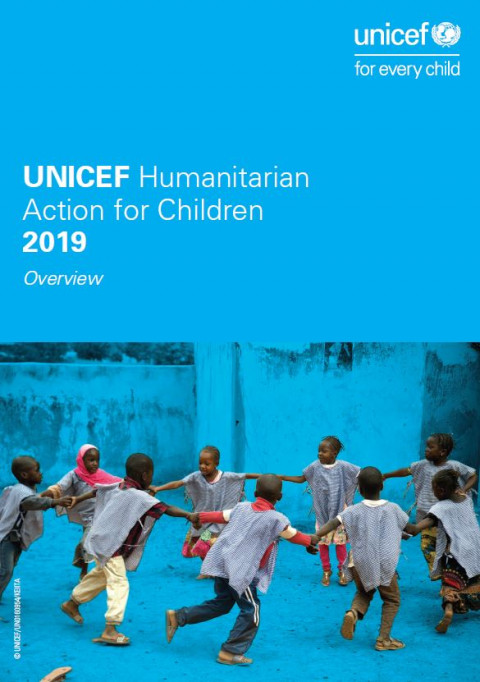 Humanitarian Action for Children 2019: Overview Year of publication: 2019 Corporate author: United Nations Children's Fund (UNICEF) This edition of UNICEF’s report on requirements for humanitarian action highlights major emergencies affecting children and families around the world, and the results achieved by UNICEF and partners in response to those crises. Noting that more violent conflicts are raging today than at any time since the adoption of the Convention on the Rights of the Child 30 years ago, the report also describes UNICEF initiatives to improve the quality of its humanitarian response in 2019 – particularly in high-threat contexts. Additional information about humanitarian action and UNICEF funding appeals at the country and regional levels is available online atwww.unicef.org/appeals.
 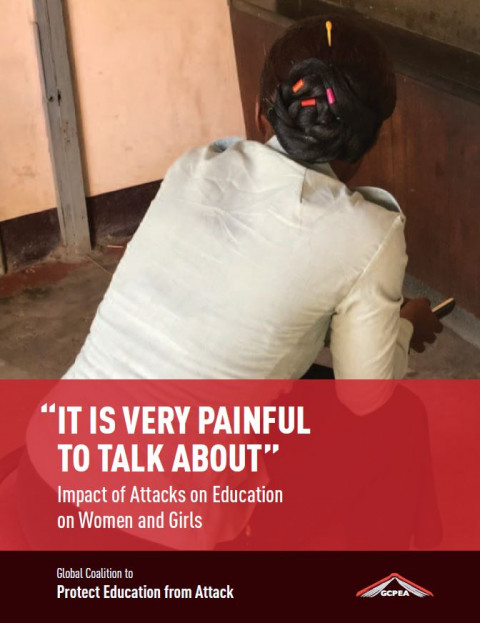 "It is Very Painful to Talk About”: The Impact of Attacks on Education on Women and Girls Year of publication: 2019 Author: Holly Cartner Corporate author: Global Coalition to Protect Education from Attack (GCPEA) This report presents the key findings of GCPEA’s multi-country study on the impact of attacks on education on women and girls.10 GCPEA’s research focuses on the types and causes of abuse most typically committed against female students in the context of attacks on education, and the long-term consequences that female students may face as a result of such attacks.11 GCPEA initiated this study to contribute to a better understanding of the implications for girls and women when education is attacked and to inform our advocacy for better strategies to protect girls and women, prevent attacks and abuse, and diminish harmful consequences against them.This report relies on previous GCPEA research, including Education Under Attack 2018 and 2014, and updates, and the organization’s field research in Nigeria and the Democratic Republic of Congo, which focused specifically on the experiences of women and girls when education is attacked. In addition, the report draws from interviews with numerous country and regional experts and an extensive review of secondary data sources, including reports by United Nations (UN) agencies, development and humanitarian non-governmental organizations (NGOs), human rights organizations, government bodies, and think tanks, including numerous contributions from GCPEA’s member organizations.
 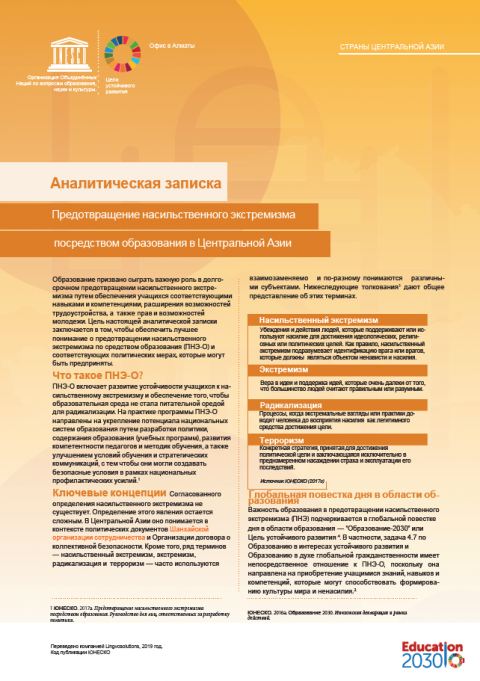 Policy Brief: Prevention of Violent Extremism Through Education in Central Asia Year of publication: 2019 Corporate author: UNESCO Almaty Education has a powerful role to play in long-term prevention of violent extremism by equipping learners with the right skills and competencies, increasing employment opportunities and empowering youth. This policy brief aims to provide a better understanding of Preventing Violent Extremism through Education (PVE-E) and the relevant policy interventions that could be taken. Аналитическая записка: предотвращение насильственного экстремизма посредством образования в Центральной Азии Year of publication: 2019 Corporate author: UNESCO Almaty Образование призвано сыграть важную роль в долго-срочном предотвращении насильственного экстре-мизма путем обеспечения учащихся соответствующими навыками и компетенциями, расширения возможностейтрудоустройства, а также прав и возможностеймолодежи. Цель настоящей аналитической записки заключается в том, чтобы обеспечить лучшее понимание о предотвращении насильственного экстремизма по средством образования (ПНЭ-О) и соответствующих политических мерах, которые могут быть предприняты.
  Information Flows and Radicalization Leading to Violent Extremism in Central Asia Year of publication: 2019 Corporate author: Search for Common Ground This study was carried out as part of the regional project “Promoting Stability and Peace in Central Asia through Media Literacy, Effective Lighting and Regional Cooperation”, implemented by the Internews office and funded by the European Union. The project aims to support national and regional initiatives that help prevent radicalization in Central Asia by increasing the capacity of journalists, civic activists and media professionals in the production of high-quality media content and the level of critical media consumption of representatives of civil society, decision-makers and active citizens. Информационные потоки и радикализация, ведущая к насильственному экстремизму в Центральной Азии Year of publication: 2019 Corporate author: Search for Common Ground Данное исследование проведено в рамках регионального проекта «Содействие стабильности и миру в Центральной Азии посредством медиаграмотности, эффективного освещения и регионального сотрудничества», реализуемого офисом Интерньюс и финансируемого Европейским союзом. Проект нацелен на поддержку национальных и региональных инициатив, способствующих предотвращению радикализации в Центральной Азии через повышение потенциала журналистов, гражданских активистов и медиаспециалистов в вопросах производства качественного медиаконтента и уровня критического медиапотребления представителей гражданского общества, лиц, принимающих решения, и активных граждан.
 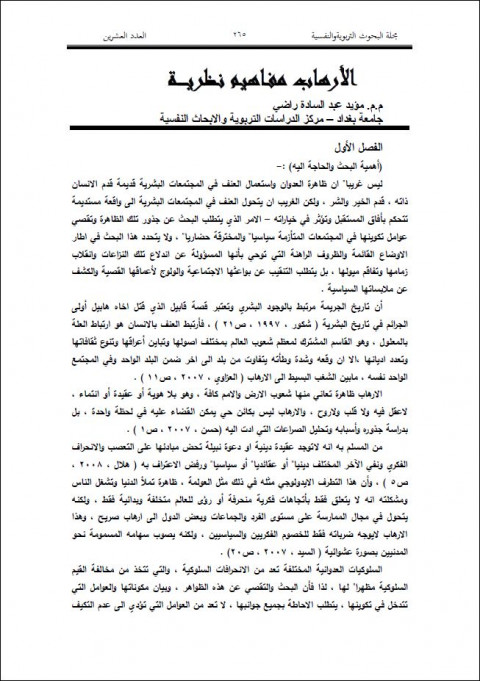 الأرهاب مفاهيم نظريـــــة Year of publication: 2009 Author: Moayad Abdel | Sadi Radi Corporate author: Educational and Psychological Research Center ليس غريبا" ان ظاهرة العدوان واستعمال العنف في المجتمعات البشرية قديمة قدم الانسان ذاته ، قدم الخير والشر ، ولكن الغريب ان يتحول العنف في المجتمعات البشرية الى واقعة مستديمة تتحكم بأفاق المستقبل وتؤثر في خياراته – الامر الذي يتطلب البحث عن جذور تلك الظاهرة وتقصي عوامل تكوينها في المجتمعات المتأزمة سياسيا" والمخترقة حضاريا" ، ولا يتحدد هذا البحث في اطار الاوضاع القائمة والظروف الراهنة التي توحي بأنها المسؤولة عن اندلاع تلك النزاعات وانقلاب زمامها وتفاقم ميولها ، بل يتطلب التنقيب عن بواعثها الاجتماعية والولوج لأعماقها القصية والكشف عن ملابساتها السياسية . Terrorism: Theoretical Concepts Year of publication: 2009 Author: Moayad Abdel | Sadi Radi Corporate author: Educational and Psychological Research Center Not surprisingly, the phenomenon of aggression and the use of violence in human societies is as old as man itself, good and evil, but it is strange that violence in human societies turns into a permanent reality that controls the future prospects and influences its choices - which requires searching for the roots of this phenomenon and investigating the factors of its formation in This research is not determined in the context of the current circumstances and circumstances that suggest that they are responsible for the outbreak of these conflicts and the reversal of their leadership and aggravation of their tendencies, but requires exploration of their social motives and access to the depths of the remote and disclose the circumstances A political.