
Resources
Explore a wide range of valuable resources on GCED to deepen your understanding and enhance your research, advocacy, teaching, and learning.
1,451 Results found
 西方公民教育思想的论争与弥合 Year of publication: 2014 Author: Feng Jianjun Corporate author: Educational Science Research 文章讨论了西方公民思想的不同流派,包括共和主义、自由主义、社群主义、多元文化主义等,并讨论了诸多思想流派之间的融合与分歧。
  Sustainable Development in the European Union: Monitoring Report on Progress Towards the SDGs in an EU Context (2021) Year of publication: 2021 Corporate author: European Union (EU) Sustainable development is firmly anchored in the European Treaties and has been at the heart of European policy for a long time. The 2030 Agenda for Sustainable Development and its 17 Sustainable Development Goals (SDGs), adopted by the UN General Assembly in September 2015, have given a new impetus to global efforts for achieving sustainable development. The EU is fully committed to playing an active role in helping to maximise progress towards the Sustainable Development Goals. This publication is the fifth of Eurostat’s regular reports monitoring progress towards the SDGs in an EU context. The analysis in this publication builds on the EU SDG indicator set, developed in cooperation with a large number of stakeholders. The indicator set comprises 102 indicators and is structured along the 17 SDGs. For each SDG, it focuses on aspects that are relevant from an EU perspective. The monitoring report provides a statistical presentation of trends relating to the SDGs in the EU over the past five years (‘short-term’) and, when sufficient data are available, over the past 15 years (‘long-term’). The indicator trends are described on the basis of a set of specific quantitative rules. This 2021 edition also shows some of the early impacts of the COVID-19 pandemic that are visible in Eurostat’s official statistics.
  Gender Equality and Empowerment of Women and Girls in the UK: Meeting the Challenge of the Sustainable Development Goals Year of publication: 2016 Author: Holly Dustin | Helen Mott | Nicola Waterworth | Gillian Cowell | Janet Veitch Corporate author: British Council This research provides the first stocktake of gender equality in the UK from the perspective of the UN’s Sustainable Development Goals (SDGs), the 17 goals adopted by world leaders in 2015 in order to end poverty, protect the planet and ensure prosperity for all.It focuses on the UK’s successes towards achieving gender equality, as well as gaps and priorities for further action in five key areas: participation, power and leadership; education; economy; justice and violence against women and girls and culture (including arts, sports and technology). There are many examples of good practice from the UK, such as strong legislation, data gathering and structures. However, the research also concludes that women and girls continue to lag behind men and boys on key rights, opportunities and well-being, with men over-represented in almost all positions of power and decision-making. It also explores the impact of international linkages and collaboration to determine whether as the UK’s cultural relations organisation, there is a role for the British Council in this.
  Nation Construction, Politics of Ethnic Integration and Citizenship Education Year of publication: 2011 Author: Wang Zhaojing | Bai Shangzhen Corporate author: Social Science Front This paper discusses the core issues of citizenship education in the West in the context of globalisation. It also elaborates the key elements of the two issues respectively. 西方公民教育发展的展望 Year of publication: 2011 Author: Wang Zhaojing | Bai Shangzhen Corporate author: Social Science Front 文章讨论了全球化背景下西方公民教育的核心议题,即培养爱国主义精神与世界公民意识,并分别探讨了二者的核心要素。
 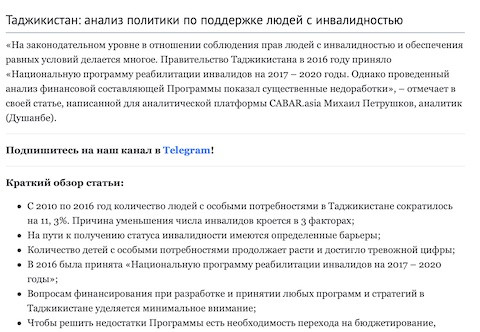 Таджикистан: Анализ политики по поддержке людей с инвалидностью Year of publication: 2018 Author: Mikhail Petrushkov Corporate author: Central Asian Bureau for Analytical Reporting (CABAR) | Institute for War and Peace Reporting (IWPR) «На законодательном уровне в отношении соблюдения прав людей с инвалидностью и обеспечения равных условий делается многое. Правительство Таджикистана в 2016 году приняло «Национальную программу реабилитации инвалидов на 2017 – 2020 годы. Однако проведенный анализ финансовой составляющей Программы показал существенные недоработки», – отмечает в своей статье, написанной для аналитической платформы CABAR.asia Михаил Петрушков, аналитик (Душанбе).
 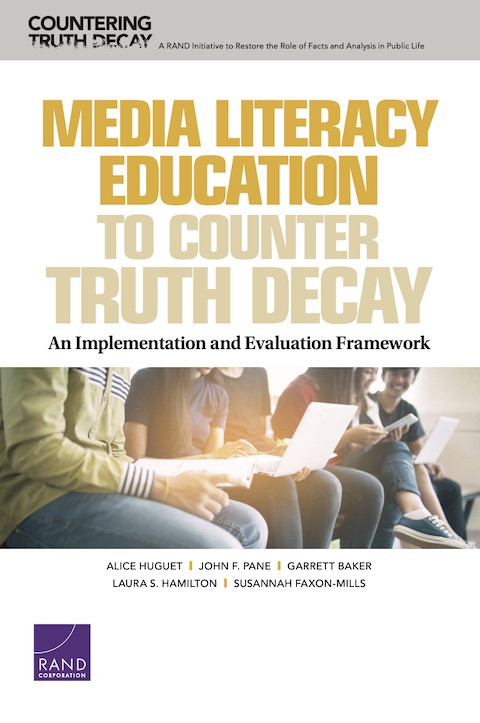 Media Literacy Education to Counter Truth Decay: An Implementation and Evaluation Framework Year of publication: 2021 Author: Alice Huguet | John F. Pane | Garrett Baker | Laura S. Hamilton | Susannah Faxon-Mills Corporate author: RAND Corporation Media literacy (ML) education has emerged as a promising approach to slowing the spread of Truth Decay, described as the diminishing role that facts, data, and analysis play in political and civil discourse. Several factors contribute to Truth Decay, including a rapidly evolving information ecosystem and overburdened educational institutions. Many teachers believe their students lack the complex skills that are necessary to navigate today’s information- saturated world. This gap—between students’ existing competencies and those required to engage responsibly in a fast-paced media environment— could lead to negative consequences for individuals and society writ large.However, teachers report a lack of guidance around promoting ML education in their practice, and rigorous research about what kinds of ML educationwork best, and in what conditions, remains limited. This report presents a framework for implementing and evaluating ML educational efforts. Following an introduction to the framework, the authors discuss six steps of ML implementation and evaluation: setting ML learning expectations; identifying conditions that can influence ML instructional efforts; exploring instructional resources; identifying measures of ML competencies; monitoring progress; and finally, measuring the summative impacts of ML education on student learning. By bringing this information together for implementors—such as district decisionmakers and teachers—as well as evaluators, the authors emphasize the important connections between these too often separate groups.
 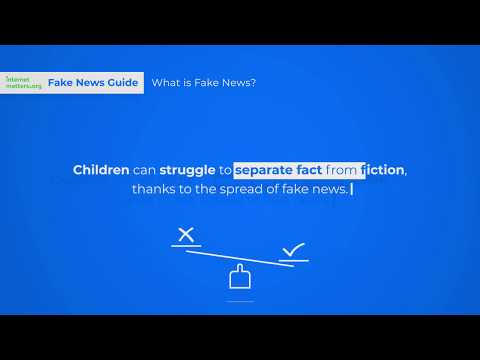 How to Help Kids Spot Fake News and Misinformation Year of publication: 2020 Corporate author: Internet Matters This video gives practical tips on how to help children spot fake news and avoid being misled into believing something that might impact their wellbeing.
  Online Media Literacy Strategy Year of publication: 2021 Corporate author: Government of the United Kingdom The Online Harms White Paper set out a commitment to develop an Online Media Literacy Strategy ahead of the implementation of the online harms regulator. The aim of the strategy is to educate and empower internet users across the UK to manage their online safety. Over 170 organisations are currently involved in delivering media literacy education in the UK. The Media Literacy Strategy sets out the government’s multi-year plan to bring coordination to the media literacy landscape and outlines a Media Literacy Framework of best practice principles to inform the content and delivery of media literacy education.
  Climate Science Resource Pack: Silver Level Corporate author: British Science Association This is a project-based resource which can lead to a CREST award. Participants receive research and design briefs on topics such as ‘greener cities’ and ‘water scarcity’ and have to design climate- friendly sustainable solutions. 30+ hours of work is required for a Silver Award.