
Resources
Explore a wide range of valuable resources on GCED to deepen your understanding and enhance your research, advocacy, teaching, and learning.
3,224 Results found
 Informe de políticas de nuestra agenda común 10: Transformar la educación Year of publication: 2023 Corporate author: United Nations (UN) Sobre la base de la Cumbre sobre la Transformación de la Educación y el informe de la Comisión Internacional sobre los Futuros de la Educación, el presente informe de políticas examina con más detalle la crisis actual de la educación y propone unas ideas y una serie de medidas orientativas para que los países y la comunidad internacional transformen la educación. El derecho a la educación y al aprendizaje permanente es una parte esencial de la Agenda 2030 para el Desarrollo Sostenible porque la educación, el conocimiento y el aprendizaje son fundamentales para la dignidad, el crecimiento y el desarrollo de la persona. Durante siglos, la educación ha sido la gran igualadora, la fuerza motriz de la construcción nacional y el motor del progreso social, cultural, económico y tecnológico. Sin embargo, en la actualidad, acosada por una doble crisis de equidad y pertinencia, la educación tal y como la conocemos ya no es idónea.
  Sustainable Development and Responsible Citizenship Year of publication: 2021 Corporate author: Argentina. Ministry of Education Social inequalities, epidemics and ecological disasters seem to be at an all-time high. Therefore, it is necessary for governments to recognize the freedoms and obligations to exercise responsible citizenship. This resource was developed within the framework of the Seguimos Educando Program, which during 2020 and 2021 allowed, through different means, students to remain in contact with school. The proposed activities and content are guided by the Priority Learning Cores common to the entire country. Desarrollo sustentable y ciudadanía responsable Year of publication: 2021 Corporate author: Argentina. Ministry of Education Las desigualdades sociales, las epidemias y los desastres ecológicos parecen estar en su punto más alto. Por ello, es necesario que los gobiernos reconozcan las libertades y obligaciones para ejercer una ciudadanía responsable. Este recurso fue elaborado en el marco del Programa Seguimos Educando, que durante 2020 y 2021 permitió, a través de distintos medios, que las y los estudiantes siguieran en contacto con la escuela. Las actividades y contenidos propuestos están orientados por los Núcleos de Aprendizajes Prioritarios comunes para todo el país.
  Podcast: Learning for the Future; Education for Sustainability Year of publication: 2024 Author: Alicia Santi | Maximiliano Molina Corporate author: Chile Foundation | Educarchile In this edition of the podcast: Learning for the Future, we develop, together with CEDEUS, the topic of "Education for Sustainability" and the multidimensional view of this phenomenon in educational establishments. Podcast: Aprendizaje para el futuro; Educación para la sustentabilidad Year of publication: 2024 Author: Alicia Santi | Maximiliano Molina Corporate author: Chile Foundation | Educarchile En esta edición del podcast: Aprendizaje para el Futuro desarrollamos, junto a CEDEUS, el tema de la "Educación para la Sustentabilidad" y la mirada multidimensional de este fenómeno en los establecimientos educacionales.
  SDG In the Republic of Korea: Progress Report 2023 Year of publication: 2023 Author: Woohyun Chung | Haesik Jung | Yunjae Hwang | Dawoon Jung | Hyojung Han | Dokyun Kim | Jongho Ahn | Sangyoup Lee | Soeun Ahn | Jungwook Kim | Sangyun Lee | Jiyoung Lee | Sora Yi | Jewoo Hong | Miju Kim | Junghee Cho | Kyungah Koo | Yul Kwon Corporate author: Korea R. Statistics Research Institute | Statistics Korea It has been eight years since the Sustainable Development Goals (SDG) were adopted at the UN General Assembly, and nations began to work toward achieving them. Now we are halfway through the 2030 target period. As an authorized national focal point of SDG data, the Statistics Research Institute has been publishing a 『Sustainable Development Goals in the Republic of Korea: Progress Report』 annually, in keeping with their vision of providing support for ‘eviꠓdence-based decision-making’.『SDG in the Republic of Korea: Progress Report 2023』, released this, was designed as a compass identifying goals to be prioritized in policy implementation during the remaining period until 2030 to keep pace for achieving the SDGs. It is hoped that the report will help to point out the direction for policies responding to the crises and changes we are facing amid the COVID pandemic, the climate crisis, and war, through relevant indicators. 한국의 SDG 이행보고서 2023 Year of publication: 2023 Author: Woohyun Chung | Haesik Jung | Yunjae Hwang | Dawoon Jung | Hyojung Han | Dokyun Kim | Jongho Ahn | Sangyoup Lee | Soeun Ahn | Jungwook Kim | Sangyun Lee | Jiyoung Lee | Sora Yi | Jewoo Hong | Miju Kim | Junghee Cho | Kyungah Koo | Yul Kwon Corporate author: Statistics Research Institute 지속가능발전목표(SDG)가 유엔총회에서 채택되고 그 시작을 알린 지 올해 8년 차로, 2030년 목표 시점까지 절반의 시간이 지났습니다. 통계개발원은 한국의 SDG 데이터 책임기관으로 ‘증거 기반 의사결정 지원’이라는 비전하에 『한국의 SDG 이행보고서』를 매년 발간하고 있습니다. 올해 발간된 『한국의 SDG 이행보고서 2023』은 2030년까지 남은 기간 동안 어떤 목표에 우선순위를 두어 정책을 실행해야 SDG 달성이 가능한지를 보여 주는 나침반 역할로 기획되었습니다. 코로나19, 기후위기, 전쟁 등 격변의 시대에 우리가 직면한 위기와 변화를 지표로 보여 줌으로써 관련 정책의 방향을 제시해주리라 기대합니다. 본 저작물은 통계청 통계개발원에서 2023년 작성하여 공공누리 제3유형으로 개방한 '한국의 SDGs 이행보고서 2023(작성자:정우현)'을 이용하였으며, 해당 저작물은 통계청 통계개발원 홈페이지(https://kostat.go.kr/)에서 무료로 내려받으실 수 있습니다.
  L'enseignement supérieur face au défi de la transition écologique Year of publication: 2023 Corporate author: Cour des Comptes Les établissements d’enseignement supérieur occupent une place spécifique dans la transition écologique. Représentant près de la moitié des opérateurs de l’État et accueillant un large public, ils ont un impact environnemental substantiel. De nombreuses initiatives ont été prises ces dernières années en la matière et les politiques menées dans les établissements commencent à se mettre en place. Elles sont cependant encore insuffisantes pour atteindre les objectifs affichés, manquant en particulier de nombreux outils pour développer une démarche rigoureuse, cohérente et efficace. L’enseignement supérieur a pourtant un rôle majeur à jouer, non seulement pour réduire sa propre empreinte écologique, mais aussi pour produire, adapter et diffuser les connaissances nécessaires à la réussite de la transition écologique.Higher education institution occupy a specific place in the ecological transition. Representing nearly half of the state operators and catering to a diverse audience, they have a substantial environmental impact. Numerous initiatives have been undertaken in recent years, and policies within these institutions are beginning to take shae. However, they are still insufficient to achieve the stated objectives, notably lacking many tools to develop a rigorous, coherent and effective approach. Higher education has a crucial role to play, not only in reducing its own ecological footprint but also in generating, adapting, and disseminating th knowledge necessary for the success of the ecological transition.
 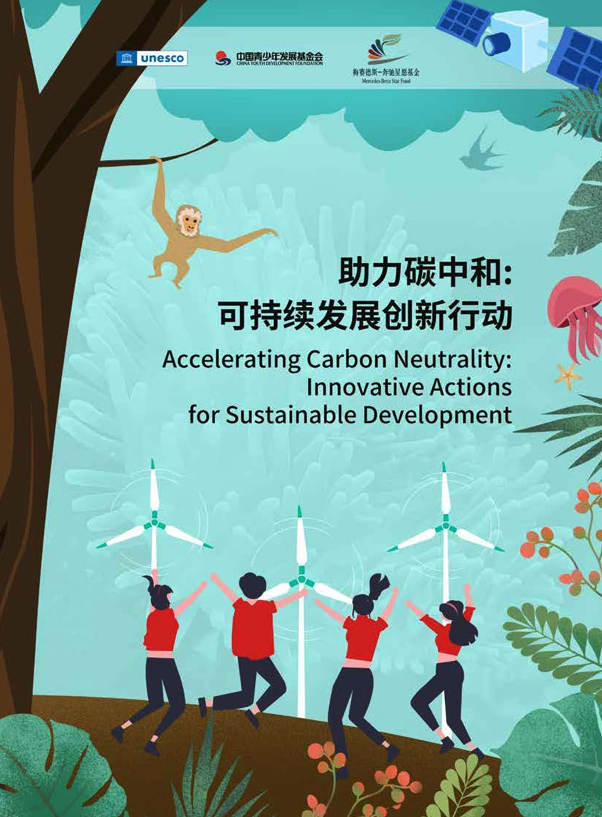 Accelerating Carbon Neutrality: Innovative Actions for Sustainable Development Year of publication: 2024 Author: UNESCO Beijing Climate change is a global challenge that respects no national borders. To achieve the 2030 Sustainable Development Agenda, all nations need to take actions to address climate change and its impacts now. The Chinese government attaches great importance to addressing climate change by setting it as a strategic goal concerning economic and social development while considering green and low-carbon development as an essential aspect of ecological civilization. China pledges to achieve carbon peak before 2030 and carbon neutrality before 2060.Education for Sustainable Development (ESD) is essential to promote climate action. As the creators and builders of the future world, youth play a significant role. Youth are the future. In the spirit of “Changing the minds, not the climate”, UNESCO has been committed to empowering the young generation to tackle climate change, supported by its robust networks in education, sciences, culture, communication and information.In June 2022, the first phase (2022-2025) of the “Accelerating Carbon Neutrality: Innovative Actions for Sustainable Development” project was officially launched under the sponsorship of the China Youth Development Foundation-MercedesBenz Star Fund. This project will fill the gap of China’s carbon neutrality action through activities such as “Accelerating youth climate action”, “Forest Protection Action” and “ Tropical Rainforest biodiversity conservation action” and make a pilot for climate change education and sustainable development education in China and the world by empowering institutions and community residents, including women, children and youth, and contribute to the realization of the UN 2030 Sustainable Development Goals (SDGs) in a bottom-up manner, including SDG 1 (No Poverty), SDG 4 (Quality Education), SDG 5 (Gender Equality), SDG 10 (Reduced Inequalities), SDG 11 (Sustainable Cities and Communities), SDG 13 (Climate Action), SDG 14 (Life below Water), SDG 15 (Life on Land) and SDG 17 (Partnerships for the Goals). The project aims to promote youth capacity in innovation and communication skills. Moreover, it seeks to increase young people’s awareness on how to reduce carbon footprint, protecting the environment, conserving biodiversity and promoting man-nature harmony through education for sustainable development, climate change, environmental protection and global citizenship education. Additionally, the project aims to explore best practices that can be shared and applied internationally. 助力碳中和:可持续发展创新行动 Year of publication: 2024 Author: UNESCO Beijing 气候变化是跨越国界的全球性挑战。为了实现2030议程,各国必须采取紧急行动来 应对气候变化及其影响。中国政府高度重视气候变化问题,将应对气候变化纳入国 家经济社会发展的重大战略,把绿色低碳发展作为生态文明建设的重要内容,并承 诺将在2030年前实现碳达峰,在2060年前实现碳中和。可持续发展教育对于促进气候行动至关重要。 青少年是未来世界的创造者与建设者,秉承着“改变思维,而非气候”的理念,联合国教科文组织教借助其在教育、 科学、文化、传播和信息领域的强大网络,一直致力于加强青少年在气候变化方面 的能力建设。2022年6月, 在中国青少年发展基金会-梅赛德斯-奔驰星愿基金资助下 “助力碳中和:可持续发展创新行动”项目第一期(2022-2025年)正 式启动。 本项目将通过基于可持续发展教育开展的“助力青少年气候行 动”“森林保护行动”和“保护热带雨林生物多样性行动”等活动内容, 填补中国碳中和行动的重要空白,在切实推进气候变化教育和为师生气候 变化赋能的同时,为中国和世界的气候变化教育以及可持续发展教育做出 示范,以自下而上的方式助力联合国2030可持续发展目标,包括SDG13 (气候变化),SDG4(优质教育),SDG11(可持续的城市与社区), SDG14(水下生态保护),SDG15 (陆地生态保护)和SDG17(伙伴 关系)等一系列目标的实现。项目 旨在促进青少年的能力建设、 知识交 流和技能创新, 通过可持续发展教 育、 气候变化教育、 环境教育和全 球公民教育, 提高青少年对减少碳 足迹、生态环境保护、生物多样性保 护、人与自然和谐共生的认知,并开 展可以在国际范围内共享和适用的良 好实践案例。