
Resources
Explore a wide range of valuable resources on GCED to deepen your understanding and enhance your research, advocacy, teaching, and learning.
55 Results found
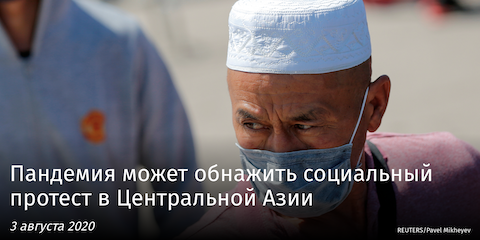 Pandemic May Expose Social Protest in Central Asia Year of publication: 2020 Author: Alexey Malashenko Corporate author: Russian International Affairs Council The coronavirus has become a serious test of the strength of the political systems of Central Asian countries. Despite the severe socio-economic impact of the pandemic, stability has been ensured. But in the long run, quarantines and tight restrictions will remind of themselves and expose old problems. Among the most acute are unemployment and the threat of violent extremism. Moreover, both problems are related. Пандемия может обнажить социальный протест в Центральной Азии Year of publication: 2020 Author: Alexey Malashenko Corporate author: Russian International Affairs Council Коронавирус стал серьезным тестом на прочность политических систем стран Центральной Азии. Несмотря на серьезные социально-экономические последствия пандемии, стабильность была обеспечена. Но в долгосрочной перспективе карантин и введенные жесткие ограничения напомнят о себе и обнажат старые проблемы. Среди наиболее острых из них — безработица и угроза насильственного экстремизма. Причем обе проблемы связаны.
  Radicalization in Central Asia: Have We Managed to Avoid It? Year of publication: 2020 Author: Milan Lazovic Corporate author: Russian International Affairs Council Central Asia is a very multifaceted, multi-ethnic, multi-confessional region, where many cultures, national traditions and ways of life intersect, united by a common factor - religious. The authors of the chapter on the role of religion in Central Asia in the book "Religion, Conflict, and Stability in the Former Soviet Union", prepared by the analytical center "RAND Corporation", touched upon a very important, significant and influential topic on the region. Experts note that, despite the success of Central Asia's attempts to avoid large-scale radicalization, there is a risk of its expansion today. Радикализация в Центральной Азии: удалось ли избежать? Year of publication: 2020 Author: Milan Lazovic Corporate author: Russian International Affairs Council Центральная Азия представляет собой весьма многогранный, полиэтнический, многоконфессиональный регион, где пересекаются множество культур, национальных традиций и укладов, объединенных общим фактором — религиозным. Авторы главы о роли религии в Центральной Азии в книге «Religion, Conflict, and Stability in the Former Soviet Union», подготовленной аналитическим центром «RAND Corporation», затронули весьма важную, значимую и имеющую широкое влияние на регион, тему. Специалисты отмечают, что, несмотря на успех попыток Центральной Азии избежать масштабной радикализации, риск ее расширения в наши дни существует.
  The Current Situation of the Russian Language in the Central Asian States (Journal of Post-Soviet Studies; vol. 3, no. 3) Year of publication: 2020 Author: Yu Haiju The article examines the current situation of the Russian language in the five Central Asian states of Kazakhstan, Kyrgyzstan, Tajikistan, Turkmenistan, and Uzbekistan, which appreciate the sovereignty they have gained, elevating their own language policies to the level of a manifestation of national independence and a symbol of sovereignty. The status of the Russian is no longer a simple question of language, but a complex political issue. The author shows that the attitudes of the five Central Asian states toward the Russian language can be divided into three main categories: acceptance, resistance and uncertainty. Современное положение русского языка в государствах Центральной Азии (Постсоветские исследования; vol. 3, no. 3) Year of publication: 2020 Author: Yu Haiju В статье рассматривается современное положение русского языка в пяти государствах Центральной Азии – Казахстан, Киргизия, Таджикистан, Туркменистан и Узбекистан, которые высоко ценят приобретённый суверенитет, поднимают свою собственную языковую политику до уровня проявления национальной независимости и символа суверенитета. Статус русского языка уже не простой вопрос языка, а сложный политический вопрос. Автор показывает, что отношение пяти государств Центральной Азии к русскому языку можно разделить на три основные категории: принятие, сопротивление и неопределенность.
  Improving the Quality of Professional Training of Graduates of Higher Technical Educational Institutions of Uzbekistan Year of publication: 2021 Author: Nazira Akhmedova | Nodira Ergasheva The article deals with the satisfaction of the needs and interests of students of higher educational institutions related to their future professional activities and special training, the introduction of new state educational standards, structural reform and modernization of higher education, updating the content of vocational education, educational technologies, forms of organization of the educational process to be solved with with the help of independent work, and advanced training of students. Повышение качества профессиональной подготовки выпускников высших технических образовательных учреждений Узбекистана Year of publication: 2021 Author: Nazira Akhmedova | Nodira Ergasheva В статье рассмотрены вопросы удовлетворения потребностей и интересов студентов высших учебных заведений, связанных с их будущей профессиональной деятельностью и специальной подготовкой, внедрением новых государственных образовательных стандартов, структурным реформированием и модернизацией высшего образования, обновлением содержания профессионального образования, технологий обучения, форм организации учебного процесса решаемых с помощью самостоятельных работ, повышением квалификации студентов непосредственно на производственных объектах для формирования интеллектуального творческого высоквалифицированного специалиста.
  Central Asian States in the International Rankings of Democracy Development Year of publication: 2021 Author: E.G. Garbuzarova Each Central Asian state has its own features and dynamics/statics of democratic transit, but they are all united by the personification of power and loyalty to the autocrat rather than to the political institutions. The author attempts to trace the current state of the political systems of Central Asian states, highlighting the positive and negative trends in their democratization. Государства Центральной Азии в международных рейтингах развития демократии Year of publication: 2021 Author: E.G. Garbuzarova В каждом Центральноазиатском государстве наблюдаются свои особенности и динамика/статика демократического транзита, однако объединяет их всех персонификация власти и лояльность личности, а не политическому институту. Автор на основе авторитетных международных рейтингов развития демократии предпринял попытку проследить современное состояние политических систем Центральноазиатских государств, выделив положительные и отрицательные тенденции в области их демократизации.