
Resources
Explore a wide range of valuable resources on GCED to deepen your understanding and enhance your research, advocacy, teaching, and learning.
3,376 Results found
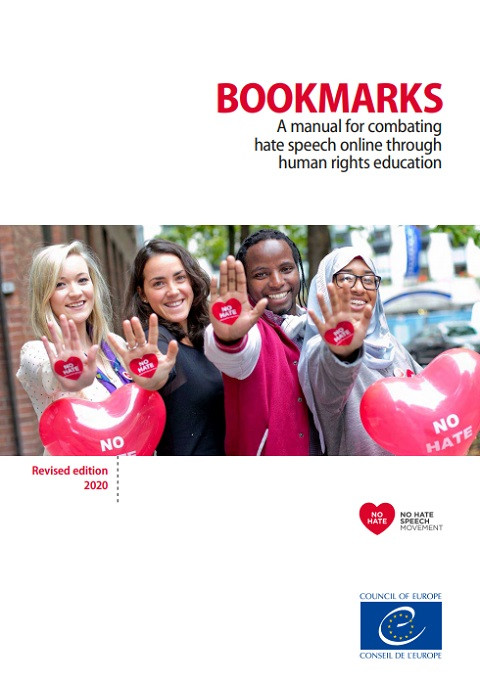 Connexions: Manuel pour la lutte contre le discours de haine en ligne par l’éducation aux droits humains Year of publication: 2020 Author: Ellie Keen | Mara Georgescu Corporate author: Conseil de l'Europe L’action du Conseil de l’Europe en faveur de la démocratie est fortement axée sur l’éducation : l’éducation à l’école, mais aussi l’éducation en tant que pratique de la démocratie tout au long de la vie, comme dans le cadre des activités d’apprentissage non formel. L’éducation aux droits humains et l’éducation à la citoyenneté démocratique font partie intégrante du socle que nous devons bâtir pour faire de la démocratie une réalité durable.Le discours de haine est l’une des formes les plus inquiétantes de racisme et de discrimination qui sévit aujourd’hui en Europe, amplifiée par Internet et par les médias sociaux. Le discours de haine en ligne n’est que la partie visible de l’iceberg de l’intolérance et de l’ethnocentrisme. Les jeunes sont directement concernés, en tant qu’acteurs et victimes d’atteintes aux droits humains en ligne. L’Europe a besoin que les jeunes veillent aux droits de l’homme et les protègent : c’est là l’assurance-vie de la démocratie.Connexions a été créé dans le cadre du Mouvement contre le discours de haine, autrement dit, la campagne de la jeunesse du Conseil de l’Europe pour les droits humains en ligne. C’est un outil précieux pour les éducateurs qui souhaitent aborder le discours de haine en ligne sous l’angle des droits de l’homme, tant dans le système éducatif formel que dans le cadre de l’éducation informelle. Ce manuel a été conçu pour travailler avec des apprenants de 13 à 18 ans, mais les activités proposées peuvent être adaptées à d’autres groupes d’âge.Cette édition de Connexions a été révisée après que le Conseil de l’Europe a mis fin à la coordination de la campagne de jeunesse liée au Mouvement contre le discours de haine. Bien que la campagne ait pris officiellement fin, il importe de poursuivre l’éducation et la sensibilisation des jeunes pour combattre le discours de haine et promouvoir les valeurs liées aux droits humains.
 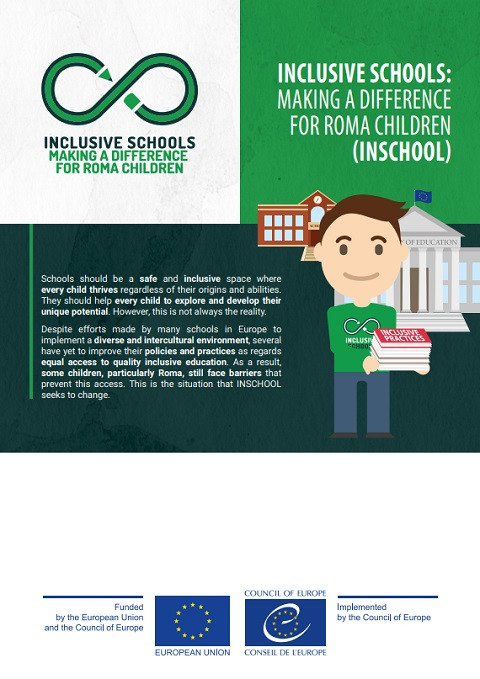 Inclusive Schools: Making a Difference for Roma Children (Inschool) Corporate author: European Union (EU) | Council of Europe This leaflet presents a joint project of the European Union and the Council of Europe on “Inclusive schools: making a difference for Roma children” targeting schools where Roma children learn, in the Czech Republic, Hungary, Romania, Slovak Republic and United Kingdom. The project aims at enhancing social inclusion of Roma by promoting inclusive education policies and practices in Europe.
 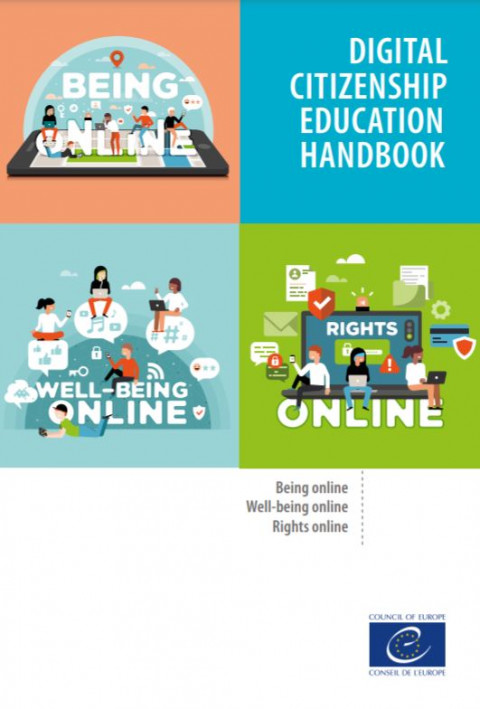 Digital Citizenship Education Handbook Year of publication: 2019 Author: Janice Richardson | Elizabeth Milovidov Corporate author: Council of Europe Digital citizenship and engagement involves a wide range of activities, from creating, consuming, sharing, playing and socialising, to investigating, communicating, learning and working. Competent digital citizens are able to respond to new and everyday challenges related to learning, work, employability, leisure, inclusion and participation in society, respecting human rights and intercultural differences.This Digital citizenship education handbook is designed to help educators and other interested adults understand and deal with them. It builds on the Council of Europe’s Reference Framework of Competences for Democratic Culture and the achievements of our longstanding Education for Democratic Citizenship programme, and complements the Internet literacy handbook as part of a coherent approach to educating citizens for the society of the future.
  T-KIT 4: Intercultural Learning Year of publication: 2018 Author: Oana Nestian Sandu | Nadine Lyamouri-Bajja Corporate author: Council of Europe | European Commission Intercultural learning is an important topic for the priorities of both the European Commission and the Council of Europe, and of their partnership in the field of youth.Intercultural learning is an educational approach that can lead to social transformation, so that people from different cultural backgrounds can develop positive relations based on the values and principles of human rights and on seeing cultural differences as positive things. It is a form of political and social education that needs to pay attention not only to intercultural relations, but also to different understandings of culture and diversity, power relations, distribution of resources, political and social context, human rights, discrimination, history and daily interactions among different groups.This T-Kit was developed for the context of youth work and non-formal education with young people, both of which support the personal development, social integration and active citizenship of young people. Educators and youth workers have an important role in addressing intercultural learning in their work with young people. They can stimulate young people’s learning in their daily lives, so that they can question and extend their perception, develop competences to interact positively with people from different cultural backgrounds and embrace the values of diversity, equality and dignity. In today’s Europe, these values and skills are fundamental for young people and for society as a whole in order to continue building peace and mutual understanding.
 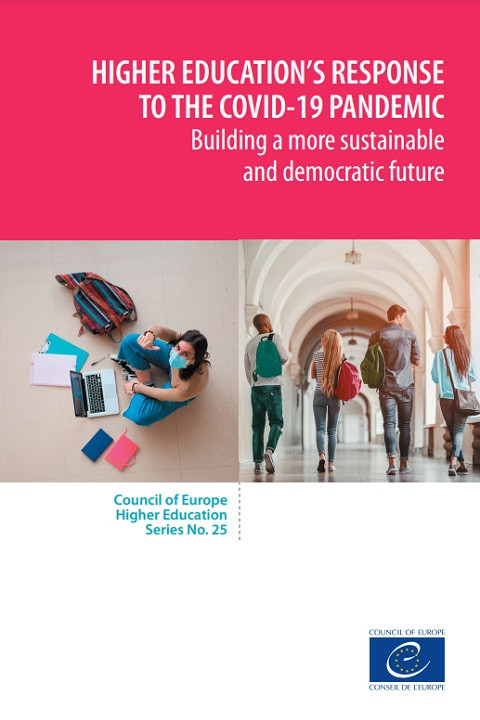 Higher Education's Response to the COVID-19 Pandemic: Building a More Sustainable and Democratic Future (Council of Europe Higher Education Series; No. 25) Year of publication: 2021 Author: Sjur Bergan | Tony Gallagher | Ira Harkavy | Ronaldo Munck | Hilligje van’t Land Corporate author: Council of Europe Public health was the immediate concern when the Covid-19 pandemic struck in Asia, then in Europe and other parts of the world. The response of our education systems is no less vital. Higher education has played a major role in responding to the pandemic and it must help shape a better, more equitable and just post-Covid-19 world. This book explores the various responses of higher education to the pandemic across Europe and North America, with contributions also from Africa, Asia and South America.The book describes the various ways in which higher education is facing the Covid-19 pandemic. It is designed to help universities, specifically their staff and students as well as their partners, contribute to a more sustainable and democratic future.
  General Policy Recommendation No. 15 of the European Commission against Racism and Intolerance: On Combating Hate Speech Year of publication: 2016 Corporate author: Council of Europe | European Committee against Racism and Intolerance (ECRI) The file is the recommendations of the European Committee against Racism and Intolerance on combating hate speech for countries. The file contains statistics and criteria established by the Commission. There are 10 recommendations made by the committee. توصية السياسة العامة رقم 15 للجنة الأوروبية لمناهضة العنصرية والتعصب: بشأن مكافحة خطاب الكراهية Year of publication: 2016 Corporate author: Council of Europe | European Committee against Racism and Intolerance (ECRI) الملف هو عبارة عن توصيات اللجنة الأوروبية لمناهضة العنصرية والتعصب بشأن مكافحة خطاب الكراهية للدول. يحتوي الملف على إحصائيات ومعايير وضعتها اللجنة. هناك 10 توصيات وضعتها اللجنة.
 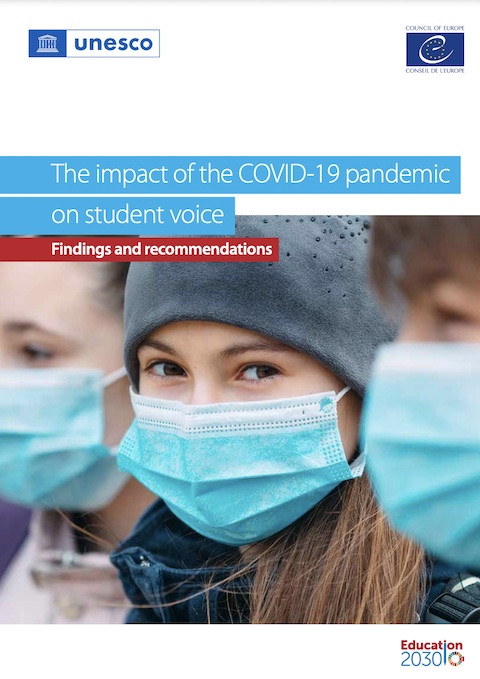 The Impact of the COVID-19 Pandemic on Student Voice: Findings and Recommendations Year of publication: 2021 Corporate author: UNESCO | Council of Europe The COVID-19 pandemic has had serious consequences on the education of young people and their ability to engage and participate meaningfully. In 2020, UNESCO and the Council of Europe decided to collaborate on a research project with a view to examining the impact of the COVID-19 pandemic on student voice and particularly the consequences of the subsequent school closures on student voice opportunities in Europe and in the Middle East and North Africa (MENA). This publication details the findings of this study and provides recommendations for school directors and personnel, teachers, educators, policy-makers and young people to build on the lessons learned from the pandemic and help the education community work collectively towards promoting societies that are guided by human rights, with student voice and participation at the centre. It is primarily intended for policy-makers, educators, teachers working in formal school systems. It may also be of interest to professionals working in non-formal education settings or other sectors – namely the justice, social and health sectors – working with student.
 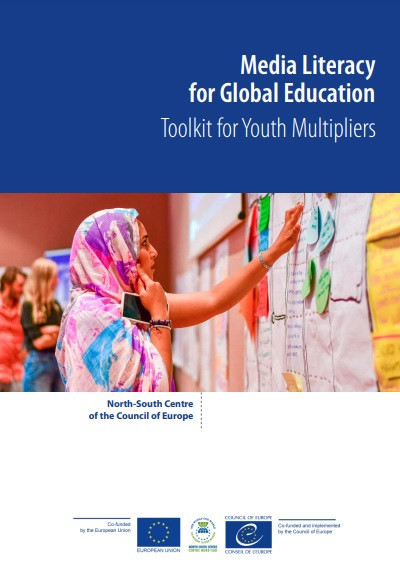 Media Literacy for Global Education: Toolkit for Youth Multipliers Year of publication: 2022 Corporate author: North-South Centre of the Council of Europe | Council of Europe | European Union (EU) This toolkit targets youth multipliers and educators and gathers practical and contextual information about Media Literacy (ML) and its contribution to the field of Global Education (GE). Its activities and fact sheets are focused on non-formal learning contexts, but they can also be implemented in schools since the toolkit combines the most recent developments in GE, ML and Digital Citizenship Education useful to enrich formal school curricula. All the practical activities proposed in the toolkit are in line with the Competences for Democratic Culture and the Human Rights approach of the Council of Europe.The toolkit’s main aim is to empower practitioners on ML, but also to provide the wider public with the knowledge and tools to become more responsible and active citizens, offering activities focused on the critical analysis and production of media messages, analysis of algorithms, active participation in societies, maintenance of privacy, maintenance of well-being and management of e-identity.
 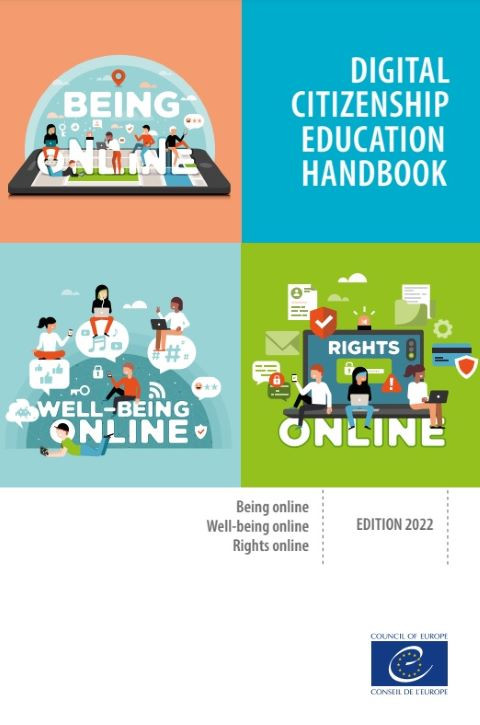 Digital Citizenship Education Handbook (Edition 2022) Year of publication: 2022 Author: Janice Richardson | Elizabeth Milovidov Corporate author: Council of Europe Digital citizenship competences define how we act and interact online. They comprise the values, attitudes, skills and knowledge and critical understanding necessary to responsibly navigate the constantly evolving digital world, and to shape technology to meet our own needs rather than to be shaped by it. The Digital citizenship education handbook offers information, tools and good practice to support the development of these competences in keeping with the Council of Europe’s vocation to empower and protect children, enabling them to live together as equals in today’s culturally diverse democratic societies, both on- and offline.The Digital citizenship education handbook is intended for teachers and parents, education decision makers and platform providers alike. It describes in depth the multiple dimensions that make up each of 10 digital citizenship domains, and includes a fact sheet on each domain providing ideas, good practice and further references to support educators in building the competences that will stand children in good stead when they are confronted with the challenges of tomorrow’s digital world. The Digital citizenship education handbook is consistent with the Council of Europe’s Reference Framework of Competences for Democratic Culture and compatible for use with the Internet literacy handbook.