
Resources
Explore a wide range of valuable resources on GCED to deepen your understanding and enhance your research, advocacy, teaching, and learning.
1,448 Results found
 Dossier pédagogique 2022: S’informer pour comprendre le monde Year of publication: 2021 Corporate author: Centre pour l’éducation aux médias et à l’information (CLEMI) | Réseau Canopé Le dossier pédagogique 2022 a pour thème pour la deuxième année consécutive: «S'informer pour comprendre le monde». Un thème qui illustre la diversité des thématiques que peut embrasser l’Éducation aux médias et à l’information : des modalités de la liberté d’expression et de l’expression médiatique des élèves au décryptage des communications politiques, de la modération des réseaux sociaux à la compréhension des représentations visuelles des données chiffrées. Un focus particulier est aussi mis sur la production médiatique : lire l’info, parvenir à en comprendre son fonctionnement et ses modalités, de façon fine, est une compétence qui se développe à l’école par une pédagogie active. Il s’agit de proposer aux élèves de fabriquer eux-mêmes de l’information : en écrivant, filmant, photographiant, enregistrant des textes, des images et des sons pour mettre en forme des contenus traitant de l’actualité du monde ou de la classe.
  The “Turtle” Technique: A Method for Self-Control of Impulsive Behavior Author: Marlene Schneider | Arthur Robin Corporate author: New York University This manual deals with a technique developed at the POINT OF WOODS SCHOOL. This Turtle technique differs from other behavior modification strategies in that it is based on "self-control" and not external control of disruptive behavior. La técnica de la "tortuga": Un metodo para el autocontrol de la conducta impulsiva Author: Marlene Schneider | Arthur Robin Corporate author: New York University Este manual trata de una técnica desarrollada en el POINT OF WOODS SCHOOL. Esta técnica de la Tortuga, difiere de otras estrategias de modificación de conductas en que está basada en el “auto-control” y no en el control externo de la conducta disruptiva.
  The Love-hate Dilemma of Western Patriotism as Understood by MacIntyre, Nussbaum and Others (Modern Education Review; no. 2) Year of publication: 2021 Author: Chenghsi Chien The article explores different theoretical perspectives on patriotism in the West and offers reflections on the current state of globalisation and international cooperation. 西方对爱国主义的爱恨情仇:从麦金太尔与努斯鲍姆论起 (现代教育论丛; no. 2) Year of publication: 2021 Author: Chenghsi Chien 该文探讨了西方关于爱国主义的不同理论观点,并针对当下全球化和国际合作的状况,提出反思意见。
 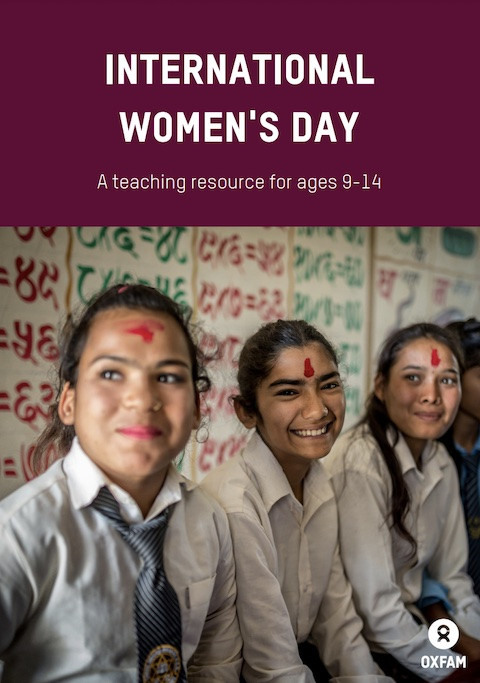 International Women’s Day: A Teaching Resource for Ages 9-14 Year of publication: 2022 Corporate author: Oxfam GB This teaching resource could be used on International Women's Day or on any day of the year, to introduce issues related to gender equality, support critical thinking, and encourage young people to consider possible action they might like to take in response. These cross-curricular activities are designed to be flexible and easily adapted for use in an assembly, form time or to support more in-depth classroom learning. Depending on the availability of time and other learning taking place, the activities could be taught sequentially over a series of lessons or selected and delivered as standalone sessions. The suggested age range is 9-14 but some of the activities could be adapted to suit the needs of younger and older learners. Depending on learners’ age and the context, teachers may also wish to acknowledge and discuss inequality issues connected to LGBT+.
 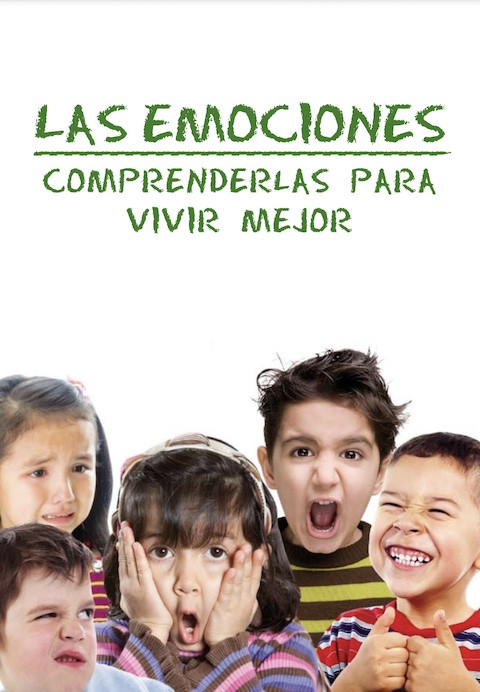 Understand Emotions to Live Better Year of publication: 2013 Corporate author: Spanish Association Against Cancer This guide explains what emotions are, what the basic emotions are and how to manage them. Also, how to teach children to identify and control their emotions, among other things about the emotional world. Las emociones: Comprenderlas para vivir mejor Year of publication: 2013 Corporate author: Spanish Association Against Cancer En esta guía se explica qué son las emociones, cuáles son las emociones básicas y cómo manejarlas. Además, cómo enseñar a los niños a identificar y controlar sus emociones, entre otras cosas acerca del mundo emocional.
 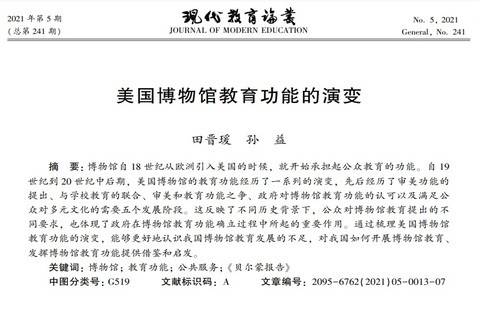 Educational Function of Museum in American: A Overall History (Modern Education Review; no. 5) Year of publication: 2021 Author: Jinyuan Tian The article reviews the history of museum-school partnerships in the US, looks at the evolution of their educational function and the changing role of government, and makes recommendations for the educational function of museums. 美国博物馆教育功能的演变 (现代教育论丛; no.5) Year of publication: 2021 Author: Jinyuan Tian 该文回顾了美国博物馆与学校合作的发展历史,关注其教育功能的演变以及政府角色的变化,并对博物馆教育的教育功能提出建议。