
Resources
Explore a wide range of valuable resources on GCED to deepen your understanding and enhance your research, advocacy, teaching, and learning.
2,772 Results found
 Can Tolerance Policy Be an Effective Tool for Conflict Prevention in Tajikistan? Year of publication: 2020 Author: Aziz Timurov Corporate author: Central Asian Bureau for Analytical Reporting (CABAR) | Institute for War and Peace Reporting (IWPR) There are no visible conflicts on the basis of ethnic-religious hostility in Tajikistan. However, if the problem is not visible, this does not mean that it does not exist, said Aziz Timurov, participant of the CABAR.asia School of Analytics. In his opinion, a well-developed and applicable tolerance policy can mitigate potential ethnic-religious and regional conflicts and be a factor in economic development in Tajikistan. Способна ли политика толерантности быть эффективным инструментом по предотвращению конфликтов в Таджикистане? Year of publication: 2020 Author: Aziz Timurov Corporate author: Central Asian Bureau for Analytical Reporting (CABAR) | Institute for War and Peace Reporting (IWPR) Видимых конфликтов на почве этно-конфессиональной неприязни в Таджикистане нет. Однако, если проблема не видна, это не значит, что ее нет, считает участник Школы аналитики CABAR.asia Азиз Тимуров. По его мнению, правильно разработанная и применимая политика толерантности может смягчить потенциальные этно-конфессиональные и региональные конфликты и быть фактором экономического развития в Таджикистане.
 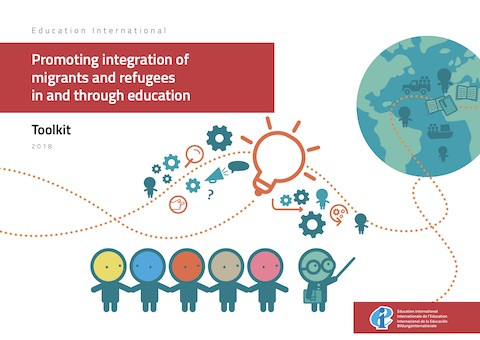 Promoting Integration of Migrants and Refugees in and Through Education: Toolkit Year of publication: 2018 Corporate author: Education International (EI) The past years have seen large numbers of refugees moving to Europe. This, and the rise of populist movements in Europe and North America, has led unions to develop activities engaging schools, local communities, authorities, etc. to promote the rights of migrants and build inclusive schools and communities.With the support of Education International (EI), exchange visits, information sharing and peer-learning activities allowed education unions to inspire each other and explore synergies across borders. This toolkit aims to build on these experiences and facilitate education unions to develop their work in this area. It also assists unions by exploring the issues around integrating migrants and refugees in education and sharing what others have been doing in this domain. Promouvoir l'intégration des personnes migrantes et réfugiées dans et à travers l'éducation: Boite à outils Year of publication: 2018 Corporate author: Education International (EI) Beaucoup de personnes réfugiées se sont installées en Europe ces dernières années. Ceci et la montée des mouvements populistes en Europe et en Amérique du Nord ont conduit les syndicats à développer des activités engageant les écoles, les communautés locales, les autorités, etc. pour promouvoir les droits des migrant.e.s et développer des écoles et communautés inclusives.Avec le soutien de l’Internationale de l’Education (IE), les visites d’échange, le partage d’informations et les activités d’apprentissage avec leurs pairs ont permis aux syndicats de l’éducation de s’inspirer mutuellement et d’explorer les synergies transfrontalières. Cette boite à outils vise à tirer parti de ces expériences et à aider les syndicats de l’éducation à amplifier leur travail dans ce domaine. Elle aide également les syndicats en explorant les questions liées à l’intégration des personnes migrantes et réfugiées dans l’éducation et en partageant ce que les autres ont fait sur cette thématique.
 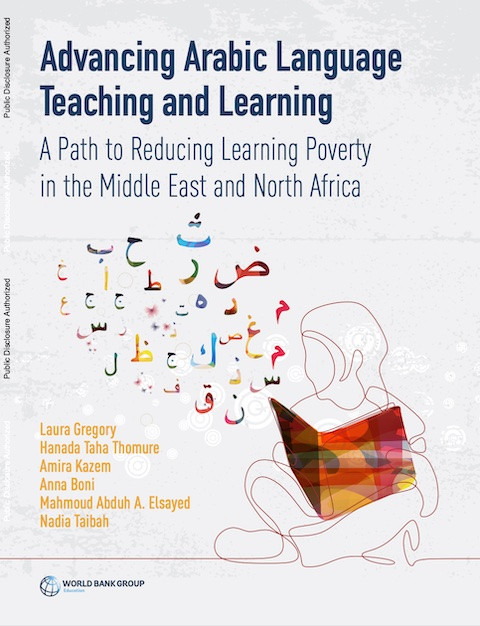 Advancing Arabic Language Teaching and Learning: A Path to Reducing Learning Poverty in the Middle East and North Africa Year of publication: 2021 Author: Laura Gregory | Hanada Taha Thomure | Amira Kazem | Anna Boni | Mahmoud Abduh A. Elsayed | Nadia Taibah Corporate author: World Bank The purpose of the present report is to identify and explore the evidence on factors that are leading to high rates of learning poverty in MENA countries. In addition, the report proposes a path for countries of the region to make the teaching and learning of the Arabic language—which are critical foundations for children in Arabic-speaking countries—more effective. The intended audience of the report is education stakeholders in the MENA region, including officials in ministries of education across the region, those responsible for education decision-making, teachers, academics, education administrators, parents, and nongovernmental organizations, as well as World Bank and partner organization staff tasked with supporting countries in their efforts to raise learning and human capital.The intention of the report is not to provide an Arabic literacy strategy for each country since countries of the region differ and each would need to have their own national dialogue. Instead, the report collates the relevant literature from the region and beyond, as well as local and regional initiatives, and offers guidance to countries to advance the teaching and learning of MSA. As such, the report does not focus on the broader issues of language use within each country. As part of the process of developing the report, a summary of the emerging evidence and recommendations was shared with a small group of teachers from two countries across the region in advance of a focus group discussion to explore local views. Unanimous agreement on the key findings and recommendations were expressed by these teachers. Further discussions on the topics raised in this report are expected to take place during the dissemination of this report and in the months and years to come, leading to greater consensus across stakeholders on the best ways to advance Arabic language teaching and learning.The report is structured in a way that first explores the incidence of learning poverty in the MENA region, followed by international evidence on the science of learning to read, and factors that are influencing Arabic language learning outcomes. The report then looks at some of the national strategies, policies, and initiatives already in place for Arabic language education, and proposes a path for advancing Arabic language teaching and learning, along with suggestions for regional collaboration efforts that could further support MENA countries.
  A Delicate Balance of Language Conflict in Uzbekistan Year of publication: 2020 Author: Eldar Asanov Corporate author: Central Asian Bureau for Analytical Reporting (CABAR) | Institute for War and Peace Reporting (IWPR) In an article for CABAR.asia, an Uzbek researcher Eldar Asanov discusses identity, nationalism, and historical memory in the realm of a rather vexed language issue in today’s Uzbekistan. Хрупкий баланс языковых споров в Узбекистане Year of publication: 2020 Author: Eldar Asanov Corporate author: Central Asian Bureau for Analytical Reporting (CABAR) | Institute for War and Peace Reporting (IWPR) Узбекистанский исследователь Эльдар Асанов в статье для CABAR.asia дискутирует об идентичности, национализме и исторической памяти в контексте довольно болезненного языкового вопроса в современном Узбекистане.
 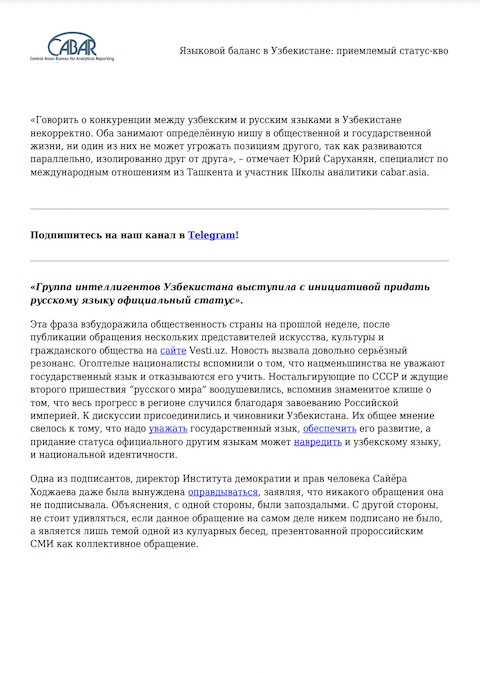 Language Balance in Uzbekistan: An Acceptable Status Quo Year of publication: 2019 Author: Yuriy Sarukhanyan Corporate author: Central Asian Bureau for Analytical Reporting (CABAR) | Institute for War and Peace Reporting (IWPR) «It is incorrect to speak about the competition between the Uzbek and Russian languages in Uzbekistan. They both occupy a certain niche in public and state life, neither of them can threaten the positions of the other, since they develop in parallel and isolation from each other,» – notes an international relations specialist from Tashkent and a participant in the cabar.asia school of analytics, Yuri Sarukhanyan. Языковой баланс в Узбекистане: Приемлемый статус-кво Year of publication: 2019 Author: Yuriy Sarukhanyan Corporate author: Central Asian Bureau for Analytical Reporting (CABAR) | Institute for War and Peace Reporting (IWPR) «Говорить о конкуренции между узбекским и русским языками в Узбекистане некорректно. Оба занимают определённую нишу в общественной и государственной жизни, ни один из них не может угрожать позициям другого, так как развиваются параллельно, изолированно друг от друга», – отмечает Юрий Саруханян, специалист по международным отношениям из Ташкента и участник Школы аналитики cabar.asia.
 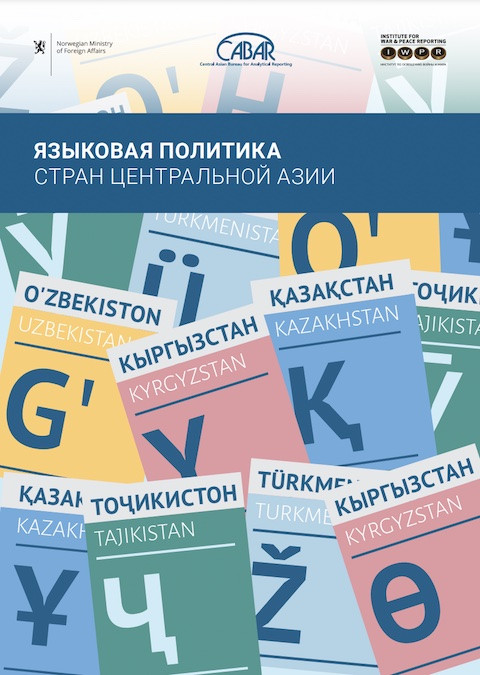 Language Policies of the Central Asian States Year of publication: 2020 Author: Nurbek Bekmurzayev Corporate author: Central Asian Bureau for Analytical Reporting (CABAR) | Institute for War and Peace Reporting (IWPR) The policy brief “Language Policy of the Central Asian States” is presented jointly by IWPR and CABAR.asia. The publication outlines the ways of the formation of state languages in the countries of Central Asia, analyzes their functioning along with the Russian language, draws conclusions and forecasts for the future, and provides recommendations for improving language policy.The publication is intended for young experts and consultants, researchers, management decision makers, and a wide range of readers.