
Resources
Explore a wide range of valuable resources on GCED to deepen your understanding and enhance your research, advocacy, teaching, and learning.
2,775 Results found
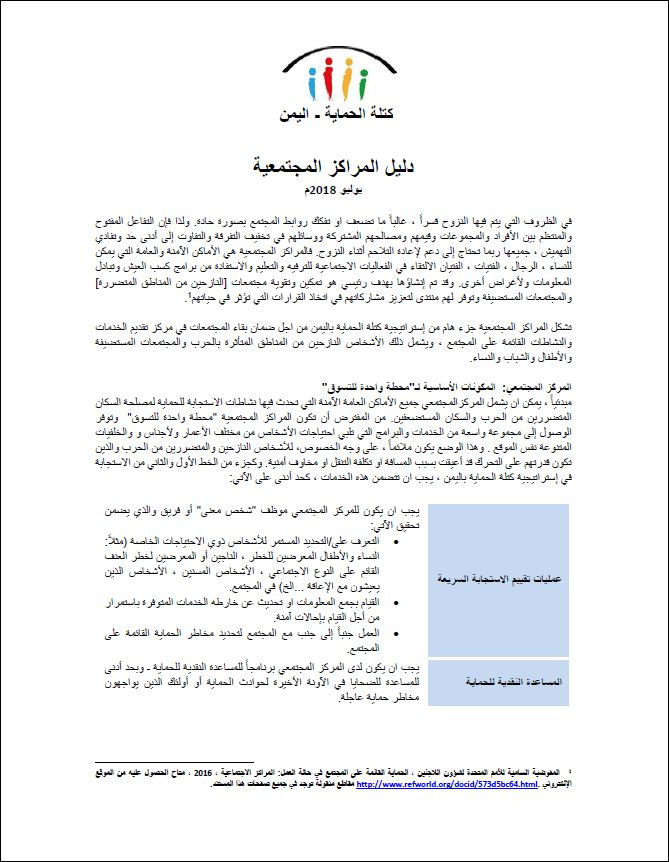 Community Centers Guide Year of publication: 2018 Corporate author: Protection Cluster Yemen Community centers are an important part of the Protection Cluster strategy in Yemen in order to ensure that communities remain at the center of providing services and community-based activities, including those displaced from war-affected areas and host communities and children, youth and women.
 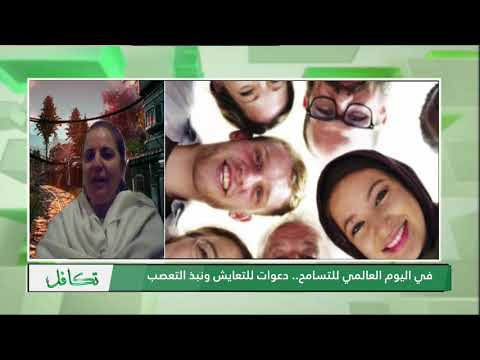 في اليوم العالمي للتسامح.. دعوات للتعايش ونبذ التعصب Year of publication: 2020 Author: Wijdan Alrubai Corporate author: Awraas TV في اليوم العالمي للتسامح، تستضيف المذيعة عبر البرنامج التلفزيوني بعض المتخصصين للتحدث عن التسامح ونبذ التعصب في الوطن العربي. من خلال البرنامج يظهر اختلاف مفهوم التسامح بين المتحدثين واثارته كقضية في الوطن العربي. On the International Day for Tolerance: Calls for Coexistence and the Rejection of Intolerance Year of publication: 2020 Author: Wijdan Alrubai Corporate author: Awraas TV On the International Day for Tolerance, the broadcaster on the TV program hosts some specialists to speak about tolerance and reject intolerance in the Arab world. Through the program, the difference in the concept of tolerance among the speakers is shown and raised as an issue in the Arab world.
 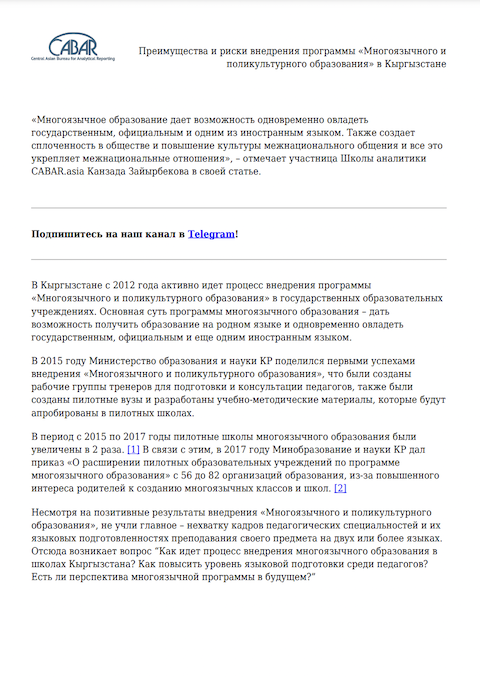 Advantages and Risks of Introducing the “Multilingual and Multicultural Education” Program in Kyrgyzstan Year of publication: 2019 Author: Kanzada Zayirbekova Corporate author: Central Asian Bureau for Analytical Reporting (CABAR) | Institute for War and Peace Reporting (IWPR) «Multilingual education makes it possible to simultaneously master the state and official languages, along with one of the foreign ones. It also creates social cohesion, enhances the culture of interethnic communication, and all this in total strengthens interethnic relations,» notes Kanzada Zayirbekova, a participant of the CABAR.asia School of Analytics, in her article. Преимущества и риски внедрения программы «Многоязычного и поликультурного образования» в Кыргызстане Year of publication: 2019 Author: Kanzada Zayirbekova Corporate author: Central Asian Bureau for Analytical Reporting (CABAR) | Institute for War and Peace Reporting (IWPR) «Многоязычное образование дает возможность одновременно овладеть государственным, официальным и одним из иностранным языком. Также создает сплоченность в обществе и повышение культуры межнационального общения и все это укрепляет межнациональные отношения», – отмечает участница Школы аналитики CABAR.asia Канзада Зайырбекова в своей статье.
  Message de la Directrice générale de l'UNESCO, Irina Bokova, à l'occasion de la Journée internationale de la langue maternelle, 21 février 2017 Year of publication: 2017 Corporate author: UNESCO. Director-General, 2009-2017 (Bokova, I.G.) The Director-General of UNESCO, Irina Bokova gives messages on the occasion of International Mother Language Day.
 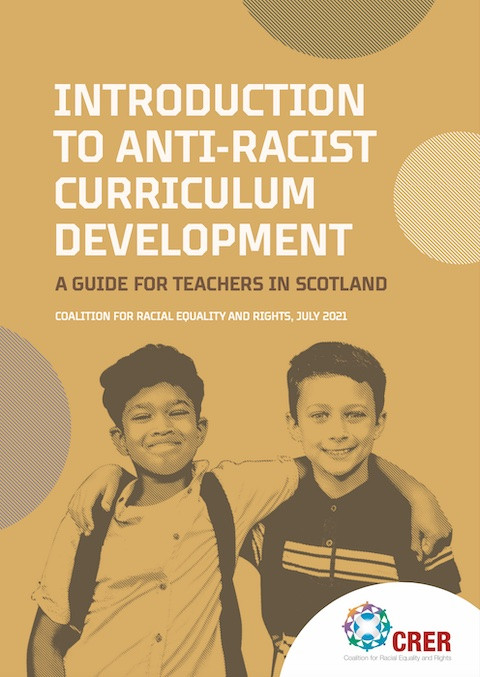 Introduction to Anti-Racist Curriculum Development: A Guide for Teachers in Scotland Year of publication: 2021 Corporate author: Coalition for Racial Equality and Rights (CRER) This guide outlines why anti-racist approaches are important in curriculum development, and explores the barriers that have hampered race equality in education. It then goes on to explore three key components for developing anti-racist approaches to curriculum development: Decolonising the curriculum Building intercultural competence Reducing racism, prejudice and discrimination
 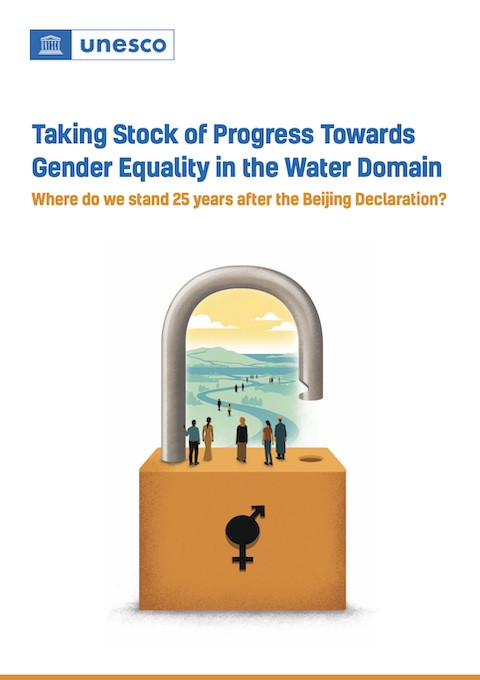 Taking Stock of Progress Towards Gender Equality in the Water Domain: Where Do We Stand 25 Years After the Beijing Declaration? Year of publication: 2021 Corporate author: UNESCO World Water Assessment Programme (WWAP) Women are not only the main persons responsible for water collection in many parts of the world, but they also possess invaluable knowledge with regard to water resources and play a key role in water and sanitation management at the local and community levels. Accordingly, women must be able to enjoy equal access to water and also have an equal say in the management and governance of water resources. Twenty-five years after the Beijing Declaration and Platform for Action, progress towards gender equality through the fulfilment of the basic right to water and sanitation is clearly off track.Despite advances at the policy level in acknowledging the need to progress towards gender equality in the water sector – and the resulting benefits – large gender inequalities persist in practice. Women are generally under-represented in terms of participation at all levels: from institutional bodies that manage national or transboundary waters, to water-related institutions such as governmental water agencies and water utilities, to local water management institutions.This report provides a detailed overview of the existing and emerging challenges to gender equality in the water domain with a particular focus on: access to water, sanitation and hygiene (WASH), health, employment,climate change management, water governance, education and training, and data collection and funding. Systematic and sustained efforts to eliminate these inequalities are essential to achieve meaningful and lasting gender equality in the water sector, and to promote sustainable development in general.Governments, international organizations, professionals and policy-makers in the water sector, academia and NGOs are invited to join forces to accelerate the achievement of gender equality in water for a more just, sustainable and peaceful future.
  The Impact of COVID-19 on Inclusive Education at the European Level: Literature Review Year of publication: 2021 Corporate author: European Agency for Special Needs and Inclusive Education | European Commission The coronavirus (COVID-19) pandemic has affected learners around the world. School closures forced emergency responses from education systems, resulting in various forms of remote schooling. The crisis highlighted pre-existing inequalities in education and provided a reason for systemic change in education worldwide.This literature review aims to map evidence and identify acknowledged ways in which COVID‑19 has impacted on education in general and inclusive education in particular at European and national levels. The intention is to provide a comprehensive overview of key messages for Agency member countries. It will also inform possible future Agency work on this topic.
 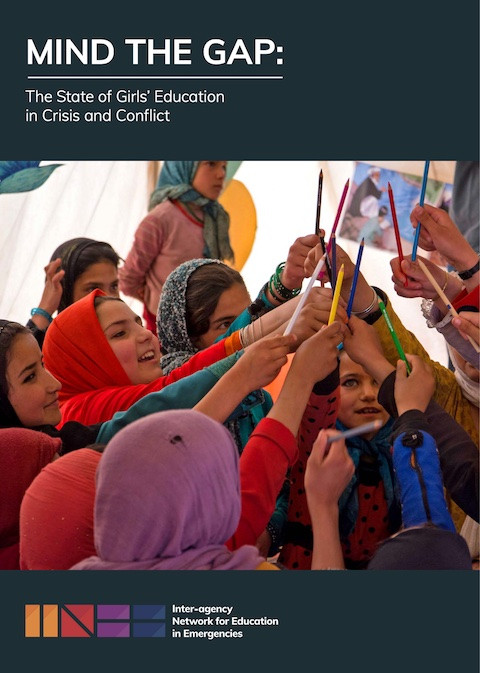 Mind the Gap: The State of Girls’ Education in Crisis and Conflict Year of publication: 2021 Corporate author: Inter-agency Network for Education in Emergencies (INEE) This report summarizes progress, gaps, challenges and opportunities in improving education and training for girls and women affected by conflict and crisis. The report aims to support the Charlevoix Declaration on Quality Education’s commitment to enhance the evidence base and monitor progress toward gender-equitable education in crises. The report draws from data on 44 crisis-affected countries, from recent research, and from a set of case studies of interventions in a range of crisis-affected contexts.