
Resources
Explore a wide range of valuable resources on GCED to deepen your understanding and enhance your research, advocacy, teaching, and learning.
684 Results found
 Digital Empowerment for Lifelong Learning and Transformative Andragogy (DELTA) for Adult Educators: Introduction to the DELTA Framework and Resources Year of publication: 2025 Corporate author: UNESCO Institute for Lifelong Learning (UIL) | Shanghai Open University (SOU) The UNESCO Institute for Lifelong Learning (UIL), in partnership with Shanghai Open University (SOU), has unveiled the DELTA Framework — Digital Empowerment for Lifelong Learning and Transformative Andragogy. This global initiative aims to enhance adult educators’ digital competencies and foster inclusive, lifelong learning opportunities for all.
  Gender Digital Divide Assessment: Uzbekistan Year of publication: 2023 Corporate author: UNDP Uzbekistan The Government of the Republic of Uzbekistan, realizing the negative impact of the gender digital divide on the development of the country, has included the issue of ensuring gender digital equality among its priorities. The United Nations Development Programme in Uzbekistan conducted an assessment to measure and analyze the main factors affecting the digital inclusion (or isolation) of women and girls, and recommended a number of actions that the Government can take to address existing gaps. Оценка гендерного цифрового разрыва: Республика Узбекистан Year of publication: 2023 Corporate author: UNDP Uzbekistan Правительство Республики Узбекистан, осознавая негативное влияние гендерного цифрового разрыва на развитие страны, включило вопрос обеспечения гендерного цифрового равенства в число своих приоритетов. Программа развития ООН в Узбекистане провела оценку с целью измерения и анализа основных факторов, влияющих на цифровую инклюзию (или изоляцию) женщин и девочек, и рекомендовала ряд действий, которые правительство может предпринять для устранения существующих разрывов.
  민주시민교육, 미디어와 만나다: 초등학교 Year of publication: 2020 Corporate author: 한국교육개발원 | 대한민국 교육부 | 충청남도교육청 본 자료는 민주시민교육과 미디어리터러시 교육 간의 연계성을 강화하여 민주시민교육과 관련한 수업에 활용하도록 개발된 교수·학습 자료이다. 자율, 존중, 연대, 정의, 평화 등 민주시민교육의 주요 주제들을 기반으로 총 5개 단원, 15개 차시로 구성되어, 교과 및 창의적 체험활동 등 교육 활동 전반에서 활용할 수 있다. 또한, 2015 개정교육과정과 연계하여 활용할 수 있도록 국어, 도덕, 사회 교과의 성취 기준을 토대로 내용과 활동을 편성하고, 활동 중심 수업을 통해 학생이 실천적인 민주시민의식을 함양할 수 있도록 단원을 구성하였다.
  민주시민교육, 미디어와 만나다: 중학교 Year of publication: 2020 Author: 주민정 | 고선화 | 이연희 | 전현영 | 최연주 Corporate author: 한국교육개발원 | 대한민국 교육부 | 충청남도교육청 본 자료는 민주시민교육과 미디어리터러시 교육 간의 연계성을 강화하여 민주시민교육과 관련한 수업에 활용하도록 개발된 교수·학습 자료이다. 자율, 존중, 연대, 정의, 평화 등 민주시민교육의 주요 주제들을 기반으로 총 5개 단원, 15개 차시로 구성되어, 교과 및 창의적 체험활동 등 교육 활동 전반에서 활용할 수 있다. 또한, 2015 개정교육과정과 연계하여 활용할 수 있도록 국어, 도덕, 사회(일반사회), 역사, 미술 교과의 성취 기준을 토대로 내용과 활동을 편성하고, 활동 중심 수업을 통해 학생이 실천적인 민주시민의식을 함양할 수 있도록 단원을 구성하였다. 수업 대상은 중학교 1학년에서 3학년이다.
 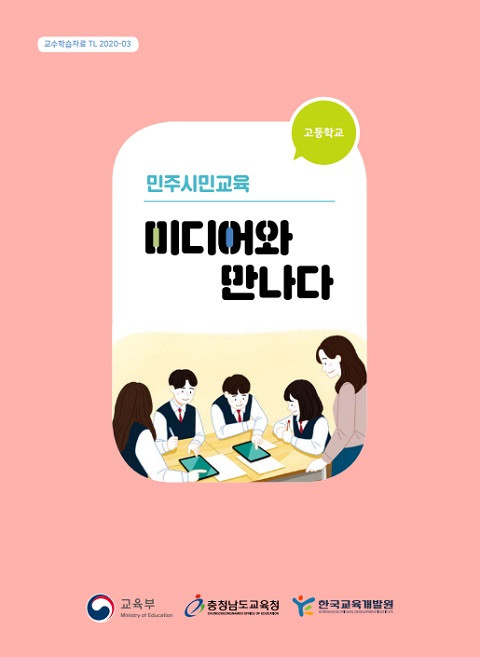 민주시민교육, 미디어와 만나다: 고등학교 Year of publication: 2020 Author: 나윤숙 | 김태현 | 임지예 | 정병연 | 조미옥 Corporate author: 한국교육개발원 | 대한민국 교육부 | 충청남도교육청 ‘민주시민교육, 미디어와 만나다’는 민주시민교육과 미디어리터러시 교육 간의 연계성을 강화하여 민주시민교육과 관련한 수업에 손쉽게 활용할 수 있도록 개발된 자료이다. 이를 통해 민주시민교육에 관심이 있는 선생님들에게 교과, 창의적 체험활동 등 교육활동 전반에 활용할 수 있는 교수-학습 자료를 제공하고자 하였다. 아울러 민주시민교육의 주제별 협력학습, 토론 수업 및 프로젝트 학습 등에 활용 가능한 교육 콘텐츠를 지원하고자 한다. 수업 대상은 고등학교 1학년이다. 다만 학습 주제, 성취기준, 학교 및 교실 여건 등을 고려하여 적용 대상을 달리하여 활용 가능하다.
  포스트 코로나 시대의 디지털 리터러시 함양 방안: 초등교육 중심으로 Year of publication: 2021 Author: 정재원 | 강성국 | 김은영 | 박효원 | 손찬희 | 정광희 | 남창우 | 신윤희 Corporate author: 한국교육개발원 본 연구는 포스트 코로나 시대의 디지털 리터러시 함양 방안 마련에 대한 연구로서, FGI, 설문조사, 전문가 델파이조사 등 다양한 과정을 통해 포스트 코로나 시대의 디지털 리터러시 개념과 구성요소를 분석하고 초등학생의 디지털 리터러시 함양 방안을 제시하고 있다. 특히, 초등학생의 디지털 리터러시는 학부모와 교사의 영향을 받는다는 점에서 학생의 디지털 리터러시 함양을 지원하기 위한 학부모와 교사의 디지털 리터러시 함양 방안도 함께 제시하였다.본 저작물은 한국교육개발원에서 2021년 작성하여 공공누리 제 4유형으로 개방한 ‘포스트 코로나 시대의 디지털 리터러시 함양 방안: 초등교육 중심으로 (정재원, 강성국, 김은영, 박효원, 손찬희, 정광희, 남창우, 신윤희)’ 을 이용하였으며 해당 저작물은 한국교육개발원 홈페이지 (www.kedi.re.kr)에서 무료로 다운받으실 수 있습니다.
 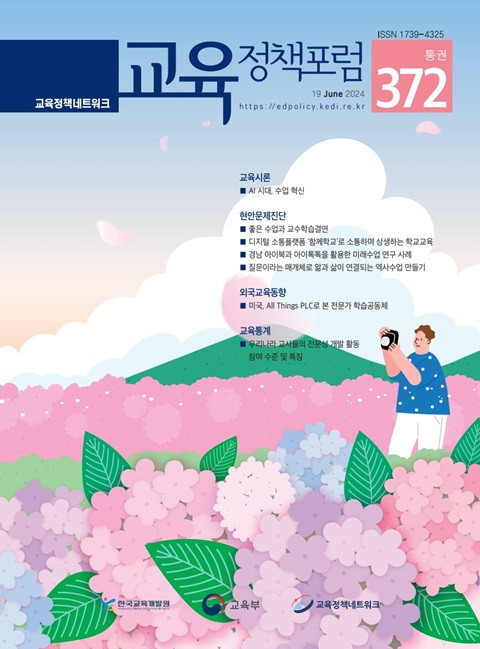 AI 시대, 수업 혁신 (교육정책포럼; 2024년 6월, Vol. 372) Year of publication: 2024 Corporate author: 한국교육개발원 교육시론ㅁ AI 시대, 수업 혁신 현안문제진단ㅁ 좋은 수업과 교수학습결연ㅁ 디지털 소통플랫폼 '함께학교'로 소통하며 상생하는 학교교육ㅁ 경남 아이북과 아이톡톡을 활용한 미래수업 연구 사례ㅁ 질문이라는 매개체로 앎과 삶이 연결되는 역사수업 만들기 외국교육동향ㅁ All Things PLC로 본 전문가 학습공동체 교육통계ㅁ 우리나라 교사들의 전문성 개발 활동 참여 수준 및 특징
 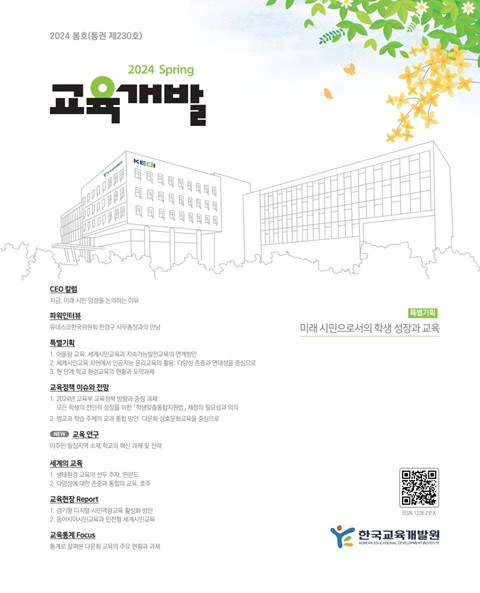 미래 시민으로서의 학생 성장과 교육 (교육개발; 2024년 봄호, Vol. 230) Year of publication: 2024 Corporate author: 한국교육개발원 CEO 칼럼지금, 미래 시민 양성을 논의하는 이유 파워인터뷰유네스코한국위원회 한경구 사무총장과의 만남 특별기획미래 시민으로서의 학생 성장과 교육1.어울림 교육: 세계시민교육과 지속가능발전교육의 연계방안2.세계시민교육 차원에서 인공지능 윤리교육의 활용: 다양성 존중과 연대성을 중심으로3.현 단계 학교 환경교육의 현황과 도약과제 교육정책 이슈와 전망1. 2024년 교육부 교육정책 방향과 중점 과제: 모든 학생의 전인적 성장을 위한 「학생맞춤통합지원법」제정의 필요성과 의의2. 범교과 학습 주제의 교과 통합 방안: 다문화·상호문화교육을 중심으로 NEW 교육 연구이주민 밀집지역 소재 학교의 혁신 과제 및 전략 세계의 교육1.생태환경 교육의 선두 주자, 핀란드2.다양성에 대한 존중과 통합의 교육, 호주 교육현장 Report1.경기형 디지털 시민역량 교육 활성화 방안2.동아시아시민교육과 인천형 세계시민교육 교육통계 Focus통계로 살펴본 다문화 교육의 주요 현황과 과제
 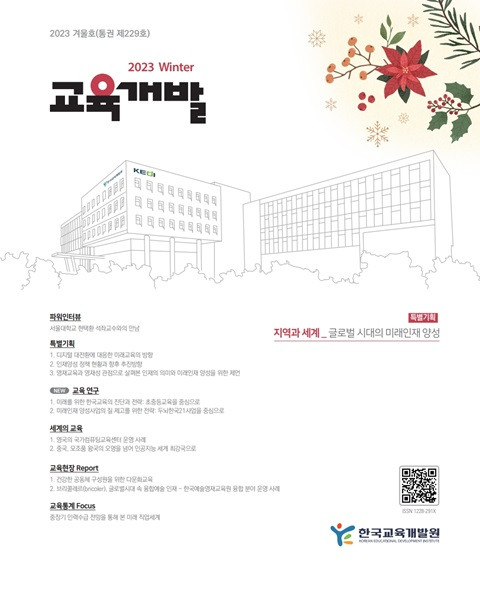 지역과 세계: 글로벌 시대의 미래인재 양성 (교육개발; 2023년 겨울호, Vol. 229) Year of publication: 2023 Corporate author: 한국교육개발원 파워인터뷰서울대학교 현택환 석좌교수와의 만남 특별기획지역과 세계 _ 글로벌 시대의 미래인재 양성1.디지털 대전환에 대응한 미래교육의 방향2.인재양성 정책 현황과 향후 추진방향3.영재교육과 영재성 관점으로 살펴본 인재의 의미와 미래인재 양성을 위한 제언 NEW 교육 연구1. 미래를 위한 한국교육의 진단과 전략: 초중등교육을 중심으로2. 미래인재 양성사업의 질 제고를 위한 전략: 두뇌한국21사업을 중심으로 세계의 교육1. 영국의 국가컴퓨팅교육센터 운영 사례2. 중국, 모조품 왕국의 오명을 넘어 인공지능 세계 최강국으로 교육현장 Report 1. 건강한 공동체 구성원을 위한 다문화교육2. 브리콜레르(bricoler), 글로벌시대 속 융합예술 인재 - 한국예술영재교육원 융합 분야 운영 사례 교육통계 Focus중장기 인력수급 전망을 통해 본 미래 직업세계